• Fri frakt över 249 kr
  • •
  • Snabba leveranser
  • •
  • Billiga böcker
Kundservice

Du är på sajten för privatpersoner.

Företag, bibliotek eller offentlig verksamhet?

Du handlar på classic.bokus.com, där alla dina funktioner finns intakta.
Till classic.bokus.com
Bokus logotyp. Gå till startsidan.
  • Erbjudanden
  • Nyheter
  • Student
  • Topplistor
  • Barn & ungdom
  • Bokus Play
  • E-böcker
  • Pocketböcker
  • Spel & pussel

10% rabatt på allt med kod NYSTART10 →

Sidfot

Mina sidor

    Hjälp

    • Kundservice
    • Vanliga frågor och svar
    • Frakt och leverans
    • Retur vid ångerrätt
    • Reklamera vara
    • Betalning
    • Köpvillkor
    • Allmänna villkor
    • Information om webbplatsens tillgänglighet

    Om Bokus

    • Om oss
    • Pressrum
    • För studenter
    • För företag
    • För bibliotek och offentlig verksamhet
    • För leverantörer
    • Hållbarhet

    Populärt

    • Aktuella erbjudanden
    • Presentkort
    • Studentlitteratur
    • Nya böcker
    • Topplistor
    • Signerade böcker
    • Engelska böcker

    Inspiration

    • Boktips
    • BookTok
    • Populära bokserier
    • Barnbokskaraktärer
    • Populära författare
    Logotyp för Bokus
    Följ oss på Facebook (extern länk)Följ oss på Instagram (extern länk)Följ oss på YouTube (extern länk)Följ oss på TikTok (extern länk)
    bokus @ CookiesAnpassa cookiesIntegritetspolicyKöpvillkor
    Till Citymail hemsida (extern länk)Till Budbee hemsida (extern länk)Till Postnord hemsida (extern länk)Till Schenker hemsida (extern länk)Till Early Bird hemsida (extern länk)Till Walleys hemsida (extern länk)
    1. Språk och ordböcker
    2. Språk: referensverk och allmänt

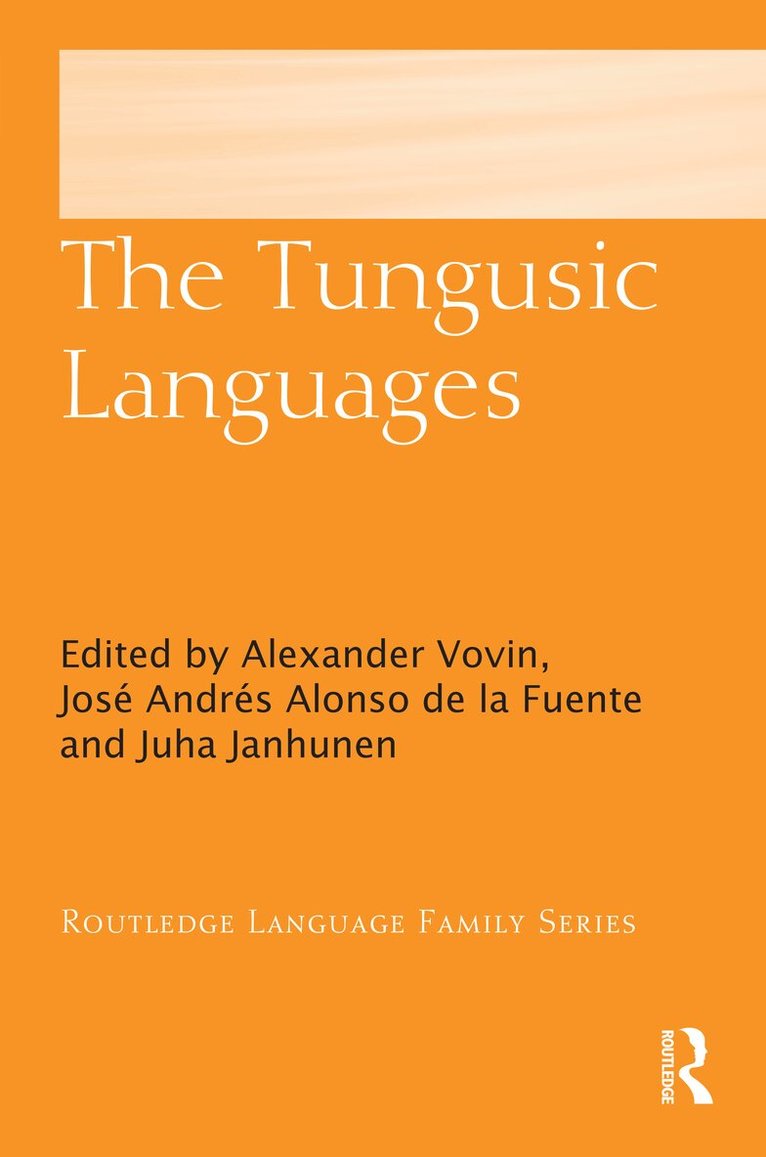
    Tungusic Languages

    AvAlexander Vovin,Alexander Vovin

    Inbunden, Engelska, 2023

    Del i serien Routledge Language Family Series

    3 769 kr

    Beställningsvara. Skickas inom 10-15 vardagar. Fri frakt över 249 kr.

    Beskrivning

    The Tungusic Languages is a survey of Tungusic, a language family which is seriously endangered today, but which at the time of its maximum spread was present all over Northeast Asia.This volume offers a systematic succession of separate chapters on all the individual Tungusic languages, as well as a number of additional chapters containing contextual information on the language family as a whole, its background and current state, as well as its history of research and documentation. Manchu and its mediaeval ancestor Jurchen are important historical literary languages discussed in this volume, while the other Tungusic languages, around a dozen altogether, have always been spoken by small, local, though in some cases territorially widespread, populations engaged in traditional subsistence activities of the Eurasian taiga and steppe zones and the North Pacific coast.All contributors to this volume are well-known specialists on their specific topics, and, importantly, all the authors of the chapters dealing with modern languages have personal experience of linguistic field work among Tungusic speakers.This volume will be informative for scholars and students specialising in the languages and peoples of Northeast Asia, and will also be of interest to those engaged with linguistic typology, cultural anthropology, and ethnic history who wish to obtain information on the Tungusic languages.

    Produktinformation

    • Utgivningsdatum:2023-08-31
    • Mått:156 x 234 x 35 mm
    • Vikt:1 020 g
    • Format:Inbunden
    • Språk:Engelska
    • Serie:Routledge Language Family Series
    • Antal sidor:544
    • Förlag:Taylor & Francis Ltd
    • ISBN:9781138845039

    Utforska kategorier

    • Språk: referensverk och allmänt inom Språk och ordböcker

    Mer om författaren

    Alexander Vovin (†), Directeur d’études, École des hautes études en sciences sociales (EHESS), Paris, France.José Andrés Alonso de la Fuente, Associate Professor, Institute of Linguistics, Translation Studies and Hungarian Studies, Jagiellonian University, Kraków, Poland.Juha Janhunen, Professor Emeritus of East Asian Languages and Cultures, University of Helsinki, Finland.

    Innehållsförteckning

    • List of tablesList of contributors Preface and acknowledgements Technical notes List of abbreviations Chart of the Manchu script Language map 1. Tungusic as a language family Ethnic nomenclatureData and sources Internal taxonomy Typological profile Grammatical framework References and further reading 2. Early Far Eastern sources on Tungusic Chinese sources Japanese sources Korean sources References and further reading 3. Early Western sources on Tungusic Types of sources Eighteenth century Nineteenth century References and further reading 4. Proto-Tungusic Data and sources Vowel system Vowel harmony Consonant system Morpheme structure Word formation Number and case Numerals PronounsPerson marking Verbal stems Verbal forms Syntax Lexical structure References and further reading 5. Jurchen Data and sources Notational conventionsThe writing system Origin of the Jurchen script Segmental structure Nominal forms Numerals Pronouns Verbal forms Lexicon and language contacts References and further reading 6. Written Manchu Data and sources Segmental structure Phonotactics and morphophonology Word formation Number and case Numerals Pronouns Participles Converbs Complex verbal forms Imperatives Syntax Lexicon and language contacts List of primary sources References and further reading 7. Siberian Ewenki Taxonomic statusDialectal division Data and sourcesSegmental structure Phonotactics and morphophonology Word formation Number and case Numerals PronounsPerson marking Verbal forms Verbal functions Syntax Lexicon and language contacts References and further reading 8. Orochen Data and sources Segmental structure Phonotactics and morphophonology Word formation Number and case Adjectives Numerals PronounsPerson markingOther word classes Verbal morphology Participles Imperatives Other modal forms Converbs Syntax Lexicon and language contacts References and further reading 9. Solon Data and sources Segmental structure Phonotactics and morphophonology Word formation Number and case Numerals Pronouns Person marking Verbal morphology Participles Imperatives Converbs Phrase structure Sentence types Lexicon and language contacts References and further reading 10. Neghidal Data and sources Segmental structure Phonotactics and morphophonology Word formation Number and case Numerals Pronouns Person marking Verbal morphology Participles Finite tense and aspect Imperatives Other modal forms ConverbsSyntax Lexicon and language contacts References and further reading 11. Ewen Dialectal division Data and sources Segmental structure Phonotactics and morphophonology Word structure and word classes Word formationNumber and case Adjectives Numerals Pronouns Person markingOther word classes Verbal morphology Participles Finite tense and mood Converbs Phrase structure Sentence types Passive and causative Complex sentences Lexicon and language contacts References and further reading 12. Oroch Taxonomic status Data and sources Segmental structure Phonotactics and morphophonology Word formation Number and case Numerals Pronouns Person marking Other word classes Verbal morphology Voice and aspect Participles Imperatives Other modal forms Converbs Syntax Lexicon and language contacts References and further reading 13. Udihe Data and sources Segmental structure Phonotactics and morphophonology Word formation Number and case Adjectives Numerals Pronouns Person marking Other word classes Verbal morphology Voice and aspect Participles Finite tense and mood Converbs Complex predicates Syntax Lexicon and language contacts References and further reading 14. Nanai Data and sourcesSegmental structure Phonotactics and morphophonology Word formation Number and case Adjectives Numerals Pronouns Person marking Other word classes Verbal morphology Voice and aspect Participles Finite indicative forms Imperatives Other modal forms Converbs Syntax Lexicon and language contacts References and further reading 15. Ulcha Taxonomic status Data and sources Segmental structure Phonotactics and morphophonology Word formation Number and case Adjectives Numerals Pronouns Person marking Other word classes Verbal morphology Voice and aspect Participles Finite indicative forms Imperatives Other modal forms Converbs Syntax Lexicon and language contacts References and further reading 16. Uilta Data and sources Segmental structure Phonotactics and morphophonology Word formation Number and case Numerals PronounsPerson marking Verbal morphology Participles Finite indicative forms Imperatives Converbs Phrase structure Sentence typesComplex sentences Lexicon and language contacts References and further reading 17. Spoken Manchu Dialectal division Data and sources Segmental structure Phonotactics and morphophonology Word formation Number and case Numerals PronounsVerbal forms Complex predicates Sentence types Complex sentencesLexicon and language contacts References and further reading 18. Sibe Data and sources Segmental structure Phonotactics and morphophonology Word formation Number and case Numerals PronounsVerbal forms Complex predicates Syntax Lexicon and language contacts References and further reading 19. Sociolinguistic aspects of Tungusic Demographic background Legislational status Data and sources Ewenki as a supraregional language Ewen in northeastern Siberia Amur-Sakhalin region Tungusic languages in education Tungusic languages in public spheres Future prospects References and further reading 20. Tungusic in time and place Data and sources External relationships Areal position Protohistorical setting Stages of expansion Sic transit gloria References and further reading Index