• Fri frakt över 249 kr
  • •
  • Snabba leveranser
  • •
  • Billiga böcker
Kundservice

Du är på sajten för privatpersoner.

Företag, bibliotek eller offentlig verksamhet?

Du handlar på classic.bokus.com, där alla dina funktioner finns intakta.
Till classic.bokus.com
Bokus logotyp. Gå till startsidan.
  • Erbjudanden
  • Nyheter
  • Student
  • Topplistor
  • Barn & ungdom
  • Bokus Play
  • E-böcker
  • Pocketböcker
  • Spel & pussel

10% rabatt på allt med kod NYSTART10 →

Sidfot

Mina sidor

    Hjälp

    • Kundservice
    • Vanliga frågor och svar
    • Frakt och leverans
    • Retur vid ångerrätt
    • Reklamera vara
    • Betalning
    • Köpvillkor
    • Allmänna villkor
    • Information om webbplatsens tillgänglighet

    Om Bokus

    • Om oss
    • Pressrum
    • För studenter
    • För företag
    • För bibliotek och offentlig verksamhet
    • För leverantörer
    • Hållbarhet

    Populärt

    • Aktuella erbjudanden
    • Presentkort
    • Studentlitteratur
    • Nya böcker
    • Topplistor
    • Signerade böcker
    • Engelska böcker

    Inspiration

    • Boktips
    • BookTok
    • Populära bokserier
    • Barnbokskaraktärer
    • Populära författare
    Logotyp för Bokus
    Följ oss på Facebook (extern länk)Följ oss på Instagram (extern länk)Följ oss på YouTube (extern länk)Följ oss på TikTok (extern länk)
    bokus @ CookiesAnpassa cookiesIntegritetspolicyKöpvillkor
    Till Citymail hemsida (extern länk)Till Budbee hemsida (extern länk)Till Postnord hemsida (extern länk)Till Schenker hemsida (extern länk)Till Early Bird hemsida (extern länk)Till Walleys hemsida (extern länk)
    1. Psykologi och pedagogik
    2. Pedagogik

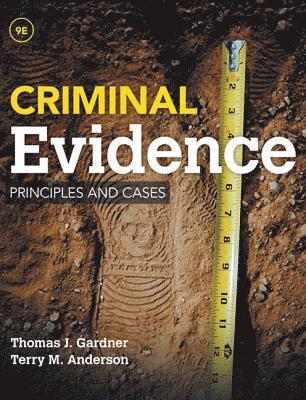
    Criminal Evidence

    Principles and Cases

    AvThomas Gardner,Terry Anderson

    Inbunden, Engelska, 2015

    1 308 kr

    Beställningsvara. Skickas inom 5-8 vardagar. Fri frakt över 249 kr.

    Beskrivning

    What makes evidence admissible or inadmissible in court? You'll know the answer once you read CRIMINAL EVIDENCE: PRINCIPLES AND CASES, 9th Edition. Whatever your future career in the justice system, you can count on this book to outline all you need to know about criminal evidence and its use. Packed with stories and cases as well as the most up-to-date legal information available, it's the most relevant and engaging resource of its kind.

    Produktinformation

    • Utgivningsdatum:2015-02-09
    • Mått:208 x 25 x 254 mm
    • Vikt:1 220 g
    • Format:Inbunden
    • Språk:Engelska
    • Antal sidor:560
    • Upplaga:9
    • Förlag:Cengage Learning
    • ISBN:9781285459004

    Utforska kategorier

    • Pedagogik inom Psykologi och pedagogik

    Mer om författaren

    Mr. Gardner received his law degree from Marquette Law School. He started the first edition of CRIMINAL LAW over 40 years ago and was a proven author and widely respected practicing attorney with more than 70 years of experience, including several years as an assistant district attorney in Milwaukee, Wisconsin. Mr. Gardner was a U.S. Navy Commander in World War II and served his country with distinction. Terry M. Anderson is Professor of Law at Creighton University School of Law. He received his Bachelor of Arts degree in 1968 and Juris Doctor degree in 1971 from the University of North Dakota, where he was a member of the Order of the Coif and Case Editor of the North Dakota Law Review. After earning a Master of Laws degree from Harvard Law School in 1972, he joined the Creighton law faculty. He has been a visiting professor at the University of New Mexico School of Law and the Denver University School of Law. He teaches Criminal Law, Contracts and Secured Transactions in Personal Property. Professor Anderson has been a joint author with Thomas Gardner since 1991 and the sole author of CRIMINAL LAW since 2013.

    Innehållsförteckning

    • Part I: INTRODUCTION TO CRIMINAL EVIDENCE. 1. History and Development of the Law of Criminal Evidence. 2. Important Aspects of the American Criminal Justice System. 3. Using Evidence to Determine Guilt or Innocence. 4. Direct and Circumstantial Evidence and the Use of Inferences. Part II: WITNESSES AND THEIR TESTIMONY. 5. Witnesses and the Testimony of Witnesses.6. Judicial Notice, Privileges of Witnesses, and Shield Laws.7. The Use of Hearsay in the Courtroom.8. The Confrontation Clause and Exceptions to the Hearsay Rule.Part III: WHEN EVIDENCE CANNOT BE USED BECAUSE OF POLICE MISTAKES OR MISCONDUCT.9. The Exclusionary Rule.10. Where the Exclusionary Rule Does Not Apply.11. "Special Needs" and Administrative Searches.12. Obtaining Statements and Confessions for Use as Evidence.13. The Law Governing Identification Evidence.14. Obtaining Physical and Other Evidence.15. Obtaining Evidence by Use of Search Warrants, from Computers, Wiretapping, or Dogs Trained to Indicate an Alert.Part IV: CRIME-SCENE, DOCUMENTARY, AND SCIENTIFIC EVIDENCE.16. The Crime Scene, the Chain of Custody Requirement, and the Use of Fingerprints and Trace Evidence.17. Videotapes, Photographs, Documents, and Writings as Evidence.18. Scientific Evidence.Appendix A: Sections of the U.S. Constitution.Appendix B: Finding and Analyzing Cases.Appendix C: Federal Rules of Evidence.Glossary.Case Index.Subject Index.