• Fri frakt över 249 kr
  • •
  • Snabba leveranser
  • •
  • Billiga böcker
Kundservice

Du är på sajten för privatpersoner.

Företag, bibliotek eller offentlig verksamhet?

Du handlar på classic.bokus.com, där alla dina funktioner finns intakta.
Till classic.bokus.com
Bokus logotyp. Gå till startsidan.
  • Erbjudanden
  • Nyheter
  • Student
  • Topplistor
  • Barn & ungdom
  • Bokus Play
  • E-böcker
  • Pocketböcker
  • Spel & pussel

10% rabatt på allt med kod NYSTART10 →

Sidfot

Mina sidor

    Hjälp

    • Kundservice
    • Vanliga frågor och svar
    • Frakt och leverans
    • Retur vid ångerrätt
    • Reklamera vara
    • Betalning
    • Köpvillkor
    • Allmänna villkor
    • Information om webbplatsens tillgänglighet

    Om Bokus

    • Om oss
    • Pressrum
    • För studenter
    • För företag
    • För bibliotek och offentlig verksamhet
    • För leverantörer
    • Hållbarhet

    Populärt

    • Aktuella erbjudanden
    • Presentkort
    • Studentlitteratur
    • Nya böcker
    • Topplistor
    • Signerade böcker
    • Engelska böcker

    Inspiration

    • Boktips
    • BookTok
    • Populära bokserier
    • Barnbokskaraktärer
    • Populära författare
    Logotyp för Bokus
    Följ oss på Facebook (extern länk)Följ oss på Instagram (extern länk)Följ oss på YouTube (extern länk)Följ oss på TikTok (extern länk)
    bokus @ CookiesAnpassa cookiesIntegritetspolicyKöpvillkor
    Till Citymail hemsida (extern länk)Till Budbee hemsida (extern länk)Till Postnord hemsida (extern länk)Till Schenker hemsida (extern länk)Till Early Bird hemsida (extern länk)Till Walleys hemsida (extern länk)
    1. Data och IT
    2. Nätverk och kommunikation

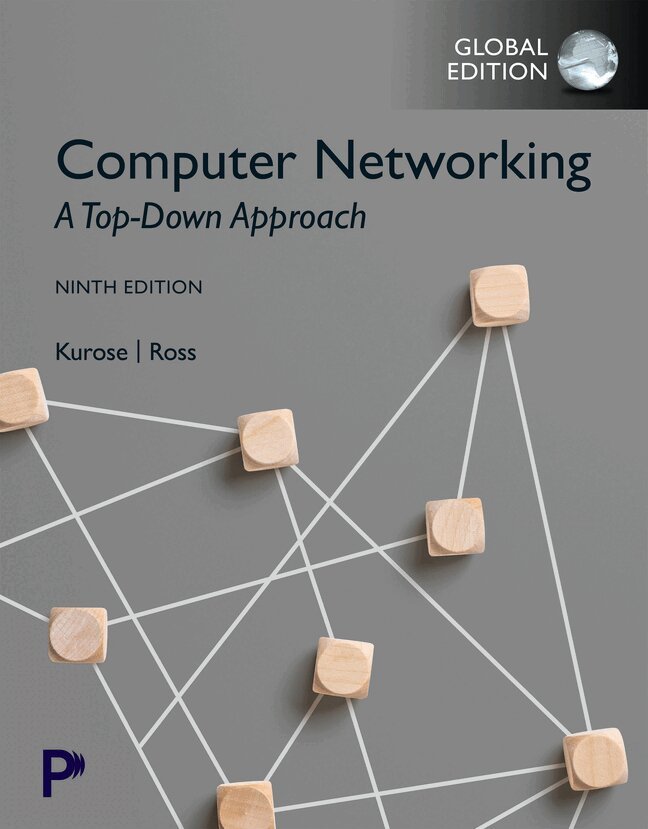
    Computer Networking, Global Edition

    AvJames Kurose,Keith Ross

    Häftad, Engelska, 2026

    1 082 kr

    Kommande

    Produktinformation

    • Utgivningsdatum:2026-09-07
    • Format:Häftad
    • Språk:Engelska
    • Antal sidor:732
    • Upplaga:9
    • Förlag:Pearson Education
    • ISBN:9781292499239

    Utforska kategorier

    • Nätverk och kommunikation inom Data och IT

    Mer om författaren

    About our authors Jim Kurose is a Distinguished University Professor in the College of Information and Computer Sciences at the University of Massachusetts Amherst, where he has been since receiving his PhD in computer science from Columbia University. He received a BA in physics from Wesleyan University. He has held a number of visiting scientist positions in the US and abroad, including IBM Research, INRIA and the Sorbonne University in France. From 2015-2019, Jim served as Assistant Director at the US National Science Foundation, where he led the Directorate of Computer and Information Science and Engineering, and in 2018 served as an Assistant Director in the White House Office of Science and Technology Policy.Jim is proud to have mentored and taught an amazing group of students, and to have received a number of awards for his research, teaching and service, including the IEEE Infocom Award, the ACM SIGCOMM Lifetime Achievement Award, the ACM Sigcomm Test of Time Award, the IEEE Computer Society Taylor Booth Education Medal, and the CRA Distinguished Service Award. Dr. Kurose is a former Editor-in-Chief of IEEE Transactions on Communications and of IEEE/ACM Transactions on Networking. He has served as Technical Program Co-Chair for IEEE Infocom, ACM SIGCOMM, ACM Internet Measurement Conference and ACM SIGMETRICS. He is a Fellow of the IEEE and ACM, and a member of the National Academy of Engineering. His research interests include network protocols and architecture, network measurement, and multimedia communication.Keith Ross is a Professor of Computer Science at NYU Abu Dhabi. Previously he was Dean of Computer Science, Data Science, and Engineering at NYU Shanghai (2013-2023), Leonard J. Shustek Chair Professor in the Computer Science and Engineering Department at NYU (2003-2013), Professor of Computer Science at Eurecom Institute (1998-2003), and Professor of Systems Engineering at University of Pennsylvania (1985-1998). He received a B.S.E.E from Tufts University, a M.S.E.E. from Columbia University and a Ph.D. in Computer and Control Engineering from The University of Michigan. Keith Ross is also the co-founder and original CEO of Wimba, which developed online multimedia applications for e-learning and was acquired by Blackboard in 2010.Professor Ross's research interests have been in modeling and measurement of computer networks, peer-to-peer systems, content distribution networks, social networks and privacy. He is currently working in deep reinforcement learning. He is an ACM Fellow, an IEEE Fellow, recipient of the Infocom 2009 Best Paper Award and recipient of 2011 and 2008 Best Paper Awards for Multimedia Communications (awarded by IEEE Communications Society). He has served on numerous journal editorial boards and conference program committees,including IEEE/ACM Transactions on Networking,

    Innehållsförteckning

    • 1: Computer Networks and the Internet Introduction1.1 What Is the Internet? 1.1.1 A Nuts-and-Bolts Description1.1.2 A Services Description1.1.3 What Is a Protocol? 1.2 The Network Edge 1.2.1 Access Networks1.2.2 Physical Media 1.3 The Network Core 1.3.1 Packet Switching1.3.2 Circuit Switching1.3.3 A Network of Networks 1.4 Delay, Loss, and Throughput in Packet-Switched Networks 1.4.1 Overview of Delay in Packet-Switched Networks1.4.2 Queuing Delay and Packet Loss1.4.3 End-to-End Delay1.4.4 Throughput in Computer Networks 1.5 Protocol Layers and Their Service Models 1.5.1 Layered Architecture1.5.2 Encapsulation 1.6 Networks Under Attack1.7 History of Computer Networking and the Internet 1.7.1 The Development of Packet Switching: 1961-19721.7.2 Proprietary Networks and Internetworking: 1972-19801.7.3 A Proliferation of Networks: 1980-19901.7.4 The Internet Explosion: The 1990s1.7.5 The New Millennium 1.8 Summary Homework Problems and QuestionsProblemsWireshark LabInterview: Leonard Kleinrock2: Application Layer Introduction2.1 Principles of Network Applications 2.1.1 Network Application Architectures2.1.2 Processes Communicating2.1.3 Transport Services Available to Applications2.1.4 Transport Services Provided by the Internet2.1.5 Application-Layer Protocols2.1.6 Network Applications Covered in This Book 2.2 The Web and HTTP 2.2.1 Overview of HTTP2.2.2 Non-Persistent and Persistent Connections2.2.3 HTTP Message Format2.2.4 User-Server Interaction: Cookies2.2.5 Web Caching2.2.6 HTTP/22.2.7 HtTP/3 and QUIC 2.3 Electronic Mail in the Internet 2.3.1 SMTP2.3.2 Mail Message Formats2.3.3 Mail Access Protocols 2.4 DNS: The Internet’s Directory Service 2.4.1 Services Provided by DNS2.4.2 Overview of How DNS Works2.4.3 DNS Records and Messages 2.5 Video Streaming and Content Distribution Networks 2.5.1 Internet Video2.5.2 HTTP Streaming and DASH2.5.3 Content Distribution Networks2.5.4 Case Studies: Netflix and YouTube 2.6 Socket Programming: Creating Network Applications 2.6.1 Socket Programming with UDP2.6.2 Socket Programming with TCP2.6.3 Socket Programming with QUIC 2.7 Summary Homework Problems and QuestionsProblemsSocket Programming AssignmentsWireshark Labs: HTTP, DNSInterview: Paul Mockapetris3: Transport Layer Introduction3.1 Introduction and Transport-Layer Services 3.1.1 Relationship Between Transport and Network Layers3.1.2 Overview of the Transport Layer in the Internet 3.2 Multiplexing and Demultiplexing3.3 Connectionless Transport: UDP 3.3.1 UDP Segment Structure3.3.2 UDP Checksum 3.4 Principles of Reliable Data Transfer 3.4.1 Building a Reliable Data Transfer Protocol3.4.2 Pipelined Reliable Data Transfer Protocols3.4.3 Go-Back-N (GBN)3.4.4 Selective Repeat (SR) 3.5 Connection-Oriented Transport: TCP 3.5.1 The TCP Connection3.5.2 TCP Segment Structure3.5.3 Round-Trip Time Estimation and Timeout3.5.4 Reliable Data Transfer3.5.5 Flow Control3.5.6 TCP Connection Management 3.6 Principles of Congestion Control 3.6.1 The Causes and the Costs of Congestion3.6.2 End-to-end and Network-assisted Approaches to Congestion Control 3.7 TCP Congestion Control 3.7.1 Classic End-End TCP Congestion Control3.7.2 More Recent End-End TCP Congestion Control Algorithms3.7.3 Network-Assisted Explicit Congestion Notification 3.7.4 Fairness 3.8 Evolution of Transport-Layer Functionality3.9 Summary Homework Problems and QuestionsProblemsProgramming AssignmentsWireshark Labs: Exploring TCP, UDPInterview: Van Jacobson4: The Network Layer: Data Plane Introduction4.1 Overview of Network Layer 4.1.1 Forwarding and Routing: The Network Data and Control Planes4.1.2 Network Service Models 4.2 What’s Inside a Router? 4.2.1 Input Port Processing and Destination-Based Forwarding4.2.2 Switching4.2.3 Output Port Processing4.2.4 Where Does Queuing Occur?4.2.5 Packet Scheduling 4.3 The Internet Protocol (IP): IPv4, Addressing, IPv6, and More 4.3.1 IPv4 Datagram Format4.3.2 IPv4 Addressing4.3.3 Network Address Translation (NAT)4.3.4 IPv6 4.4 Generalized Forwarding and SDN 4.4.1 Match4.4.2 Action4.4.3 OpenFlow Examples of Match-plus-action in Action4.4.4 Middleboxes 4.5 Architectural Principles of the Internet4.6 Summary Homework Problems and QuestionsProblemsWireshark Lab: IPInterview: Vinton G. Cerf5: The Network Layer: Control Plane Introduction5.1 Introduction5.2 Routing Algorithms 5.2.1 The Link-State (LS) Routing Algorithm5.2.2 The Distance-Vector (DV) Routing Algorithm 5.3 Intra-AS Routing in the Internet: OSPF5.4 Routing Among the ISPs: BGP 5.4.1 The Role of BGP5.4.2 Advertising BGP Route Information5.4.3 Determining the Best Routes5.4.4 IP-Anycast5.4.5 Routing Policy5.4.6 Putting the Pieces Together: Obtaining Internet Presence 5.5 The SDN Control Plane 5.5.1 The SDN Control Plane: SDN Controller and SDN Network-Control Applications5.5.2 OpenFlow Protocol5.5.3 Data and Control Plane Interaction: An Example5.5.4 SDN: Past and Future 5.6 ICMP: The Internet Control Message Protocol5.7 Network Management, SNMP, and NETCONF/YANG 5.7.1 The Network Management Framework5.7.2 The Simple Network Management Protocol (SNMP) and the Management Information Base (MIB)5.7.3 The Network Configuration Protocol (NETCONF) and YANG 5.8 Summary Homework Problems and QuestionsProblemsSocket Programming Assignment 5: ICMP PingProgramming Assignment: RoutingWireshark Lab: ICMPInterview: Jennifer Rexford6: The Link Layer and LANs Introduction6.1 Introduction to the Link Layer 6.1.1 The Services Provided by the Link Layer6.1.2 Where Is the Link Layer Implemented? 6.2 Error-Detection and -Correction Techniques 6.2.1 Parity Checks6.2.2 Checksumming Methods6.2.3 Cyclic Redundancy Check (CRC) 6.3 Multiple Access Links and Protocols 6.3.1 Channel Partitioning Protocols6.3.2 Random Access Protocols6.3.3 Taking-Turns Protocols6.3.4 DOCSIS: The Link-Layer Protocol for Cable Internet Access 6.4 Switched Local Area Networks 6.4.1 Link-Layer Addressing and ARP6.4.2 Ethernet6.4.3 Link-Layer Switches6.4.4 Virtual Local Area Networks (VLANs) 6.5 Link Virtualization: A Network as a Link Layer 6.5.1 Multiprotocol Label Switching (MPLS)6.5.2 VXLANs: Ethernet Over IP 6.6 Data Center Networking 6.6.1 Data Center Architectures6.6.2 Trends in Data Center Networking 6.7 Retrospective: A Day in the Life of a Web Page Request 6.7.1 Getting Started: DHCP, UDP, IP, and Ethernet6.7.2 Still Getting Started: DNS and ARP6.7.3 Still Getting Started: Intra-Domain Routing to the DNS Server6.7.4 Web Client-Server Interaction: TCP and HTTP 6.8 Summary Homework Problems and QuestionsProblemsWireshark Labs: Ethernet and Home NetworkingInterview: Vahdat7: Wireless and Mobile Networks Introduction7.1 Introduction7.2 The Physical Layer in Wireless Networks 7.2.1 Characteristics of wireless Channel7.2.2 Coding and Modulation: from bits to symbols to waveforms 7.3 The Wireless Access Network 7.3.1 Sharing the Wireless Channel7.3.2 WiFi: the 802.11 Wireless LAN7.3.3 The 5G Radio Access Network7.3.4 Discovery: Attaching to a Wireless Network7.3.5 Scheduling Transmissions over the RAN/WLAN7.3.6 Energy Considerations: wake/sleep 7.4 The Wireless Core Network 7.4.1 The 5G Core and Network Functions7.4.2 User-plane Function7.4.3 User identity, registration, and session establishment 7.5 Mobility 7.5.1 Mobility Principles7.5.2 Mobility in a WiFi Network7.5.3 Mobility in a 5G Network 7.6 Bluetooth, Satellite and IoT Networks 7.6.1 Bluetooth Networks7.6.2 Satellite Networks7.6.3 Internet of Things (IoT) Networks 7.7 Summary Homework Problems and QuestionsProblemsProgramming Assignment: Implementing a 4G/5G RAN schedulerWireshark Labs: WiFi and 4/5GInterview: Deborah Estrin8: Security in Computer Networks Introduction8.1 What Is Network Security?8.2 Principles of Cryptography 8.2.1 Symmetric Key Cryptography8.2.2 Public Key Encryption 8.3 Message Integrity and Digital Signatures 8.3.1 Cryptographic Hash Functions8.3.2 Message Authentication Code8.3.3 Digital Signatures 8.4 End-Point Authentication8.5 Securing E-Mail 8.5.1 Secure E-Mail8.5.2 PGP 8.6 Securing TCP and HTTP Connections: TLS 8.6.1 The Big Picture8.6.2 A More Complete Picture: TLS 1.3 8.7 Network-Layer Security: IPsec and Virtual Private Networks 8.7.1 IPsec and Virtual Private Networks (VPNs)8.7.2 The AH and ESP Protocols8.7.3 Security Associations8.7.4 The IPsec Datagram8.7.5 IKE: Key Management in IPsec 8.8 Securing Wireless LANs and 4G/5G Cellular Networks 8.8.1 Authentication and Key Agreement in 802.11 Wireless LANs8.8.2 Authentication and Key Agreement in 5G Cellular Networks 8.9 Operational Security: Firewalls and Intrusion Detection Systems 8.9.1 Firewalls8.9.2 Intrusion Detection Systems 8.10 Summary Homework Problems and QuestionsProblemsWireshark Lab: TLS, IPsec LabsInterview: Cranor