• Fri frakt över 249 kr
  • •
  • Snabba leveranser
  • •
  • Billiga böcker
Kundservice

Du är på sajten för privatpersoner.

Företag, bibliotek eller offentlig verksamhet?

Du handlar på classic.bokus.com, där alla dina funktioner finns intakta.
Till classic.bokus.com
Bokus logotyp. Gå till startsidan.
  • Erbjudanden
  • Nyheter
  • Student
  • Topplistor
  • Barn & ungdom
  • Bokus Play
  • E-böcker
  • Pocketböcker
  • Spel & pussel

10% rabatt på allt med kod: NYSTART10 →

Sidfot

Mina sidor

    Hjälp

    • Kundservice
    • Vanliga frågor och svar
    • Frakt och leverans
    • Retur vid ångerrätt
    • Reklamera vara
    • Betalning
    • Köpvillkor
    • Allmänna villkor
    • Information om webbplatsens tillgänglighet

    Om Bokus

    • Om oss
    • Pressrum
    • För studenter
    • För företag
    • För bibliotek och offentlig verksamhet
    • För leverantörer
    • Hållbarhet

    Populärt

    • Aktuella erbjudanden
    • Presentkort
    • Studentlitteratur
    • Nya böcker
    • Topplistor
    • Signerade böcker
    • Engelska böcker

    Inspiration

    • Boktips
    • BookTok
    • Populära bokserier
    • Barnbokskaraktärer
    • Populära författare
    Logotyp för Bokus
    Följ oss på Facebook (extern länk)Följ oss på Instagram (extern länk)Följ oss på YouTube (extern länk)Följ oss på TikTok (extern länk)
    bokus @ CookiesAnpassa cookiesIntegritetspolicyKöpvillkor
    Till Citymail hemsida (extern länk)Till Budbee hemsida (extern länk)Till Postnord hemsida (extern länk)Till Schenker hemsida (extern länk)Till Early Bird hemsida (extern länk)Till Walleys hemsida (extern länk)
    1. Samhälle och politik
    2. Politik och statsskick
    3. Statsvetenskap och politisk teori

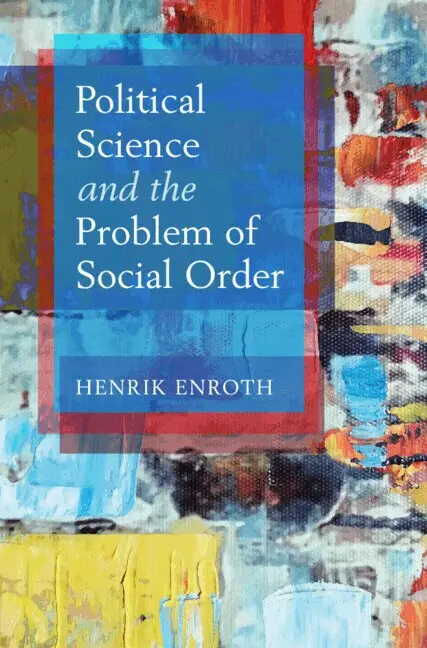
    Political Science and the Problem of Social Order

    AvHenrik Enroth

    Inbunden, Engelska, 2022

    1 402 kr

    Beställningsvara. Skickas inom 10-15 vardagar. Fri frakt över 249 kr.

    Fler format och utgåvor

    E-bok

    537 kr

    E-bok

    537 kr

    Häftad

    443 kr

    Beskrivning

    The problem of social order is the question of what holds complex and diverse societies together. Today, this question has become increasingly urgent in the world. Yet our ability to ask and answer the question in a helpful way is constrained by the intellectual legacy through which the question has been handed down to us. In this impressive, erudite study, Henrik Enroth describes and analyzes how the problem of social order has shaped concept formation, theory, and normative arguments in political science. The book covers a broad range of influential thinkers and theories throughout the history of political science, from the early twentieth century onwards. Social order has long been a presupposition for inquiry in political science; now we face the challenge of turning it into an object of inquiry.

    Produktinformation

    • Utgivningsdatum:2022-03-24
    • Mått:157 x 235 x 20 mm
    • Vikt:470 g
    • Format:Inbunden
    • Språk:Engelska
    • Antal sidor:212
    • Förlag:Cambridge University Press
    • ISBN:9781316515150

    Utforska kategorier

    • Statsvetenskap och politisk teori inom Samhälle och politik

    Mer om författaren

    Henrik Enroth is Associate Professor at Linnaeus University.

    Recensioner i media

    'What holds society together? This book shows how political scientists across the twentieth century answered this question – and also how, at least sometimes, they avoided confronting it directly, sublimating controversial theories of social order into conceptual presuppositions. Both masterful storyteller and incisive critic, Enroth has a knack for the accessible presentation of ideas in ways that do not flatten their complexity, capturing their strengths and their vulnerabilities with enviable economy, elegance, and wit.' Patchen Markell, Cornell University

    Innehållsförteckning

    • Preface; 1. The problem of social order and the history of political science; 2. Plurality and unity; 3. Processing community; 4. Bringing community back in; 5. Conflict and consensus; 6. Support for the system; 7. Questioning consensus; 8. Power and participation; 9. The problem of social order and the future of political science; Bibliography.