• Fri frakt över 249 kr
  • •
  • Snabba leveranser
  • •
  • Billiga böcker
Kundservice

Du är på sajten för privatpersoner.

Företag, bibliotek eller offentlig verksamhet?

Du handlar på classic.bokus.com, där alla dina funktioner finns intakta.
Till classic.bokus.com
Bokus logotyp. Gå till startsidan.
  • Erbjudanden
  • Nyheter
  • Student
  • Topplistor
  • Barn & ungdom
  • Bokus Play
  • E-böcker
  • Pocketböcker
  • Spel & pussel

10% rabatt på allt med kod: NYSTART10 →

Sidfot

Mina sidor

    Hjälp

    • Kundservice
    • Vanliga frågor och svar
    • Frakt och leverans
    • Retur vid ångerrätt
    • Reklamera vara
    • Betalning
    • Köpvillkor
    • Allmänna villkor
    • Information om webbplatsens tillgänglighet

    Om Bokus

    • Om oss
    • Pressrum
    • För studenter
    • För företag
    • För bibliotek och offentlig verksamhet
    • För leverantörer
    • Hållbarhet

    Populärt

    • Aktuella erbjudanden
    • Presentkort
    • Studentlitteratur
    • Nya böcker
    • Topplistor
    • Signerade böcker
    • Engelska böcker

    Inspiration

    • Boktips
    • BookTok
    • Populära bokserier
    • Barnbokskaraktärer
    • Populära författare
    Logotyp för Bokus
    Följ oss på Facebook (extern länk)Följ oss på Instagram (extern länk)Följ oss på YouTube (extern länk)Följ oss på TikTok (extern länk)
    bokus @ CookiesAnpassa cookiesIntegritetspolicyKöpvillkor
    Till Citymail hemsida (extern länk)Till Budbee hemsida (extern länk)Till Postnord hemsida (extern länk)Till Schenker hemsida (extern länk)Till Early Bird hemsida (extern länk)Till Walleys hemsida (extern länk)
    1. Skönlitteratur
    2. Litteraturvetenskap

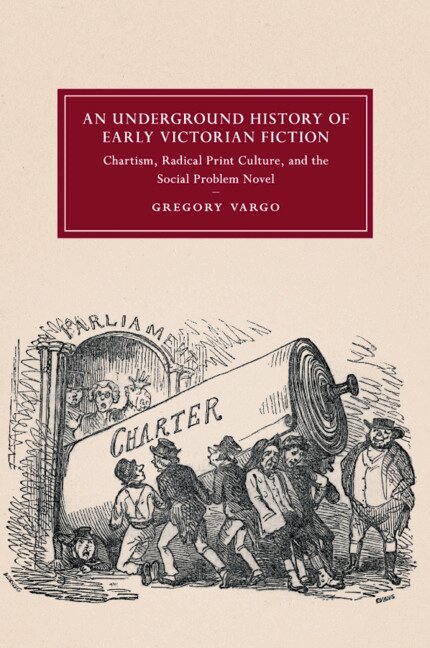
    An Underground History of Early Victorian Fiction

    Chartism, Radical Print Culture, and the Social Problem Novel

    AvGregory Vargo

    Häftad, Engelska, 2019

    Del 110 i serien Cambridge Studies in Nineteenth-Century Literature and Culture

    533 kr

    Beställningsvara. Skickas inom 10-15 vardagar. Fri frakt över 249 kr.

    Fler format och utgåvor

    Inbunden

    1 535 kr

    Beskrivning

    How does the literature and culture of early Victorian Britain look different if viewed from below? Exploring the interplay between canonical social problem novels and the journalism and fiction appearing in the periodical press associated with working-class protest movements, Gregory Vargo challenges long-held assumptions about the cultural separation between the 'two nations' of rich and poor in the Victorian era. The flourishing radical press was home to daring literary experiments that embraced themes including empire and economic inequality, helping to shape mainstream literature. Reconstructing social and institutional networks that connected middle-class writers to the world of working-class politics, this book reveals for the first time acknowledged and unacknowledged debts to the radical canon in the work of such authors as Charles Dickens, Thomas Carlyle, Harriet Martineau and Elizabeth Gaskell. What emerges is a new vision of Victorian social life, in which fierce debates and surprising exchanges spanned the class divide.

    Produktinformation

    • Utgivningsdatum:2019-02-28
    • Mått:150 x 228 x 15 mm
    • Vikt:450 g
    • Format:Häftad
    • Språk:Engelska
    • Serie:Cambridge Studies in Nineteenth-Century Literature and Culture
    • Antal sidor:300
    • Förlag:Cambridge University Press
    • ISBN:9781316647912

    Utforska kategorier

    • Litteraturvetenskap inom Skönlitteratur

    Mer om författaren

    Gregory Vargo is Assistant Professor at New York University. His published essays have appeared in Victorian Studies and Victorian Literature and Culture. He has held fellowships from the Fulbright program, the American Council of Learned Societies, and the Mrs Giles Whiting Foundation. With Rob Breton, he is the creator of Chartist Fiction, a bibliographic database of over 1000 reviews and stories that appeared in over twenty-five Chartist periodicals.

    Recensioner i media

    'Comparing revolutionary bloodshed with the gradual violence of famine in Ireland, Vargo notes, '[the Star] asks why one merits sensational prose little notice' … In thus stressing the Chartists' desire to make melodramatic language applicable to daily oppression as well as to outbursts of violence, Vargo instantly reminded me of Zola and other natural polemicists. Altogether, he sheds important light on the almost subvocalized conversations that precede those very public debates of the fin de siècle.' John Plotz, Review 19 (www.nbol-19.org)

    Innehållsförteckning

    • Introduction: can a social problem speak?; 1. Social inheritance in the New Poor Law debate: William Cobbett, Harriet Martineau, and the Royal Commission of Inquiry; 2. Books of (social) murder: melodrama and the slow violence of the market in anti-New Poor Law satire, fiction, and journalism; 3. A life in fragments: Thomas Cooper's Chartist Bildungsroman; 4. Questions from workers who read: education and self-formation in Chartist print culture and Elizabeth Gaskell's Mary Barton; 5. Revenge in the age of insurance: villainy in theatrical melodrama and Ernest Jones's fiction; 6. 'Outworks of the citadel of corruption': the Chartist Press reports the empire; 7. Two nations revisited: the refugee question in the People's Paper, Household Words and Charles Dickens's A Tale of Two Cities.