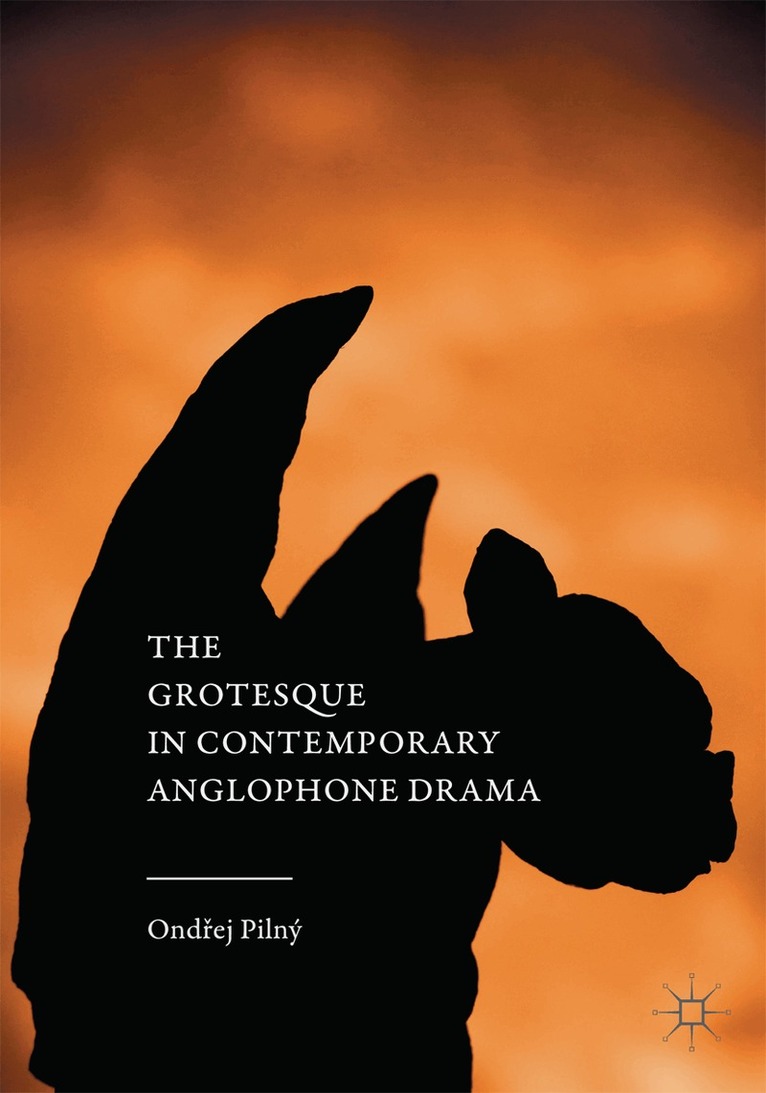
Grotesque in Contemporary Anglophone Drama
639 kr
Beställningsvara. Skickas inom 10-15 vardagar. Fri frakt över 249 kr.
Du är på sajten för privatpersoner.
639 kr
Beställningsvara. Skickas inom 10-15 vardagar. Fri frakt över 249 kr.
Ondřej Pilný is Associate Professor of English and Director of the Centre for Irish Studies at Charles University, Prague. He is the author of Irony and Identity in Modern Irish Drama and has edited collections of essays and journal issues on subjects ranging from Anglophone drama and Irish literature to cultural memory and structuralist theory. His translations include plays by J.M. Synge, Brian Friel, Martin McDonagh and Enda Walsh.
“Pilný’s book delivers an always perspicacious and often eloquent set of readings of plays that speak to a cultural moment of distress and crisis by summoning elements and strategies of the grotesque. In so doing, he enriches our understanding of the role of contemporary theatre to hold a distorted mirror, as’ twere, up to our distorted nature, and perhaps the clairvoyance that paradoxically emerges from that double warping is the true purpose of the grotesque.” (Ralf Remshardt, Journal of Contemporary Drama in English, Vol 6 (02), November, 2018)
Du är på sajten för privatpersoner.
639 kr
Beställningsvara. Skickas inom 10-15 vardagar. Fri frakt över 249 kr.
Ondřej Pilný is Associate Professor of English and Director of the Centre for Irish Studies at Charles University, Prague. He is the author of Irony and Identity in Modern Irish Drama and has edited collections of essays and journal issues on subjects ranging from Anglophone drama and Irish literature to cultural memory and structuralist theory. His translations include plays by J.M. Synge, Brian Friel, Martin McDonagh and Enda Walsh.
“Pilný’s book delivers an always perspicacious and often eloquent set of readings of plays that speak to a cultural moment of distress and crisis by summoning elements and strategies of the grotesque. In so doing, he enriches our understanding of the role of contemporary theatre to hold a distorted mirror, as’ twere, up to our distorted nature, and perhaps the clairvoyance that paradoxically emerges from that double warping is the true purpose of the grotesque.” (Ralf Remshardt, Journal of Contemporary Drama in English, Vol 6 (02), November, 2018)