• Fri frakt över 249 kr
  • •
  • Snabba leveranser
  • •
  • Billiga böcker
Kundservice

Du är på sajten för privatpersoner.

Företag, bibliotek eller offentlig verksamhet?

Du handlar på classic.bokus.com, där alla dina funktioner finns intakta.
Till classic.bokus.com
Bokus logotyp. Gå till startsidan.
  • Erbjudanden
  • Student
  • Topplistor
  • Barn & ungdom
  • Bokus Play
  • E-böcker
  • Ljudböcker
  • Pocketböcker
  • Spel & pussel

Upp till 25% på utvalda nyheter →

Sidfot

Mina sidor

    Hjälp

    • Kundservice
    • Vanliga frågor och svar
    • Frakt och leverans
    • Retur vid ångerrätt
    • Reklamera vara
    • Betalning
    • Köpvillkor
    • Allmänna villkor
    • Information om webbplatsens tillgänglighet

    Om Bokus

    • Om oss
    • Pressrum
    • För studenter
    • För företag
    • För bibliotek och offentlig verksamhet
    • För leverantörer
    • Hållbarhet

    Populärt

    • Aktuella erbjudanden
    • Presentkort
    • Studentlitteratur
    • Nya böcker
    • Topplistor
    • Signerade böcker
    • Engelska böcker

    Inspiration

    • Boktips
    • BookTok
    • Populära bokserier
    • Barnbokskaraktärer
    • Populära författare
    Logotyp för Bokus
    Följ oss på Facebook (extern länk)Följ oss på Instagram (extern länk)Följ oss på YouTube (extern länk)Följ oss på TikTok (extern länk)
    bokus @ CookiesAnpassa cookiesIntegritetspolicyKöpvillkor
    Till Citymail hemsida (extern länk)Till Budbee hemsida (extern länk)Till Postnord hemsida (extern länk)Till Schenker hemsida (extern länk)Till Early Bird hemsida (extern länk)Till Walleys hemsida (extern länk)
    1. Filosofi och religion
    2. Filosofi
    3. Filosofiska discipliner

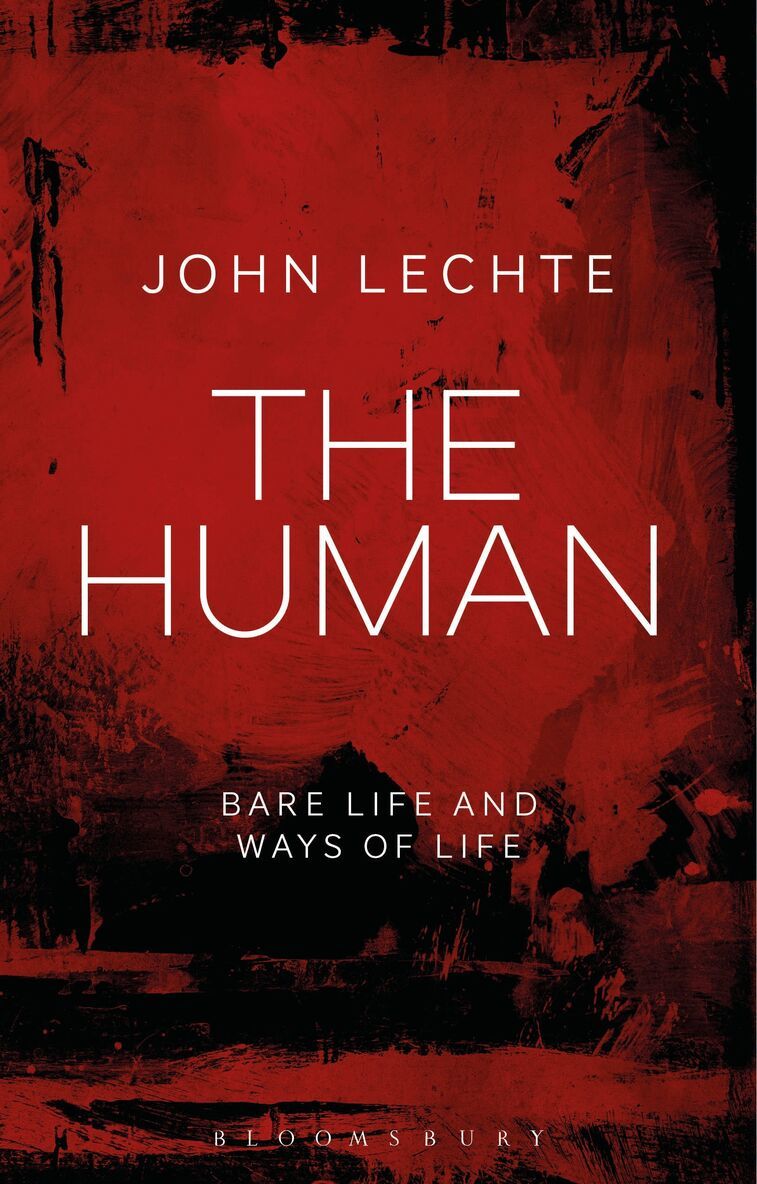
    Human

    Bare Life and Ways of Life

    AvJohn Lechte

    Inbunden, Engelska, 2018

    1 812 kr

    Beställningsvara. Skickas inom 10-15 vardagar. Fri frakt över 249 kr.

    Fler format och utgåvor

    E-bok

    528 kr

    E-bok

    528 kr

    Häftad

    490 kr

    Beskrivning

    Why is it important to consider the human today? Exploring this question John Lechte takes inspiration from the interplay of two of Giorgio Agamben’s concepts: ‘ways of life’ and ‘bare life’.Stateless people, those who do not have a political community, such as asylum seekers and refugees, are no less human. However the European tradition, represented most clearly in Hannah Arendt’s thinking of the opposition between the oikos, as the satisfaction of basic needs, and the polis, as the realm of freedom and glory, proposes the opposite of this. Arendt’s famous phrase, ‘the right to have rights’, means that freedom and full human potential can only be realised in the context of civil society; in short, that only citizens can be fully human. Because Arendt’s view is so influential, yet often not acknowledged, it is necessary to undertake a full investigation of the nature and meaning of the human to establish that it is not reducible to the citizen, but is always characterised by a ‘way of life’ – life mediated by language. The human is never reducible to ‘bare life’ – a life with no other significance than physical survival. The implications of ‘bare life’ are investigated through important themes in relation to the human, such as: freedom and necessity, the animal, animality as nature, inclusion and exclusion in politics, the sacred, death and dying, technics and nature, the Same and the Other, the everyday as extraordinary. Journeying through Agamben, Arendt, Bataille, Derrida, Hegel, Heidegger, Husserl, Levinas, Schelling, Simondon, and Stiegler, this is a profound search to reveal the truly human.

    Produktinformation

    • Utgivningsdatum:2018-06-14
    • Mått:156 x 234 x 19 mm
    • Vikt:558 g
    • Format:Inbunden
    • Språk:Engelska
    • Antal sidor:272
    • Förlag:Bloomsbury Publishing PLC
    • ISBN:9781350028135

    Utforska kategorier

    • Filosofiska discipliner inom Filosofi och religion

    Mer om författaren

    John Lechte is Professor of Sociology at Macquarie University, Sydney, Australia. He has published widely on French thought, particularly the work of Julia Kristeva. His most recent books are: Genealogy and Ontology of the Western Image and its Digital Future (2012) and he co-authored Agamben and the Politics of Human Rights: Statelessness, Images, Violence (2013). He has also published key essays on the thought of Georges Bataille, Julia Kristeva, Giorgio Agamben and Hannah Arendt, as well as on Derrida.

    Recensioner i media

    How can it be possible – as we so often see – for human life to be excluded, exploited, oppressed and, ultimately, destroyed in the very name of humanity? This is the crucial question that Lechte tackles in this philosophical tour de force. The domains of politics, ethics, economics, law and rights are all founded on the idea of the human and are meant to serve this end. Yet, this idea of humanity conceals a distinction, which has been with us since the Greeks, between human life as mere biological necessity, and human life as a ‘way of life’ – a division that allows certain ways of living to be denigrated. Lechte’s bold and penetrating analysis forces us to question this assumption and, in doing so, disrupts the familiar categories of the Western political and philosophical tradition. Taking up from where Agamben left off, Lechte proposes a radical new understanding of the human as transcendent, as that which cannot be reduced to bare life. In doing so, he presents a fundamental challenge to the economic and political rationalities that today aim to objectify and control us.

    Innehållsförteckning

    • Introduction1. The Condition of Being Human 2. The Theory of the Polis and the Political in Western Philosophy: Implications for the Human3. How the Ordinary is Extraordinary: Arendt and Heidegger on the Polis 4. Approaching the Human and Freedom 5. The Human and the Animal: Bare Life and Transcendence 6. The Human and the Sacred in Bataille’s Writing 7. The Human and/at the Moment of Death: Index and Image 8. The Human as Technics, Technicity, Technology and ‘Way of Life’ 9. Levinas on the Absolute Other as the Human 10. Life as Way of Life – As Acting BibliographyIndex