• Fri frakt över 249 kr
  • •
  • Snabba leveranser
  • •
  • Billiga böcker
Kundservice

Du är på sajten för privatpersoner.

Företag, bibliotek eller offentlig verksamhet?

Du handlar på classic.bokus.com, där alla dina funktioner finns intakta.
Till classic.bokus.com
Bokus logotyp. Gå till startsidan.
  • Erbjudanden
  • Nyheter
  • Student
  • Topplistor
  • Barn & ungdom
  • Bokus Play
  • E-böcker
  • Pocketböcker
  • Spel & pussel

10% rabatt på allt med kod NYSTART10 →

Sidfot

Mina sidor

    Hjälp

    • Kundservice
    • Vanliga frågor och svar
    • Frakt och leverans
    • Retur vid ångerrätt
    • Reklamera vara
    • Betalning
    • Köpvillkor
    • Allmänna villkor
    • Information om webbplatsens tillgänglighet

    Om Bokus

    • Om oss
    • Pressrum
    • För studenter
    • För företag
    • För bibliotek och offentlig verksamhet
    • För leverantörer
    • Hållbarhet

    Populärt

    • Aktuella erbjudanden
    • Presentkort
    • Studentlitteratur
    • Nya böcker
    • Topplistor
    • Signerade böcker
    • Engelska böcker

    Inspiration

    • Boktips
    • BookTok
    • Populära bokserier
    • Barnbokskaraktärer
    • Populära författare
    Logotyp för Bokus
    Följ oss på Facebook (extern länk)Följ oss på Instagram (extern länk)Följ oss på YouTube (extern länk)Följ oss på TikTok (extern länk)
    bokus @ CookiesAnpassa cookiesIntegritetspolicyKöpvillkor
    Till Citymail hemsida (extern länk)Till Budbee hemsida (extern länk)Till Postnord hemsida (extern länk)Till Schenker hemsida (extern länk)Till Early Bird hemsida (extern länk)Till Walleys hemsida (extern länk)
    1. Skönlitteratur
    2. Litteraturvetenskap
    3. Litteraturvetenskap

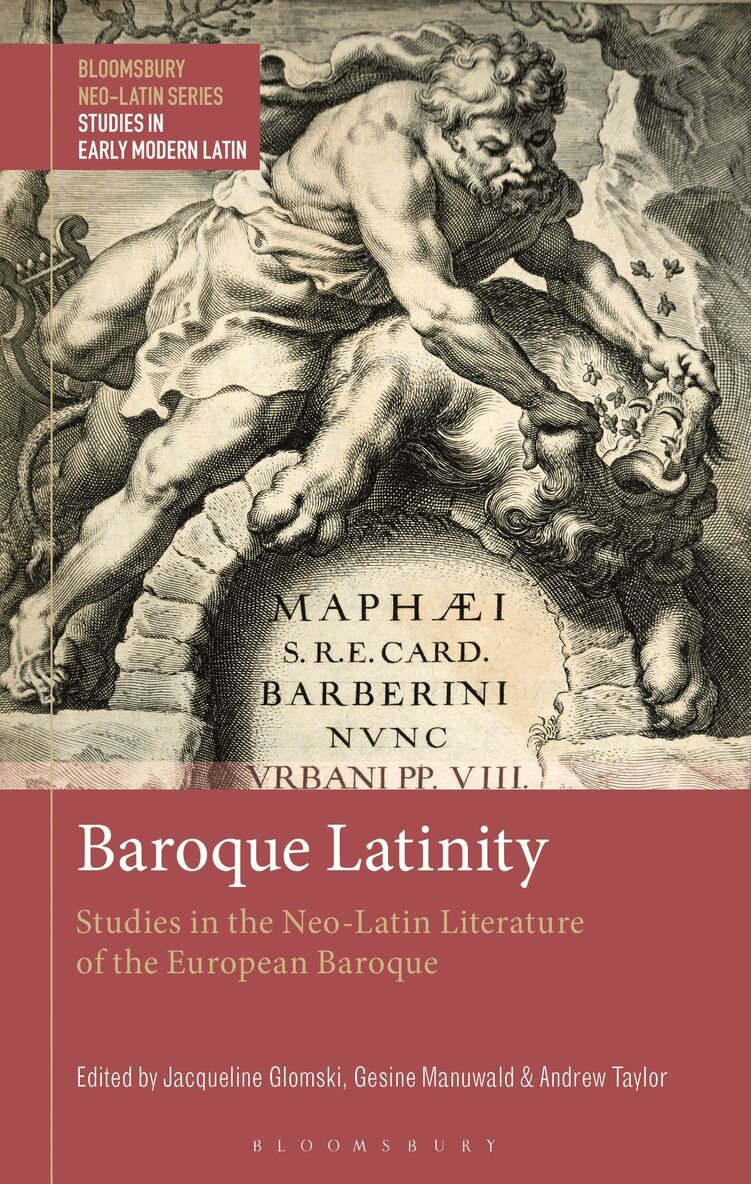
    Baroque Latinity

    Studies in the Neo-Latin Literature of the European Baroque

    AvJacqueline Glomski,Gesine Manuwald

    Häftad, Engelska, 2025

    Del i serien Bloomsbury Neo-Latin Series: Studies in Early Modern Latin

    471 kr

    Beställningsvara. Skickas inom 10-15 vardagar. Fri frakt över 249 kr.

    Beskrivning

    This volume addresses the idea of the Baroque in European literature in Latin. With contributions by scholars from various disciplines and countries, and by looking at a range of texts from across Europe, the volume offers case studies to deepen scholarly understanding of this important literary phenomenon and inspire future research.A key aim of the volume is to address the distinctiveness of these texts by interrogating the usefulness and specificity of the term ‘Baroque’, especially in relation to the classical rules it transgresses to produce effects of grandeur, richness, and exuberance in a range of secular and sacred arts (e.g. music, architecture, painting), as well as various forms of literature (e.g. prose, poetry, drama). The contributors consider how and why Latin writing mutated from earlier humanist paradigms, thus exploring how ideas of ‘early modern’ and ‘Baroque’ are related, and examine the interplay of the theory and practice of the ‘Baroque’, including its debts to and deviations from ancient models, and its limits and limitations.

    Produktinformation

    • Utgivningsdatum:2025-04-24
    • Mått:154 x 232 x 14 mm
    • Vikt:360 g
    • Format:Häftad
    • Språk:Engelska
    • Serie:Bloomsbury Neo-Latin Series: Studies in Early Modern Latin
    • Antal sidor:224
    • Förlag:Bloomsbury Publishing PLC
    • ISBN:9781350323476

    Utforska kategorier

    • Litteraturvetenskap inom Skönlitteratur

    Mer om författaren

    Jacqueline Glomski is Honorary Senior Research Fellow at University College London, UK, Vice-President of the Society for Neo-Latin Studies (SNLS), and a fellow of the Royal Historical Society. She has co-edited the collected volumes Seventeenth-Century Libraries: Problems and Perspectives (forthcoming), Seventeenth-Century Fiction: Text and Transmission (2016), and Acta Conventus Neo-Latini Monasteriensis: Proceedings of the Fifteenth International Congress of Neo-Latin Studies (2015).Andrew Taylor is Senior Lecturer, Fellow and Director of Studies in English at Churchill College, University of Cambridge, UK. He has published widely on Renaissance literature and has edited Neo-Latin and Translation in the Renaissance (2014), The Early Modern Cultures of Neo-Latin Drama (2013), and Neo-Latin and the Pastoral (2006), the latter two both with Philip Ford.Gesine Manuwald is Professor of Latin at University College London, UK, and President of the Society for Neo-Latin Studies (SNLS). She has published a number of articles on early modern Latin literature and edited the collected volume Neo-Latin Poetry in the British Isles (Bloomsbury, 2012) with Luke Houghton.

    Recensioner i media

    I have nothing but praise for this extremely fine collection of studies on various aspects of the Baroque. It is a book that fills a major gap in the literature

    Innehållsförteckning

    • List of contributorsPreface1 Introduction (Gesine Manuwald, UCL, UK and Andrew Taylor, Churchill College, Cambridge, UK)2 The sixteenth century’s revolution in rhetoric and its impact on the Baroque (Lucy R. Nicholas, Warburg Institute, UK)3 The Greekness of Neo-Latin wit: Hermogenes and ingenuity in Julius Caesar Scaliger’s Poetices libri septem (Javiera Lorenzini Raty, KCL, UK)4 The triumph of the saint: St Casimir Jagiellon and the militant motifs in Baroque hagiographical poetry (Patryk Ryczkowski, Universität Innsbruck, Austria)5 Innovation and fusion: Sarbiewski’s theory of Baroque literary style (Tomas Riklius, Vilnius University, Lithuania)6 Christ’s blood or Mary’s milk? ‘Clarus Bonarscius’, Baroque piety and English Protestant outrage (Alison Shell, UCL, UK)7 An example of Baroque Latinity through the inclusion of ancient literary models into modern thought: Claude-Barthélemy Morisot’s Peruviana (1644) (Valérie Boutrois-Wampfler, University of Reims Champagne-Ardenne, France)8 Maffeo Barberini’s poems for the Farnese family in early Baroque Rome (Stephen J. Harrison, University of Oxford, UK)9 Mannerisms in Latin Baroque poetry by Paul Fleming (1609–40) and Georg Gloger (1603–31) (Beate Hintzen, Universität Bonn, Germany)10 What makes a Neo-Latin tragedy Baroque? (Jan Bloemendal, Royal Netherlands Academy/Huygens Institute, Netherlands and James Parente, University of Minnesota, USA)11 Asses at the lyre: Latin as musical language and the benefits of exclusion (Eric Bianchi, Fordham University, USA)12 Latin motet texts in seventeenth-century Rome and the Exercitia spiritualia of St Ignatius of Loyola (Adrian Horsewood, Royal Birmingham Conservatoire, UK)Index