• Fri frakt över 249 kr
  • •
  • Snabba leveranser
  • •
  • Billiga böcker
Kundservice

Du är på sajten för privatpersoner.

Företag, bibliotek eller offentlig verksamhet?

Du handlar på classic.bokus.com, där alla dina funktioner finns intakta.
Till classic.bokus.com
Bokus logotyp. Gå till startsidan.
  • Erbjudanden
  • Nyheter
  • Student
  • Topplistor
  • Barn & ungdom
  • Bokus Play
  • E-böcker
  • Pocketböcker
  • Spel & pussel

Må bättre, för mindre! Upp till 50% rabatt på hälsoböcker

Sidfot

Mina sidor

    Hjälp

    • Kundservice
    • Vanliga frågor och svar
    • Frakt och leverans
    • Retur vid ångerrätt
    • Reklamera vara
    • Betalning
    • Köpvillkor
    • Allmänna villkor
    • Information om webbplatsens tillgänglighet

    Om Bokus

    • Om oss
    • Pressrum
    • För studenter
    • För företag
    • För bibliotek och offentlig verksamhet
    • För leverantörer
    • Hållbarhet

    Populärt

    • Aktuella erbjudanden
    • Presentkort
    • Studentlitteratur
    • Nya böcker
    • Topplistor
    • Signerade böcker
    • Engelska böcker

    Inspiration

    • Boktips
    • BookTok
    • Populära bokserier
    • Barnbokskaraktärer
    • Populära författare
    Logotyp för Bokus
    Följ oss på Facebook (extern länk)Följ oss på Instagram (extern länk)Följ oss på YouTube (extern länk)Följ oss på TikTok (extern länk)
    bokus @ CookiesAnpassa cookiesIntegritetspolicyKöpvillkor
    Till Citymail hemsida (extern länk)Till Budbee hemsida (extern länk)Till Postnord hemsida (extern länk)Till Schenker hemsida (extern länk)Till Early Bird hemsida (extern länk)Till Walleys hemsida (extern länk)
    1. Kultur
    2. Scenkonst och film
    3. Teater

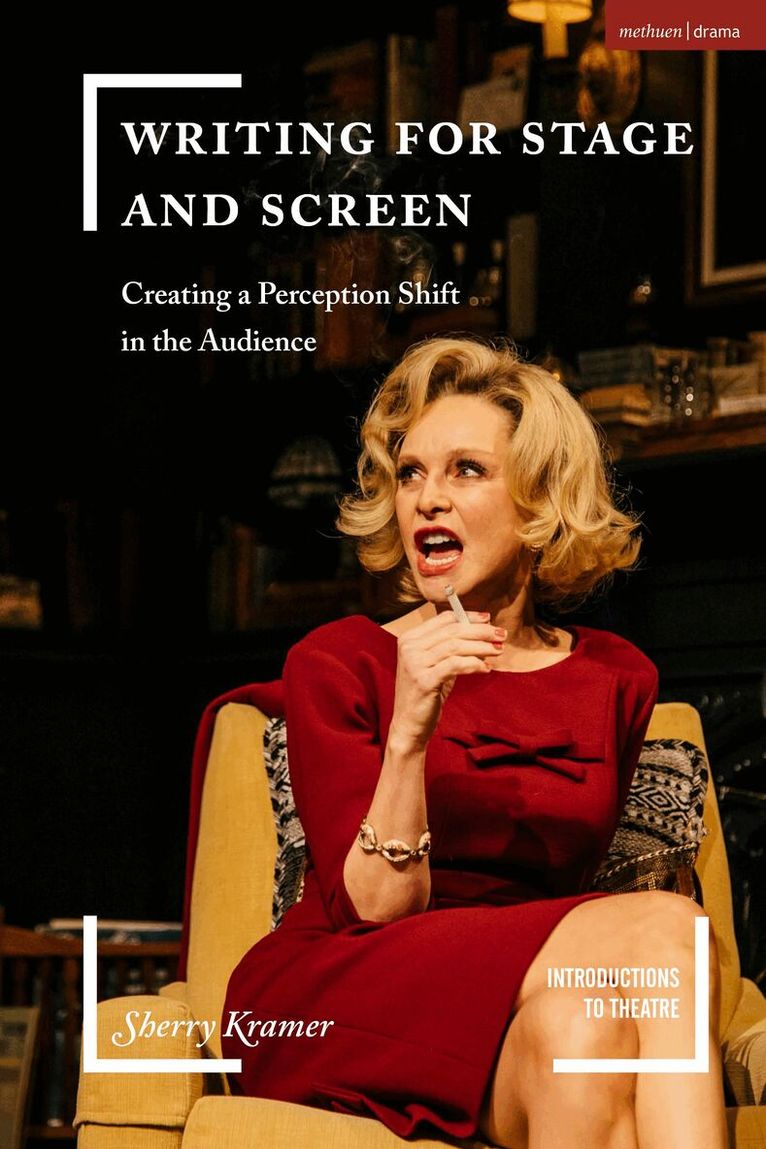
    Writing for Stage and Screen

    Creating a Perception Shift in the Audience

    AvSherry Kramer,Jim Volz

    Häftad, Engelska, 2023

    Del i serien Introductions to Theatre

    322 kr

    Beställningsvara. Skickas inom 10-15 vardagar. Fri frakt över 249 kr.

    Fler format och utgåvor

    Inbunden

    1 008 kr

    E-bok

    342 kr

    E-bok

    342 kr

    Beskrivning

    " Reading and digesting the lessons in this book can be of greater value to an aspiring dramatist than years in an MFA program. Whether you are writing for the stage, screen or audio, this book is an invaluable teacher and guide to have by your side throughout the development and revision process."Frances Ya-Chu Cowhig"This book does what no other playwriting book in my experience has done, it offers a new way of seeing and conceiving how theatre makes meaning and carries emotional impact in performance."Suzan Zeder, Professor Emerita and former Head Of Playwriting at University of Texas at Austin, USACombining a step-by-step analysis of the technique of writing for stage and screen with how the mystery, poetry, and emotional momentum is achieved for the audience, Sherry Kramer offers an empowering, original guide for emerging and established writers.In this structured look at the way audience members progress through a work in real time, Sherry Kramer uses plain-spoken vocabulary to help you discover how to make work that will mean more to your audiences. By using examples drawn from plays, film, and streaming series, ranging from A Streetcar Named Desire to Fleabag to Pirates of the Caribbean, this study makes its concepts accessible to a wide range of artists who work in timebound art. The book also features multiple exercises, developed with MFA writers in The Iowa Playwrights Workshop and The Michener Center for Writers, where Kramer taught for the past 25 years, which provide entrance points to help you consider and create your work.

    Produktinformation

    • Utgivningsdatum:2023-07-13
    • Mått:156 x 232 x 18 mm
    • Vikt:380 g
    • Format:Häftad
    • Språk:Engelska
    • Serie:Introductions to Theatre
    • Antal sidor:240
    • Förlag:Bloomsbury Publishing PLC
    • ISBN:9781350338265

    Utforska kategorier

    • Teater inom Kultur
    • Kreativt skrivande inom Språk och ordböcker

    Mer om författaren

    Sherry Kramer is a playwright who has won numerous awards for her work and has written more than thirty plays, including David’s RedHaired Death, When Something Wonderful Ends and The Wall of Water. She teaches playwriting at Bennington College, USA, and taught regularly in the MFA programs of The Michener Center for Writers UT Austin, TX, and the Iowa Playwrights’ Workshop, where she was previously head of the workshop. She was the first national member of New Dramatists.

    Recensioner i media

    It's hard for me to think of anyone who has shaped the way I think about playwriting more than Sherry Kramer. While most of my education as a playwright was awash in silly rules surrounding plot mechanics, Sherry showed me how plays are organized in more meaningful and fundamental ways. While others taught me the structure of playwriting, she taught me the poetry of it.

    Innehållsförteckning

    • List of Illustrations1. Works of Art Teach Us How to Read ThemFirst We Must Find a Way to See The World in Front of Us There is an Old Saying in the Theatre: The First 20 Minutes Are FreeA Closer Look at The First 20 Minutes Some Advice About the First 20 Minutes ToneThere is Always a ClockEXERCISE: Spend Some Time With Structured TimeAttention2. The Perception ShiftInsight: The Eureka MomentAttention and InsightThe Power of a Moment’s Newness How Newness Drives InsightA Joke is a Small PlayThe Perception Shift in Three Plays: Who’s Afraid of Virginia Woolf?, The Beauty Queen of Leenane, A Streetcar Named DesireEXERCISE: Experience a Small Perception Shift in the Comfort of Your Own Home Hiding in Plain Sight3. Theatre Is a Rhyme For Life Certainty, Meaning, and MaybeDramatic DoublenessThe Bone ViolinThe Bone Violin: A Fugue for Five Actors EXERCISE: Track Doubling in The Bone Violin Doubleness is Our Most Elegant ToolThe Three Surfaces of Doubleness in Three Plays : A Streetcar Named Desire, Betrayal, The Beauty Queen of Leenane SystemsEXERCISE: PleatsSystems and ThemeEXERCISE: Tracking Systems In A Streetcar Named Desire The Ends of Plays Tend to Mirror Their BeginningsEmpathy and Doubleness4. Story and PlotSequence = MeaningEXERCISE: Order Makes Meaning BreadcrumbsStory Is Another Word for Time How the Plot Organizes Itself Outside of StoryFuturityThe Double Track of Time (Non-linear plays)Plot and Story are Two Different ThingsAnti-ClimaxEXERCISE: How Your Plot Uses Story ConveniencesTo Sum Up Story and PlotSo Here We are, Ready to Talk About the Enchantment That Is Story Vertical and HorizontalVertical vs. HorizontalEXERCISE: Draw Two Sets5. Choice and ConsequenceWhy Choice Matters to the Audience The God Who Loves You - Carl DennisEXERCISE: Tracking Character DesireThe And Then, The So Then, and The What If EXERCISE: The And Then, The So ThenRepeatabilityWRITING EXERCISE: A Five Minute Scene About ChoiceChoice vs. RevealWRITING EXERCISE: Adapt A Family StoryAlternative HistoryWRITING EXERCISE: An Alternative History PlayChoice and TragedyA Tragedy is like Going Down a River There are Two Forks of the River The Sun has to ShineBreaking BadRight vs. RightTragedy is the Art Form of ChangeTragedy is Made Out of HopeHope as StrategyWRITING EXERCISE: The NodesTragedy is a Clash of ValuesWhat is it Worth? vs. What does it Mean? In-Itself Value and the Evolution of the Art Form Tragedy Is Not Simply SadWhy Do We Take Pleasure in TragedyCharacters Don’t Change No Matter How Much They Want To. No Matter How Much We Hope They Will. In Comedy, People ChangeIt’s a Form of Magic The Magic of Changing Without ChangingEXERCISE: Find Comedies Where People Change But it Feels Like Someone Changes in Plays That Aren’t Comedies. Are You Sure Someone Doesn’t Change? But If People Can’t Change How Do We Change?WRITING EXERCISE: Write Three Monologues About the Same Choice from Three Different Character’s Point of View6. In Retrospect, Inevitable In Retrospect Inevitable OutcomesNot In Retrospect Inevitable OutcomesEXERCISE: Write the Last Moment of Your Play As a SonnetPointers Pointers are Lies that Tell the TruthThe Attributes of Pointers: Systems and Pointers, Forwards and PointersHow Pointers Announce ThemselvesHow to Write Pointers On Purpose The Atomic Throw Is an Uncertain KitchenForeshadowing and MisdirectionTitlesEXERCISE: Finding Your Title Running GagsA Play Tells the Truth, But It Enjoys Using a Lie To Tell ItEXERCISE: LiesSpoilersEXERCISE: Identifying PointersEXERCISE: Identify Pointers In Your Own Play 7. Convergence It’s Never a Single MomentEXERCISE: The End and The BeginningIs Saying That Convergence is Everywhere in A Great Work of Timebound Art The Same Thing as Saying That a Great Work of Timebound Art is All Convergence?To Be Human Is To Confuse a Satisfying Story With a Meaningful OneEXERCISE: Noticing Perception ShiftsThe TurnThe PrestigeReveal and ChoiceEnlarging the Idea of Dramatic EventEXERCISE: The Dramatic FutureThe Difference Between What Happens on Stage and What Happens in the AudienceEXERCISE: The Last 45 Seconds Again. Endings as Different GenresWhy a Perception Shift Makes Things Weightless How Coincidence is a Form of RhymeOpen EndingsMysteries are Almost All Writers’ Favorite Genre for a ReasonA Small Play To Fill Us With Wonder Structure is Just What Happens in the EndEXERCISE: Adapt the Climax/Convergence of a Song Hope is at the Heart of Everything in the TheatreEXERCISE: Tracking Hope Once Again: The Duck RabbitIndex