• Fri frakt över 249 kr
  • •
  • Snabba leveranser
  • •
  • Billiga böcker
Kundservice

Du är på sajten för privatpersoner.

Företag, bibliotek eller offentlig verksamhet?

Du handlar på classic.bokus.com, där alla dina funktioner finns intakta.
Till classic.bokus.com
Bokus logotyp. Gå till startsidan.
  • Erbjudanden
  • Nyheter
  • Student
  • Topplistor
  • Barn & ungdom
  • Bokus Play
  • E-böcker
  • Pocketböcker
  • Spel & pussel

10% rabatt på allt med kod NYSTART10 →

Sidfot

Mina sidor

    Hjälp

    • Kundservice
    • Vanliga frågor och svar
    • Frakt och leverans
    • Retur vid ångerrätt
    • Reklamera vara
    • Betalning
    • Köpvillkor
    • Allmänna villkor
    • Information om webbplatsens tillgänglighet

    Om Bokus

    • Om oss
    • Pressrum
    • För studenter
    • För företag
    • För bibliotek och offentlig verksamhet
    • För leverantörer
    • Hållbarhet

    Populärt

    • Aktuella erbjudanden
    • Presentkort
    • Studentlitteratur
    • Nya böcker
    • Topplistor
    • Signerade böcker
    • Engelska böcker

    Inspiration

    • Boktips
    • BookTok
    • Populära bokserier
    • Barnbokskaraktärer
    • Populära författare
    Logotyp för Bokus
    Följ oss på Facebook (extern länk)Följ oss på Instagram (extern länk)Följ oss på YouTube (extern länk)Följ oss på TikTok (extern länk)
    bokus @ CookiesAnpassa cookiesIntegritetspolicyKöpvillkor
    Till Citymail hemsida (extern länk)Till Budbee hemsida (extern länk)Till Postnord hemsida (extern länk)Till Schenker hemsida (extern länk)Till Early Bird hemsida (extern länk)Till Walleys hemsida (extern länk)
    1. Medicin
    2. Klinisk medicin och internmedicin
    3. Sjukdomar och rubbningar
    4. Onkologi

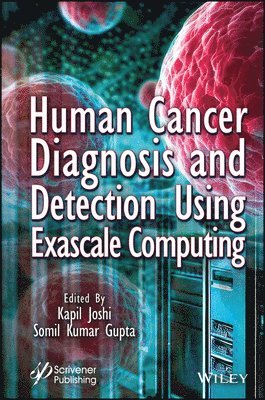
    Human Cancer Diagnosis and Detection Using Exascale Computing

    AvKapil Joshi,Somil Kumar Gupta

    Inbunden, Engelska, 2024

    2 135 kr

    Beställningsvara. Skickas inom 5-8 vardagar. Fri frakt över 249 kr.

    Beskrivning

    Human Cancer Diagnosis and Detection Using Exascale Computing The book provides an in-depth exploration of how high-performance computing, particularly exascale computing, can be used to revolutionize cancer diagnosis and detection; it also serves as a bridge between the worlds of computational science and clinical oncology. Exascale computing has the potential to increase our ability in terms of computation to develop efficient methods for a better healthcare system. This technology promises to revolutionize cancer diagnosis and detection, ushering in an era of unprecedented precision, speed, and efficiency. The fusion of exascale computing with the field of oncology has the potential to redefine the boundaries of what is possible in the fight against cancer. The book is a comprehensive exploration of this transformative unification of science, medicine, and technology. It delves deeply into the realm of exascale computing and its profound implications for cancer research and patient care. The 18 chapters are authored by experts from diverse fields who have dedicated their careers to pushing the boundaries of what is achievable in the realm of cancer diagnosis and detection. The chapters cover a wide range of topics, from the fundamentals of exascale computing and its application to cancer genomics to the development of advanced imaging techniques and machine learning algorithms. Explored is the integration of data analytics, artificial intelligence, and high-performance computing to move cancer research to the next phase and support the creation of novel medical tools and technology for the detection and diagnosis of cancer. Audience This book has a wide audience from both computer sciences (information technology, computer vision, artificial intelligence, software engineering, applied mathematics) and the medical field (biomedical engineering, bioinformatics, oncology). Researchers, practitioners and students will find this groundbreaking book novel and very useful.

    Produktinformation

    • Utgivningsdatum:2024-02-23
    • Mått:156 x 232 x 24 mm
    • Vikt:780 g
    • Format:Inbunden
    • Språk:Engelska
    • Antal sidor:336
    • Förlag:John Wiley & Sons Inc
    • ISBN:9781394197675

    Utforska kategorier

    • Onkologi inom Medicin

    Mer om författaren

    Kapil Joshi is an assistant professor in the Computer Science & Engineering Department, Uttaranchal Institute of Technology in Dehradun, Uttarakhand, India. Joshi completed a PhD on the topic of Image Quality Enhancement using Fusion Techniques. He has 8 years of academic experience in his areas of interest in Operating systems, Computer Networks, Web Technology, Data Structure, and Java. He has published various patents, research papers, and two books. In 2021, he was awarded the 'Best Young Researcher' Award in Global Education and Corporate Leadership received by Life Way Tech India Pvt. Ltd.Somil Kumar Gupta is an assistant professor in the School of Computing, DIT University, Dehradun, Uttarakhand, India. He has fourteen years of experience in academics and research. He has published many research articles in reputed national and international conferences and journals. He has published more than 16 patents in the Indian Patent Office.

    Innehållsförteckning

    • Preface xiii1 Evaluating the Impact of Healthcare 4.0 on the Performance of Hospitals 1Pramod Kumar, Nitu Maurya, Keerthiraj, Somanchi Hari Krishna, Geetha Manoharan and Anupama Bharti1.1 Introduction 21.2 Literature Review 41.3 Methodology 61.3.1 Selection of the Sample and Characterization 61.3.2 Creation of a Data-Gathering Tool and Measures 71.3.3 Inspection of the Conceptions’ Reliability and Validity 81.3.4 Data Evaluation 81.4 Result and Discussion 91.5 Conclusion 11References 122 Human Breast Cancer Classification Employing the Machine Learning Ensemble 19Sreenivas Mekala, S. Srinivasulu Raju, M. Gomathi, Naga Venkateshwara Rao K., Kothandaraman D. and Saurabh Sharma2.1 Introduction 202.1.1 Breast Cancer Symptoms and Signs 202.1.2 Breast Cancer Risk Factors 212.1.3 Disease Prediction Using Machine Learning 222.2 Literature Review 222.3 Methodology 242.3.1 Bayesian Network 242.3.2 Radial Basis Function 252.3.3 Ensemble Learning 262.3.4 The Suggested Algorithm 272.4 Results and Discussion 282.5 Conclusion 31References 313 Multi-Objective Differential Development Using DNN for Multimodality Medical Image Fusion 35M. Ranjith Kumar, Abhishek Dondapati, Dilip Kumar Sharma, Prakash Pareek, Rajchandar K. and S. Shalini3.1 Introduction 363.2 Literature Review 373.3 Methodology 383.3.1 Non-Subsampled Contourlet Transform 403.3.2 Deep Xception Mode Feature Extraction 403.3.3 Differential Evolutions with Several Objectives for Feature Selection 413.3.4 Fusion of High-Frequency Bands 413.4 Result and Discussion 413.4.1 Visual Evaluation 413.4.2 Quantitative Research 433.5 Conclusion 47References 474 Multimodal Deep Learning Analysis for Biomedical Data Fusion 53Divyanshu Sinha, B. Jogeswara Rao, D. Khalandar Basha, Parvathapuram Pavan Kumar, N. Shilpa and Saurabh Sharma4.1 Introduction 544.2 Literature Review 564.3 Methodology 584.3.1 Early Fusion 594.3.2 Intermediate Fusion 604.3.3 Late Fusion 624.4 Results and Discussion 624.5 Conclusion 64References 655 Developing Robot-Based Neurorehabilitation Exercises Using a Teaching–Training Process 71W. Vinu, Sonali Vyas, A. Chandrashekhar, T. Ch. Anil Kumar, T. Raghu and Mohit Tiwari5.1 Introduction 725.1.1 Research Gap 745.1.2 Research Aim 745.2 Literature Review 745.3 Research Methodology 775.4 Results 785.5 Conclusion 815.6 Future Research Directions 82References 836 Investigation on Introduction to Heterogeneous Exascale Computing in the Medical Field 87M. Pyingkodi, Raju Shanmugam, Dilip Kumar Sharma, Deepesh Lall, S. Deepan and B. Dasu6.1 Introduction 886.1.1 Research Gap 896.2 Literature Review 896.3 Research Methodology 926.4 Results and Discussion 946.5 Conclusion 966.6 Future Research Direction 96References 977 Adoption of Cloud Computing in the Healthcare Field Using the SEM Approach 101R. Chithambaramani, C. Balakumar, Dilip Kumar Sharma, Keyur Patel, Bhavana Jamalpur and M. R. Arun7.1 Introduction 1027.1.1 Research Gap 1037.1.2 Research Aim 1037.2 Literature Review 1047.3 Research Methodology 1067.3.1 Research Hypothesis 1077.3.2 Data Analysis 1077.4 Results and Discussion 1077.5 Implications 1107.6 Conclusion 1107.7 Future Research Directions 111References 1128 Chest X-Ray Analysis for COVID-19 Diagnosis Using an Exascale Computation and Machine Learning Framework 115M. Dhinakaran, S. Deivasigamani, Saikat Kar, Nishakar Kankalla, V. Malathy and Saurabh Sharma8.1 Introduction 1168.2 Literature Review 1178.3 Research Methodology 1198.4 Analysis and Discussion 1208.5 Conclusion 130References 1319 3D-Printed Human Organ Designs with Tissue Physical Characteristics and Embedded Sensors 135A. Chandrashekhar, R. Raffik, R. Sridevi, M. Sindhu, Kodela Rajkumar and Tarun Jaiswal9.1 Introduction 1369.2 Literature Review 1379.3 Methodology 1399.4 Analysis and Discussion 1409.5 Conclusion 149References 15010 Fast Computing Network Infrastructure for Healthcare Systems Based on 6G Future Perspective 153Ranjeet Yadav, S. L. Prathapa Reddy, Akshay Upmanyu, Ravi Kumar Sanapala, V. Malathy and Umakant Bhaskar Gohatre10.1 Introduction 15410.2 Literature Review 15510.3 Research Methodology 15710.4 Analysis and Discussion 15810.5 Conclusion 167References 16811 Analysis of Multimodality Fusion of Medical Image Segmentation Employing Deep Learning 171G. Santhakumar, Dattatray G. Takale, Swati Tyagi, Raju Anitha, Mohit Tiwari and Joshuva Arockia Dhanraj11.1 Introduction 17211.1.1 Research Gap 17411.1.2 Research Aim 17411.2 Literature Review 17411.3 Research Methodology 17611.4 Results and Discussion 17711.5 Conclusion 180References 18112 New Perspectives, Challenges, and Advances in Data Fusion in Neuroimaging 185Pedada Sujata, Dattatray G. Takale, Swati Tyagi, Saniya Bhalerao, Mohit Tiwari and Joshuva Arockia Dhanraj12.1 Introduction 18612.1.1 Research Gap 18812.2 Literature Review 18812.3 Research Methodology 19012.3.1 Human Brain Temporal and Spatial Data Mining Using FOCA and Data Fusion 19012.3.2 Construction of the Multimodal Neuroimaging Data Fusion 19012.4 Results and Discussion 19112.4.1 EEG–fMRI Shared Multimodal Simulation Evaluation 19212.4.2 Implementation of Multimodal Neuroimaging Data Fusion 19212.5 Challenges 19412.6 Conclusion 195References 19613 The Potential of Cloud Computing in Medical Big Data Processing Systems 199A. Mallareddy, M. Jaiganesh, Sophia Navis Mary, Manikandan K., Umakant Bhaskar Gohatre and Joshuva Arockia Dhanraj13.1 Introduction 20013.2 Literature Review 20213.3 Materials and Method 20313.4 Result and Discussion 20613.5 Conclusion 210References 21114 Deep Learning (DL) on Exascale Computing to Speed Up Cancer Investigation 215D. Rubidha Devi, S. Ashwini, Samreen Rizvi, P. Venkata Hari Prasad, Mohit Tiwari and Joshuva Arockia Dhanraj14.1 Introduction 21614.2 Literature Review 21714.3 Research Methodology 21914.4 Analysis and Discussion 22014.5 Conclusion 223References 22415 Current Breakthroughs and Future Perspectives in Surgery Based on AI-Based Computing Vision 227Suneet Gupta, Madhu Kumar Vanteru, Sanjeevkumar Angadi, Manikandan K., Mohit Tiwari and Joshuva Arockia Dhanraj15.1 Introduction 22815.2 Literature Review 22915.3 Research Methodology 23115.4 Analysis and Discussion 23215.5 Conclusion 235References 23616 MRI-Based Brain Tumor Detection Using Machine Learning 239Vivek Kumar, Pinki Chugh, Bhuprabha Bharti, Anchit Bijalwan, Amrendra Tripathi, Ram Narayan and Kapil Joshi16.1 Introduction 24016.2 Pre-Processing 24216.3 Segmentation 24316.4 Feature Extraction 24416.5 SVM Classifier 24616.6 Methodology 24816.7 Conclusion 249References 24917 Chili Pepper as a Natural Therapeutic Drug: A Review of Its Anticancer and Antioxidant Properties and Mechanism of Action Using the Machine Learning Approach 253Rachana Joshi, Narinder Kumar, B. S. Rawat, Reena Dhyani, Hemlata Sharma and Rajiv Kumar17.1 Introduction 25417.2 Machine Learning Technique 25517.3 Composition Profile 25517.4 Reactions of Phytochemicals to Drying and Ripening 25617.5 Antioxidant Activity 25717.6 Anticancer Activity 25817.7 Activities that are Anti-Inflammatory and Relieve Pain 26017.8 Activities Controlling Diabetes and Hyperglycemia 26017.9 The Impacts of Anticholesteremic Activity on Lipid Metabolism 26217.10 Anticlotting Effect 26217.11 Antimicrobial Activity 26317.12 Immune Checkpoint Signaling 26317.13 Suppression of Antitumor Immune Response 26417.14 Antigen Masking 26417.15 Immune-Based Cancer Therapies 26417.16 Other Miscellaneous Medicinal Values 26517.17 Conclusion 267References 26818 Exascale Computing: The Next Frontier of High-Performance Computing 279Rashmi M., Girija D.K. and Yogeesh N.18.1 Introduction 28018.1.1 Literature Study 28118.2 Exascale Computing 28218.2.1 Exascale Computers 28318.2.2 Case Study 28418.2.3 Measuring Computer Speed 28518.2.4 Usage of FLOPS in Supercomputers 28618.2.5 Exascale Computing: A Crucial Technology 29018.2.6 Requirements of High-Speed Computers 29118.2.7 Milestones 29218.2.8 Exascale Computing Processing 29318.2.9 Advantages of Exascale Computing 29418.2.10 Exascale Computing in Various Domains 29518.2.11 Exascale Computer: A Supercomputer 29718.2.12 Exascale Computing Different from Quantum Computing 29818.3 Exascale Computing Challenges 29918.4 Future Lookup 30118.4.1 Needed Improvements 30118.5 Conclusion 302References 303Index 305