• Fri frakt över 249 kr
  • •
  • Snabba leveranser
  • •
  • Billiga böcker
Kundservice

Du är på sajten för privatpersoner.

Företag, bibliotek eller offentlig verksamhet?

Du handlar på classic.bokus.com, där alla dina funktioner finns intakta.
Till classic.bokus.com
Bokus logotyp. Gå till startsidan.
  • Erbjudanden
  • Student
  • Topplistor
  • Barn & ungdom
  • Bokus Play
  • E-böcker
  • Ljudböcker
  • Pocketböcker
  • Spel & pussel

10% rabatt på allt med kod NYSTART10 →

Sidfot

Mina sidor

    Hjälp

    • Kundservice
    • Vanliga frågor och svar
    • Frakt och leverans
    • Retur vid ångerrätt
    • Reklamera vara
    • Betalning
    • Köpvillkor
    • Allmänna villkor
    • Information om webbplatsens tillgänglighet

    Om Bokus

    • Om oss
    • Pressrum
    • För studenter
    • För företag
    • För bibliotek och offentlig verksamhet
    • För leverantörer
    • Hållbarhet

    Populärt

    • Aktuella erbjudanden
    • Presentkort
    • Studentlitteratur
    • Nya böcker
    • Topplistor
    • Signerade böcker
    • Engelska böcker

    Inspiration

    • Boktips
    • BookTok
    • Populära bokserier
    • Barnbokskaraktärer
    • Populära författare
    Logotyp för Bokus
    Följ oss på Facebook (extern länk)Följ oss på Instagram (extern länk)Följ oss på YouTube (extern länk)Följ oss på TikTok (extern länk)
    bokus @ CookiesAnpassa cookiesIntegritetspolicyKöpvillkor
    Till Citymail hemsida (extern länk)Till Budbee hemsida (extern länk)Till Postnord hemsida (extern länk)Till Schenker hemsida (extern länk)Till Early Bird hemsida (extern länk)Till Walleys hemsida (extern länk)
    1. Naturvetenskap och teknik
    2. Teknik och industri
    3. Agronomi och lantbruk

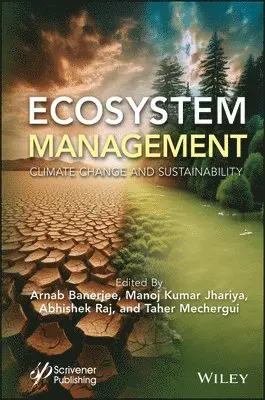
    Ecosystem Management

    Climate Change and Sustainability

    AvArnab Banerjee,Manoj Kumar Jhariya

    Inbunden, Engelska, 2024

    2 627 kr

    Beställningsvara. Skickas inom 5-8 vardagar. Fri frakt över 249 kr.

    Beskrivning

    This book is essential for anyone who wants to understand the challenges of environmental degradation and learn about the sustainable solutions needed to address these critical issues. Today, the entire globe is suffering from various forms of environmental degradation, resource depletion, and an imbalance of natural phenomena. In this context, one of the major issues is loss of ecosystem services and proper functioning of natural ecosystems. Pollution, ecological invasion, loss of biodiversity, land degradation, and loss of productivity across various ecosystems have become the biggest challenges humankind is faced with. Considering Sustainable Development Goals 2030, the major target is to restore degraded ecosystems and their functionality, which will bring back the valuable ecosystem services of a diverse ecosystem. Ecosystem Management: Climate Change and Sustainability addresses all these issues to teach a global readership the dimensions of ecosystem services and ways toward a future sustainable world.

    Produktinformation

    • Utgivningsdatum:2024-11-15
    • Mått:238 x 158 x 47 mm
    • Vikt:1 270 g
    • Format:Inbunden
    • Språk:Engelska
    • Antal sidor:720
    • Förlag:John Wiley & Sons Inc
    • ISBN:9781394231218

    Utforska kategorier

    • Agronomi och lantbruk inom Naturvetenskap och teknik

    Mer om författaren

    Arnab Banerjee, PhD, is an assistant professor in the Department of Environmental Science, Sant Gahira Guru Vishwavidyalaya, Ambikapur, Chhattisgarh, India. He has published 80 research papers in reputed national and international journals, as well as 17 books and 90 book chapters. Additionally, he is a life member of the Academy of Environmental Biology and is dynamically involved in post-graduate teaching and research, including work as a fellow under a University Grants Commission project. Manoj Kumar Jhariya, PhD, is an assistant professor in the Department of Farm Forestry at Sant Gahira Guru Vishwavidyalaya, Sarguja, Ambikapur, Chhattisgarh, India. He is the author or co-author of more than 86 research papers in peer-reviewed journals, 16 books, 86 book chapters, and several extension articles and serves as an editorial board member of several journals. He is a life member of The Indian Science Congress Association, Applied and Natural Science Foundation, Society for Advancement of Human and Nature, Medicinal and Aromatic Plants Association of India, and International Journal of Development and Sustainability. Abhishek Raj, PhD, is an assistant professor in the Department of Forest Product and Utilization, Pandit Deendayal Upadhyay College of Horticulture & Forestry, Dr. Rajendra Prasad Central Agriculture University, India. He has published over 20 papers in scientific journals, 60 book chapters, and five books. Taher Mechergui, PhD, is an assistant professor on the faculty of Sciences of Bizerte, Laboratory of Forest, Tabarka Pastoral Resources, Jarzouna, Tunisia. He has published various research papers and chapters from reputed international publishers and has a long, well-respected career in academia and research, particularly in research and development. He has a wide specialization in the diverse field of ecophysiology along with allied biological sciences.

    Innehållsförteckning

    • List of Contributors xxviiPreface xxxiii1 Ecosystem Management: Climate Change and Global Sustainability—An Introduction 1Arnab Banerjee, Manoj Kumar Jhariya, Abhishek Raj and Taher Mechergui1.1 Introduction 21.2 Ecosystem Management 41.3 Key Principles Behind Ecosystem Management 61.4 Climate Change and Ecosystem Management 101.5 Issues and Challenges of Global Sustainability 121.6 Climate Change and Health 131.7 Ecosystem Management and Global Sustainability 141.8 Conclusion 161.9 Future Perspectives of Ecosystem Management, Climate Change, and Global Sustainability 17References 182 Climate Change Mitigation Through Sustainable and Climate-Smart Agriculture 23Saikat Mondal and Debnath Palit2.1 Introduction 242.2 Climate Change Risks on Global Agriculture System 272.3 The History and Fundamental Principles of Sustainable Agriculture 302.4 Climate-Smart Agriculture 322.5 Importance of Sustainable and Climate-Smart Agriculture 332.6 Various Climate-Smart Technologies Toward CC Mitigation 392.7 Policy Support and International Cooperation 452.7.1 Policy Support and International Cooperation for Sustainable and Climate-Smart Agriculture in India 462.8 Future Directives Toward Climate-Smart Practices Toward Sustainable Agriculture 462.9 Conclusion 47References 483 Management of Soil Degradation: A Comprehensive Approach for Combating Oil Degradation, Food Insecurity, and Climate Change 55Zia Ur Rahman Farooqi, Muhammad Sohail, Hussein Alserae, Ayesha Abdul Qadir, Tajammal Hussain, Predrag Ilic, Sobia Riaz and Zikria Zafar3.1 Introduction 563.2 Soil Degradation: Causes and Extent 573.3 Management of Soil Degradation 613.4 Win-Win Strategies/Effective Resource Utilization in Management of Degraded Soils 693.5 Conclusions 713.6 Future Perspective of Combating Land Degradation 72References 724 Green Approaches to Mitigate Climate Change Issues in Indian Subcontinent 79Jayati Chakraborti, Saikat Mondal and Debnath Palit4.1 Introduction 804.2 Renewable Energy Initiatives 824.3 Sustainable Agriculture Practices 914.4 Forest Conservation and Reforestation in CC Mitigation 954.5 Waste Management and Circular Economy as Green Approach 974.6 Green Transportation and Green Urban Planning 1014.7 Climate Change Adaptation and Resilience 1034.8 Policies and Governance in Promoting Green Approaches in Indian Subcontinent 1034.9 Importance of Stakeholder Collaboration and International Cooperation in India in CC Mitigation Through Green Approach 1044.10 Challenges and Opportunities Faced in Implementing Green Approaches in the Indian Subcontinent 1064.11 Conclusion 106References 1085 Management of Environmental Pollution: Hyperaccumulator Plants, Arbuscular Mycorrhizal Fungi (AMF), and Biochar in Heavy Metal Remediation 115Tareq A. Madouh and Merlin K. Davidson5.1 Introduction 1165.2 Heavy Metals and Environmental Pollution 1165.3 Impact of Heavy Metals 1205.4 Remediation Measures 1245.5 Phytoremediation 1245.6 AMF in Heavy Metal Remediation 1335.7 Biochar in Heavy Metal Remediation 1385.8 Mechanisms of Biochar-AMF–Aided Phytoremediation 1485.9 Future Prospects and Research Needs 1505.10 Conclusion 152References 1536 Global Climate Change and Ecosystem Services: An Indian Perspective 171Niladri Sekhar Mondal and Apurba Ratan Ghosh6.1 Introduction 1726.2 Understanding Ecosystem Services and Their Importance 1736.3 Consequences of Climate Change on Ecosystem Services 1766.4 Policy, Governance, and Future Pathways 1906.5 Conclusion 191References 1927 Mensurational Assessment of Partial, Total Tree, and Stand Mortality of Mangrove Dieback Amidst Climate Change in The Gambia, West Africa 205Gordon N. Ajonina and J-Hude E. Moudingo7.1 Introduction 2067.2 Operational Definition of Dieback 2077.3 Material and Methods 2087.4 Findings 2217.5 Conclusions 2437.6 Management of Mangrove Ecosystem Against Dieback and Future Outlook 244Acknowledgments 245References 2458 Heavy Metal Pollution and Environmental Sustainability: Issues, Challenges, and Bioremediation Strategies 249Sudeshna Mitra, Prosanta Saha and Debnath Palit8.1 Introduction 2508.2 Bioaccumulation and Biomagnification of Heavy Metals 2568.3 Toxic Effects of Heavy Metals 2578.4 Recent Advances and Future Prospects in Heavy Metal Remediation 2778.5 Conclusion 281References 2829 Innovative Techniques for Soil and Water Conservation 291Maghchiche Abdelhak9.1 Introduction 2929.2 Importance of Soil and Water Conservation 2949.3 Emerging Technologies in Soil and Water Conservation 2979.4 Innovative Techniques for Soil Conservation 3009.5 Nanotechnology for Soil and Water Conservation 3049.6 Innovative Techniques for Water Conservation 3089.7 Challenges and Opportunities in Adopting Innovative Techniques for Water and Soil Conservation 3149.8 Conclusion 3179.9 Future Outlook for Innovative Water and Soil Conservation 318References 31910 “Green Technology”—Efficient Solution Toward Environmental Management in 21st Century 327Sangeeta Banerjee and Debnath Palit10.1 Introduction 32810.2 Application of Green Technology in Different Sectors 33410.3 Challenges in Adopting Green Technology 34510.4 Government Initiative in Green Technology 34510.5 Some Green Companies in India 34910.6 Conclusion 34910.7 Future Perspective of Green Technology Toward Environmental Management 349References 35011 Navigating Sustainability and Ecosystem Management Through a Systemic Lens: Core Principles 353Leonid Melnyk, Inna Koblianska, Iryna Dehtyarova and Oleksandr Kubatko11.1 Introduction 35411.2 Prerequisites for the Shift Toward Sustainability: A Historical and Resource-Energy Perspective 35611.3 Natural and Societal Underpinnings of Sustainability 35911.4 Systemic Basics of Natural and Social Object Functioning 36311.5 Sustainable Development and Ecosystem Management Through the Prism of System Principles 36711.6 Contours of Sustainable Economy 36911.7 Key Pathways for Advancing Sustainable Economy 37211.8 Principles of Natural and Social Systems’ Sustainable Development 37411.9 Ecosystems’ Contributions to Maintaining Equilibrium in a Sustainable Economy 38611.10 Mechanisms of Sustainability Transformation 38711.11 Conclusions 389References 39112 A Vulnerability Study on Groundwater Arsenic Exposures and Possible Sustainable Management Options 397Alok Chandra Samal, Piyal Bhattacharya, Anusaya Mallick, Manoj Kumar Kar and Subhas Chandra Santra12.1 Introduction 39812.2 Toxicity of Arsenic 39912.3 Origin and Mobility of Arsenic in the Environment 40012.4 Arsenic in Soil and Crops 40112.5 Epidemiology of Chronic Arsenicosis 40412.6 Arsenic Flow in Ecosystems 40412.7 Arsenic-Induced Health Risks Through Dietary Pathway 40512.8 Strategic Management of Arsenic Contamination 40612.9 Biological Techniques for Removal of Arsenic 40812.10 Water Resource Management for Minimization of Arsenic Contamination 40912.11 Conclusions 41012.12 Future Research and Development Toward Management of Groundwater Contamination of Arsenic 411References 41113 Lessons Learned From Six Landscape Restoration Initiatives in Cameroon with Focus on the Species Selection and Women’s Involvement 427Hermann Taedoumg and Francois Manga Essouma13.1 Introduction 42813.2 Site and Project Selection 43113.3 Data Collection Device 43113.4 General Characterization 43113.5 Species Choice 43813.6 Key Aspects and Lessons Learned 44213.7 Conclusions Recommendations and Future Perspectives 447References 45014 Micropollutants in Environment: Sources, Ecotoxicity, and Strategies for Remediation 453Abhratanu Ganguly, Sayantani Nanda, Kanchana Das, Siddhartha Ghanty, Gopal Biswas, Moutushi Mandi, Sagarika Mukherjee, Manas Paramanik and Prem Rajak14.1 Introduction 45414.2 Environmental Pollution as a Decade-Old Concern 45514.3 Micropollutants in the Environment and Their Sources 45714.4 Ecotoxicity of Micropollutants 46914.5 Molecular Mechanism of Toxicity 47414.6 Remedial Approaches 47414.7 Future Research and Development on Micropollutants for Sustainable Ecosystem Management 47714.8 Conclusion 478Acknowledgments 478References 47915 Acid Mine Drainage: A Silent Threat to Environmental Health and Its Journey Toward Sustainable Management 493Sagarika Mukherjee, Manas Paramanik, Sudip Paramanik, Suman Dasmodak, Prem Rajak and Abhratanu Ganguly15.1 Introduction 49415.2 Understanding the Genesis and Characteristics of AMD 49615.3 Scenario of AMD in Globe and Indian Subcontinent 49915.4 Impacts of AMD 49915.5 Prevention of AMD 50215.6 Remediation from AMD 50415.7 Sustainable Mining Practices 50615.8 Conclusion 51015.9 Future Researches and Development in AMD 510References 51116 Bio-Collage Mode of Plantation for Increase in Green Cover to Manage Ecosystem and Environment 519Subhra Bandopadhyay and Debnath Palit16.1 Introduction 52016.2 Background 52116.3 Objective 52216.4 Practices of Plantation 52516.5 Recast Modality of Plantation 52616.6 Elaboration of Suitable Plant Types 53016.7 Statutory Precaution 53216.8 Future Directive 53316.9 Conclusion 536References 53717 The Impact of Unsustainable Development and Climate Change on Agriculture and Forestry in Nigeria: Predictions, Solutions, and Management 541Aroloye O. Numbere, Keayiabarido Jude, Sobomate B. Chuku, Miracle C. Uzoma, Chinedu Obanye, Peace Ohia, Udi Emoyoma and Ibiene W. Dick-Abbey17.1 Introduction 54217.2 Unsustainable Development: The Nigeria Perspective 54217.3 Fisheries and Vegetation Resources in Nigeria 54417.4 Climate Change Scenario in Nigeria 54917.5 Impacts of Climate Change on Coastal and Land Resources 55117.6 Impact of Anthropogenic Activities on Natural Resources 55317.7 Environmental Management of Natural Resources 55717.8 Solutions to Present and Future Climate Change Predictions 55817.9 Policy Decision and Regulation/Legal Framework 57017.10 Conclusion and Recommendations 57117.11 Future Perspective 571References 57218 Monitoring Water Quality to Support Sustainable Development: A Case Study From a Small Tropical Mountain River System, Southwest of Kerala, India 581Shabna Sherin, K.S. Arunkumar and Sreechitra Suresh18.1 Introduction 58218.2 Data and Methodology 58218.3 Results and Discussion 58418.4 Conclusion 59618.5 Future Perspective of Water Quality Monitoring and Environmental Sustainability 597Acknowledgment 597References 59719 Wetland Management Through Integrated Fish Farming: An Institutional Case Study 599Saurabh Sarkar, Sukhendu Roy, Aparnita Nandi Roy, Ankit Kumar Bhagat, Hemanta Mukhopadhyay and Uday Chand Mete19.1 Introduction 60019.2 Wetland/Water Body 60319.3 Aquaculture Research and Training Unit 60519.4 Management of Water Body 60819.5 Future Plans 62219.6 Future Research and Development in Integrated Fish Farming and Wetland Management 62419.7 Conclusion 624References 62520 Millet-Based Food Adoption for Environmental Sustainability and Nutritional Security 629Anusaya Mallick, Kumar Rajnish, Kausik Mondal, Rasmani Hazra and Alok Chandra Samal20.1 Introduction 63020.2 Origin of Millets 63220.3 Global Distribution and Production of Millets 63420.4 Distribution of Millet Cultivation in India 63620.5 Millets with Their Nutritional Value 63920.6 Millet Cultivation Toward Environmental Resilience and Agricultural Sustainability 64320.7 Health Benefits of Millet 64420.8 Effect of Millet Consumption on Gut Microbiome 64520.9 Constraints of Millet Production 64620.10 Millet-Based Value-Added Products 64720.11 Millet as the Staple Food for Tribal Community 64920.12 Millet Movement Under Mission LiFE (Lifestyle for Environment) Program 65020.13 Conclusion 65020.14 Future Research and Development in Sustainable Millet Production and Environmental Sustainability 651References 652About the Editors 659Index 661