• Fri frakt över 249 kr
  • •
  • Snabba leveranser
  • •
  • Billiga böcker
Kundservice

Du är på sajten för privatpersoner.

Företag, bibliotek eller offentlig verksamhet?

Du handlar på classic.bokus.com, där alla dina funktioner finns intakta.
Till classic.bokus.com
Bokus logotyp. Gå till startsidan.
  • Erbjudanden
  • Nyheter
  • Student
  • Topplistor
  • Barn & ungdom
  • Bokus Play
  • E-böcker
  • Pocketböcker
  • Spel & pussel

10% rabatt på allt med kod NYSTART10 →

Sidfot

Mina sidor

    Hjälp

    • Kundservice
    • Vanliga frågor och svar
    • Frakt och leverans
    • Retur vid ångerrätt
    • Reklamera vara
    • Betalning
    • Köpvillkor
    • Allmänna villkor
    • Information om webbplatsens tillgänglighet

    Om Bokus

    • Om oss
    • Pressrum
    • För studenter
    • För företag
    • För bibliotek och offentlig verksamhet
    • För leverantörer
    • Hållbarhet

    Populärt

    • Aktuella erbjudanden
    • Presentkort
    • Studentlitteratur
    • Nya böcker
    • Topplistor
    • Signerade böcker
    • Engelska böcker

    Inspiration

    • Boktips
    • BookTok
    • Populära bokserier
    • Barnbokskaraktärer
    • Populära författare
    Logotyp för Bokus
    Följ oss på Facebook (extern länk)Följ oss på Instagram (extern länk)Följ oss på YouTube (extern länk)Följ oss på TikTok (extern länk)
    bokus @ CookiesAnpassa cookiesIntegritetspolicyKöpvillkor
    Till Citymail hemsida (extern länk)Till Budbee hemsida (extern länk)Till Postnord hemsida (extern länk)Till Schenker hemsida (extern länk)Till Early Bird hemsida (extern länk)Till Walleys hemsida (extern länk)
    1. Naturvetenskap och teknik
    2. Matematik och naturvetenskap
    3. Biologi
    4. Biokemi

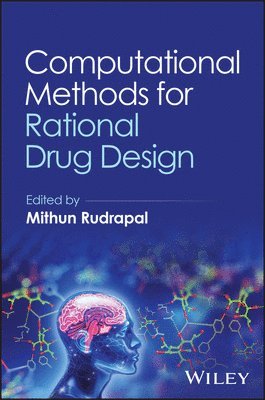
    Computational Methods for Rational Drug Design

    AvMithun Rudrapal

    Inbunden, Engelska, 2024

    2 586 kr

    Beställningsvara. Skickas inom 5-8 vardagar. Fri frakt över 249 kr.

    Beskrivning

    Comprehensive resource covering computational tools and techniques for the development of cost-effective drugs to combat diseases, with specific disease examples Computational Methods for Rational Drug Design covers the tools and techniques of drug design with applications to the discovery of small molecule-based therapeutics, detailing methodologies and practical applications and addressing the challenges of techniques like AI/ML and drug design for unknown receptor structures. Divided into 23 chapters, the contributors address various cutting-edge areas of therapeutic importance such as neurodegenerative disorders, cancer, multi-drug resistant bacterial infections, inflammatory diseases, and viral infections. Edited by a highly qualified academic with significant research contributions to the field, Computational Methods for Rational Drug Design explores topics including: Computer-assisted methods and tools for structure- and ligand-based drug design, virtual screening and lead discovery, and ADMET and physicochemical assessmentsIn silico and pharmacophore modeling, fragment-based design, de novo drug design and scaffold hopping, network-based methods and drug discoveryRational design of natural products, peptides, enzyme inhibitors, drugs for neurodegenerative disorders, anti-inflammatory therapeutics, antibacterials for multi-drug resistant infections, and antiviral and anticancer therapeuticsProtac and protide strategies in drug design, intrinsically disordered proteins (IDPs) in drug discovery and lung cancer treatment through ALK receptor-targeted drug metabolism and pharmacokineticsHelping readers seamlessly navigate the challenges of drug design, Computational Methods for Rational Drug Design is an essential reference for pharmaceutical and medicinal chemists, biochemists, pharmacologists, and phytochemists, along with molecular modeling and computational drug discovery professionals.

    Produktinformation

    • Utgivningsdatum:2024-11-29
    • Vikt:1 492 g
    • Format:Inbunden
    • Språk:Engelska
    • Antal sidor:576
    • Förlag:John Wiley & Sons Inc
    • ISBN:9781394249169

    Utforska kategorier

    • Biokemi inom Naturvetenskap och teknik
    • Fysikalisk kemi inom Naturvetenskap och teknik
    • Organisk kemi inom Naturvetenskap och teknik

    Mer om författaren

    Mithun Rudrapal, PhD, FIC, CChem (India) is Associate Professor at the Department of Pharmaceutical Sciences at Vignan’s Foundation for Science, Technology & Research, Guntur, India. He has over a hundred publications in peer-reviewed international journals and more than a dozen books, including three with Wiley.

    Innehållsförteckning

    • List of Contributors xxiPreface xxvii1 Molecular Modeling and Drug Design 1Monalisa Kesh, Abhirup Ghosh, and Diptanil Biswas1.1 Introduction 11.2 Types of Molecular Models 41.3 Computational Methods in Drug Discovery 71.4 Potential Use and Application of AI in Drug Designing 121.5 Limitations of Current Methods 141.6 Case Studies 161.7 Molecular Docking 171.8 Conclusion and Future Works 19References 202 Bioactive Small Molecules and Drug Discovery 25Ashish Shah, Vaishali Patel, Sathiaseelan Perumal, Riddhi Dave, Neha Zachariah, Ghanshyam Parmar, and Jay Mukesh Chudasama2.1 Introduction 252.2 Importance of Computational Methods in Bioactive Small-Molecules Discovery 262.3 Natural Products in Bioactive Small-Molecule Discovery 302.4 Role of Density Functional Theory (DFT) Studies in Bioactive Small-Molecule Discovery 332.5 Application of DFT to Bioactive Small Molecules 342.6 Factors Affecting the Choice of Bioactive Molecules in Drug Discovery 362.7 Conclusion 43References 433 Novel Drug Targets for Small Molecule-based Drug Discovery 49Raghu Ram Achar, Ipsita Panigrahi, Aditi Singh, N. Chandana, and Shivananju Nanjunda Swamy3.1 Introduction 493.2 Drug Target Identification 513.3 Classification of Novel Drug Targets 533.4 Small Molecules as Drugs 573.5 Conclusion 60References 654 Computer-assisted Methods and Tools for Structure- and Ligand-based Drug Design 69Saurav Kumar Mishra, Sneha Roy, Tabsum Chhetri, and John J. Georrge4.1 Introduction 694.2 Structure-Based Drug Discovery Concept 694.3 Ligand-Based Drug Discovery Concept 814.4 Structure- and Ligand-Based Assisted Studies 844.5 Advancement and Challenges in SBDD and LBDD 904.6 Conclusion 90References 915 Virtual Screening and Lead Discovery 97Nisha Kumari Singh, Nigam Jyoti Maiti, Manshi Mishra, Shantanu Raj, Gourav Rakshit, Rahul Ghosh, and Sharanya Roy5.1 Introduction to Virtual Screening and Lead Discovery 975.2 Molecular Targets and Biomolecular Structures 995.3 Virtual Screening Approaches 995.4 Databases and Compound Collections 1015.5 Molecular Docking 1025.6 Pharmacophore Modeling 1045.7 Quantitative Structure–Activity Relationship (QSAR) 1055.8 Machine Learning and AI in Virtual Screening 1075.9 Hit-to-Lead Optimization 1095.10 Case Studies and Examples 1125.11 Challenges and Future Directions 1145.12 Ethical and Regulatory Considerations 1165.13 Conclusion 116References 1176 ADMET and Physicochemical Assessments in Drug Design 123Ulviye Acar Çevik, Ayşen Işik, and Abdüllatif Karakaya6.1 ADMET 1236.2 Physicochemical Assessments 135References 1447 In Silico Modeling and Drug Design 153Sonali S. Shinde, Sanket S. Rathod, and Sohan S. Chitlange7.1 Introduction 1537.2 Target Identification 1547.3 Computer-Aided Drug Design 1567.4 ADMET Assessment 1607.5 Conclusion 160References 1618 Pharmacophore Modeling in Drug Design 167Rahul Ghosh, Sharanya Roy, Gourav Rakshit, Nisha Kumari Singh, and Nigam Jyoti Maiti8.1 Introduction 1678.2 Essential Concepts in Pharmacophore Hypothesis Generation 1708.3 Diverse Approaches to Pharmacophore Modeling 1738.4 Application of Pharmacophore Modeling 1768.5 Emerging Trends in Pharmacophore Model Development 1808.6 Case Studies 1838.7 Challenges in Pharmacophore Modeling 1868.8 Conclusion 187Acknowledgments 188References 1889 Scaffold Hopping and De Novo Drug Design 195Shrimanti Chakraborty, Soumi Chakraborty, Biprajit Sarkar, Rahul Ghosh, Sharanya Roy, Nisha Kumari Singh, and Gourav Rakshit9.1 Introduction 1959.2 Scaffold Hopping 1969.3 De Novo Drug Design 2019.4 Results and Discussion 2119.5 Software Tools for SH (Scaffold Hopping) and De Novo Design Selection 2149.6 Case Study 2149.7 Conclusion 215References 21610 Fragment-based Drug Design and Drug Discovery 221André M. Oliveira and Mithun Rudrapal10.1 Introduction 22110.2 The Process of Finding Fragments 22210.3 FBDD Strategies 22710.4 Case Studies 22810.5 Conclusion and Future Perspectives 230References 23211 AI/ML Approaches in Drug Design 237Kevser Kübra Kırboğa11.1 Introduction 23711.2 Traditional Drug Design Methods 23711.3 AI/ML Landscape in Drug Design 23911.4 Ethics, Reliability, and Regulatory Issues 24411.5 Future Directions 24611.6 Conclusion 247References 24712 Network-based Methods in Drug Discovery 255Ghanshyam Parmar, Ashish Shah, Jay Mukesh Chudasama, Priya Kashav, and Vanesa James12.1 Introduction 25512.2 Network Pharmacology: Practical Guide 26012.3 Ayurveda and Traditional Indian Medicine 26912.4 Network Pharmacology in Herbal Remedies 27312.5 Conclusion and Future Prospects 277References 27813 Rational Design of Natural Products for Drug Discovery 285Ankita Kashyap, Anupam Sarma, Bhrigu Kumar Das, and Ashis Kumar Goswami13.1 Introduction 28513.2 Natural Products for the Development of New Drugs 28613.3 Criteria for Selecting Natural Products for Drug Design 28813.4 Importance of Biodiversity in Sourcing Natural Products 28813.5 Structural Elucidation of Natural Products 28913.6 In Silico Computational Tools for Rational Drug Discovery from Natural Sources 29013.7 Formulation Challenges with Natural Products 29813.8 Quality by Design (QbD) Approaches 30013.9 Conclusion 303References 30414 Design of Enzyme Inhibitors in Drug Discovery 311Koyel Kar14.1 Introduction 31114.2 Importance of Enzyme Inhibition as a Strategy for Modulating Enzyme Activity 31214.3 Classification of Enzyme Inhibitors 31214.4 Strategies Employed in the Design and Development of Enzyme Inhibitors 31414.5 Limitations and Challenges 32114.6 Future Directions 32114.7 Conclusion 322References 32215 Rational Design of Peptides and Protein Molecules in Drug Discovery 327Ipsa Padhy, Abanish Biswas, Chandan Nayak, and Tripti Sharma15.1 Introduction 32715.2 Peptides as Therapeutics 32815.3 New Technologies for Peptide-Based Drug Discovery 34415.4 Computational Approaches in Peptide Drug Discovery 34715.5 Conclusion 350References 35116 Rational Design of Drugs for Neurodegenerative Disorders 363Priyanka Kamaria16.1 Introduction 36316.2 Common Mechanism of Neurodegeneration 36416.3 Brief Overview of Computational Methods in Drug Design 36516.4 Parkinson’s Disease as Prevalent Neurodegenerative Disorder 36716.5 Conclusion 382References 38217 Rational Design of Anti-inflammatory Therapeutics 389Kratika Singh, Anmol Gupta, Irum Siddiqui, Ashapurna Sinha, Mukesh Kumar Patwa, and Urmila Singh17.1 Introduction 38917.2 Navigating Inflammation and its Microenvironment 39017.3 The Demand for Advanced Anti-inflammatory Medications 39317.4 Natural Products Used for Anti-inflammatory Drug Development: Systematic Approach in Use of Different Animal Models for Evaluations 39417.5 Rational Design of Anti-inflammatory Agents 39417.6 Conclusion and Future Perspectives 397Authors’ Contribution 397References 39718 Rational Design of Antibacterial Agents for Multidrug-Resistant Infections 403Sathish Kumar Konidala, Podila Naresh, Risy Namratha Jamullamudi, Kamma Harsha Sri, Richie Rashmin Bhandare, and Afzal Basha Shaik18.1 Introduction 40318.2 Treatment 40418.3 Antibacterial Resistance 40518.4 Medicinal Chemistry Strategies for the Design of Antibacterials Combating Multidrug-Resistant Bacterial Infections 40818.5 Summary and Conclusion 418References 41819 Rational Design of Antiviral Therapeutics 423Sneha Dokhale, Samiksha Garse, Shine Devarajan, Vaishnavi Thakur, and Shaunak Kolhapure19.1 Introduction to Antiviral Therapeutics 42319.2 Targets for Antiviral Therapeutics and Inhibition Strategies 42719.3 Rational Strategies for Antiviral Therapeutics 43119.4 Conclusion 437References 43820 Rational Design of Anticancer Therapeutics 445Debarupa Dutta Chakraborty and Prithviraj Chakraborty20.1 Introduction 44520.2 Rational Design of Nanomedicine for Cancer Treatment 44620.3 The CAPIR Cascade: A Nanomedicine Strategy for Administering Cancer Medications 44720.4 Rational Regulation of Nanoparticle’s Physicochemical Characteristics 44720.5 Some Approaches of Rational Drug Design in Anticancer Theranostics 44820.6 Artificial Intelligence’s Progress in Anticancer Drug Development 45020.7 Conclusion 452References 45221 PROTAC and ProTide Strategies in Drug Design 457Maitreyee Mukherjee21.1 Introduction 45721.2 Drug Design: Past to Present 45821.3 PROTAC Strategy in Drug Design 45921.4 Emergence of ProTide Technology in Drug Design 46521.5 Approaches of ProTides in Drug Development 46621.6 Implementation of ProTides as Nucleoside Analogs 47021.7 Conclusion 471References 47122 Advancing Lung Cancer Treatment Through ALK Receptor-targeted Drug Metabolism and Pharmacokinetics 477Vivek Yadav, Shikha Goswami, Rajiv Kumar Tonk, and Mithun Rudrapal22.1 Introduction 47722.2 ALK Receptor and Its Role 47822.3 Diagnostic Methods for ALK Rearranged NSCLC 47922.4 ALK Inhibitors Drug Development 48122.5 Drug Metabolism of Reported ALK Inhibitor 48422.6 Resistance and Mutations 48722.7 Conclusion 488Conflict of Interest 488References 48923 Targeting Intrinsically Disordered Proteins (IDPs) in Drug Discovery: Opportunities and Challenges 493Sridhar Vemulapalli23.1 Introduction 49323.2 Properties and Significance of IDPs 49323.3 Challenges in Targeting IDPs 49623.4 Computational Tools for IDP Analysis 49923.5 Rational Design Approaches for IDP Inhibition 50023.6 Case Studies 50523.7 Future Directions 50823.8 Conclusions 509References 510Index 519