• Fri frakt över 249 kr
  • •
  • Snabba leveranser
  • •
  • Billiga böcker
Kundservice

Du är på sajten för privatpersoner.

Företag, bibliotek eller offentlig verksamhet?

Du handlar på classic.bokus.com, där alla dina funktioner finns intakta.
Till classic.bokus.com
Bokus logotyp. Gå till startsidan.
  • Erbjudanden
  • Nyheter
  • Student
  • Topplistor
  • Barn & ungdom
  • Bokus Play
  • E-böcker
  • Pocketböcker
  • Spel & pussel

Upp till 20% på populära nyheter →

Sidfot

Mina sidor

    Hjälp

    • Kundservice
    • Vanliga frågor och svar
    • Frakt och leverans
    • Retur vid ångerrätt
    • Reklamera vara
    • Betalning
    • Köpvillkor
    • Allmänna villkor
    • Information om webbplatsens tillgänglighet

    Om Bokus

    • Om oss
    • Pressrum
    • För studenter
    • För företag
    • För bibliotek och offentlig verksamhet
    • För leverantörer
    • Hållbarhet

    Populärt

    • Aktuella erbjudanden
    • Presentkort
    • Studentlitteratur
    • Nya böcker
    • Topplistor
    • Signerade böcker
    • Engelska böcker

    Inspiration

    • Boktips
    • BookTok
    • Populära bokserier
    • Barnbokskaraktärer
    • Populära författare

    Mina sidor

      Hjälp

      • Kundservice
      • Vanliga frågor och svar
      • Frakt och leverans
      • Retur vid ångerrätt
      • Reklamera vara
      • Betalning
      • Köpvillkor
      • Allmänna villkor
      • Information om webbplatsens tillgänglighet

      Om Bokus

      • Om oss
      • Pressrum
      • För studenter
      • För företag
      • För bibliotek och offentlig verksamhet
      • För leverantörer
      • Hållbarhet

      Populärt

      • Aktuella erbjudanden
      • Presentkort
      • Studentlitteratur
      • Nya böcker
      • Topplistor
      • Signerade böcker
      • Engelska böcker

      Inspiration

      • Boktips
      • BookTok
      • Populära bokserier
      • Barnbokskaraktärer
      • Populära författare
      Logotyp för Bokus
      Följ oss på Facebook (extern länk)Följ oss på Instagram (extern länk)Följ oss på YouTube (extern länk)Följ oss på TikTok (extern länk)
      bokus @ CookiesIntegritetspolicyKöpvillkor
      Till Citymail hemsida (extern länk)Till Budbee hemsida (extern länk)Till Postnord hemsida (extern länk)Till Schenker hemsida (extern länk)Till Early Bird hemsida (extern länk)Till Walleys hemsida (extern länk)
      1. Medicin
      2. Medicin: allmänt
      3. Hälsoinformatik

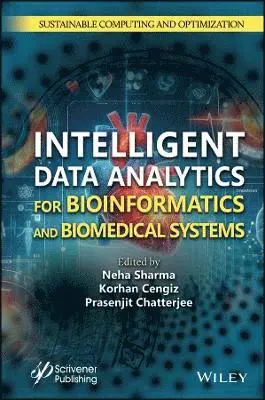
      Intelligent Data Analytics for Bioinformatics and Biomedical Systems

      AvNeha Sharma,Korhan Cengiz

      Inbunden, Engelska, 2024

      Del i serien Sustainable Computing and Optimization

      2 484 kr

      Beställningsvara. Skickas inom 5-8 vardagar. Fri frakt över 249 kr.

      Beskrivning

      The book analyzes the combination of intelligent data analytics with the intricacies of biological data that has become a crucial factor for innovation and growth in the fast-changing field of bioinformatics and biomedical systems. Intelligent Data Analytics for Bioinformatics and Biomedical Systems delves into the transformative nature of data analytics for bioinformatics and biomedical research. It offers a thorough examination of advanced techniques, methodologies, and applications that utilize intelligence to improve results in the healthcare sector. With the exponential growth of data in these domains, the book explores how computational intelligence and advanced analytic techniques can be harnessed to extract insights, drive informed decisions, and unlock hidden patterns from vast datasets. From genomic analysis to disease diagnostics and personalized medicine, the book aims to showcase intelligent approaches that enable researchers, clinicians, and data scientists to unravel complex biological processes and make significant strides in understanding human health and diseases. This book is divided into three sections, each focusing on computational intelligence and data sets in biomedical systems. The first section discusses the fundamental concepts of computational intelligence and big data in the context of bioinformatics. This section emphasizes data mining, pattern recognition, and knowledge discovery for bioinformatics applications. The second part talks about computational intelligence and big data in biomedical systems. Based on how these advanced techniques are utilized in the system, this section discusses how personalized medicine and precision healthcare enable treatment based on individual data and genetic profiles. The last section investigates the challenges and future directions of computational intelligence and big data in bioinformatics and biomedical systems. This section concludes with discussions on the potential impact of computational intelligence on addressing global healthcare challenges. Audience Intelligent Data Analytics for Bioinformatics and Biomedical Systems is primarily targeted to professionals and researchers in bioinformatics, genetics, molecular biology, biomedical engineering, and healthcare. The book will also suit academicians, students, and professionals working in pharmaceuticals and interpreting biomedical data.

      Produktinformation

      • Utgivningsdatum:2024-10-25
      • Vikt:903 g
      • Format:Inbunden
      • Språk:Engelska
      • Serie:Sustainable Computing and Optimization
      • Antal sidor:432
      • Förlag:John Wiley & Sons Inc
      • ISBN:9781394270880

      Utforska kategorier

      • Hälsoinformatik inom Medicin
      • Databaser inom Data och IT

      Mer om författaren

      Neha Sharma PhD, is an assistant professor in the Department of Computer Science and Engineering, Chitkara University, Rajpura, India. She has more than 60 international publications in reputed peer-reviewed journals. She has also published more than 30 national & international patents under the Intellectual Property Rights of the governments of India and abroad. Her main areas of research are in image processing, machine learning, deep learning, and cybersecurity. Korhan Cengiz, PhD, is an assistant professor at the Department of Information Technologies, Faculty of Informatics and Management, University of Hradec Kralove, Kralove, Czech Republic. He obtained his doctorate in electronics engineering from Kadir Has University, Istanbul, Turkey, in 2016 and has authored more than 40 SCI articles, five international patents, ten chapters in books, and one book. His research interests include wireless sensor networks, wireless communications, statistical signal processing, etc. Prasenjit Chatterjee, PhD, is a professor of mechanical engineering and dean (research and consultancy) at MCKV Institute of Engineering, West Bengal, India. He has authored several books on intelligent decision-making, fuzzy computing, supply chain management, etc. He has over 6850 citations and many research papers in various international journals. Dr. Chatterjee is one of the developers of two multiple-criteria decision-making methods called Measurement of Alternatives and Ranking according to Compromise Solution (MARCOS) and Ranking Alternatives through Functional Mapping of Criterion Sub-Intervals into a Single Interval (RAFSI).

      Innehållsförteckning

      • Preface xixAcknowledgment xxv1 Advancements in Machine Learning Techniques for Biological Data Analysis 1S. Kanakaprabha, G. Ganesh Kumar, Y. Padma, Gangavarapu and Venkata Nagaraju Thatha1.1 Introduction 11.1.1 Significance of Advanced Data Analysis in Biology 21.2 Literature Survey 31.3 Machine Learning Fundamentals 51.3.1 Supervised, Unsupervised, and Semi-Supervised Learning 61.3.2 Feature Engineering and Selection 61.3.3 Deep Learning Architectures for Biological Data 71.4 Genomic Sequence Analysis 71.4.1 DNA Sequence Classification and Prediction 81.4.2 Genomic Variant Analysis with Machine Learning 81.4.3 Enhancing Epigenetic Studies through AI 81.5 Proteomic Profiling and Structural Prediction 91.5.1 Protein Structure Prediction Using Deep Learning 101.5.2 Peptide and Protein Identification via Machine Learning 111.5.3 Functional Annotation of Proteins 111.6 Metabolomics and Pathway Analysis 121.6.1 Metabolite Identification and Quantification 141.6.2 Metabolic Pathway Reconstruction Using AI 141.6.3 Integrative Analysis of Multi-Omics Data 151.7 Medical Applications 151.7.1 Disease Diagnosis and Biomarker Discovery 151.7.2 Personalized Treatment and Drug Discovery 161.7.3 Predictive Modeling for Clinical Outcomes 161.7.4 Drug Repurposing and Adverse Event Prediction 171.7.5 Neuroinformatics and Brain Disorders 171.8 Challenges and Future Directions 171.8.1 Interpretable Machine Learning in Biology 211.8.2 Addressing Data Privacy and Ethics 211.8.3 Advancing Quantum Computing in Biological Data Analysis 221.8.4 Handling Heterogeneous and Multi-Modal Data 221.8.5 Small Data and Imbalanced Datasets 221.8.6 Clinical Adoption and Validation 221.8.7 Ethical and Societal Implications 231.9 Conclusion 231.9.1 Synthesis of Key Contributions and Insights 231.9.2 Anticipated Transformations in Biological Research 24References 242 Predictive Analytics in Medical Diagnosis 27Vivek Upadhyaya2.1 Introduction to Predictive Analytics in Healthcare 282.1.1 Definition of Predictive Analytics 282.1.2 The Significance of Predictive Analytics in Medical Diagnosis 292.2 Overview of the Chapter’s Structure 292.3 Data Sources and Data Preprocessing 302.3.1 Types of Data Sources (Electronic Health Records, Wearable Devices, Genetic Data, etc.) 312.4 Data Quality and Cleaning 332.4.1 Feature Selection and Engineering 332.4.2 Dealing with Missing Data 352.5 Predictive Analytics Techniques 362.5.1 Regression Analysis 362.5.2 Classification Models (e.g., Logistic Regression, Decision Trees, Random Forests) 372.5.3 Machine Learning Algorithms (e.g., Support Vector Machines, Neural Networks) 392.5.4 Time Series Analysis 402.6 Use Cases in Medical Diagnosis 402.6.1 Early Detection of Diseases (e.g., Cancer, Diabetes) 422.6.2 Risk Assessment and Stratification 422.6.3 Personalized Treatment Recommendations 432.6.4 Image Analysis and Medical Imaging 432.6.5 Disease Progression Tracking 462.6.6 Model Interpretability and Explainability 472.6.7 The Importance of Model Interpretability in Healthcare 472.6.8 Techniques for Making Predictive Models More Interpretable 482.6.9 Regulatory Considerations (e.g., GDPR, HIPAA) 492.6.10 Ethical and Legal Considerations 502.7 Challenges and Limitations 512.7.1 Data-Related Challenges (Data Volume, Quality, Interoperability) 532.7.2 Overfitting and Model Generalization 532.7.3 Addressing Bias and Fairness in Predictive Models 542.7.4 Successful Implementation and Case Studies 552.7.5 Real-World Examples of Healthcare Institutions Successfully Using Predictive Analytics 562.8 Future Trends and Innovations 582.8.1 The Role of Artificial Intelligence and Deep Learning 592.8.2 Integration with Electronic Health Records and Telemedicine 602.8.3 The Potential Impact of Quantum Computing on Medical Diagnosis 602.9 Conclusion 62References 633 Skin Disease Detection and Classification 67M. Aamir Gulzar, Salman Iqbal, Akhtar Jamil, Alaa Ali Hameed and Faezeh Soleimani3.1 Introduction 683.2 Related Work 693.3 Data 703.4 Methodology 713.4.1 Data Pre-Processing 713.4.2 Image Enhancement 723.4.3 Feature Extraction 733.4.4 Machine Learning Algorithm Used 743.5 Results 813.5.1 Experimental Setup 813.5.2 Data Preprocessing, Feature Extraction, and Model Selection 833.5.3 Evaluation Metrics 853.5.4 Classification and Outcomes 863.6 Conclusion 893.7 Future Work 90References 914 Computer-Aided Polyp Detection Using Customized Convolutional Neural Network Architecture 93Palak Handa, Nidhi Goel, S. Indu and Deepak Gunjan4.1 Introduction 944.2 Related Works 964.3 Materials and Methods 964.3.1 Description of the Used Datasets and Their Preparation 964.3.2 Data Augmentation 964.3.3 Customized CNN 974.4 Results and Discussion 984.4.1 CNN Optimizers 994.4.2 Kernel Initializers 994.4.3 Color Space 1004.4.4 Image Dimension 1014.4.5 Kernel Size 1014.4.6 Sample Maps of the CNN Features 1034.4.7 Ablation Study 1044.4.8 Comparison of the Proposed Architecture with Existing Deep-Learning Algorithms in This Field 1044.5 Conclusion and Future Scope 105References 1065 Computational Intelligence Induced Risk in Modern Healthcare: Classical Review and Current Status 109Nitish Ojha and Shrikant Ojha5.1 Introduction 1105.2 People-Based Risk 1135.3 Doctor-Induced Risk 1165.4 Patient-Based Risk 1205.5 Process-Based Risk 1215.6 Technology-Based Risk 1295.7 Conclusion 138References 1396 A Hybrid Deep Learning Framework to Diagnose Sleep Apnea Using Electrocardiogram Signals for Smart Healthcare 145Sampoorna Poria, Ahona Ghosh, Biswarup Ganguly and Sriparna Saha6.1 Introduction 1466.2 Proposed Methodology 1486.2.1 Introduction to the Data Acquisition Device 1486.2.2 Preprocessing Using Discrete Wavelet Transform 1486.2.3 Feature Extraction Using Auto Encoder 1496.2.4 Classification Using Bidirectional LSTM 1506.3 Experiment Results and Discussions 1526.3.1 Dataset Details 1526.3.1.1 Preprocessing Outcomes 1536.3.2 Feature Extraction Outcomes 1546.3.3 Classification Results 1556.3.4 Statistical Validation 1566.3.5 Experimental Setup for Computer Aided Diagnosis System 1586.3.6 Performance Evaluation 1586.4 Conclusion and Future Scope 160Acknowledgments 160References 1607 Deep Ensemble Feature Extraction Based Classification of Bleeding Regions Using Wireless Capsule Endoscopy Images 163Srijita Bandopadhyay, Kyamelia Roy, Sheli Sinha Chaudhuri, Soumen Banerjee and Korhan Cengiz7.1 Introduction 1647.2 Related Works 1647.3 Methodology 1667.3.1 Dataset 1677.3.2 Image Processing 1687.3.3 Histogram Equalizer 1697.3.4 Denoising 1727.3.5 Adaptive Filtering 1737.3.6 Augmentation 1737.3.7 Data Processing 1757.3.8 Convolutional Neural Network 1757.3.8.1 ResNet 50 1757.3.8.2 Vgg 16 1767.3.8.3 Inception V 3 1777.3.9 Feature Extraction 1777.3.10 Feature Reconstruction 1787.3.11 Classification 1797.4 Results and Discussion 1807.5 Conclusion 189References 1898 Advances in Brain Tumor Detection and Localization: A Comprehensive Survey 195Krishnangshu Paul, Arunima Patra and Prithwineel Paul8.1 Introduction 1958.2 Background Study on Various Methods 1988.2.1 Svm 1988.2.1.1 Advantages 1988.2.1.2 Limitations 1998.2.2 Knn 1998.2.2.1 Advantages 1998.2.2.2 Limitations 1998.2.3 Logistic Regression 2008.2.3.1 Advantages 2008.2.3.2 Limitations 2008.2.4 Cnn 2008.2.4.1 Advantages 2018.2.4.2 Limitations 2018.3 Methodology 2028.4 Experimentation 2058.4.1 Dataset 2058.4.2 Results Achieved 2068.5 Discussion 2108.6 Conclusion 2108.6.1 Future Scope 210References 2119 Integrating Apriori Algorithm with Data Mining Classification Techniques for Enhanced Primary Tumor Prediction 213Khalid Mahboob, Nida Khalil, Fatima Waseem and Abeer Javed Syed9.1 Overview 2149.1.1 Feature Selection 2169.1.2 Hyperparameter Tuning 2169.1.3 Enhanced Primary Tumor Prediction 2179.1.4 Continuous Improvement 2179.1.5 Clinical Integration 2179.2 Previous Studies on Tumor Prediction Using Data Mining and Apriori Algorithm 2189.3 Data Mining Process 2209.3.1 Data Collection and Pre-Processing 2219.3.1.1 Data Cleaning 2219.3.1.2 Data Transformation 2219.3.1.3 Data Reduction 2219.3.1.4 Data Integration 2229.3.1.5 Data Discretization 2229.3.2 Model(s) Selection and Building 2229.3.2.1 Supervised Learning 2229.3.2.2 Unsupervised Learning 2239.3.2.3 Reinforcement Learning 2239.3.2.4 Ensemble Method 2249.3.3 Evaluation and Exploratory Data Analysis 2249.3.3.1 Evaluation Techniques in Data Mining 2259.4 Data Mining in Bioinformatics 2259.5 Cancer and Tumor Biology 2269.6 Data Mining Classification Techniques 2289.6.1 J48 Decision Tree 2299.6.2 Naïve Bayes 2299.6.3 K-Nearest Neighbor 2299.7 Apriori Algorithm and Association Rule Mining 2309.8 Conclusion and Future Work 230References 23110 Deep Learning in Genomics, Personalized Medicine, and Neurodevelopmental Disorders 235Ajay Sharma, Shashi Kala, Aman Kumar, Shamneesh Sharma, Gaurav Gupta and Varun Jaiswal10.1 Introduction 23610.1.1 Genomics, Genetics, and Personalized-Medicine Genetics 23810.1.2 The “Omics” Revolution a Bioinformatics Perspective 23910.2 Machine Learning in Personalized Medicine and Neurogenerative Disorder 24110.2.1 Machine Learning Using Artificial Deep Neural Networks (DNN) 24310.2.2 Limitations and Advantages of ML Over Traditional Approaches 24510.3 Machine Learning in Genomics 24610.3.1 Multi-Model Data Integration Using Machine Learning 24910.4 Machine Learning and the Future of Medicine in Healthcare 25110.4.1 Ethical and Legal Considerations of Precision Medicine 25210.5 Genomics Technology and Application 25510.5.1 High-Throughput DNA Sequencing Technology 25510.5.2 Pharmacogenomics (PGx) 25610.5.3 The Study of Drug Action is Divided into Different Categories: Pharmacokinetics and Pharmacodynamics 25710.5.4 Circulating Cell-Free Nucleic Acids 25710.5.5 Circulating Tumor Cells (CTCs) 25810.5.6 Mitochondrial DNA (mtDNA) 25810.6 Artificial Intelligence and Neurodegenerative Disorders 25910.7 Conclusion 261Conflict of Interest 261Acknowledgments 262References 26211 Emerging Trends of Big Data in Bioinformatics and Challenges 265Ajay Sharma, Tarun Pal, Utkarsha Naithani, Gaurav Gupta and Varun Jaiswal11.1 Introduction 26611.2 Human Genome 26711.3 Next-Generation Sequencing 26811.3.1 Challenges of NGS in Big Data 27111.4 Bioinformatics Big Data Architecture 27211.5 Big Data in Immunology 27311.6 Structural Biology 27511.7 Computer Science 27711.8 Healthcare 28011.8.1 Application of Big Data in Healthcare 28211.9 Big Data Formats 28211.9.1 Quantum Computing 28411.10 Conclusion 285Conflict of Interest 285Acknowledgments 285References 28612 Wearable Devices and Health Monitoring: Big Data and AI for Remote Patient Care 291S. Kanakaprabha, G. Ganesh Kumar, Bhargavi Peddi Reddy, Yallapragada Ravi Raju and P. Chandra Mohan Rai12.1 Introduction 29212.1.1 Importance of Remote Patient Monitoring 29312.1.2 Significance of Big Data and AI in Healthcare 29412.2 Related Work 29412.3 Wearable Technologies in Healthcare 29712.3.1 Types of Wearable Devices (Smartwatches, Fitness Trackers, Medical-Grade Wearables, etc.) 29712.3.2 Applications in Monitoring Vital Signs (Heart Rate, Blood Pressure, Temperature, etc.) 29812.3.3 Wearables for Tracking Physical Activity and Sleep Patterns 29912.4 Remote Patient Monitoring 29912.4.1 Definition and Benefits of Remote Patient Monitoring 30012.5 Use Cases: Chronic Disease Management, Post‐Operative Care, Elderly Care, Etc. 30112.6 Challenges of Traditional In-Person Care vs. Remote Monitoring 30212.7 Data Collection and Transmission 30312.7.1 Sensors and Data Collection Methods in Wearables 30312.8 Wireless Data Transmission Technologies (Bluetooth, Wi-Fi, Cellular, Etc.) 30412.8.1 Ensuring Data Security and Privacy 30412.8.2 Big-Data Analytics in Healthcare 30412.8.3 Role of Big Data in Healthcare Decision-Making 30512.8.4 Handling and Processing Large Volumes of Wearable‐Generated Data 30512.8.5 Data Storage, Integration, and Interoperability 30512.8.6 AI and Machine Learning in Health Monitoring 30612.9 Introduction to AI and ML Applications in Healthcare 30612.9.1 Predictive Analytics for Early Disease Detection 30712.9.2 Real-Time Anomaly Detection and Alerts 30712.9.3 Clinical Decision Support Systems 30712.9.4 Integration of AI Insights into Clinical Workflows 30812.9.5 Enabling Personalized Treatment Plans Based on Wearable Data 30812.9.6 Enhancing Healthcare Professional Decision-Making 30812.9.7 Challenges and Ethical Considerations in Using Patient‐Generated Data 30912.10 Future Directions and Trends 30912.11 Conclusion 310References 31113 Disease Biomarker Discovery with Big Data Analysis 313G. Venu Gopal, Kanakaprabha S., Gangavarapu Moahana Rao, Yallapragada Ravi Raju and G. Ganesh Kumar13.1 Introduction 31413.1.1 The Need for Multi-Omics Data Integration in Biomarker Discovery 31413.1.2 Role of Machine Learning in Multi-Omics Data Analysis 31413.2 Literature Survey 31613.3 Challenges in Multi-Omics Data Integration 31913.3.1 Data Heterogeneity and Integration Challenges 31913.3.2 Dimensionality Reduction and Feature Selection 31913.3.3 Feature Representation and Integration Techniques 31913.3.4 Early Fusion vs. Late Fusion Approaches 32013.3.5 Network-Based Integration Methods 32013.4 Deep Learning Architectures for Multi-Omics Data 32013.4.1 Disease Subtyping and Stratification 32113.4.2 Identification of Key Regulatory Pathways 32213.4.3 Predictive Modeling for Treatment Response 32213.4.4 Cancer Biomarker Discovery Using Multi-Omics Data 32213.4.5 Neurological Disorder Classification through Integration 32213.5 Evaluation Metrics and Validation Strategies 32313.5.1 Cross-Validation Techniques for Multi-Omics Data 32413.5.2 Assessing Robustness and Generalizability of Biomarker Models 32513.6 Ethical Considerations in Biomarker Discovery 32513.6.1 Privacy and Security of Patient Data 32513.6.2 Bias and Fairness in Machine Learning Models 32613.6.3 Integration of Single-Cell Omics Data 32613.6.4 Explainable AI for Biomarker Discovery 32713.6.5 Personalized Medicine and Biomarker-Based Therapies 32713.7 Conclusion 328References 32914 Real-Time Epilepsy Monitoring and Alerting System Using IoT Devices and Machine Learning Techniques in Blockchain-Based Environment 331Mohsen Ghorbian and Saeid Ghorbian14.1 Introduction 33214.2 Preliminaries 33414.2.1 Overview of IoT Technology 33414.2.2 Blockchain Technology 33514.2.3 Overview of ML Technology 33614.2.4 Epilepsy Disease 33714.3 IoT and ML in Healthcare 33814.3.1 HLF Architectural Framework 33814.3.2 Epilepsy Detection Procedures 34114.3.3 Various Approaches to ml 34214.4 Incorporating ML with IoT in the Blockchain 34314.5 Intelligent Alert Mechanism in IoT Healthcare 34514.5.1 Data Gathering, Transmission, and Storage 34714.5.2 Analyzing Stored Data 34814.5.3 Sending an Alert Message 34914.6 Conclusion 351References 35215 Integrating Quantum Computing in Bioinformatics and Biomedical Research 357Prasad Selladurai, Ruby Dahiya, Baskar Kandasamy and Venkateswaran Radhakrishnan15.1 Introduction 35815.1.1 Quantum Computing 36015.1.2 The Role of Quantum Computing in Bioinformatics 36115.1.3 Application of Quantum Technologies 36315.1.4 Characteristics of Quantum Computing in Bioinformatics 36415.1.5 What are the Tools Used in Quantum Computing in Bioinformatics? 36615.2 Novel Approaches of Quantum Computing in Bioinformatics 36715.2.1 Quantum Chemistry for Drug Discovery 36715.2.2 A Quantum Advance in Genetics 36915.2.3 Hybrid Quantum-Classical Approaches 37015.2.4 Quantum-Inspired Machine Learning 37215.2.5 Challenges and Limitations 37415.3 Conclusion 37515.4 The Future of Quantum Computing in Bioinformatics and Biomedical Research 376References 37816 Future Perspective and Emerging Trends in Computational Intelligence 381Chander Prabha16.1 Introduction 38216.2 Emerging Trends in CI for Bioinformatics 38416.3 ci Emerging Trends for Biomedical Systems 38616.4 ci Future Perspective in Bioinformatics 38816.5 The Future of CI in Biomedical Systems 39116.6 Conclusion and Future Scope 393References 394Index 397
      Hoppa över listan

      Du kanske också är intresserad av

      Prasenjit Chatterjee, Korhan Cengiz, Neha Sharma - Intelligent Data Analytics for Bioinformatics and Biomedical Systems, E-bok

      Intelligent Data Analytics for Bioinformatics and Biomedical Systems

      Prasenjit Chatterjee, Korhan Cengiz, Neha Sharma

      E-bok
      2024

      3 045 kr

      Prasenjit Chatterjee, Korhan Cengiz, Neha Sharma - Intelligent Data Analytics for Bioinformatics and Biomedical Systems, E-bok

      Intelligent Data Analytics for Bioinformatics and Biomedical Systems

      Prasenjit Chatterjee, Korhan Cengiz, Neha Sharma

      E-bok
      2024

      3 045 kr

      Neha Sharma, Abhijit Saha, Gerhard Wilhelm Weber, Chieh-Yuan Tsai, Prasenjit Chatterjee - Sustainable Communication, Machine Intelligence and Metaverse, E-bok

      Sustainable Communication, Machine Intelligence and Metaverse

      Neha Sharma, Abhijit Saha, Gerhard Wilhelm Weber, Chieh-Yuan Tsai, Prasenjit Chatterjee

      E-bok
      2026

      3 500 kr

      P. Naga Srinivasu, Prasenjit Chatterjee, Ahmed A. Elngar, Neha Sharma, Sunil Kumar Chawla - Industrial Internet of Things Security, E-bok

      Industrial Internet of Things Security

      P. Naga Srinivasu, Prasenjit Chatterjee, Ahmed A. Elngar, Neha Sharma, Sunil Kumar Chawla

      E-bok
      2024

      1 000 kr

      Sunil Kumar Chawla, Neha Sharma, Ahmed A. Elngar, Prasenjit Chatterjee, P. Naga Srinivasu - Industrial Internet of Things Security, Häftad
      • Nyhet

      Industrial Internet of Things Security

      Sunil Kumar Chawla, Neha Sharma, Ahmed A. Elngar, Prasenjit Chatterjee, P. Naga Srinivasu

      Häftad, 2026

      833 kr

      P. Naga Srinivasu, Prasenjit Chatterjee, Ahmed A. Elngar, Neha Sharma, Sunil Kumar Chawla - Industrial Internet of Things Security, E-bok

      Industrial Internet of Things Security

      P. Naga Srinivasu, Prasenjit Chatterjee, Ahmed A. Elngar, Neha Sharma, Sunil Kumar Chawla

      E-bok
      2024

      1 000 kr

      Prasenjit Chatterjee, Chieh-Yuan Tsai, Gerhard Wilhelm Weber, Abhijit Saha, Neha Sharma - Sustainable Communication, Machine Intelligence and Metaverse, Inbunden

      Sustainable Communication, Machine Intelligence and Metaverse

      Prasenjit Chatterjee, Chieh-Yuan Tsai, Gerhard Wilhelm Weber, Abhijit Saha, Neha Sharma

      Inbunden, 2026

      2 773 kr

      Sunil Kumar Chawla, Neha Sharma, Ahmed A. Elngar, Prasenjit Chatterjee, P. Naga Srinivasu - Industrial Internet of Things Security, Inbunden

      Industrial Internet of Things Security

      Sunil Kumar Chawla, Neha Sharma, Ahmed A. Elngar, Prasenjit Chatterjee, P. Naga Srinivasu

      Inbunden, 2024

      1 797 kr

      Hari Murthy, Marta Zurek-Mortka, Vinay Jha Pillai, Kukatlapalli Pradeep Kumar - Internet of Things in Bioelectronics, Inbunden

      Internet of Things in Bioelectronics

      Hari Murthy, Marta Zurek-Mortka, Vinay Jha Pillai, Kukatlapalli Pradeep Kumar

      Inbunden, 2024

      2 151 kr

      Namita Gupta, Prasenjit Chatterjee, Tanupriya Choudhury - Smart and Sustainable Intelligent Systems, Inbunden

      Smart and Sustainable Intelligent Systems

      Namita Gupta, Prasenjit Chatterjee, Tanupriya Choudhury

      Inbunden, 2021

      2 879 kr