Prasenjit Chatterjee – författare
1 770 kr
Skickas inom 10-15 vardagar
712 kr
Skickas inom 10-15 vardagar
1 770 kr
Skickas inom 10-15 vardagar
698 kr
Skickas inom 10-15 vardagar
1 417 kr
Skickas inom 10-15 vardagar
698 kr
Skickas inom 10-15 vardagar
2 203 kr
Läs direkt efter köp
As transactions and other business functions move online and grow more popular every year, the finance and banking industries face increasingly complex data management and identity theft and fraud issues. AI can bring many financial and business functions to the next level, as systems using deep learning technologies are able to analyze patterns and spot suspicious behavior and potential fraud. In this volume, the focus is on the application of artificial intelligence in finance, business, and related areas. The book presents a selection of chapters presenting cutting-edge research on current business practices in finance and management. Topics cover the use of AI in e-commerce systems, financial services, fraud prevention, identifying loan-eligible customers, online business, Facebook social commerce, insurance industry, online marketing, and more.
2 125 kr
Läs direkt efter köp
As transactions and other business functions move online and grow more popular every year, the finance and banking industries face increasingly complex data management and identity theft and fraud issues. AI can bring many financial and business functions to the next level, as systems using deep learning technologies are able to analyze patterns and spot suspicious behavior and potential fraud. In this volume, the focus is on the application of artificial intelligence in finance, business, and related areas. The book presents a selection of chapters presenting cutting-edge research on current business practices in finance and management. Topics cover the use of AI in e-commerce systems, financial services, fraud prevention, identifying loan-eligible customers, online business, Facebook social commerce, insurance industry, online marketing, and more.
1 882 kr
Läs direkt efter köp
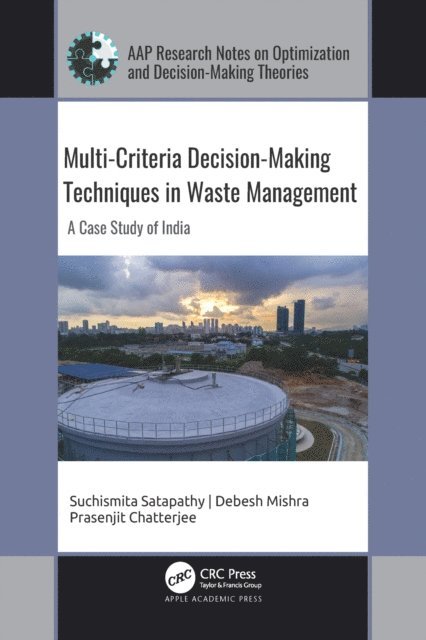
This book addresses the problem of waste management by using multi-criteria decision-making (MCDM) methods. The authors discuss how to apply MCDM, a complex decision-making tool that involves both quantitative and qualitative factors, to develop strategies for effective waste management using various optimization models to rank alternatives, while also incorporating the concerns and needs of multiple stakeholders to find the most optimal decisions for various types of wastes. Typically, there does not exist a single optimal solution to waste problems; with help of MCDM, far better solutions can often be found and utilized to facilitate sustainable waste management techniques in various industries.
This book provides unique, effective, and quick decision-making strategies for waste management. With the ever-increasing population and continuing human development, the problem of managing waste becomes increasingly essential, and this volume helps lead the way to finding sustainable solutions.
1 882 kr
Läs direkt efter köp
This book addresses the problem of waste management by using multi-criteria decision-making (MCDM) methods. The authors discuss how to apply MCDM, a complex decision-making tool that involves both quantitative and qualitative factors, to develop strategies for effective waste management using various optimization models to rank alternatives, while also incorporating the concerns and needs of multiple stakeholders to find the most optimal decisions for various types of wastes. Typically, there does not exist a single optimal solution to waste problems; with help of MCDM, far better solutions can often be found and utilized to facilitate sustainable waste management techniques in various industries.
This book provides unique, effective, and quick decision-making strategies for waste management. With the ever-increasing population and continuing human development, the problem of managing waste becomes increasingly essential, and this volume helps lead the way to finding sustainable solutions.
668 kr
Läs direkt efter köp
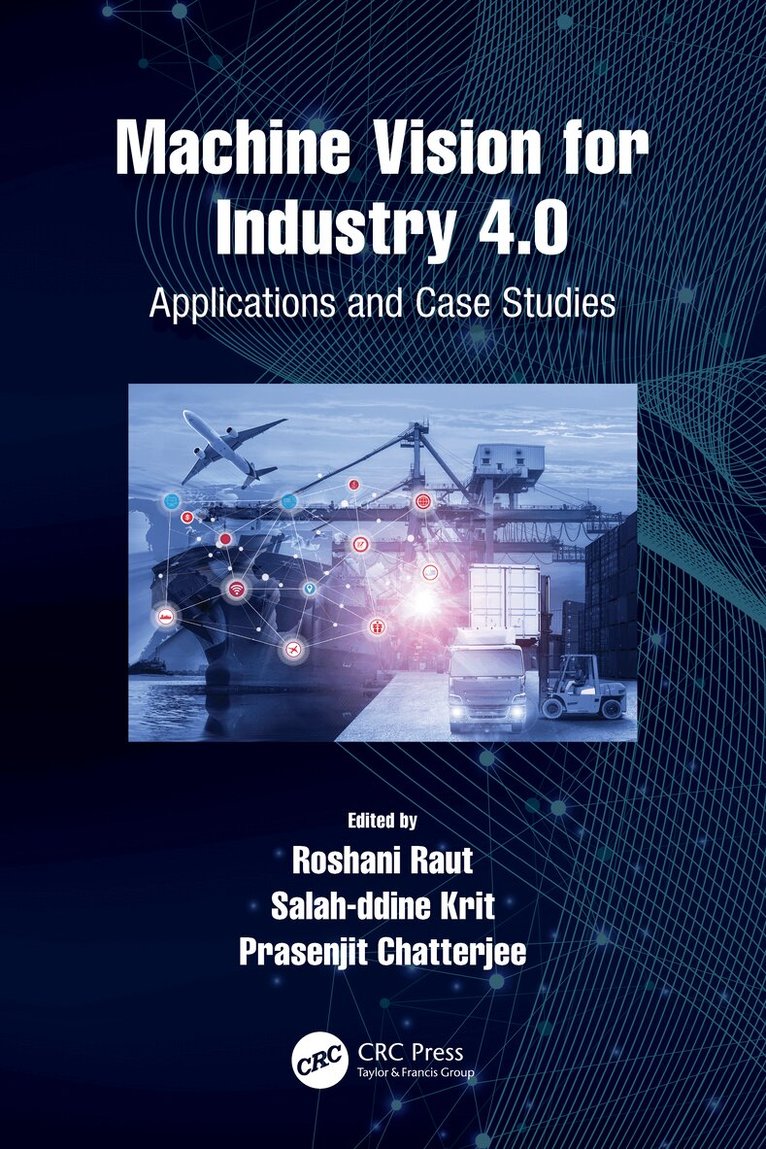
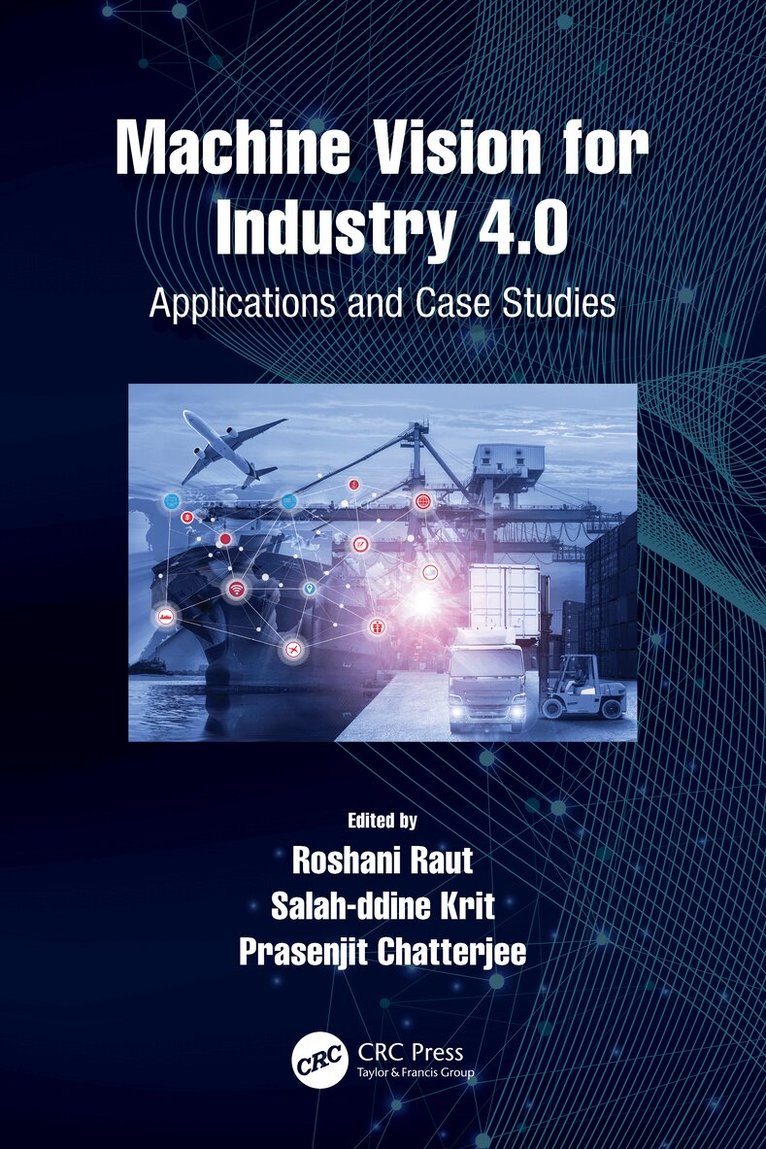
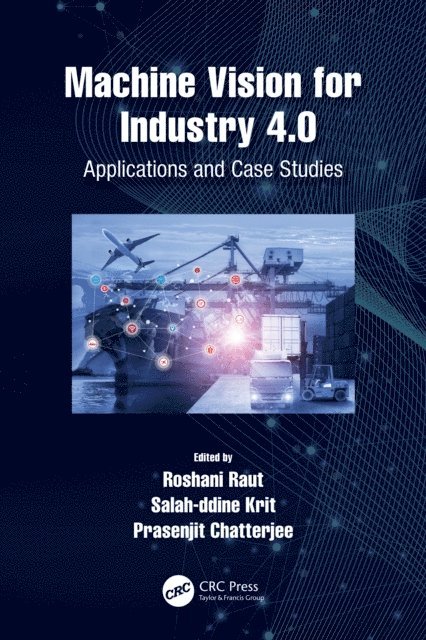
This book discusses the use of machine vision and technologies in specific engineering case studies and focuses on how machine vision techniques are impacting every step of industrial processes and how smart sensors and cognitive big data analytics are supporting the automation processes in Industry 4.0 applications.
Industry 4.0, the Fourth Industrial Revolution, combines traditional manufacturing with automation and data exchange. Machine vision is used in the industry for reliable product inspections, quality control, and data capture solutions. It combines different technologies to provide important information from the acquisition and analysis of images for robot-based inspection and guidance.
Features
Presents a comprehensive guide on how to use machine vision for Industry 4.0 applications, such as analysis of images for automated inspections, object detection, object tracking, and more
Includes case studies of Robotics Internet of Things with its current and future applications in healthcare, agriculture, and transportation
Highlights the inclusion of impaired people in the industry, for example, an intelligent assistant that helps deaf-mute individuals to transmit instructions and warnings in a manufacturing process
Examines the significant technological advancements in machine vision for Industrial Internet of Things and explores the commercial benefits using real-world applications from healthcare to transportation
Discusses a conceptual framework of machine vision for various industrial applications
The book addresses scientific aspects for a wider audience such as senior and junior engineers, undergraduate and postgraduate students, researchers, and anyone interested in the trends, development, and opportunities for machine vision for Industry 4.0 applications.
693 kr
Läs direkt efter köp
This book discusses the use of machine vision and technologies in specific engineering case studies and focuses on how machine vision techniques are impacting every step of industrial processes and how smart sensors and cognitive big data analytics are supporting the automation processes in Industry 4.0 applications.
Industry 4.0, the Fourth Industrial Revolution, combines traditional manufacturing with automation and data exchange. Machine vision is used in the industry for reliable product inspections, quality control, and data capture solutions. It combines different technologies to provide important information from the acquisition and analysis of images for robot-based inspection and guidance.
Features
Presents a comprehensive guide on how to use machine vision for Industry 4.0 applications, such as analysis of images for automated inspections, object detection, object tracking, and more
Includes case studies of Robotics Internet of Things with its current and future applications in healthcare, agriculture, and transportation
Highlights the inclusion of impaired people in the industry, for example, an intelligent assistant that helps deaf-mute individuals to transmit instructions and warnings in a manufacturing process
Examines the significant technological advancements in machine vision for Industrial Internet of Things and explores the commercial benefits using real-world applications from healthcare to transportation
Discusses a conceptual framework of machine vision for various industrial applications
The book addresses scientific aspects for a wider audience such as senior and junior engineers, undergraduate and postgraduate students, researchers, and anyone interested in the trends, development, and opportunities for machine vision for Industry 4.0 applications.
2 385 kr
Läs direkt efter köp
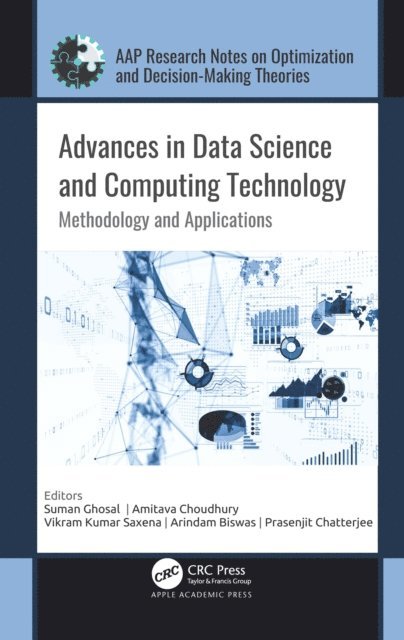
This volume helps to address the genuine 21st century need for advances in data science and computing technology. It provides an abundance of new research and studies on progressive and innovative technologies, including artificial intelligence, communication systems, cyber security applications, data analytics, Internet of Things (IoT), machine learning, power systems, VLSI, embedded systems, and much more. The book presents a variety of interesting and important aspects of data science and computing technologies and methodologies in a wide range of applications, including deep learning, DNA cryptography, classy fuzzy MPPT controller, driving assistance, and safety systems. Novel algorithms and their applications for solving cutting-edge computational and data science problems are included also for an interdisciplinary research perspective.
The book addresses recent applications of deep learning and ANN paradigms, the role and impact of big data in the e-commerce and retail sectors, algorithms for load balancing in cloud computing, advances in embedded system based applications, optimization techniques using a MATLAB platform, and techniques for improving information and network security.
Advances in Data Science and Computing Technology: Methodology and Applications provides a wealth of valuable information and food for thought on many important issues for data scientists and researchers, industry professionals, and faculty and students in the data and computing sciences.
2 385 kr
Läs direkt efter köp
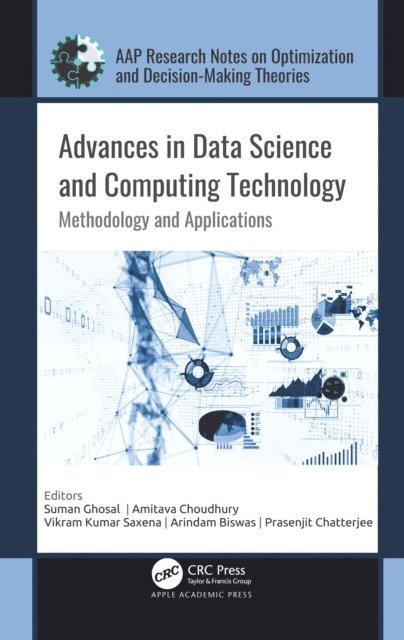
This volume helps to address the genuine 21st century need for advances in data science and computing technology. It provides an abundance of new research and studies on progressive and innovative technologies, including artificial intelligence, communication systems, cyber security applications, data analytics, Internet of Things (IoT), machine learning, power systems, VLSI, embedded systems, and much more. The book presents a variety of interesting and important aspects of data science and computing technologies and methodologies in a wide range of applications, including deep learning, DNA cryptography, classy fuzzy MPPT controller, driving assistance, and safety systems. Novel algorithms and their applications for solving cutting-edge computational and data science problems are included also for an interdisciplinary research perspective.
The book addresses recent applications of deep learning and ANN paradigms, the role and impact of big data in the e-commerce and retail sectors, algorithms for load balancing in cloud computing, advances in embedded system based applications, optimization techniques using a MATLAB platform, and techniques for improving information and network security.
Advances in Data Science and Computing Technology: Methodology and Applications provides a wealth of valuable information and food for thought on many important issues for data scientists and researchers, industry professionals, and faculty and students in the data and computing sciences.
2 072 kr
Läs direkt efter köp
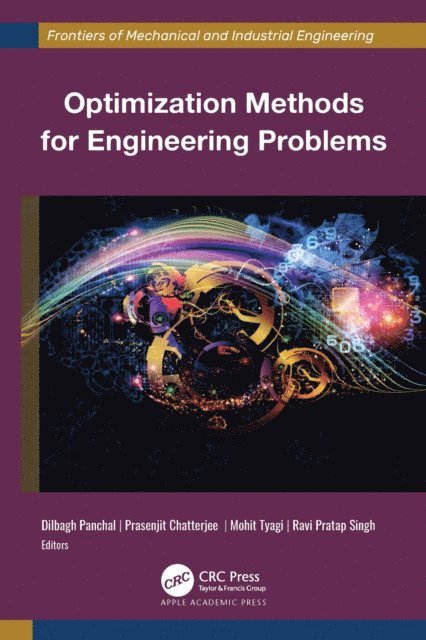
This new volume offers a variety of perspectives from investigators, industry professionals, stakeholders, and economic strategists that look at new ways of solving optimization problems related to different industrial sectors. Case studies relay how optimization methods deal with both real operative conditions in process industries and in service industries. The volume also explores emerging research areas toward the implementation of optimization algorithms for enhancement of system performance as well as system effectiveness.
The book explores the role of optimization methods in engineering applications in industrial and mechanical engineering as well as in the fields of healthcare/medicine, food production, oil, textiles, energy, and agriculture. The volume offers new ways of solving optimization problems related to different industrial sectors, incorporating mathematical formulation for particular design problems and thus aiding the selection of the optimal design among many alternatives. It shows optimization methods that deal with actual operative conditions both in process and in service industries.
A unique advantage of this volume is its wide range of topics in different engineering domains using novel mathematical modeling-based optimization methods for solving the real-life problems. The array of examples and case studies of the effective use of optimization in diverse areas of engineering include healthcare analysis and monitoring (fetal phonocardiography), medical device design (3D printing design for protheses), agriculture/farming (monitoring climate conditions), environmental science (waste management), automotive and aeronautic design, industrial manufacturing, solar energy, and more.
Key features:
Presents case studies on optimization problems related to industry Discusses case studies on operations management practices optimization Provides an overview of design optimization Highlights case studies on process optimization Assesses different techniques for handling engineering problemsThis valuable book will be useful for researchers, scientists, faculty, and students involved or interested in the field of optimization engineering in industrial design.
Indexed in SCOPUS.
2 072 kr
Läs direkt efter köp
This new volume offers a variety of perspectives from investigators, industry professionals, stakeholders, and economic strategists that look at new ways of solving optimization problems related to different industrial sectors. Case studies relay how optimization methods deal with both real operative conditions in process industries and in service industries. The volume also explores emerging research areas toward the implementation of optimization algorithms for enhancement of system performance as well as system effectiveness.
The book explores the role of optimization methods in engineering applications in industrial and mechanical engineering as well as in the fields of healthcare/medicine, food production, oil, textiles, energy, and agriculture. The volume offers new ways of solving optimization problems related to different industrial sectors, incorporating mathematical formulation for particular design problems and thus aiding the selection of the optimal design among many alternatives. It shows optimization methods that deal with actual operative conditions both in process and in service industries.
A unique advantage of this volume is its wide range of topics in different engineering domains using novel mathematical modeling-based optimization methods for solving the real-life problems. The array of examples and case studies of the effective use of optimization in diverse areas of engineering include healthcare analysis and monitoring (fetal phonocardiography), medical device design (3D printing design for protheses), agriculture/farming (monitoring climate conditions), environmental science (waste management), automotive and aeronautic design, industrial manufacturing, solar energy, and more.
Key features:
Presents case studies on optimization problems related to industry Discusses case studies on operations management practices optimization Provides an overview of design optimization Highlights case studies on process optimization Assesses different techniques for handling engineering problemsThis valuable book will be useful for researchers, scientists, faculty, and students involved or interested in the field of optimization engineering in industrial design.
Indexed in SCOPUS.
836 kr
Läs direkt efter köp
843 kr
Läs direkt efter köp
819 kr
Läs direkt efter köp
This book addresses the reliability, risk, and safety issues of real industrial systems with application of the latest reliability and risk-based modeling. Related topics such as maintenance decision-making and risk and safety modeling are also addressed with the implementation of decision-making techniques. The book provides real-life studies on industrial operations along with solutions. It discusses modeling and optimization of reliability and safety aspects in industry and covers reliability maintenance issues in process industries.
The book goes on to present cost optimization, life cycle costing analysis, and multi-criteria decision making (MCDM) application for risk and safety analysis.
Academic institutions, students, professionals, large companies involved in engineering sciences, research scholars, and investigators working in the domain of Reliability and Safety Engineering and its allied domains will find this book useful.
826 kr
Läs direkt efter köp
This book addresses the reliability, risk, and safety issues of real industrial systems with application of the latest reliability and risk-based modeling. Related topics such as maintenance decision-making and risk and safety modeling are also addressed with the implementation of decision-making techniques. The book provides real-life studies on industrial operations along with solutions. It discusses modeling and optimization of reliability and safety aspects in industry and covers reliability maintenance issues in process industries.
The book goes on to present cost optimization, life cycle costing analysis, and multi-criteria decision making (MCDM) application for risk and safety analysis.
Academic institutions, students, professionals, large companies involved in engineering sciences, research scholars, and investigators working in the domain of Reliability and Safety Engineering and its allied domains will find this book useful.
2 456 kr
Läs direkt efter köp
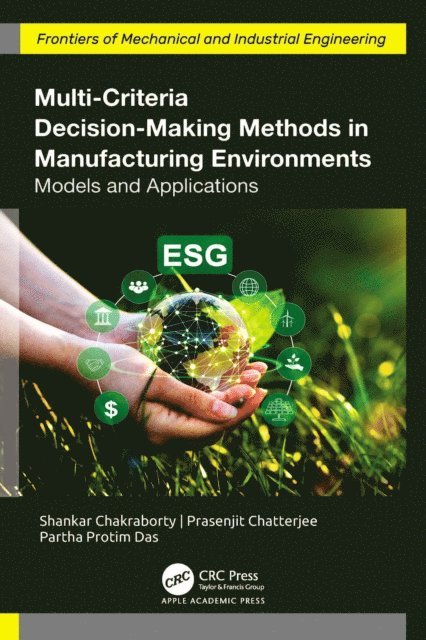
This book introduces the step-by-step processes involved in using MCDM methods, starting from problem formulation, model development, and criteria weighting to the final ranking of the alternatives. The authors explain the different MCDM methods that can be used in specific manufacturing environments. The book explains the conceptual frameworks of how these methods are applied with special focus on their applicability and usefulness. The authors begin with an introduction to multi-criteria decision-making, followed by explanations of 29 MCDM methods and their applications. The final sections of the book describe helpful normalization techniques and criteria weight measurement techniques. The collection of diverse range of manufacturing applications and case studies presented here will aid readers in applying cutting-edge MCDM methods to their own manufacturing projects. As both a research and teaching tool, this book encourages critical and logical thinking when applying MCDM methods for solving complex manufacturing decision-making problems.
2 456 kr
Läs direkt efter köp
This book introduces the step-by-step processes involved in using MCDM methods, starting from problem formulation, model development, and criteria weighting to the final ranking of the alternatives. The authors explain the different MCDM methods that can be used in specific manufacturing environments. The book explains the conceptual frameworks of how these methods are applied with special focus on their applicability and usefulness. The authors begin with an introduction to multi-criteria decision-making, followed by explanations of 29 MCDM methods and their applications. The final sections of the book describe helpful normalization techniques and criteria weight measurement techniques. The collection of diverse range of manufacturing applications and case studies presented here will aid readers in applying cutting-edge MCDM methods to their own manufacturing projects. As both a research and teaching tool, this book encourages critical and logical thinking when applying MCDM methods for solving complex manufacturing decision-making problems.
2 275 kr
Läs direkt efter köp
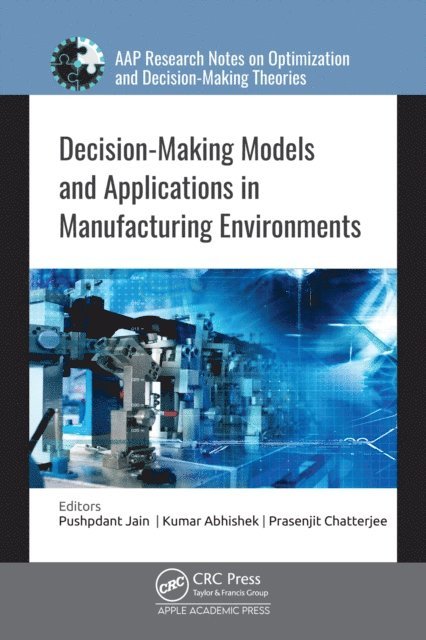
Multi-criteria decision-making (MCDM) has gained vast popularity for its ability to help make decisions in the presence of various similar and conflicting choices.This new volume applies the MCDM theory to solving problems and challenges in manufacturing environments. It discusses using MCDM computational methods to evaluate and select the most optimal solution or method for real-world, real-time manufacutring engineering issues. It details the decision-making process in relation materials selection; identification, assessment, and evaluation of risk; sustainability assessment; selection of green suppliers; and more.
The chapter authors demonstrate the application of myriad MCDM techniques in decision-making, including MADM (multiple attribute decision-making), DEA (data envelopment analysis), fuzzy TOPSIS (technique for order preference by similarities to ideal solution), fuzzy-VIKOR (multicriteria optimization and compromise solution); MOORA (multi-objective optimization on the basis of ratio analysis), EWM (entropy weight method), (AHP) analytic hierarchy process, TODIM (TOmada de Decisao Interativa Multicriterio), and others. The volume illustrates these MCDM models in several industries and industrial processes, including for experimental analysis and optimization of drilling of glass fiber reinforced plastic, in the textile industries, for selection of refrigerants for domestic applications, and others.
2 255 kr
Läs direkt efter köp
Multi-criteria decision-making (MCDM) has gained vast popularity for its ability to help make decisions in the presence of various similar and conflicting choices.This new volume applies the MCDM theory to solving problems and challenges in manufacturing environments. It discusses using MCDM computational methods to evaluate and select the most optimal solution or method for real-world, real-time manufacutring engineering issues. It details the decision-making process in relation materials selection; identification, assessment, and evaluation of risk; sustainability assessment; selection of green suppliers; and more.
The chapter authors demonstrate the application of myriad MCDM techniques in decision-making, including MADM (multiple attribute decision-making), DEA (data envelopment analysis), fuzzy TOPSIS (technique for order preference by similarities to ideal solution), fuzzy-VIKOR (multicriteria optimization and compromise solution); MOORA (multi-objective optimization on the basis of ratio analysis), EWM (entropy weight method), (AHP) analytic hierarchy process, TODIM (TOmada de Decisao Interativa Multicriterio), and others. The volume illustrates these MCDM models in several industries and industrial processes, including for experimental analysis and optimization of drilling of glass fiber reinforced plastic, in the textile industries, for selection of refrigerants for domestic applications, and others.
2 471 kr
Läs direkt efter köp
Bridging the gap between the need for micro elements and the profitable microfabrication of goods, this new book provides an informative overview of the electro-micromachining and microfabrication processes, varieties, and important applications. Opening with an overview of a variety of micromachining technologies, with an emphasis on nontraditional approaches and recent advances in each, the volume discusses the ultrasonic micromachining processes for producing a variety of micro-shapes, such as micro-holes, micro-slots, and micro-walls, as well as assisted hybrid micromachining with ultrasonic vibration of the tool or workpiece, all which help to improve precision and to advance research. Computer-aided design and computer-aided manufacturing dental micromachining technologies are discussed. Micro-electrical discharge machining, laser micro grooving, and laser micromachining are among the advanced micro-manufacturing processes addressed as well. The volume also covers the use of an electrochemical micromachining method to improve micro texturing and the use of nano-additives to enhance MQL and micromachining process optimization.
2 385 kr
Läs direkt efter köp
Bridging the gap between the need for micro elements and the profitable microfabrication of goods, this new book provides an informative overview of the electro-micromachining and microfabrication processes, varieties, and important applications. Opening with an overview of a variety of micromachining technologies, with an emphasis on nontraditional approaches and recent advances in each, the volume discusses the ultrasonic micromachining processes for producing a variety of micro-shapes, such as micro-holes, micro-slots, and micro-walls, as well as assisted hybrid micromachining with ultrasonic vibration of the tool or workpiece, all which help to improve precision and to advance research. Computer-aided design and computer-aided manufacturing dental micromachining technologies are discussed. Micro-electrical discharge machining, laser micro grooving, and laser micromachining are among the advanced micro-manufacturing processes addressed as well. The volume also covers the use of an electrochemical micromachining method to improve micro texturing and the use of nano-additives to enhance MQL and micromachining process optimization.
2 125 kr
Läs direkt efter köp
This new volume provides detailed insight into supply chain management (SCM) and supply chain performance measurement (SCPM) in the textile industry. The book provides a comprehensive set of performance sub-criteria for the evaluation of SCPM, offering the information needed to understand, implement, and evaluate the supply chain performance of the textile industry and its cyclic processes.
Using the Delphi method (a process used to arrive at a group opinion or decision by surveying a panel of experts), the authors studied several companies of diverse sizes and applied an analytical hierarchy process to establish crucial performance measurement criteria and sub-criteria. Around 80 textile industry personnel were contacted, including general managers, factory managers, managers, assistant managers, executives, and supervisors involved in various functions related to textile supply chains to discuss procurement, production, and distribution alternatives. The authors employed the multi-criteria decision-making technique, i.e. analytical hierarchy process, for executing pair-wise comparison and establishing priority weights of criteria, sub-criteria, and for estimating the contribution of supply chain cyclic processes to overall supply chain performance.
2 125 kr
Läs direkt efter köp
This new volume provides detailed insight into supply chain management (SCM) and supply chain performance measurement (SCPM) in the textile industry. The book provides a comprehensive set of performance sub-criteria for the evaluation of SCPM, offering the information needed to understand, implement, and evaluate the supply chain performance of the textile industry and its cyclic processes.
Using the Delphi method (a process used to arrive at a group opinion or decision by surveying a panel of experts), the authors studied several companies of diverse sizes and applied an analytical hierarchy process to establish crucial performance measurement criteria and sub-criteria. Around 80 textile industry personnel were contacted, including general managers, factory managers, managers, assistant managers, executives, and supervisors involved in various functions related to textile supply chains to discuss procurement, production, and distribution alternatives. The authors employed the multi-criteria decision-making technique, i.e. analytical hierarchy process, for executing pair-wise comparison and establishing priority weights of criteria, sub-criteria, and for estimating the contribution of supply chain cyclic processes to overall supply chain performance.
2 471 kr
Läs direkt efter köp
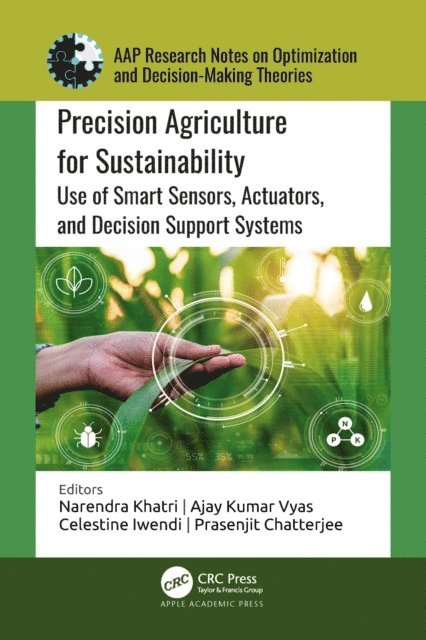
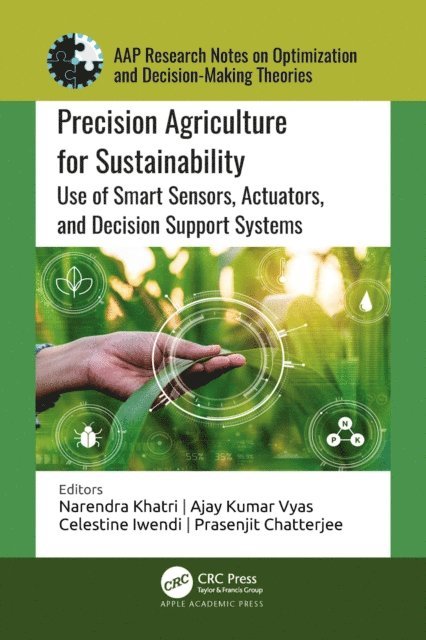
This new book delves into how modern technologies—i.e., global positioning systems (GPS), unmanned aerial vehicles (drones), image processing methods, artificial intelligence, machine learning, and deep learning—are being used to make agriculture more farmer-friendly and more economically profitable. The volume focuses on the use of smart sensors, actuators, and decision support systems to provide intelligent data about crop health and for monitoring for yield prediction, soil quality, nutrition requirement prediction, etc. The authors discuss robotic-based innovations in agriculture, soft computing methodologies for crop forecasting, machine learning techniques to classify and identify plant diseases, deep convolutional neural networks for recognizing nutrient deficiencies, and more.
2 471 kr
Läs direkt efter köp
This new book delves into how modern technologies—i.e., global positioning systems (GPS), unmanned aerial vehicles (drones), image processing methods, artificial intelligence, machine learning, and deep learning—are being used to make agriculture more farmer-friendly and more economically profitable. The volume focuses on the use of smart sensors, actuators, and decision support systems to provide intelligent data about crop health and for monitoring for yield prediction, soil quality, nutrition requirement prediction, etc. The authors discuss robotic-based innovations in agriculture, soft computing methodologies for crop forecasting, machine learning techniques to classify and identify plant diseases, deep convolutional neural networks for recognizing nutrient deficiencies, and more.