• Fri frakt över 249 kr
  • •
  • Snabba leveranser
  • •
  • Billiga böcker
Kundservice

Du är på sajten för privatpersoner.

Företag, bibliotek eller offentlig verksamhet?

Du handlar på classic.bokus.com, där alla dina funktioner finns intakta.
Till classic.bokus.com
Bokus logotyp. Gå till startsidan.
  • Erbjudanden
  • Nyheter
  • Student
  • Topplistor
  • Barn & ungdom
  • Bokus Play
  • E-böcker
  • Pocketböcker
  • Spel & pussel

10% rabatt på allt med kod: NYSTART10 →

Sidfot

Mina sidor

    Hjälp

    • Kundservice
    • Vanliga frågor och svar
    • Frakt och leverans
    • Retur vid ångerrätt
    • Reklamera vara
    • Betalning
    • Köpvillkor
    • Allmänna villkor
    • Information om webbplatsens tillgänglighet

    Om Bokus

    • Om oss
    • Pressrum
    • För studenter
    • För företag
    • För bibliotek och offentlig verksamhet
    • För leverantörer
    • Hållbarhet

    Populärt

    • Aktuella erbjudanden
    • Presentkort
    • Studentlitteratur
    • Nya böcker
    • Topplistor
    • Signerade böcker
    • Engelska böcker

    Inspiration

    • Boktips
    • BookTok
    • Populära bokserier
    • Barnbokskaraktärer
    • Populära författare
    Logotyp för Bokus
    Följ oss på Facebook (extern länk)Följ oss på Instagram (extern länk)Följ oss på YouTube (extern länk)Följ oss på TikTok (extern länk)
    bokus @ CookiesAnpassa cookiesIntegritetspolicyKöpvillkor
    Till Citymail hemsida (extern länk)Till Budbee hemsida (extern länk)Till Postnord hemsida (extern länk)Till Schenker hemsida (extern länk)Till Early Bird hemsida (extern länk)Till Walleys hemsida (extern länk)
    1. Naturvetenskap och teknik
    2. Matematik och naturvetenskap
    3. Kemi
    • Nyhet

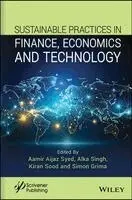
    Sustainable Practices in Finance, Economics and Technology

    AvAamir Aijaz Syed,Alka Singh

    Inbunden, Engelska, 2026

    2 281 kr

    Beställningsvara. Skickas inom 5-8 vardagar. Fri frakt över 249 kr.

    Beskrivning

    Navigate the complex intersection of green finance, circular economics, and technological innovation with this definitive guide to the interdisciplinary solutions currently reshaping the global landscape. In recent years, the global push toward sustainability has transformed finance, economics, and technology from siloed disciplines into interconnected drivers of environmental and social progress. Governments, investors, and businesses are increasingly aligning their strategies with the United Nations Sustainable Development Goals, leading to rapid growth in areas such as green finance, sustainable economic policy, and climate-conscious technological innovation. Industry and academia alike are embracing tools like ESG reporting, circular economy models, digital automation, and AI-driven analytics to address pressing global challenges, ranging from poverty and pollution to energy access and inclusive growth. The intersection of these fields is where the most impactful solutions are emerging, making interdisciplinary research and cross-sector collaboration more important than ever. This book showcases current developments, future trends, and practical approaches at the nexus of sustainability, finance, economics, and technology. It presents a comprehensive, interdisciplinary exploration of how sustainable development is reshaping the global landscape across key sectors. Bringing together contributions from scholars and practitioners around the world, this edited volume bridges theory and practice to address urgent challenges and emerging opportunities in green finance, circular economy, responsible investment, and technological innovation. Readers will find the volume: Integrates finance, economics, and technology to offer a holistic approach to sustainability challenges and solutions;Features real-world case studies and research from diverse regions, including India, Iraq, Europe, the Caribbean, and Azerbaijan;Chapters directly address sustainable development goals, particularly those focused on poverty alleviation, clean energy, and responsible consumption;Includes cutting-edge research techniques like bibliometric analysis, machine learning models, and systems theory;Explores emerging topics such as green finance, circular economy, digital transformation, and central bank digital currencies.Audience Academics, researchers, financial industry professionals, policymakers, and corporate strategists in the fields of economics, environmental studies, and technology.

    Produktinformation

    • Utgivningsdatum:2026-07-07
    • Format:Inbunden
    • Språk:Engelska
    • Antal sidor:592
    • Förlag:John Wiley & Sons Inc
    • ISBN:9781394315017

    Utforska kategorier

    • Kemi inom Naturvetenskap och teknik

    Mer om författaren

    Aamir Aijaz Syed, PhD is an Assistant Professor in the Institute of Management, Commerce and Economics, Shri Ramswaroop Memorial University, Barabanki, UP, India, with more than seven years of academic and research experience. He has published more than 50 peer-reviewed articles in highly regarded journals. His research spans critical areas such as non-performing loan mitigation, international banking, corporate finance, and sustainable finance. Alka Singh, PhD is a Professor in the School of Management at Chandigarh University, Unnao, U.P., India, with more than 25 years of experience in research, teaching, and industry. Her prolific research portfolio includes numerous publications in reputed journals. Her expertise lies in the intersection of finance, economics, and sustainable business practices. Kiran Sood, PhD is a Professor in the Chitkara Business School at Chitkara University, Punjab, India with more than 20 years of academic experience. She has more than 100 publications and around 20 edited volumes with prestigious international publishers. Her research interests include finance, insurance, and risk management. Simon Grima, PhD is the Deputy Dean of the School of Economics, Management, and Accountancy and an Associate Professor and Head of the Department of Insurance and Risk Management University of Malta, Malta. He serves as a reviewer, editor, and chief editor for a number of scientific journals. His research focus is on governance, regulations, and internal controls.

    Innehållsförteckning

    • Foreword xixPreface xixPart 1: Foundations of Sustainability 11 Introduction to the Concept of Sustainability and Its Relevance to Finance, Economics, and Technology 3Radka MacGregor Pelikánová1.1 Introduction 41.2 Theoretical Foundation and Literature Review 61.3 Methodology 101.4 Roots, Evolution, and Present of the Concept of Sustainability 111.5 The Relevance of the Concept of Sustainability 191.6 Conclusion 262 Harnessing Tourism Corporate Social Responsibility to Combat Rural Poverty in Iraq Aligned with SDG1 37Paiman Ahmad2.1 Introduction 382.2 Review of Literature 402.3 Research Methodology 442.4 The Impact of Tourism Development on Poverty Reduction 442.5 The Role of Tourism Corporations in Committing to CSR for Alleviating Poverty 462.6 Practical Implications 472.7 Conclusions 483 Investigating the Horizon of Green Finance Research: A Bibliometric Approach 55Bhawna and Renuka Sharma3.1 Overview 563.2 Theoretical Grounding 583.3 Materials and Methods 593.4 Findings 613.5 Limitations and Future Research Recommendations 743.6 Conclusion 753.7 Implications of the Study 754 The Paradigm of Sustainable Finance – An Indian Overview 81Neha Verma4.1 Introduction 824.2 How is Traditional Finance Different from Sustainable Finance? 844.3 Why is Sustainable Finance Becoming Increasingly Important? 844.4 The Scenario of Sustainable Finance in India 874.5 The Factors Impeding the Growth of Sustainable Finance in India 904.6 How Can India Improve Its Growth in Sustainable Finance? 924.7 The Bottomline 96Part 2: Finance for a Sustainable Future 1015 Case Studies of Green Bonds, Renewable Energy Financing, and Innovative Funding Models for Sustainable Projects 103Narayanage Jayantha Dewasiri and Mohamed Ismail Mohamed Riyath5.1 Introduction 1045.2 Methodology 1055.3 Findings and Discussion 1075.4 Implications for Policy and Practice 1186 Discussion on the Role of Financial Institutions in Driving Sustainable Initiatives and Supporting Environmentally Responsible Businesses 125Mohamed Ismail Mohamed Riyath, Narayanage Jayantha Dewasiri and Mohamed Alkashami6.1 Introduction 1266.2 Methodology 1286.3 Findings and Discussion 1316.4 Thematic Analysis 1426.5 Direction for Future Research 1496.6 Conclusion 1547 Investors' Emotional Intelligence, Personality Traits, and Risk Tolerance: A Measure of Investment Decisions 161Saloni Raheja and Amanjot Singh Syan7.1 Introduction 1627.2 Review of Literature 1627.3 Objective of the Study 1677.4 Research Methodology 1677.5 Data Analysis and Interpretation 1687.6 Findings and Suggestions 1817.7 Conclusion 1838 Systems Theory of Financial Inclusion 189Peterson K. Ozili8.1 Introduction 1898.2 Overview of Financial Inclusion 1918.3 Systems Theory of Financial Inclusion 1918.4 Conceptual Understanding of the Theory 1938.5 The Sub-Systems Enabling Financial Inclusion 1958.6 How the Sub-Systems Benefit from Financial Inclusion 2008.7 Conclusion 202Part 3: Economics and the Circular Economy 2079 Unveiling Dynamics in Circular Economy Research: A Systematic and Bibliometric Analysis 209Hiranya Dissanayake and Leena B. Dam9.1 Purpose of the Study 2109.2 Need for the Study 2109.3 Methodology 2119.4 Results 2139.5 Conclusion 2379.6 Practical Implications 23810 Sustainable Consumption Patterns, Eco-Friendly Production Methods, and Sustainability of Textile and Apparel Supply Chains 243Amita Venkatesh and Kusuma G.10.1 Introduction 24410.2 Research Methodology 24510.3 Results and Discussion 24710.4 Systematic Review Using TCCM Framework 25510.5 Nomological Model Based on SOR Framework 26410.6 Implications of the Study 266xii Contents10.7 Future Research Avenues 26710.8 Conclusions 26811 Does the Circular Economy Drive Sustainable Economic Growth? Evidence from the European Countries (NMS 11) 275Mehmed Ganic11.1 Introduction 27611.2 Literature Review 27711.3 Methodology and Data 27911.4 Empirical Results 28111.5 Conclusion 28712 Analysis of Economic Policies and Regulations Incentivizing Green Practices and Discouraging Harmful Environmental Impact 293Manju Dahiya, Anmol Gupta and Ritu Singh12.1 Introduction 29412.2 Evolution of International Climate Agreements 29512.3 Economic Policies and Regulation 29712.4 Other Environmental Tools 30812.5 Circular Economy 30912.6 Impact Assessment of Environmental Policies 31012.6 Conclusion 31513 The Impact of Public Expenditures on Economic Growth: A Theoretical Analysis and Development Perspectives 325Lekë Pula and Vlora Prenaj13.1 The Role of Public Spending in Economic Development and Market Stability 326Contents xiii13.2 Historical Perspective on Public Expenditure Development 32713.3 Economic Systems and Their Role in Market Functioning 33013.4 The Armey Curve 33213.5 The Role of Public Expenditures in Poverty Reduction: A Theoretical Perspective 33513.6 Literature Review on Empirical Analyses 33713.7 Conclusions 34314 Exploration of Future Trends and Potential Disruptions in the Fields of Finance, Economics, and Technology That Could Further Advance Global Green Practices 349Anand Bharathi S., Vinoth Kumar S., S. Rajamohan, D. Unika and Prince Jason A.14.1 Introduction 35014.2 Background and Literature Review 35114.3 Methodology 35414.4 Analysis and Findings 35414.5 Discussion: Implications for Policymakers, Industries, and Researchers 37914.6 Limitations, Challenges, and Future Directions 38214.7 Conclusions and Recommendations 382Part 4: Technological Innovations for Sustainability 39115 A Comparative Analysis of Machine Learning and Traditional Time Series Forecasting Models to Predict Solar Energy Power 393Adriana AnaMaria Davidescu, Eduard Mihai Manta and Diana Popa16 Acceleration SDGs: The Global Goals with Hyperautomation 423Adriana AnaMaria Davidescu, Eduard Mihai Manta and Marina Diana Agafiței16.1 Introduction 42416.2 Literature Review 42516.3 A Summary of the Key Studies in the Research Area 42716.4 Data and Methodology 42716.5 Descriptive Analysis and Results 43216.6 Conclusions 45117 Determinants of the Development of Enterprise Personnel Management Systems: Use of Digital Tools 457George Abuselidze, Anna Slobodianyk, Liudmyla Parii, Lina Melnichuk, Mykhailo Lishchynskyi and Anna Soroka17.1 Introduction 45817.2 Methodological Foundations 45917.3 Results and Discussion 46017.4 Conclusions 47318 Evaluating the Effects of Technological Innovation Spending on Productivity Growth in Azerbaijan's Manufacturing Industry 477Aliagha Gasimov, Vekil Ibrahimov, Kiran Sood, Nargiz Hajiyeva and Natavan Baymmamadli18.1 Introduction 47818.2 Review of Literature 47918.3 Material and Methods 48318.4 Discussions and Conclusion 486Part 5: Synergy and Future Prospects 49919 Exploring the Economic Landscape Post-CBDC in Caribbean Nations 501Hajra Arshi and Hem Shweta Rathore19.1 Introduction 50219.2 Literature Review 50319.3 Objectives of Study 50919.4 Research Methodology 50919.5 Data Analysis and Interpretation 51119.6 Interpretation of Results 51719.7 Suggestions for Future Research 52019.8 Implications of Study 52019.9 Conclusion 521Part 6: Forging a Sustainable Path Forward 52720 Emphasis on the Vital Role of Individuals, Businesses, Policymakers, and Innovators in Driving Positive Change 529Elwira Gross-Go³acka20.1 Introduction 53020.2 Theoretical Review 53020.3 The Importance of Collaboration among Various Actors 53120.4 Synergistic Collaboration 54320.5 Conclusion 544References 547Index 553