• Fri frakt över 249 kr
  • •
  • Snabba leveranser
  • •
  • Billiga böcker
Kundservice

Du är på sajten för privatpersoner.

Företag, bibliotek eller offentlig verksamhet?

Du handlar på classic.bokus.com, där alla dina funktioner finns intakta.
Till classic.bokus.com
Bokus logotyp. Gå till startsidan.
  • Erbjudanden
  • Nyheter
  • Student
  • Topplistor
  • Barn & ungdom
  • Bokus Play
  • E-böcker
  • Pocketböcker
  • Spel & pussel

Må bättre, för mindre! Upp till 50% rabatt på hälsoböcker

Sidfot

Mina sidor

    Hjälp

    • Kundservice
    • Vanliga frågor och svar
    • Frakt och leverans
    • Retur vid ångerrätt
    • Reklamera vara
    • Betalning
    • Köpvillkor
    • Allmänna villkor
    • Information om webbplatsens tillgänglighet

    Om Bokus

    • Om oss
    • Pressrum
    • För studenter
    • För företag
    • För bibliotek och offentlig verksamhet
    • För leverantörer
    • Hållbarhet

    Populärt

    • Aktuella erbjudanden
    • Presentkort
    • Studentlitteratur
    • Nya böcker
    • Topplistor
    • Signerade böcker
    • Engelska böcker

    Inspiration

    • Boktips
    • BookTok
    • Populära bokserier
    • Barnbokskaraktärer
    • Populära författare
    Logotyp för Bokus
    Följ oss på Facebook (extern länk)Följ oss på Instagram (extern länk)Följ oss på YouTube (extern länk)Följ oss på TikTok (extern länk)
    bokus @ CookiesAnpassa cookiesIntegritetspolicyKöpvillkor
    Till Citymail hemsida (extern länk)Till Budbee hemsida (extern länk)Till Postnord hemsida (extern länk)Till Schenker hemsida (extern länk)Till Early Bird hemsida (extern länk)Till Walleys hemsida (extern länk)
    1. Naturvetenskap och teknik
    2. Teknik och industri
    3. Agronomi och lantbruk

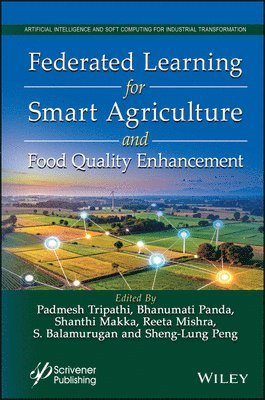
    Federated Learning for Smart Agriculture and Food Quality Enhancement

    AvPadmesh Tripathi,Bhanumati Panda

    Inbunden, Engelska, 2025

    2 391 kr

    Beställningsvara. Skickas inom 5-8 vardagar. Fri frakt över 249 kr.

    Beskrivning

    This essential book provides a comprehensive, expert-led guide on how federated learning can revolutionize crop yield, enhance resource management, and ensure a pathway to sustainable food quality and safety. The convergence of artificial intelligence, machine learning, and data science with agriculture and food, provides remarkable opportunities to improve quality, sustainability, and productivity in the agricultural sector. Federated Learning is a promising technology that has emerged at this intersection. In the context of smart agriculture, federated learning holds promise for improving crop yield, resource management, and decision-making. Additionally, federated learning provides greater clarity and understanding in the world of agriculture, encouraging stakeholders to explore and adopt this technology for improved farm management. Readers will find the book: Explores the integration of federated learning, a novel machine learning technique, into the realm of agriculture and food quality enhancement, showcasing the latest advancements;Introduces real-world applications of federated learning in agriculture, and demonstrates the way this technology can transform farming practices, crop monitoring, pest control, and food quality assurance;By bridging the fields of agriculture, machine learning, and food science, it offers a holistic perspective on leveraging technology to address challenges in food production and quality management;Emphasizes the importance of sustainability in agriculture, exploring how federated learning can contribute to more efficient resource utilization, reduced environmental impact, and the overall sustainability of food production systems;Discusses the future directions of smart agriculture and food quality enhancement, envisioning how federated learning and other emerging technologies can continue to shape the industry and address evolving challenges.Audience Agriculture specialists, agricultural engineers, professionals associated with food safety, crop managers, quality assurance professionals, IT professionals, data scientists, and academics working towards improved quality and sustainability in agriculture.

    Produktinformation

    • Utgivningsdatum:2025-12-20
    • Vikt:839 g
    • Format:Inbunden
    • Språk:Engelska
    • Antal sidor:432
    • Förlag:John Wiley & Sons Inc
    • ISBN:9781394338696

    Utforska kategorier

    • Agronomi och lantbruk inom Naturvetenskap och teknik

    Mer om författaren

    Padmesh Tripathi, PhD is a Professor of Mathematics in the Department of AI and Data Science at the Delhi Technical Campus, Greater Noida, India with more than 24 years of teaching experience. He has published several articles in reputed journals, book chapters as well as several patents. Bhanumati Panda, PhD is an Associate Professor in the Academy of Business and Engineering Science’s Engineering College, Ghaziabad, UP, India with more than two decades of teaching experience. Her teaching and research expertise spans a wide range of subjects, including engineering mathematics, operations research, numerical analysis, complex analysis, discrete mathematics, real analysis, and statistics. Shanthi Makka, PhD is a Professor in the Department of Computer Science and Engineering and the Head of the Teaching Learning Center at the Vardhaman College of Engineering, Hyderabad, India with more than 19 years of academic experience. She has published one book, more than 28 papers in reputed international journals and conferences, and several patents. Reeta Mishra is an Assistant Professor in the School of Computer Science and Engineering at IILM University, Greater Noida, India. She has contributed to many research papers in reputed national and international journals and published five patents. S. Balamurugan, PhD is the Director of Intelligent Research Consultancy Services in Coimbatore India. He has published more than 70 books, 300 articles in international journals and conferences, and 300 patents, and serves as a research consultant to many companies and startups. Sheng-Lung Peng, PhD is a Professor and the Director of the Department of Creative Technologies and Product Design at the National Taipei University of Business,Taiwan. He has published over 100 articles in international journals and conferences.

    Innehållsförteckning

    • Preface xxiii1 Harnessing the Power of Federated Learning for Agricultural Innovation 1Abhishek, Mritunjay Rai, Anand Prakash Singh and Vishwanath Jha1.1 Introduction 21.2 Various Methods for Providing Solutions to Challenges in Agriculture 61.3 Rice Leaf Disease Classification 101.4 Federated Learning–Based CNNs for Sunflower Leaf Disease Detection 151.5 Federated Learning–Based CNNs for Banana Leaf Disease Detection 181.6 Conclusion 232 Federated Learning–Based Food Calorie Estimation 27Lingam Sunitha, Shanthi Makka, Kumavat Prakash and Vankadaru Charan2.1 Introduction 272.2 Foundations of Federated Learning 282.3 Federated Learning: A Collaborative Learning Approach 312.4 Machine Learning for Food Calorie Estimation 372.5 Federated Learning in Food Calorie Estimation 422.6 Challenges and Future Directions 502.7 Conclusion 543 Federated Learning for Food Safety and Compliance 57Ramit Sehgal and Nitendra Kumar3.1 Introduction 573.2 Principles and Mechanisms of Federated Learning 603.3 Applications of Federated Leaning in Food Safety and Quality Standards 633.4 Challenges and Limitations of Federated Learning in Food Safety and Quality Standards 693.5 Challenges and Opportunities in Implementing Federated Learning for Food Safety 733.6 Future Directions and Innovation in Federated Learning for Food Safety 763.7 Challenges and Limitations of Federated Learning in Food Safety 803.8 Conclusion 824 Federated Learning and Its Applications in Smart Agricultural Processes 85Mahesh Kumar Singh, Pushpa Choudhary, Akhilesh Kumar Singh, Arun Kumar Singh and Om Prakash Rishi4.1 Introduction 864.2 Federated Learning (FL) 894.3 Types of Federated Learning 904.4 Applications of Federated Learning 1014.5 Conclusion 1065 Federated Learning in Food Inspection and Grading 111Reeta Mishra, Padmesh Tripathi, Reddy Saisindhutheja, Gagandeep Arora and Bhanumati Panda5.1 Introduction 1125.2 Traditional Food Inspection Methods: Key Approaches 1155.3 Challenges and Limitations of Traditional Food Inspection Systems 1165.4 Federated Learning: Overview and Applications in Food Systems 1185.5 Existing Frameworks and Implementations in Food Inspection 1205.6 Comparison Between Existing and Future Federate Learning System for Food Inspection and Grading 1215.7 Case Studies in Federated Learning for Food Inspection and Grading 1215.8 Future Directions and Potential of Federated Learning in Food Systems 1305.9 Conclusion 1316 Federated Learning–Based Approach for Crop Recommendation and Market Stability in Agriculture 135Saurabh Kumar, Tejasva Maurya, Mritunjay Rai and Abhishek Saxena6.1 Introduction 1366.2 Literature Review 1406.3 Proposed Federated Learning–Based Crop Recommendation System Conceptual Approach 1436.4 Workflow for the Proposed System 1476.5 Conclusion and Future Scopes 1607 Federated Learning for Plant Disease Detection 165Siddhartha Das, Sudipta Jana, Sudeepta Pattanayak, Pradipta Banerjee and Sweety Maity7.1 Introduction 1667.2 Federated Learning 1677.3 Various Crop Diseases and Their Identification Strategies 1687.4 Tools Used in the Federated Learning 1697.5 Advantages of Federated Learning to Identify Plant Diseases 1697.6 Data Collection and Preprocessing 1707.7 Model Training and Aggregation 1707.8 Other Associative Models 1767.9 Benefits of Federated Learning for Plant Disease Detection 1817.10 Implementation of DL Models 1827.11 Challenges and Solutions in Federated Learning for Plant Disease Detection 1857.12 Case Studies and Applications 1867.13 Various Kind of Integration through Edge, Multi-Modal and Reinforcement Learning 1877.14 Conclusion 1888 Federated Learning for Decentralized Smart Farm Network Applications: Enhancing Crop Classification Performance 193Mukesh Kumar Tripathi, Praveen Kumar Reddy, Vangara Nikitha, Nakshatra Reddy, Akshaya Gourisetty and Kapil Misal8.1 Introduction 1948.2 Related Work 1988.3 Methodology and Experimental Setup 2058.4 Results and Discussion 2098.5 Conclusion 2119 Revolutionizing Agriculture Yields through Federated Learning 217Ramit Sehgal, Nitendra Kumar and Yash Dwivedi9.1 Introduction 2189.2 Overview of Crop Yield Prediction 2229.3 The Importance of Crop Yield Prediction 2269.4 Federated Learning in Agriculture 2319.5 Implementation of Federated Learning for Crop Yield Prediction 2339.6 Challenges and Limitations of Federated Learning in Crop Yield Predictions 2399.7 Future Directions in Federated Learning for Agriculture 24110 Federated Learning in Smart Agriculture: Applications, Challenges, and Solutions 247Abhishek Tyagi, Shekhar Tyagi and Guru Dayal Kumar10.1 Introduction 24810.2 Related Work 25010.3 Federated Learning: Pioneering Precision Agriculture Applications 25210.4 Implementing Federated Learning in Smart Agriculture: Challenges and Solutions 25910.5 Conclusion 26610.6 Future Directions 26711 Federated Learning and Its Impact on Decision-Making in Smart Agriculture 271Divita Jain, Nikita Bhati and Nisha Bhardwaj11.1 Introduction to Federated Learning in Agriculture 27211.2 Applications of Federated Learning in Smart Agriculture 27311.3 Enhancing Food Quality through Federated Learning 27411.4 Using AI to Make Decisions in Smart Agriculture 27511.5 Improving Food Quality with IoT, AI, and Blockchain 27711.6 Federated Learning Enhances the Detection of Food Adulterants 27811.7 Federated Learning Enhances Food Inspection and Grading 28011.8 The Impact of Federated Learning Systems on Farmer Decision-Making: A Psychological Perspective 28311.9 Challenges in Implementing Federated Learning 28411.10 Limitations of Federated Learning 28511.11 Future Directions for Research 28611.12 Conclusion 28612 A Federated Differential Privacy Model with Pyramid Residual Network for Predicting Crop Yields 293Reddy Saisindhutheja, Shanthi Makka, Reeta Mishra and Padmesh Tripathi12.1 Introduction 29412.2 Crop Yield Prediction Using Federated Learning 29912.3 Methodologies of the Proposed Work 30212.4 Execution and Outcomes 30812.5 Conclusions and Future Scope 31213 A Review on Detection of Adulteration in Food Using Federated Learning 319Jagamohan Meher and Rajanandini Meher13.1 Introduction 32013.2 Fundamentals of FL 32113.3 Data Types and Features in FA Detection 32413.4 Integration of Diverse Data Sources in FA Detection and Its Benefit 33213.5 Conclusion 34014 Federated Learning for Crop Yield Prediction 347Gangadhara Doggalli, Santhoshini E., Sujitha R., Vishwas Gowda G.R., Kavya, N.S. Gouthami and Oinam Bobochand Singh14.1 Introduction 34814.2 Introduction to Federated Learning 34814.3 Accurate Crop Yield Prediction with Federated Learning 35714.4 Data Privacy in Federated Learning in Crop Yield Prediction 37014.5 Integration with Existing Agricultural Technologies 37214.6 Real-World Examples of Federated Learning in Crop Yield Prediction 37314.7 Policy and Regulatory Considerations 37514.8 Challenges and Future Directions 37614.9 Conclusion 378References 378Index 383