• Fri frakt över 249 kr
  • •
  • Snabba leveranser
  • •
  • Billiga böcker
Kundservice

Du är på sajten för privatpersoner.

Företag, bibliotek eller offentlig verksamhet?

Du handlar på classic.bokus.com, där alla dina funktioner finns intakta.
Till classic.bokus.com
Bokus logotyp. Gå till startsidan.
  • Erbjudanden
  • Nyheter
  • Student
  • Topplistor
  • Barn & ungdom
  • Bokus Play
  • E-böcker
  • Pocketböcker
  • Spel & pussel

Upp till 20% på populära nyheter →

Sidfot

Mina sidor

    Hjälp

    • Kundservice
    • Vanliga frågor och svar
    • Frakt och leverans
    • Retur vid ångerrätt
    • Reklamera vara
    • Betalning
    • Köpvillkor
    • Allmänna villkor
    • Information om webbplatsens tillgänglighet

    Om Bokus

    • Om oss
    • Pressrum
    • För studenter
    • För företag
    • För bibliotek och offentlig verksamhet
    • För leverantörer
    • Hållbarhet

    Populärt

    • Aktuella erbjudanden
    • Presentkort
    • Studentlitteratur
    • Nya böcker
    • Topplistor
    • Signerade böcker
    • Engelska böcker

    Inspiration

    • Boktips
    • BookTok
    • Populära bokserier
    • Barnbokskaraktärer
    • Populära författare

    Mina sidor

      Hjälp

      • Kundservice
      • Vanliga frågor och svar
      • Frakt och leverans
      • Retur vid ångerrätt
      • Reklamera vara
      • Betalning
      • Köpvillkor
      • Allmänna villkor
      • Information om webbplatsens tillgänglighet

      Om Bokus

      • Om oss
      • Pressrum
      • För studenter
      • För företag
      • För bibliotek och offentlig verksamhet
      • För leverantörer
      • Hållbarhet

      Populärt

      • Aktuella erbjudanden
      • Presentkort
      • Studentlitteratur
      • Nya böcker
      • Topplistor
      • Signerade böcker
      • Engelska böcker

      Inspiration

      • Boktips
      • BookTok
      • Populära bokserier
      • Barnbokskaraktärer
      • Populära författare
      Logotyp för Bokus
      Följ oss på Facebook (extern länk)Följ oss på Instagram (extern länk)Följ oss på YouTube (extern länk)Följ oss på TikTok (extern länk)
      bokus @ CookiesIntegritetspolicyKöpvillkor
      Till Citymail hemsida (extern länk)Till Budbee hemsida (extern länk)Till Postnord hemsida (extern länk)Till Schenker hemsida (extern länk)Till Early Bird hemsida (extern länk)Till Walleys hemsida (extern länk)
      1. Data och IT
      2. IT-säkerhet

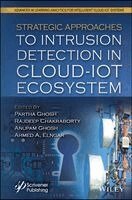
      Strategic Approaches to Intrusion Detection in Cloud-IoT Ecosystem

      AvPartha Ghosh,Rajdeep Chakraborty

      Inbunden, Engelska, 2026

      Del i serien Advances in Learning Analytics for Intelligent Cloud-IoT Systems

      2 363 kr

      Beställningsvara. Skickas inom 5-8 vardagar. Fri frakt över 249 kr.

      Beskrivning

      Future-proof your digital infrastructure with this essential book, which provides a comprehensive exploration of both traditional and advanced machine and deep learning models to implement resilient and intelligent intrusion detection systems for securing complex cloud-IoT environments. The rapid growth of cloud computing and the Internet of Things has transformed industry by enabling real-time data collection, processing, and automation. However, this increasing interconnectivity also introduces significant security challenges, including data breaches, unauthorized access, and cyber threats. Ensuring the security and privacy of cloud-IoT environments requires advanced intrusion detection mechanisms, privacy-preserving strategies, and efficient resource management. This book explores various advanced methods to achieve these goals, including machine and deep learning models, to protect cloud-IoT systems against cyber threats. This book covers both traditional and advanced techniques to implement intrusion detection systems and provides detailed comparative analysis. By offering practical insights, readers will gain a deeper understanding of how to effectively implement intelligent security solutions, ensuring resilience, privacy, and protection against evolving cyber threats in cloud-IoT environments. Readers will find the volume: Provides comprehensive coverage of topics like machine and deep learning for intelligent security; Explores cyber-IoT systems and intrusion detection systems for identifying suspicious activities and mitigating potential threats;Discusses various security mechanisms to safeguard the cloud-IoT environment and implement various techniques to detect intrusions early on.Audience Research scholars and industry professionals in information technology, artificial intelligence and cybersecurity looking to innovate cybersecurity for cloud computing and IoT.

      Produktinformation

      • Utgivningsdatum:2026-03-17
      • Mått:159 x 237 x 28 mm
      • Vikt:771 g
      • Format:Inbunden
      • Språk:Engelska
      • Serie:Advances in Learning Analytics for Intelligent Cloud-IoT Systems
      • Antal sidor:384
      • Förlag:John Wiley & Sons Inc
      • ISBN:9781394341948

      Utforska kategorier

      • IT-säkerhet inom Data och IT

      Mer om författaren

      Partha Ghosh, PhD is an Associate Professor in the Department of Information Technology and the Head of the Department of Computer Science and Business Systems at the Netaji Subhash Engineering College, Kolkata, India. He has published more than 20 research papers in reputed journals and conferences. His research interests include cloud computing, machine learning, intrusion detection systems, optimization techniques, feature selection, computer networks, and security. Rajdeep Chakraborty, PhD is a Professor in the Computer Science and Engineering Department at Medi-Caps University, Indore, Madhya Pradesh, India with nearly two decades of research and teaching experience. He has made notable contributions through various publications, including patents, books, journal articles, and conference papers. His research interests include cryptography, network security, cybersecurity, IoT, and blockchain. Anupam Ghosh, PhD is a Professor and Head of the Department of Computer Science and Engineering at Netaji Subhash Engineering College, Kolkata, India with more than 22 years of experience. He has published more than 100 international papers in reputed journals and conferences. His research focuses on AI, machine learning, deep learning, image processing, soft computing, and bioinformatics. Ahmed A. Elngar, PhD is an Associate Professor and Head of the Computer Science Department in the School of Computers and Artificial Intelligence at Beni-Suef University, Egypt and an Associate Professor of Computer Science in the College of Computer Information Technology at American University in the United Arab Emirates. He has published more than 150 scientific research papers in prestigious international journals and more than 35 books. His research interests include the Internet of Things, network security, intrusion detection, machine learning, data mining, and artificial intelligence.

      Innehållsförteckning

      • Preface xviiPart I: Intelligent Cloud-IoT Security 11 Intrusion Detection in Cloud-IoT Systems: Challenges and Opportunities 3Anindita Raychaudhuri and Inadyuti Dutt1.1 Introduction 41.2 Overview of Cloud IoT Systems 51.3 Challenges in Cloud IoT Systems 51.4 Security Issues in Cloud Systems 61.5 Evolution of Intrusion Detection Systems 91.5.1 Evolution of IDTs in IoT-Cloud Systems 91.5.2 Comparative Analysis of Intrusion Detection Systems 111.6 Techniques and Algorithms for Intrusion Detection 121.7 Applications Areas of Intrusion Detection in Cloud-IoT Systems 141.8 Future Directions and Research Opportunities 221.9 Conclusion 23References 242 Applications of Artificial Intelligence for Early Detection of Cyber Threats in Cloud Networks for IoT Devices: A Sentinel Analysis 31Kaushiki Chatterjee and Soumen Santra2.1 Introduction 322.2 Implementing Protective Measures and Following Best Practices to Mitigate Threats from IoCST 352.3 Utilizing Diffie-Hellman for Enhancing IoT Security 412.4 Utilizing Machine Learning to Enhance Security in the Realm of IoT 422.5 Future 432.6 Conclusion 44References 453 Securing the Interconnected: AI-Driven Strategies for Dynamic Cloud-IoT Ecosystem 49Ayan Banerjee and Anirban Kundu3.1 Introduction 503.1.1 Overview 503.1.2 Aim 513.1.3 Scope 513.1.4 Motivation 513.1.5 Organization 523.2 Literature Review 523.2.1 Past Researches 523.2.2 Challenges 533.3 CA Based MCMS Framework for System Allocation Using Memory Capacity Analysis 533.4 Cloud-Based Communication between Administrator Module and Controller Module for Maintaining IoT Ecosystem Capacity 583.5 Functional Communication between User Module and Controller Module for Query Analysis 603.6 Controller Design for Measuring System Capacity Using CA 633.6.1 CA Based Controller Design for IoT Ecosystem’s Performance Sustainability 643.6.2 CA Based Controller Design for User Query Analysis 683.7 Analytical Discussion 733.7.1 Connection Demand Analysis Based on Connections between Web Server and Database Server 733.7.2 Server Load Analysis Based on Connections between Web Server and Database Server 743.7.3 HDD Capacity Analysis 743.7.4 RAM Capacity Analysis 743.7.5 Memory Capacity Analysis 753.7.6 System Reliability Analysis 753.8 Theoretical Discussion 753.8.1 Theoretical Perspective on Server Load Evaluation 753.8.2 Theoretical Examination of HDD Capacity Analysis 803.8.3 Theoretical Examination of RAM Capacity Analysis 813.8.4 Theoretical Foundation on Memory Capacity Analysis 823.8.5 Theoretical Discussion on System Reliability 833.9 Experimental Discussion 843.9.1 Overview 843.9.2 Experimental Setup 843.9.3 Time Complexity Analysis 853.9.4 System Load Analysis 863.9.5 System Proficiency Analysis Using Different Factors 883.10 Comparison 903.11 Conclusion 94Acknowledgment 95References 954 Navigating the Fog AI-Driven Resilience and Privacy Preservation in Cloud IoT Environments 99Bhupendra Panchal, Sarah Joby David, Ritika Singh, Manini Chhabra, Ajay Sharma and Tarannum Khan4.1 Introduction 1004.2 Literature Review 1034.2.1 Cloud and IoT: Challenges and Opportunities 1034.2.2 AI-Driven Resilience in Fog and Cloud IoT Environments 1034.2.3 Privacy Preservation in AI-Driven Cloud IoT Systems 1044.2.4 Security Concerns and AI Mitigation Strategies 1044.3 Proposed Work 1054.4 Experimental Setup 1094.4.1 Tools 1094.4.2 Simulation 1104.4.3 Dataset 1104.5 Experimental Results 1114.5.1 Privacy Breach Risk Comparison 1114.5.2 Latency Comparison 1124.5.3 Bandwidth Usage Comparison 1124.5.4 Model Accuracy and Resilience Comparison 1134.6 Conclusion 115References 1155 Learning Safeguards: Leveraging Machine Learning for Anomaly Detection in Cloud – IoT Networks 119Swastika Kayal and Soumen Santra5.1 Introduction 1205.1.1 Cloud Security 1225.1.2 Adhoc Network 1225.2 Background and Literature Survey 1235.3 Methodology 1245.3.1 Deviation Detection System 1245.3.1.1 Anomaly Detection in Network Using Optimized Kernel-SVM 1255.3.1.2 Anomaly Detection in Network Using Hierarchical Trees 1265.3.2 Intrusion Detection System 1265.3.3 Behavioral Malware Detection Techniques 1285.3.4 Bayesian Network for Predictive Threat Modeling 1305.4 Comparative Analysis 1325.4.1 Comparative Analysis of Outlier Detection Techniques 1325.4.2 Supervised Learning: Kernel SVM 1325.4.2.1 Pros 1325.4.2.2 Cons 1325.4.3 Supervised Learning: Hierarchical Trees 1325.4.3.1 Pros 1335.4.3.2 Cons 1335.4.4 Deep Learning: Spatial Feature Learner (SFL) 1335.4.4.1 Pros 1335.4.4.2 Cons 1335.4.5 Deep Learning: Recurrent Neural Networks (RNN) 1345.4.5.1 Pros 1345.4.5.2 Cons 1345.4.6 Bayesian Networks for Predictive Threat Modeling 1345.4.6.1 Pros 1345.4.6.2 Cons 1345.5 Results and Discussion 1355.5.1 Dataset Link 1365.5.2 Dataset Table 1365.5.3 Output 1365.6 Future Work 1385.6.1 Transfer Learning in IoT Anomaly Detection 1395.6.2 Semi-Supervised Learning for IoT 1395.6.3 Data Augmentation Techniques for IoT Networks 1405.6.4 Continuous Learning and Adaptation 1405.6.5 Scalability and Real-Time Detection 1405.7 Conclusion 141References 1416 Smart Shields: Machine Learning Approaches for Adaptive Defense in Cloud-IoT Security 143Bhupendra Panchal, Aafiya Choudhary, Ashish Anand, Ajay Sharma and Tarannum Khan6.1 Introduction 1446.1.1 Motivation of the Study 1456.1.2 Problem Statement 1456.2 Literature Review 1466.3 Proposed Methodology 1486.3.1 Data Collection and Simulation 1496.3.2 Layered Architecture 1496.3.3 Model Adaptation and Defense Mechanisms 1506.4 Experimental Result 1516.4.1 Hardware and Network Environment 1516.4.2 Datasets 1526.4.3 ml Algorithms 1526.4.4 Threat Simulation 1526.4.5 Adaptive Defense Mechanism 1536.5 Result Analysis 1536.5.1 Detection Accuracy 1536.5.2 Latency 1546.5.3 Power Consumption 1546.5.4 Model Scalability 1556.5.5 Adaptability 1566.6 Conclusion 157References 1587 Real Time Threats Prediction and Security Issues in Cloud and Internet of Things System: The AI and ML Context 161Nilanjan Das7.1 Introduction 1627.2 Objectives 1637.3 Methodology 1637.4 Fundamentals of Cyber Security Issues 1657.5 Fundamentals of IoT in Association with Cloud Computing 1677.6 Foundation of Artificial Intelligence and Machine Learning 1707.7 Cyber Threats and Intrusion Detection Using AI and ml 1747.8 Real Time Threat Detection and Prediction on Cloud IoT Platform in the Context of Artificial Intelligence 1757.9 Core Findings 1817.10 Conclusion and Future Work 182Acknowledgement 182References 1838 Deep Learning Driven Heteromorphic Block Cipher (DL-HBC) Framework for Asynchronous Data Transmission in Heterogeneous Cloud Based Network 189Nivedita Ray, Shreya Kumari, Ankita Bera, Shruti Singh and Anirban Kundu8.1 Introduction 1908.1.1 Overview 1908.1.2 Literature Survey 1918.1.3 Aim 1938.1.4 Scope 1948.1.5 Motivation 1948.1.6 Organization 1948.2 System Design and Architecture for Heteromorphic DLE 1948.3 Procedure for Heteromorphic DLE 1958.4 Detailed Procedural Explanation for Design Framework 2008.5 Analysis on Asynchronous Data Transmission 2018.6 Experimental Observations 2068.6.1 Experimental Setup 2068.6.2 Experimental Results 2068.6.3 Comparative Analysis 2068.6.4 Cost Analysis 2098.7 Conclusion 220Acknowledgment 221References 221Part II: Intelligent Intrusion Detection for Cloud-IoT System 2259 Deep Learning Insights into Defending Against Adversarial Attacks in IoT Systems 227J. Ramkumar and S. Vetrivel9.1 Introduction 2289.1.1 Overview of Adversarial Attacks on IoT Systems 2289.1.2 Role of Deep Learning in Enhancing IoT Security 2299.1.3 Review Literature Nature of Adversarial Attacks 2309.1.4 Definition and Characteristics 2309.1.5 Common Techniques Used in Attacks 2319.1.6 Impact on IoT Systems and Devices 2319.2 IoT System Vulnerabilities 2329.2.1 Security Flaws in IoT Devices 2339.2.2 Network Vulnerabilities 2339.2.3 Exploitation Methods and Scenarios 2349.3 Deep Learning Approaches 2349.3.1 Overview of Deep Learning Models 2359.3.2 Specific Algorithms for Security 2369.3.3 Training and Validation of Models 2369.4 Defense Mechanisms 2379.4.1 Detection of Adversarial Attacks 2389.4.2 Real-Time Threat Response 2389.4.3 Mitigation and Prevention Strategies 2399.5 Integration with IoT Security Frameworks 2399.5.1 System Design Considerations 2409.5.2 Scalability and Performance Issues 2409.5.3 Practical Implementation Steps 2419.6 Recent Advances and Future Trends 2429.6.1 Innovations in Deep Learning for Security 2429.6.2 Future Research Directions 2459.7 Conclusion 2469.7.1 Key Takeaways 2469.7.2 Implications for IoT Security and Deep Learning Applications 247References 24810 Federated Learning for Intrusion Detection in Edge Computing for Cloud IoT Systems 251Krupali Gosai, Hansa Vaghela, Yogeshwar Prajapati and Om Prakash Suthar10.1 Introduction 25210.1.1 Overview of Cloud IoT Systems 25210.1.2 Role of Edge Computing in IoT 25310.1.3 Importance of Intrusion Detection 25310.1.4 Federated Learning: A Decentralized Approach 25410.2 Background 25510.2.1 Related Work 25510.2.1.1 Signature-Based Detection 25510.2.1.2 Anomaly-Based Detection 25610.2.1.3 Rule-Based Detection 25610.2.2 Limitations of Centralized Intrusion Detection in IoT 25610.2.3 Federated Learning for Security Applications 25710.2.3.1 Federated Learning: Benefits for IoT Intrusion Detection 25710.2.3.2 Challenges of Federated Learning in IoT Security 25810.2.4 Comparative Analysis of Federated Learning and Traditional Machine Learning in Security 25810.3 Federated Learning in Edge Computing for Intrusion Detection 25910.3.1 Overview of Federated Learning 25910.3.2 Architecture of Federated Learning for Edge Computing 25910.3.3 Federated Learning Workflow for Intrusion Detection 26010.4 Challenges and Solutions 26010.4.1 Data Privacy and Security 26010.4.2 Communication Overhead and Bandwidth Efficiency 26110.4.3 Model Training Efficiency and Accuracy 26310.4.4 Scalability in Large-Scale IoT Networks 26410.5 Proposed Intrusion Detection Framework Using Federated Learning 26610.5.1 Framework Design and Architecture 26610.5.2 Model Selection and Training Processes 26610.5.3 Model Synchronization and Data Combination 26710.5.4 Federated Intrusion Detection Edge to Cloud Data Flow for Enhanced Security 26810.6 Implementation and Experimentation 26910.6.1 Experimental Setup 26910.6.2 Data Collection and Preprocessing 27010.6.3 Model Training and Evaluation Metrics 27010.6.4 Performance Evaluation and Findings 27110.7 Case Study: Real World Application of Federated Intrusion Detection 27210.7.1 Case Study Background and Objectives 27210.7.1.1 Case Study: Enhancing Cybersecurity in Financial Sector with Federated Intrusion Detection 27310.7.1.2 Case Study: Securing the Smart Grid with Federated Intrusion Detection 27310.7.2 Implementation Details 27410.8 Discussion 27510.8.1 Enhanced Privacy 27610.8.2 Improved Security 27610.8.3 Overcoming IoT-Specific Challenges 27610.8.4 Special Applications of Security in IoT 27710.8.5 Challenges and Considerations 27710.9 Future Directions 27710.9.1 Advanced Federated Learning Techniques for IoT Security 27710.9.2 Integrating Blockchain for Decentralized Authentication 27810.9.3 AI in Anomaly Detection 27910.10 Conclusion 280References 28011 Behavioral Profiling for Dynamic Anomaly Detection in Cloud-IoT Networks 283Triveni Lal Pal and Manoj Kumar Pandey11.1 Introduction 28411.1.1 Real Motivation 28511.1.2 Various Challenges in Securing Cloud-IoT Networks 28611.1.3 Objectives and Scope of Behavioral Profiling 28711.1.4 Organization of the Chapter 28711.2 Cloud IoT Architecture 28811.3 Literature Study 28811.3.1 Anomaly Detection Techniques 28911.3.2 Anomaly Detection in Cloud-IoT Network 29211.3.3 Machine Learning Based Anomaly Detection 29311.4 Emerging Trends and Opportunities 29411.5 Conclusion and Future Direction 296References 29812 Immunity against Intrusion: Introducing an Agent-Based Blockchain Mechanism in Cloud IoT Environment 301Amitabha Mandal and Pramit Ghosh12.1 Introduction 30212.1.1 Evolution of Digital System 30212.1.2 Distributed Sensor Environment 30312.1.3 Intrusion and Intrusion Detection 30512.1.4 Internet of Things (IoT) 30512.1.5 Cloud IoT 30912.1.6 Blockchain 31012.2 Contribution of the Authors 31112.3 Proposed Agent-Based Blockchain Mechanism in Cloud IoT [ABBM Cloud IoT] 31112.3.1 Proposed Scheme 31112.3.2 Phase I: Device Registration 31312.3.3 Phase II: Authentication with Key Management 31412.3.4 Incorporating Blockchain in Key Management 31812.4 Results and Discussion 31812.4.1 Security Analysis 31812.4.2 Overhead Metrics 32012.4.2.1 Computation Cost 32012.4.2.2 Communication Cost 32212.4.2.3 Storage Cost 32312.4.3 Blockchain Efficiency 32412.4.3.1 Transaction Handling 32512.4.3.2 Block Preparation Time 32512.4.4 Summary of Results 32712.5 Conclusion 327References 32813 Designing a Hybrid Intrusion Detection System for Wireless Acoustic Sensor Networks: Enhancing Security During Audio Transmission 331Utpal Ghosh and Uttam Kr. Mondal13.1 Introduction 33213.2 Background 33313.3 Proposed Hybrid IDS Architecture 33513.3.1 Data Collection 33513.3.2 Data Preprocessing 33613.3.3 Signature-Based Detection 33713.3.4 Anomaly-Based Detection 33813.3.5 Machine Learning-Based Detection 33913.3.6 Alert Generation 33913.3.7 Incident Response 33913.4 Experimental Setup 34013.4.1 Simulation Environment 34013.4.2 Network Topology 34113.4.3 Audio Signal Characteristics 34113.4.4 Hybrid Intrusion Detection System (HIDS) Configuration 34113.4.5 Attack Scenarios 34113.4.5.1 Scenario 1 34113.4.5.2 Scenario 2 34113.4.5.3 Scenario 3 34113.4.6 Performance Metrics 34113.4.7 Simulation Duration 34213.4.8 Datasets 34213.4.9 Training 34213.5 Results Analysis and Performance Evaluation 34213.5.1 Experimental Results 34313.5.2 Comparative Performance Analysis 34513.6 Conclusions and Future Scope 350References 350Index 353
      Hoppa över listan

      Du kanske också är intresserad av

      Chandan Banerjee, Anupam Ghosh, Rajdeep Chakraborty, Ahmed A. Elngar - Fog Computing for Intelligent Cloud IoT Systems, Inbunden

      Fog Computing for Intelligent Cloud IoT Systems

      Chandan Banerjee, Anupam Ghosh, Rajdeep Chakraborty, Ahmed A. Elngar

      Inbunden, 2024

      2 478 kr

      Ahmed A. Elngar, Anupam Ghosh, Rajdeep Chakraborty, Partha Ghosh - Strategic Approaches to Intrusion Detection in Cloud-IoT Ecosystem, E-bok

      Strategic Approaches to Intrusion Detection in Cloud-IoT Ecosystem

      Ahmed A. Elngar, Anupam Ghosh, Rajdeep Chakraborty, Partha Ghosh

      E-bok
      2026

      2 795 kr

      Rajdeep Chakraborty, Rajdeep Chakraborty, Anupam Ghosh, Jyotsna Kumar Mandal, Tanupriya Choudhury, Prasenjit Chatterjee - Smart Edge Computing, Inbunden

      Smart Edge Computing

      Rajdeep Chakraborty, Rajdeep Chakraborty, Anupam Ghosh, Jyotsna Kumar Mandal, Tanupriya Choudhury, Prasenjit Chatterjee

      Inbunden, 2024

      1 782 kr

      Ahmed A. Elngar, Rajdeep Chakraborty, Anupam Ghosh, Chandan Banerjee - Fog Computing for Intelligent Cloud IoT Systems, E-bok

      Fog Computing for Intelligent Cloud IoT Systems

      Ahmed A. Elngar, Rajdeep Chakraborty, Anupam Ghosh, Chandan Banerjee

      E-bok
      2024

      2 938 kr

      Ahmed A Elngar, Valentina Emilia Balas, Anupam Ghosh, Rajdeep Chakraborty - Blockchain, E-bok

      Blockchain

      Ahmed A Elngar, Valentina Emilia Balas, Anupam Ghosh, Rajdeep Chakraborty

      E-bok
      2022

      898 kr

      Ahmed A. Elngar, Rajdeep Chakraborty, Anupam Ghosh, Chandan Banerjee - Fog Computing for Intelligent Cloud IoT Systems, E-bok

      Fog Computing for Intelligent Cloud IoT Systems

      Ahmed A. Elngar, Rajdeep Chakraborty, Anupam Ghosh, Chandan Banerjee

      E-bok
      2024

      2 916 kr

      Ahmed A. Elngar, Anupam Ghosh, Rajdeep Chakraborty, Partha Ghosh - Strategic Approaches to Intrusion Detection in Cloud-IoT Ecosystem, E-bok

      Strategic Approaches to Intrusion Detection in Cloud-IoT Ecosystem

      Ahmed A. Elngar, Anupam Ghosh, Rajdeep Chakraborty, Partha Ghosh

      E-bok
      2026

      2 795 kr

      Rajdeep Chakraborty, Anupam Ghosh, Valentina Emilia Balas, Ahmed A Elngar - Blockchain, Inbunden

      Blockchain

      Rajdeep Chakraborty, Anupam Ghosh, Valentina Emilia Balas, Ahmed A Elngar

      Inbunden, 2022

      2 147 kr

      Rajdeep Chakraborty, Anupam Ghosh, Valentina Emilia Balas, Ahmed A Elngar - Blockchain, Häftad

      Blockchain

      Rajdeep Chakraborty, Anupam Ghosh, Valentina Emilia Balas, Ahmed A Elngar

      Häftad, 2024

      747 kr

      Ahmed A Elngar, Valentina Emilia Balas, Anupam Ghosh, Rajdeep Chakraborty - Blockchain, E-bok

      Blockchain

      Ahmed A Elngar, Valentina Emilia Balas, Anupam Ghosh, Rajdeep Chakraborty

      E-bok
      2022

      907 kr