• Fri frakt över 249 kr
  • •
  • Snabba leveranser
  • •
  • Billiga böcker
Kundservice

Du är på sajten för privatpersoner.

Företag, bibliotek eller offentlig verksamhet?

Du handlar på classic.bokus.com, där alla dina funktioner finns intakta.
Till classic.bokus.com
Bokus logotyp. Gå till startsidan.
  • Erbjudanden
  • Nyheter
  • Student
  • Topplistor
  • Barn & ungdom
  • Bokus Play
  • E-böcker
  • Pocketböcker
  • Spel & pussel

10% rabatt på allt med kod: NYSTART10 →

Sidfot

Mina sidor

    Hjälp

    • Kundservice
    • Vanliga frågor och svar
    • Frakt och leverans
    • Retur vid ångerrätt
    • Reklamera vara
    • Betalning
    • Köpvillkor
    • Allmänna villkor
    • Information om webbplatsens tillgänglighet

    Om Bokus

    • Om oss
    • Pressrum
    • För studenter
    • För företag
    • För bibliotek och offentlig verksamhet
    • För leverantörer
    • Hållbarhet

    Populärt

    • Aktuella erbjudanden
    • Presentkort
    • Studentlitteratur
    • Nya böcker
    • Topplistor
    • Signerade böcker
    • Engelska böcker

    Inspiration

    • Boktips
    • BookTok
    • Populära bokserier
    • Barnbokskaraktärer
    • Populära författare
    Logotyp för Bokus
    Följ oss på Facebook (extern länk)Följ oss på Instagram (extern länk)Följ oss på YouTube (extern länk)Följ oss på TikTok (extern länk)
    bokus @ CookiesAnpassa cookiesIntegritetspolicyKöpvillkor
    Till Citymail hemsida (extern länk)Till Budbee hemsida (extern länk)Till Postnord hemsida (extern länk)Till Schenker hemsida (extern länk)Till Early Bird hemsida (extern länk)Till Walleys hemsida (extern länk)
    1. Data och IT
    2. Systemvetenskap och AI
    • Nyhet

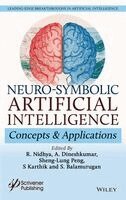
    Neuro-Symbolic Artificial Intelligence

    Concepts and Applications

    AvR. Nidhya,A. Dinesh Kumar

    Inbunden, Engelska, 2026

    2 349 kr

    Beställningsvara. Skickas inom 5-8 vardagar. Fri frakt över 249 kr.

    Beskrivning

    Master the next frontier of artificial intelligence with this essential guide to uniting the pattern recognition of deep learning with the transparent, logical reasoning of symbolic AI. The field of artificial intelligence has witnessed rapid advancements in recent years, driven primarily by deep learning and data-centric approaches. Despite their impressive performance, purely neural methods often lack interpretability, logical reasoning capabilities, and the ability to generalize beyond training data. In contrast, symbolic AI, rooted in formal logic and structured representations, offers transparency and reasoning strength, but struggles with adaptability and learning from raw data. In response to these challenges, neuro-symbolic AI has emerged as a compelling paradigm that unifies the strengths of both approaches. This book is a comprehensive exploration of one of the most transformative frontiers in artificial intelligence. By combining the pattern recognition power of neural networks with the logical reasoning capabilities of symbolic systems, neuro-symbolic AI promises to deliver systems that are not only accurate but also interpretable, adaptable, and aligned with human cognitive processes. This book brings together a diverse range of research contributions that showcase both foundational theory and practical applications across domains like natural language processing, healthcare, intelligent transport, cybersecurity, and ethical AI. Spanning topics such as hybrid architectures, logic-enhanced deep learning, graph neural networks, transfer learning, and explainable AI, the volume addresses the technical and conceptual challenges of building trustworthy intelligent systems. Each chapter provides technical depth, experimental insights, and future directions, making this guide a vital resource for researchers, graduate students, and professionals in AI and machine learning. Readers will find the volume introduces the fundamental concepts of neuro-symbolic AI, explores real-world applications in healthcare, natural language processing, and ethical AI, and presents a forward-looking perspective on the next generation of robust, transparent, and trustworthy AI technologies. Audience Engineering research scholars and students, IT professionals, network administrators, artificial intelligence and deep learning experts, and government research agencies.

    Produktinformation

    • Utgivningsdatum:2026-07-23
    • Format:Inbunden
    • Språk:Engelska
    • Antal sidor:400
    • Förlag:John Wiley & Sons Inc
    • ISBN:9781394355570

    Utforska kategorier

    • Systemvetenskap och AI inom Data och IT

    Mer om författaren

    R. Nidhya, PhD is a Professor in the Department of Computer Science and Engineering, Manipal Institute of Technology and Science, Madanapalle, India, with more than 16 years of teaching experience. She has published many research papers in refereed international journals and conferences. Her research interests include machine learning, wireless body area networks, and network security. A. Dineshkumar, PhD is an Associate Professor at Koneru Lakshmaiah Education Foundation, Vijayawada, Andhra Pradesh, India. He completed his PhD at Anna University in Chennai in 2018. His current research interests include wireless body area networks, wireless sensor networks, network security, and artificial intelligence. Sheng-Lung Peng, PhD is a Professor and the Director of the Department of Creative Technologies and Product Design, National Taipei University of Business, Taiwan. He has edited several special issues of journals and published more than 100 research articles. His research interests are in designing and analyzing algorithms for bioinformatics, combinatorics, data mining, and networks. S. Karthik, PhD is a Professor and Dean in the Department of Computer Science and Engineering, SNS College of Technology, Anna University, Chennai, Tamil Nadu, India. He has published more than 150 papers in refereed international journals and 125 papers in international conferences. His research interests include network security, big data, cloud computing, web services, and wireless systems. S. Balamurugan, PhD is the Director of Research, Intelligent Research Consultancy Services, Coimbatore, Tamil Nadu, India. He has published 100 books, 300 papers in international journals and conferences, and 300 patents. With 20 years of research on various cutting-edge technologies, he provides expert guidance in technology forecasting and decision-making for leading companies and startups.

    Innehållsförteckning

    • Series Preface xvPreface xviiAcknowledgements xxiPart 1: Neuro-Symbolic AI: Concepts 11 Cataract Detection Systems Using Deep Learning Technique: A Survey 3Arveti Mallikharjuna Rao and Suma Kamalesh Gandhimathi1.1 Introduction 41.2 Deep Learning Models 61.3 Conclusion and Future Work 142 Agentic AI Workflows for Financial Large Language Models Using LlaMA and LangChain Framework 19Mantri Udaya Jyothi, John Deva Prasanna D. S., Shanthini A. and Balasubramani S.2.1 Introduction 202.2 Predict Stock Using Financial Analysis 212.3 Stock Market Prediction Using Agentic AI Using LLM 232.4 Llama Framework 242.5 Llama Framework Reduces AI Trading Risks 272.6 Working Principle of Agents 282.7 Results 332.8 Conclusion 363 Brain-Inspired Artificial Neural Network for Energy-Efficient and Adaptive Learning 39R. Dhanalakshmi, Sahaya Beni Prathiba, Kavisankar L., Balasubramani S. and Pandiyanathan M.3.1 Introduction 403.2 Literature Review 403.3 Methodology 423.4 Proposed System 463.5 Simulation Results 503.6 Conclusion 544 Neuro-Symbolic AI with a CNN-Based Framework for Detecting Tomato Leaf Diseases 59Khaleelullah Shaik and Mohammed Ali Shaik4.1 Introduction 604.2 Related Work 624.3 Methodology 664.4 Performance Analysis 724.5 Conclusion 755 Early Detection of Breast Cancer Using Multi-Modal Deep Learning Framework 79Salma Mohammad and Mohammed Ali Shaik5.1 Introduction 805.2 Related Work 815.3 Methodology 835.4 Results and Discussion 905.5 Conclusion 976 Neuro-Symbolic Transfer Learning Model with Logic-Based Intrusion Detection System in IoT 101Deepak V., S. John Justin Thangaraj, Yogaraja C. A. and Iswariya S.6.1 Introduction 1026.2 Literature Review 1046.3 Neuro-Symbolic Transfer Learning + BiLSTM Model 1076.4 Results and Discussion 1146.5 Conclusion 1187 Integrating Artificial Intelligence in Neuro-Symbolic: Challenges, Applications, and Future Directions 121J. D. Dorathi Jayaseeli, D. Malathi, R. S. Ponmagal, G. Abirami, S. Nagadevi and M. Senthil Raja7.1 Introduction 1227.2 Neuro-Symbolic AI: An Overview 1237.3 Evolution of Neuro-Symbolic AI 1257.4 Neural-Symbolic Integration 1267.5 Applications of Neuro-Symbolic AI 1297.6 Challenges and Future Directions in Neuro-Symbolic AI 1357.7 Conclusion 137Part 2: Neuro-Symbolic AI: Applications 1438 A Rule-Based Decision Framework for Accident Prevention in Intelligent Transport Systems 145D. Pavithra, T. Deepa, Shaik Naseema, R. Nidhya, G. Smilarubavathy and C. Kumar8.1 Introduction 1468.2 Related Work 1478.3 Rule-Based Accident Prevention System 1518.4 Simulation Results 1608.5 Conclusion 1639 A Hybrid Logic-Driven and Neural Parsing Framework for Enhanced Emotion Recognition in Natural Language Processing 167R. Nidhya, V. Arun, T. Maragatham, D. J. Ashpin Pabi, Ajaypradeep N. and Manish Kumar9.1 Introduction 1689.2 Literature Review 1709.3 Methodology 1739.4 Results and Discussion 1799.5 Conclusion 18510 A Neuro-Symbolic AI Approach for Lumbar Spinal Stenosis Detection Using Graph Convolutional Networks and Fuzzy Logic 189Gurusamy Murugesan, Sabenabanu Abdulkadhar, Selvamuthukumar T., Velkumar K. and Rajkumar K.10.1 Introduction 19010.2 Materials and Methods 19110.3 Results and Discussion 19810.4 Conclusion and Future Work 20211 Adaptive Filtering Framework for Medical Image Denoising across Spatial and Wavelet Filters 207Naveen Kumar Penjarla, Tejaswi Vallabhapurapu, Syamala Rao P., Nissankara Lakshmi Prasanna, Kamesh Sonti and P. Vishnu Priya11.1 Introduction 20811.2 Literature Review 21111.3 Methodology 21211.4 Results and Discussion 21511.5 Conclusion 22212 Heritage Monument Classification Using Hybrid Deep Attention-Based Architecture for Cultural Preservation 225A. Satya Phani Kumari, Kalai Vani Y.S., Savitha S., Sujata Kulkarni and Jyothi N. M.12.1 Introduction 22612.2 Literature Survey 22712.3 Methodology 22912.4 Experimentation 23312.5 Results 23512.6 Discussion 23912.7 Conclusion 24113 Comparative Analysis and Classification of Age-Related Medical Conditions Applying Neural Network and Transformer-Based Deep Models 245Levina Tukaram, Umme Najma, D. Chandravathi, Bh. Padma and Jyothi N. M.13.1 Introduction 24613.2 Literature Survey 24713.3 Methodology 25013.4 Experimentation 25313.5 Results 25513.6 Discussion 25913.7 Conclusion and Future Enhancements 26514 Integrating Locality Sensitive Hashing and Embeddings into Collaborative Filtering for the Visual-Image-Based View 269Balaji Maram, Rekha Sundari, Anupama Angadi, Satya Keerthi Gorripati and Venubabu Rachapudi14.1 Introduction 27014.2 Related Works 27114.3 Methodology 27314.4 Experimental Results and Analysis 28314.5 Conclusion 28715 Adversarial Architectures and BERT for Mitigating Gender Bias in Word Embeddings towards Ethical AI Systems 291Saraswathi Rangaraju, P. Lakshmilavanya, Karunsagar Kanda, Bh. Padma, Kothapalli Ramesh Chandra and Jyothi N. M.15.1 Introduction 29215.2 Literature Survey 29315.3 Methodology 29515.4 Results 30315.5 Discussion 31015.6 Conclusion 31216 Exploring Machine Learning in Voice-Based Parkinson's Disease Diagnosis: A Comprehensive Survey 317G. Smilarubavathy and K. Vijayakumar16.1 Introduction 31816.2 Background 31816.3 Flowchart 31916.4 Performance Metrics 32316.5 Comparative Analysis 32416.6 Challenges and Limitations 32716.7 Future Directions 32917 Neuro-AI-Driven Image Augmentation and Data Leak Prevention via Automated Classification Agents 337S. M. Keerthana and K. Vijayakumar17.1 Introduction 33817.2 Background 33917.3 Methods 34617.3.1 Preprocessing and Automatic Annotating 34617.4 Result 349Conclusion 352References 352Index 355