• Fri frakt över 249 kr
  • •
  • Snabba leveranser
  • •
  • Billiga böcker
Kundservice

Du är på sajten för privatpersoner.

Företag, bibliotek eller offentlig verksamhet?

Du handlar på classic.bokus.com, där alla dina funktioner finns intakta.
Till classic.bokus.com
Bokus logotyp. Gå till startsidan.
  • Erbjudanden
  • Nyheter
  • Student
  • Topplistor
  • Barn & ungdom
  • Bokus Play
  • E-böcker
  • Pocketböcker
  • Spel & pussel

10% rabatt på allt med kod: NYSTART10 →

Sidfot

Mina sidor

    Hjälp

    • Kundservice
    • Vanliga frågor och svar
    • Frakt och leverans
    • Retur vid ångerrätt
    • Reklamera vara
    • Betalning
    • Köpvillkor
    • Allmänna villkor
    • Information om webbplatsens tillgänglighet

    Om Bokus

    • Om oss
    • Pressrum
    • För studenter
    • För företag
    • För bibliotek och offentlig verksamhet
    • För leverantörer
    • Hållbarhet

    Populärt

    • Aktuella erbjudanden
    • Presentkort
    • Studentlitteratur
    • Nya böcker
    • Topplistor
    • Signerade böcker
    • Engelska böcker

    Inspiration

    • Boktips
    • BookTok
    • Populära bokserier
    • Barnbokskaraktärer
    • Populära författare
    Logotyp för Bokus
    Följ oss på Facebook (extern länk)Följ oss på Instagram (extern länk)Följ oss på YouTube (extern länk)Följ oss på TikTok (extern länk)
    bokus @ CookiesAnpassa cookiesIntegritetspolicyKöpvillkor
    Till Citymail hemsida (extern länk)Till Budbee hemsida (extern länk)Till Postnord hemsida (extern länk)Till Schenker hemsida (extern länk)Till Early Bird hemsida (extern länk)Till Walleys hemsida (extern länk)
    1. Naturvetenskap och teknik
    2. Geovetenskap
    3. Geografi

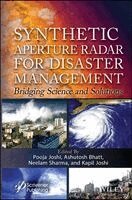
    Synthetic Aperture Radar for Disaster Management

    Bridging Science and Solutions

    AvPooja Joshi,Ashutosh Bhatt

    Inbunden, Engelska, 2026

    2 278 kr

    Beställningsvara. Skickas inom 5-8 vardagar. Fri frakt över 249 kr.

    Beskrivning

    Empower your response to global climate extremes by mastering the transformative power of synthetic aperture radar technology with this essential guide to its role in disaster management. As humanity navigates the escalating challenges of a rapidly changing world marked by intensifying climate extremes, environmental degradation, and urbanization, the demand to mitigate disasters and protect vulnerable communities has never been more urgent. This book is a critical resource at this pivotal juncture, uniting the frontiers of synthetic aperture radar technology with the pressing demands of disaster resilience. It illustrates how science, engineering, and policy can converge to build a safer, more sustainable future, offering a transformative lens through which to address the complex interplay of global vulnerabilities and technological innovation. Using a holistic exploration of synthetic aperture radar’s transformative role in disaster management, the book equips readers to harness this emerging technology for rapid disaster response, infrastructure recovery, and climate resilience. Readers will find the volume: Explores the role of machine learning, deep learning, and multi-sensor data fusion in interpreting SAR data for real-time decision-making;Includes real-world case studies that demonstrate the effectiveness of SAR in disaster scenarios, bridging theory with actionable solutions;Combines radar technology, computational advancements, and policy frameworks to address the interdisciplinary challenges of disaster management;Covers the end-to-end workflow of SAR in disaster contexts, from data acquisition and processing to interpretation and decision-making.Audience Designed for professionals, researchers, and students in remote sensing, geoinformatics, earth observation, disaster management, environmental agencies, and geospatial intelligence.

    Produktinformation

    • Utgivningsdatum:2026-04-27
    • Format:Inbunden
    • Språk:Engelska
    • Antal sidor:400
    • Upplaga:26001
    • Förlag:John Wiley & Sons Inc
    • ISBN:9781394398935

    Utforska kategorier

    • Geografi inom Naturvetenskap och teknik

    Mer om författaren

    Pooja Joshi, PhD is an Assistant Professor at Swami Rama Himalayan University, Dehradun, India, with more than 13 years of teaching and research experience in the field of computer science and engineering. She has published three books and numerous articles in international journals and conferences. Her areas of expertise include artificial intelligence, machine learning, cloud computing, remote sensing, and disaster management technologies. She is also a certified SAR Remote Sensing expert from IIRS–ISRO and actively contributes to interdisciplinary research connecting AI, Earth Observation, and Sustainable Development Goals. Ashutosh Bhatt, PhD is an Associate Professor and the Head of the Department of Computer Science and Engineering at Swami Rama Himalayan University, Dehradun, India, with more than 12 years of teaching experience. He has published one book, one book chapter, three patents, and numerous research papers published in prestigious journals. His research spans diverse topics, from job scheduling in multi-cloud environments to energy-efficient technologies in green cloud computing. Neelam Sharma, PhD is an Associate Professor at Banasthali Vidyapith, Rajasthan, India, specializing in machine learning and data mining. She has extensive research and teaching experience in areas such as intrusion detection systems, cloud computing, task scheduling, landslide susceptibility prediction, and intelligent computing techniques. Kapil Joshi, PhD is an Associate Professor in the Department of Computer Science and Engineering in the Uttaranchal Institute of Technology, Uttaranchal University, India, with more than ten years of experience. He has published various patents, more than 400 research papers in reputed journals, and more than 20 books. His areas of interest include operating systems, computer networks, web technology, data structure, and Java.

    Innehållsförteckning

    • Foreword xxiiiPreface xxvPart 1: Foundations of Synthetic Aperture Radar (SAR) and Disaster Management 11 Fundamentals of Synthetic Aperture Radar Technology: The Intersection of Physics, Engineering, and Geospatial Analysis for Advanced Imaging Systems 3R. Venkatesh and Pooja Joshi1.1 Introduction to Synthetic Aperture Radar Technology 41.2 Physics behind Synthetic Aperture Radar Systems 141.3 Engineering of Synthetic Aperture Radar Systems 221.4 Geospatial Analysis with Synthetic Aperture Radar Data 281.5 Challenges and Future Directions 341.6 Conclusion 382 Extracting Reservoir Surface Features and Land Cover Changes from Optical and Synthetic Aperture Radar Imagery: Tumariya Reservoir Case Study 47Asha Thapliyal, Sanjeev Kimothi and Himani Bisht2.1 Introduction 482.2 Study Area 492.3 Materials and Methods 492.4 Generation of Spectral Indices 502.5 Wetland and Land Use Land Cover Mapping 532.6 Conclusion 54Part 2: Techniques for Disaster Monitoring and Assessment 593 Synthetic Aperture Radar Polarimetry for Disaster Analysis 61Vijaya Bhandari, Jaspreet Singh and Arun Balodi3.1 Introduction 623.2 The Evolution of Synthetic Aperture Radar Technology: From Imaging to Polarimetry 623.3 Synthetic Aperture Radar Polarimetry as a Game-Changer in Disaster Management 623.4 Fundamentals of Synthetic Aperture Radar Polarimetry 633.5 Polarization and Its Critical Role in Synthetic Aperture Radar Imaging 633.6 Polarimetric Synthetic Aperture Radar Modes: Single, Dual, and Full Polarization 643.7 Comparative Advantages of Optical and Passive Radar Systems 643.8 Techniques in Synthetic Aperture Radar Polarimetry 653.9 Analysis of Coherence and Phase Information for Damage Assessment 653.10 Feature Extraction Using Advanced Algorithms 663.11 Automated Change Detection with Artificial Intelligence and Machine Learning Techniques 683.12 Applications in Disaster Analysis 693.13 Integration with Emerging Technologies 723.14 Multisensor Fusion: Combining Synthetic Aperture Radar with Optical, Light Detection and Ranging, and Ground-Based Systems 733.15 Real-Time Data Processing for Faster Disaster Response 743.16 Cloud-Based Platforms for Global Accessibility and Scalability 743.17 Case Studies 753.18 Challenges and Future Directions 813.19 Conclusion 824 Synthetic Aperture Radar Interferometry 89Suryakant Annasaheb Shinde4.1 Introduction 904.2 Historical Evolution of Synthetic Aperture Radar Interferometry 914.3 Fundamental Principles and Working Mechanism of Synthetic Aperture Radars and Interferometric Synthetic Aperture Radars 974.4 Case Studies 1064.5 Advanced Interferometric Synthetic Aperture Radar Techniques 1104.6 Challenges and Future Trends in Interferometric Synthetic Aperture Radar 1124.7 Conclusion 1145 Calibration and Validation Techniques for Disaster Response 117Surmadhur Pant and Yashender Sharma5.1 Introduction 1185.2 Fundamentals of Synthetic Aperture Radar Calibration and Validation 1195.3 Supervised Learning in Synthetic Aperture Radar for Disaster Response 1215.4 Unsupervised Learning Techniques for Synthetic Aperture Radar Data Analysis 1255.5 Reinforcement Learning for Adaptive Calibration 1265.6 Multi-Source Data Integration for Enhanced Calibration and Validation 1295.7 Advanced Validation Techniques 1315.8 Case Studies and Practical Applications 1335.9 Impact Assessment: Speed, Accuracy, and Decision-Making Improvements 1355.10 Conclusion and Future Directions 1355.11 Outlook: Vision for Artificial Intelligence-Driven Synthetic Aperture Radar Systems in Disaster Management 1376 Artificial Intelligence-Driven Insights from Synthetic Aperture Radar Data: Transforming Disaster Preparedness and Response 141Nidhi Sharma and Gopal Krishna6.1 Introduction 1426.2 Fundamentals of Synthetic Aperture Radar in Disaster Management 1506.3 Artificial Intelligence Techniques for Synthetic Aperture Radar Data Processing 1536.4 Artificial Intelligence-Driven Disaster Preparedness Using Synthetic Aperture Radar Data 1576.5 Artificial Intelligence-Enabled Response and Recovery Using Synthetic Aperture Radar Data 1646.6 Case Studies 1696.7 Challenges and Future Prospects 1727 Interferometric Synthetic Aperture Radar-Based Assessment of Snow Water Equivalent Trends in the Dry Snow Zone of Dhundi, Himachal Pradesh 181Dilsa Nasar and Geetha Priya M.7.1 Introduction 1827.2 Study Area 1857.3 Data Used 1867.4 Methodology 1877.5 Results and Discussion 1917.6 Comparative Analysis of Field and Interferometric Synthetic Aperture Radar Results 1957.7 Uncertainty Analysis 1977.8 Comprehensive Analysis of Snow Water Equivalent Variability and Validation 1987.9 Conclusion 199Part 3: Historical and Contemporary Missions 2058 The National Aeronautics and Space Administration Magellan Mission 207Dipan Kumar Das, Padmaja Patnaik and Sudip Kumar Das8.1 Introduction 2088.2 Mission Design and Development 2118.3 Launch and Journey to Venus 2158.4 Radar Mapping of Venus 2178.5 Key Scientific Discoveries 2208.6 Data Analysis and Interpretation 2248.7 Future Prospects in Venus Exploration 2288.8 Conclusion 2319 Synthetic Aperture Radar in Solar System Exploration 235Sachin Srivastava, Vineet Rawat, Aditya Singh Rana and Abhay Dhasmana9.1 Introduction 2369.2 Fundamentals of Synthetic Aperture Radar Technology 2389.3 Design Considerations for Synthetic Aperture Radar in Solar System Exploration 2419.4 Integration of Synthetic Aperture Radar in Solar and Heliospheric Research 2469.5 Synthetic Aperture Radar for Planetary Surface and Atmospheric Studies 2499.6 Case Studies of Synthetic Aperture Radar in Solar System Exploration 2539.7 Future Trends and Emerging Technologies 2579.8 Conclusion 259Part 4: Challenges, Policies, and Future Directions 26510 Applications of Synthetic Aperture Radar in Disaster Management 267Gagandeep Singh10.1 Introduction: Unveiling the Potential of Synthetic Aperture Radar in Disaster Management 26810.2 Evolution of Platforms: From Inception to the New Millennium 26910.3 Foundations of Synthetic Aperture Radar Data Analysis: A Practical Guide for Disaster Practitioners 27110.4 Synthetic Aperture Radar Applications Across the Disaster Management Lifecycle 27510.5 Case Studies of Synthetic Aperture Radar in Action During Catastrophic Events 28110.6 Integrating Synthetic Aperture Radar with Other Technologies for Enhanced Disaster Monitoring 28910.7 Opportunities and Challenges in Operationalizing Synthetic Aperture Radar for Disaster Management 29310.8 Conclusion and Future Research Directions 29511 Sentinel-1 SAR Insights into Arctic Glacier Behavior: Dynamics of Vestre Brøggerbreen and Climate Implications 305Namitha K. Narayan, Dhanush S., Dilsa Nasar and Geetha Priya M.11.1 Introduction 30611.2 Study Area 30711.3 Data Used 30911.4 Methodology 31011.5 Results 31211.6 Discussion 32911.7 Conclusion 33212 Legal, Ethical, and Policy Aspects of SAR in Disaster Management 337Amit Bhadula12.1 Introduction 33712.2 Legal Aspects 33912.3 Ethical Frameworks 35312.4 Policy Challenges 35512.5 Case Studies 35612.6 Recommendations 35812.7 Conclusion 359References 360Index 363