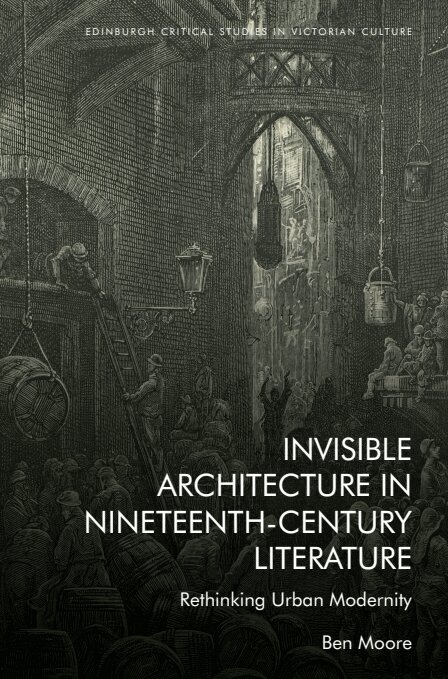
Inbunden, Engelska, 2024
Invisible Architecture in Nineteenth-Century Literature
Rethinking Urban Modernity
Av Ben Moore
Del i serien Edinburgh Critical Studies in Victorian Culture
2236 kr
Beställningsvara. Skickas inom 3-6 vardagar. Fri frakt över 249 kr.
Beskrivning
Produktinformation
- Utgivningsdatum: 2024-01-12
- Mått: 156 x 234 x 21 mm
- Vikt: 544 g
- Format: Inbunden
- Språk: Engelska
- Serie: Edinburgh Critical Studies in Victorian Culture
- Antal sidor: 272
- Förlag: Edinburgh University Press
- ISBN: 9781399508483
Utforska kategorier
Mer om författaren
Ben Moore is Assistant Professor in English Literature at the University of Amsterdam. His research areas include nineteenth-century literature, cities, money, modernity, childhood and the human. He is the author of Human Tissue in the Realist Novel, 1850–1895 (Palgrave 2023) and Co-Editor of the Gaskell Journal. His work has appeared in journals including Victorian Literature and Culture, Modernism/modernity, Modern Language Review and the Journal of Victorian Culture, as well as in various handbooks and edited collections.
Recensioner i media
Overall, the book makes a wide-ranging contribution to a body of scholarship that is interested in troubling our assumptions about "architecture"—that is, "architecture" in the singular, and with an implicit capital "A."
Betyg & recensioner
0 recensioner
Inga recensioner tillgängliga.