Inbunden, Engelska, 2026
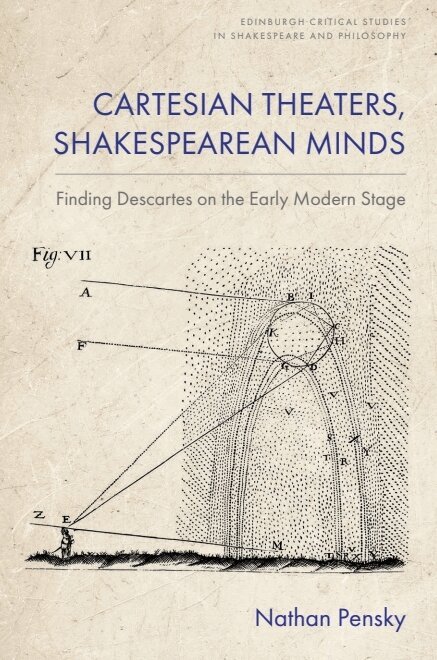
Cartesian Theaters, Shakespearean Minds
Finding Descartes on the Early Modern Stage
Del i serien Edinburgh Critical Studies in Shakespeare and Philosophy
1455 kr
Beställningsvara. Skickas inom 7-10 vardagar. Fri frakt över 249 kr.
Beskrivning
Produktinformation
- Utgivningsdatum: 2026-03-31
- Mått: 156 x 234 x 19 mm
- Vikt: 612 g
- Format: Inbunden
- Språk: Engelska
- Serie: Edinburgh Critical Studies in Shakespeare and Philosophy
- Antal sidor: 312
- Förlag: Edinburgh University Press
- ISBN: 9781399556965
Utforska kategorier
Mer om författaren
Nathan Pensky is an Adjunct Professor of English at the University of Pittsburgh and Duquesne University. He has published work in Early Theater and Early Modern Literary Studies and in non-academic outlets, including The Los Angeles Review of Books, The Chronicle of Higher Education, The Boston Globe, and many others. His interests of study include early modern literature, hermeneutics, ethics and philosophy of mind.
Recensioner i media
This book promises to reshape our understanding of the relationship between thought and experience on the early modern English stage. Pensky shows how early modern dramatists anticipated Descartes, not as a philosopher of the modern disembodied self but as one who offered a way back to the body through skepticism.
Betyg & recensioner
0 recensioner
Inga recensioner tillgängliga.