• Fri frakt över 249 kr
  • •
  • Snabba leveranser
  • •
  • Billiga böcker
Kundservice

Du är på sajten för privatpersoner.

Företag, bibliotek eller offentlig verksamhet?

Du handlar på classic.bokus.com, där alla dina funktioner finns intakta.
Till classic.bokus.com
Bokus logotyp. Gå till startsidan.
  • Erbjudanden
  • Nyheter
  • Student
  • Topplistor
  • Barn & ungdom
  • Bokus Play
  • E-böcker
  • Pocketböcker
  • Spel & pussel

10% rabatt på allt med kod: NYSTART10 →

Sidfot

Mina sidor

    Hjälp

    • Kundservice
    • Vanliga frågor och svar
    • Frakt och leverans
    • Retur vid ångerrätt
    • Reklamera vara
    • Betalning
    • Köpvillkor
    • Allmänna villkor
    • Information om webbplatsens tillgänglighet

    Om Bokus

    • Om oss
    • Pressrum
    • För studenter
    • För företag
    • För bibliotek och offentlig verksamhet
    • För leverantörer
    • Hållbarhet

    Populärt

    • Aktuella erbjudanden
    • Presentkort
    • Studentlitteratur
    • Nya böcker
    • Topplistor
    • Signerade böcker
    • Engelska böcker

    Inspiration

    • Boktips
    • BookTok
    • Populära bokserier
    • Barnbokskaraktärer
    • Populära författare
    Logotyp för Bokus
    Följ oss på Facebook (extern länk)Följ oss på Instagram (extern länk)Följ oss på YouTube (extern länk)Följ oss på TikTok (extern länk)
    bokus @ CookiesAnpassa cookiesIntegritetspolicyKöpvillkor
    Till Citymail hemsida (extern länk)Till Budbee hemsida (extern länk)Till Postnord hemsida (extern länk)Till Schenker hemsida (extern länk)Till Early Bird hemsida (extern länk)Till Walleys hemsida (extern länk)
    1. Juridik
    2. Rättsvetenskap
    3. Juridik: metod och teori

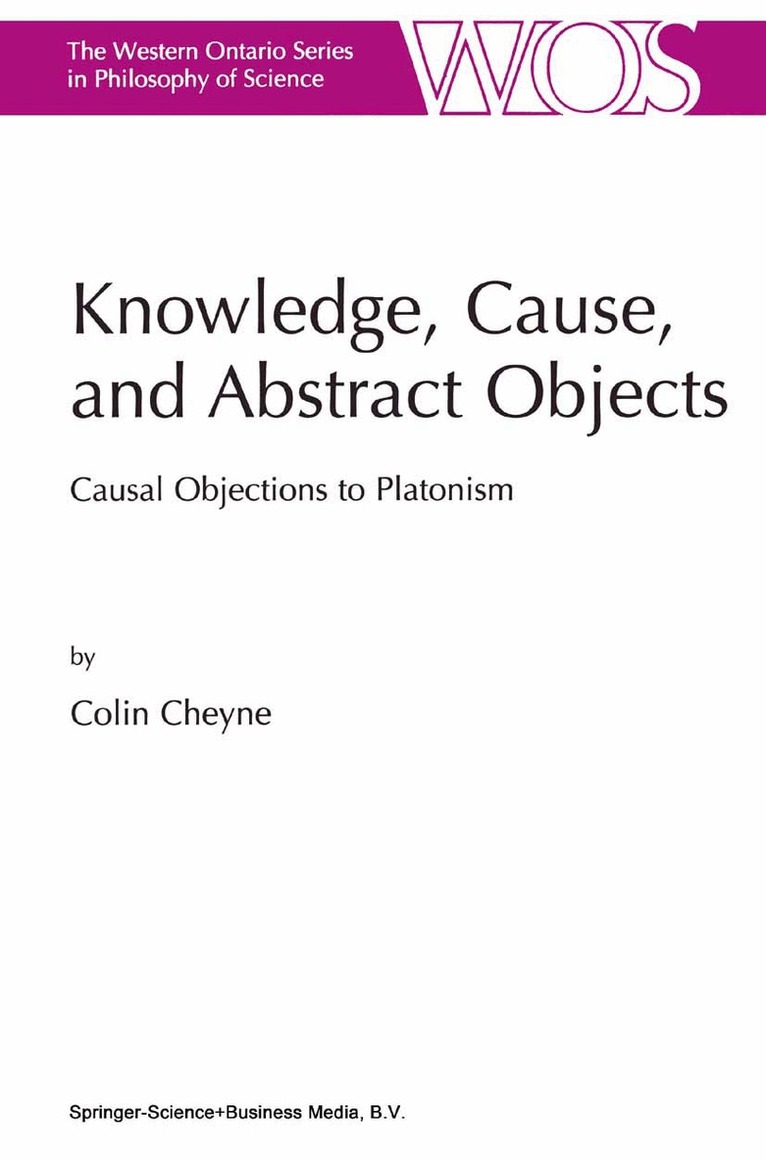
    Knowledge, Cause, and Abstract Objects

    Causal Objections to Platonism

    AvC. Cheyne

    Inbunden, Engelska, 2001

    Del i serien Western Ontario Series in Philosophy of Science

    999 kr

    Beställningsvara. Skickas inom 10-15 vardagar. Fri frakt över 249 kr.

    Fler format och utgåvor

    Häftad

    1 086 kr

    E-bok

    1 416 kr

    Beskrivning

    According to platonists, entities such as numbers, sets, propositions and properties are abstract objects. But abstract objects lack causal powers and a location in space and time, so how could we ever come to know of the existence of such impotent and remote objects? In Knowledge, Cause, and Abstract Objects, Colin Cheyne presents the first systematic and detailed account of this epistemological objection to the platonist doctrine that abstract objects exist and can be known. Since mathematics has such a central role in the acquisition of scientific knowledge, he concentrates on mathematical platonism. He also concentrates on our knowledge of what exists, and argues for a causal constraint on such existential knowledge. Finally, he exposes the weaknesses of recent attempts by platonists to account for our supposed platonic knowledge.This book will be of particular interest to researchers and advanced students of epistemology and of the philosophy of mathematics and science. It will also be of interest to all philosophers with a general interest in metaphysics and ontology.

    Produktinformation

    • Utgivningsdatum:2001-10-31
    • Mått:155 x 235 x 19 mm
    • Vikt:565 g
    • Format:Inbunden
    • Språk:Engelska
    • Serie:Western Ontario Series in Philosophy of Science
    • Antal sidor:240
    • Upplaga:2001
    • Förlag:Kluwer Academic Publishers
    • ISBN:9781402000515

    Utforska kategorier

    • Juridik: metod och teori inom Juridik

    Innehållsförteckning

    • 1. Platonism and Causality.- 2. Beliefs and Facts.- 3. Beliefs and Causes.- 4. The Case for a Causal Connection.- 5. Is a Causal Connection Necessary for Knowledge?.- 6. Other Theories of Knowledge.- 7. Existence Claims and Causality.- 8. The Burden of Proof.- 9. Platonic Knowledge by Intuition.- 10. Apriorism.- 11. Indispensability and Platonic Knowledge.- 12. Problems with Prolifigate Platonism.- Conclusion.- Appendices.- I. Does Knowledge Require Belief?.- 1.1. The traditional analysis of knowledge.- 1.2. The truth condition.- 1.3. The consistency of belief and knowledge.- 1.4. Radford’s counterexample.- 1.5. Information and knowledge.- II. Can We Choose Our Beliefs?.- II. 1. Belief-voluntarism and epistemic justification.- 11.2. Belief-voluntarism — is it possible?.- 11.3. Direct belief-voluntarism — is it actual?.- 11.4. Belief and acceptance.- 11.5. Choosing beliefs indirectly.