• Fri frakt över 249 kr
  • •
  • Snabba leveranser
  • •
  • Billiga böcker
Kundservice

Du är på sajten för privatpersoner.

Företag, bibliotek eller offentlig verksamhet?

Du handlar på classic.bokus.com, där alla dina funktioner finns intakta.
Till classic.bokus.com
Bokus logotyp. Gå till startsidan.
  • Erbjudanden
  • Nyheter
  • Student
  • Topplistor
  • Barn & ungdom
  • Bokus Play
  • E-böcker
  • Pocketböcker
  • Spel & pussel

10% rabatt på allt med kod: NYSTART10 →

Sidfot

Mina sidor

    Hjälp

    • Kundservice
    • Vanliga frågor och svar
    • Frakt och leverans
    • Retur vid ångerrätt
    • Reklamera vara
    • Betalning
    • Köpvillkor
    • Allmänna villkor
    • Information om webbplatsens tillgänglighet

    Om Bokus

    • Om oss
    • Pressrum
    • För studenter
    • För företag
    • För bibliotek och offentlig verksamhet
    • För leverantörer
    • Hållbarhet

    Populärt

    • Aktuella erbjudanden
    • Presentkort
    • Studentlitteratur
    • Nya böcker
    • Topplistor
    • Signerade böcker
    • Engelska böcker

    Inspiration

    • Boktips
    • BookTok
    • Populära bokserier
    • Barnbokskaraktärer
    • Populära författare
    Logotyp för Bokus
    Följ oss på Facebook (extern länk)Följ oss på Instagram (extern länk)Följ oss på YouTube (extern länk)Följ oss på TikTok (extern länk)
    bokus @ CookiesAnpassa cookiesIntegritetspolicyKöpvillkor
    Till Citymail hemsida (extern länk)Till Budbee hemsida (extern länk)Till Postnord hemsida (extern länk)Till Schenker hemsida (extern länk)Till Early Bird hemsida (extern länk)Till Walleys hemsida (extern länk)
    1. Naturvetenskap och teknik
    2. Matematik och naturvetenskap
    3. Kemi

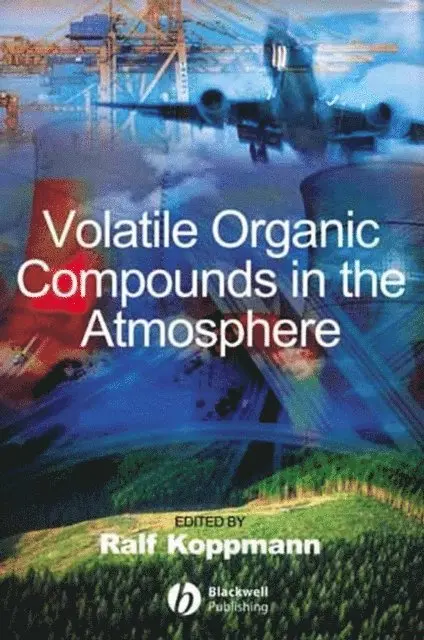
    Volatile Organic Compounds in the Atmosphere

    AvRalf Koppmann

    Inbunden, Engelska, 2007

    2 310 kr

    Tillfälligt slut

    Beskrivning

    Every day, large quantities of volatile organic compounds (VOCs) are emitted into the atmosphere from both anthropogenic and natural sources. The formation of gaseous and particulate secondary products caused by oxidation of VOCs is one of the largest unknowns in the quantitative prediction of the earth’s climate on a regional and global scale, and on the understanding of local air quality. To be able to model and control their impact, it is essential to understand the sources of VOCs, their distribution in the atmosphere and the chemical transformations which remove these compounds from the atmosphere. In recent years techniques for the analysis of organic compounds in the atmosphere have been developed to increase the spectrum of detectable compounds and their detection limits. New methods have been introduced to increase the time resolution of those measurements and to resolve more complex mixtures of organic compounds. Volatile Organic Compounds in the Atmosphere describes the current state of knowledge of the chemistry of VOCs as well as the methods and techniques to analyse gaseous and particulate organic compounds in the atmosphere. The aim is to provide an authoritative review to address the needs of both graduate students and active researchers in the field of atmospheric chemistry research.

    Produktinformation

    • Utgivningsdatum:2007-06-06
    • Mått:178 x 249 x 31 mm
    • Vikt:1 256 g
    • Format:Inbunden
    • Språk:Engelska
    • Antal sidor:512
    • Förlag:John Wiley and Sons Ltd
    • ISBN:9781405131155

    Utforska kategorier

    • Kemi inom Naturvetenskap och teknik

    Mer om författaren

    Ralf Koppmann was until recently deputy director of the Institute for Chemistry and Dynamics of the Geosphere, Institute II: Troposphere at the Research Centre Jülich, Germany and is now Professor of Physics and head of the Atmospheric Physics Department at the University of Wuppertal, Germany. Contributors:Dr Lucy J. CarpenterDr Paolo CiccioliProf. Allen GoldsteinDr. Jacqui F. HamiltonProfessor. Thorsten HoffmannDr Alastair C. LewisDr Michela MannozziDr Simon O’DohertyDr. Stefan ReimannDr James RobertsDr. Jochen RudolphDr Paul ShepsonDr. Allison SteinerDr Joerg WarnkeDr. Jürgen WildtDr. Jonathan Williams

    Recensioner i media

    "The aim of the book, and well achieved, is to provide an authoritative review to address the needs of both graduate students and active researchers in the field of atmospheric chemistry." (International Journal of Environmental and Analytical Chemistry, July 2008)

    Innehållsförteckning

    • Preface ixList of Contributors xi1 Volatile Organic Compounds in the Atmosphere: An Overview 1Jonathan Williams and Ralf Koppmann1.1 Introduction 11.2 Sources 31.3 Sinks 51.4 Atmospheric distribution 71.5 Measurement tools 91.6 Modelling tools 101.7 How organic species affect the atmosphere 121.8 Open questions and future directions 15References 192 Anthropogenic VOCs 33Stefan Reimann and Alastair C. Lewis2.1 Introduction 332.2 Sources of anthropogenic VOCs 332.3 Atmospheric distribution of VOCs 452.4 Chemical behaviour of VOCs in the atmosphere 552.5 Measurement techniques 60References 703 Biogenic VOCs 82Allison H. Steiner and Allen L. Goldstein3.1 Introduction 823.2 Sources of biogenic VOCs 833.3 Emission inventories of biogenic VOCs 973.4 Global distribution of biogenic VOCs 1033.5 Impact on photooxidants and atmospheric chemistry 1073.6 Sampling and measurement techniques 1143.7 Future directions 116References 1174 Oxygenated Volatile Organic Compounds 129Ralf Koppmann and Jürgen Wildt4.1 Introduction 1294.2 Tropospheric mixing ratios and global distribution 1304.3 Sources of OVOCs 1374.4 Sinks of OVOCs 1494.5 Budgets and emission inventories 1544.6 Sampling and measurement techniques 1554.7 Future directions 160Acknowledgement 160References 1605 Halogenated Volatile Organic Compounds 173Simon J. O’Doherty and Lucy J. Carpenter5.1 Introduction 1735.2 Sources of halogenated VOCs 1795.3 Atmospheric concentrations: trends and distribution 1875.4 Sinks of halogenated VOCs 1925.5 Emission inventories 2045.6 Sampling techniques 2075.7 Measurement techniques 210References 2146 PAN and Related Compounds 221James M. Roberts6.1 The chemistry of PANs 2226.2 Atmospheric formation 2296.3 Measurement and calibration techniques 2376.4 Atmospheric measurements 2436.5 Modelling and interpretation of ambient measurements 2496.6 Conclusions 255Acknowledgements 256References 2567 Organic Nitrates 269Paul B. Shepson7.1 Introduction 2697.2 Production mechanism 2717.3 Measurement methods 2747.4 Atmospheric measurements 2767.5 Fate 2827.6 Conclusions 285References 2868 High-Molecular-Weight Carbonyls and Carboxylic Acids 292Paolo Ciccioli and Michela Mannozzi8.1 Introduction 2928.2 Sources 2938.3 Atmospheric levels 3098.4 Reactivity and impact on the atmosphere 3248.5 Sampling and analysis 3298.6 Conclusions 333References 3349 Organic Aerosols 342Thorsten Hoffmann and Jörg Warnke9.1 Introduction 3429.2 Carbonaceous aerosols 3459.3 Analysis of organic aerosols 365Further reading 375References 37510 Gas Chromatography-Isotope RatioMass Spectrometry 388Jochen Rudolph10.1 Introduction 38810.2 Fundamentals of stable isotope ratios of VOCs 38910.3 Experimental methods 40510.4 Kinetic isotope effects 42010.5 Stable isotope ratios of atmospheric VOC and their sources 44710.6 Conclusions 458References 46011 Comprehensive Two-Dimensional Gas Chromatography 467Jacqueline F. Hamilton and Alastair C. Lewis11.1 Introduction 46711.2 Fundamentals of comprehensive gas chromatography 46811.3 Modulators 47111.4 Detectors 47411.5 Examples of GC × GC use in atmospheric samples 47511.6 Conclusions 482Further reading 486References 486Index 489Color plate appears between pages 268 and 269