• Fri frakt över 249 kr
  • •
  • Snabba leveranser
  • •
  • Billiga böcker
Kundservice

Du är på sajten för privatpersoner.

Företag, bibliotek eller offentlig verksamhet?

Du handlar på classic.bokus.com, där alla dina funktioner finns intakta.
Till classic.bokus.com
Bokus logotyp. Gå till startsidan.
  • Erbjudanden
  • Student
  • Topplistor
  • Barn & ungdom
  • Bokus Play
  • E-böcker
  • Ljudböcker
  • Pocketböcker
  • Spel och pussel

Pocketfynda! Hundratals böcker för 49 kr/st →

Sidfot

Mina sidor

    Hjälp

    • Kundservice
    • Vanliga frågor och svar
    • Frakt och leverans
    • Retur vid ångerrätt
    • Reklamera vara
    • Betalning
    • Köpvillkor
    • Allmänna villkor
    • Information om webbplatsens tillgänglighet

    Om Bokus

    • Om oss
    • Pressrum
    • För studenter
    • För företag
    • För bibliotek och offentlig verksamhet
    • För leverantörer
    • Hållbarhet

    Populärt

    • Aktuella erbjudanden
    • Presentkort
    • Studentlitteratur
    • Nya böcker
    • Topplistor
    • Signerade böcker
    • Engelska böcker

    Inspiration

    • Boktips
    • BookTok
    • Barnbokskaraktärer
    • Populära författare
    Logotyp för Bokus
    Följ oss på Facebook (extern länk)Följ oss på Instagram (extern länk)Följ oss på YouTube (extern länk)Följ oss på TikTok (extern länk)
    bokus @ CookiesAnpassa cookiesIntegritetspolicyKöpvillkor
    Till Citymail hemsida (extern länk)Till Budbee hemsida (extern länk)Till Postnord hemsida (extern länk)Till Schenker hemsida (extern länk)Till Early Bird hemsida (extern länk)Till Walleys hemsida (extern länk)
    1. Medicin
    2. Klinisk medicin och internmedicin
    3. Hjärt- och kärlsjukdomar

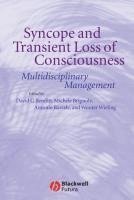
    Syncope and Transient Loss of Consciousness

    Multidisciplinary Management

    AvDavid G. Benditt,Michele Brignole

    Häftad, Engelska, 2007

    1 343 kr

    Beställningsvara. Skickas inom 11-20 vardagar. Fri frakt över 249 kr.

    Beskrivning

    Syncope is one of the most important causes of transient loss of consciousness, and is such a common event that it may be encountered by practitioners in virtually any field of medicine. As such, a broad spectrum of healthcare professionals may be involved in its assessment and management.Edited by distinguished individuals whose pioneering work in syncope highlights careers devoted to improving patient care, this book provides:• Succinct, practical and up-to-date guidance on the optimal clinical evaluation and treatment of patients with syncope and transient loss of consciousness in a multidisciplinary framework• Evidence-based recommendations founded on comprehensive literature review and extensive clinical experience by expert contributors• Meaningful clinical tips for appropriate use of guidelines in clinical practice• Key recent citations Building on the European Society of Cardiology Syncope Guidelines, this book provides a clear evaluation of the latest recommendations for care of patients with syncope and transient loss of consciousness, with a multidisciplinary focus that makes it equally relevant for general physicians or those specializing in cardiology or neurology.

    Produktinformation

    • Utgivningsdatum:2007-09-28
    • Mått:154 x 230 x 12 mm
    • Vikt:381 g
    • Format:Häftad
    • Språk:Engelska
    • Antal sidor:208
    • Förlag:John Wiley and Sons Ltd
    • ISBN:9781405176255

    Utforska kategorier

    • Hjärt- och kärlsjukdomar inom Medicin

    Mer om författaren

    David G Benditt, M.D., FACC, FRCP(C), FHRSDavid G. Benditt, M.D. was born in Winnipeg, Canada. He received a B.Sc. degree in Electrical Engineering and an MD degree from the University of Manitoba. Following completion of postgraduate training in Internal Medicine, he moved to Duke University Medical Center in Durham, North Carolina where he completed a fellowship training in cardiology and cardiac electrophysiology. Thereafter, Dr Benditt joined the faculty of the Cardiovascular Division in the Dept of Medicine at the University of Minnesota where he established its training and research program in clinical cardiac electrophysiology Dr. Benditt is currently Professor of Medicine and Co-director of the Cardiac Arrhythmia Center at the University of Minnesota in Minneapolis. He has been an Established Investigator of the American Heart Association, and President of both the American Heart Association-Minnesota Affiliate and the North American Society for Pacing and Electrophysiology (NASPE). Dr Benditt has recently been honored with the Pioneer in Pacing and Electrophysiology Award of the Heart Rhythm Society. He is a Fellow of both the American College of Cardiology, the Royal College of Physicians and Surgeons of Canada, and the Heart Rhythm Society (HRS). He is a member of the European Heart Rhythm Association (EHRA), and of the Council of Presidents of HRS. He is an associate editor of the Journal of Interventional Electrophysiology (JICE), and is a member of the Editorial Board of Europace. He has been a member of the Editorial Board of the Journal of the American College of Cardiology (JACC), The Journal of Cardiac Electrophysiology, and the American Journal of Cardiology (AJC). He has participated in many professional society Guidelines and Consensus reports, most recently the Syncope guidelines of the European Society of Cardiology. He is a medical consultant to the US Federal Aviation administration on evaluation of individuals with transient loss of consciousness, as well as to several medical device manufacturers. His principal research interests are directed toward the fields of autonomic control as it applies to syncope (fainting), and implantable and external devices for cardiac rhythm management. Michele Brignole, MD FESC From 1996, he is the chief of the Department of Cardiology of Ospedali del Tigullio, Lavagna, Italy.He is Fellow of the European Society of Cardiology.He was the chairman of the Task Force on Syncope of the European Society of Cardiology.He is currently the President of AIAC, Associazione Italiana di Aritmologia e Cardiostimolazione.The main research field has been diagnosis, pathophysiology and therapy of syncope and rhythm disturbances and radiofrequency catheter ablation of arrhythmias; he has published:- 164 original papers currently quoted on Medline; he was first name in 75 of them. Antonio Raviele, MD, FESC Graduated with honors in Medicine and Surgery at Universita’ degli Studi di Napoli of University of Napoli in 1971Specialized in Cardiology at Florence University in 1974Since 1995 Chief of the Cardiology Division and since 2000 Chief of the Cardiovascular Department of the Umberto I Hospital of Venice-Mestre , ItalyFrom 2000 to 2004 President of AIAC, Italian Association of Arrhythmology and Cardiac Pacing; from 2004 to 2006 Past-President of the same AssociationFounding Father and current General Secretary of ECAS, European Cardiac Arrhythmia SocietyFellow of the European Society of Cardiology and fellow of the Heart Ryhtm Society W. Wieling. MD, PhD Scientific and professional experience1984- present. Head research group physiology and pathophysiology of the circulation of the Cardiovascular Research Institute of the AMC. This research group is a collaboration of clinicians, physiologists and engineers and its main interest is research on the short-term regulation of the circulation using non-invasive technologies.1994- present associate professor Department of Internal Medicine, director syncope unit Academic Medical Centre1999- 2004 member of the Executive Committtee of the European Society ofCardiology Task Force on SyncopeMajor areas of research interest1. Autonomic nervous system control of the circulation in health and disease2. Physiological strategies to improve orthostatic intolerance3. Evaluation and treatment of syncope

    Innehållsförteckning

    • Contributors. Preface.Part 1 Syncope and TLOC overview.1 Definition and classification of syncope and transient.loss of consciousness.Jean-Jacques Blanc.2 Epidemiologic aspects of transient loss of consciousness/syncope.Robert S Sheldon, Anna Serletis.3 Pathophysiology of syncope: postural, neurally-mediated,.and arrhythmic.W Wieling.4 Cerebral perfusion in syncope.J Gert van Dijk, Roland D Thijs.5 Risk stratification—impact on diagnostic strategy.Brian Olshansky.Part 2 Clinical evaluation strategies.6 Value and limitations of clinical history in assessing cause of syncope.Paolo Alboni, Maurizio Dinelli.7 Emergency department evaluation of transient loss of consciousness/.syncope.Franc¸ois P Sarasin.8 The essential autonomic assessment for evaluating the.cause of syncope.Carlos A Morillo, Juan C Guzman.9 Neurally-mediated reflex syncope: recognition by history and.clinical testing.Anna Serletis, Robert S Sheldon.10 Value and limitations of ambulatory electrocardiographic monitoring.Andrew D Krahn.11 Recording ambulatory blood pressure in the syncope and.TLOC evaluation.Dietrich Andresen.12 Electrophysiologic testing: value and limitations in the transient loss of.consciousness/syncope evaluation.Suneet Mittal.13 Intolerance to upright posture in autonomic failure and the postural.tachycardia syndrome: assessment and treatment strategies.Christopher J Mathias.14 Improving tolerance to upright posture: current status of tilt-training.and other physical maneuvers.Hugo Ector, Tony Reybrouck.15 Syncope in patients with bundle-branch block and other conduction.system abnormalities.Angel Moya.Part 3 Specific conditions.16 Treatment strategies in neurally-mediated reflex syncope: effectiveness of.drugs, pacing, and physical maneuvers.Richard Sutton.17 Structural heart disease, syncope, and risk of sudden death: selection of.patients for implantable cardioverter-defibrillator therapy.Kathy L Lee, Hung-Fat Tse, Chu-Pak Lau.18 Channelopathies as a cause of syncope.T Boussy, Pedro Brugada.19 Distinguishing seizures and pseudosyncope from syncope.Adam P Fitzpatrick.20 Syncope and transient loss of consciousness in children and adolescents:.congenital and acquired conditions.Hugh Calkins.21 Transient loss of consciousness, syncope, and falls in the elderly.Rose Anne Kenny.22 Drug-induced (iatrogenic) syncope.Gerald V Naccarelli.Part 4 Economic and research aspects.23 Syncope and the competitive athlete: recommendations for evaluation.and permission to compete.Franco Giada, Antonio Raviele (Ospedale Umberto I).24 Role of syncope management units.Win K Shen, Michele Brignole (Ospedali del Tigullio).25 The impact of syncope and transient loss of consciousness on.quality of life.Blair P Grubb.Part 5 Current controversies and future directions.26 Driving and flying restrictions for the syncope and/or implanted.cardiac device patient.Christina M Murray, Dwight W Reynolds.27 Clinical trials landscape: what’s new, what’s ongoing, what do.we need.Michele Brignole (Ospedali del Tigullio), David G Benditt (University of Minnesota Medical School), Wouter Wieling (Academic Medical Centre).28 Syncope and transient loss of consciousness: multidisciplinary.management.A John Camm.29 Syncope practice guidelines initiative.David G Benditt (University of Minnesota Medical School).Appendix: syncope consortium members.Index