• Fri frakt över 249 kr
  • •
  • Snabba leveranser
  • •
  • Billiga böcker
Kundservice

Du är på sajten för privatpersoner.

Företag, bibliotek eller offentlig verksamhet?

Du handlar på classic.bokus.com, där alla dina funktioner finns intakta.
Till classic.bokus.com
Bokus logotyp. Gå till startsidan.
  • Erbjudanden
  • Nyheter
  • Student
  • Topplistor
  • Barn & ungdom
  • Bokus Play
  • E-böcker
  • Pocketböcker
  • Spel & pussel

10% rabatt på allt med kod NYSTART10 →

Sidfot

Mina sidor

    Hjälp

    • Kundservice
    • Vanliga frågor och svar
    • Frakt och leverans
    • Retur vid ångerrätt
    • Reklamera vara
    • Betalning
    • Köpvillkor
    • Allmänna villkor
    • Information om webbplatsens tillgänglighet

    Om Bokus

    • Om oss
    • Pressrum
    • För studenter
    • För företag
    • För bibliotek och offentlig verksamhet
    • För leverantörer
    • Hållbarhet

    Populärt

    • Aktuella erbjudanden
    • Presentkort
    • Studentlitteratur
    • Nya böcker
    • Topplistor
    • Signerade böcker
    • Engelska böcker

    Inspiration

    • Boktips
    • BookTok
    • Populära bokserier
    • Barnbokskaraktärer
    • Populära författare
    Logotyp för Bokus
    Följ oss på Facebook (extern länk)Följ oss på Instagram (extern länk)Följ oss på YouTube (extern länk)Följ oss på TikTok (extern länk)
    bokus @ CookiesAnpassa cookiesIntegritetspolicyKöpvillkor
    Till Citymail hemsida (extern länk)Till Budbee hemsida (extern länk)Till Postnord hemsida (extern länk)Till Schenker hemsida (extern länk)Till Early Bird hemsida (extern länk)Till Walleys hemsida (extern länk)
    1. Naturvetenskap och teknik
    2. Teknik och industri
    3. Agronomi och lantbruk

    Oil Palm

    AvR. H. V. Corley,P. B. H. Tinker

    Inbunden, Engelska, 2015

    Del i serien World Agriculture Series

    2 278 kr

    Beställningsvara. Skickas inom 5-8 vardagar. Fri frakt över 249 kr.

    Beskrivning

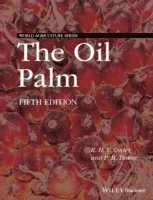
    The Oil PalmFIFTH EDITION The oil palm is the world’s most valuable oil crop. Its production has increased over the decades, reaching 56 million tons in 2013, and it gives the highest yields per hectare of all oil crops. Remarkably, oil palm has remained profitable through periods of low prices. Demand for palm oil is also expanding, with the edible demand now complemented by added demand from biodiesel producers. The Oil Palm is the definitive reference work on this important crop. This fifth edition features new topics – including the conversion of palm oil to biodiesel and discussions about the impacts of palm oil production on the environment and effects of climate change – alongside comprehensively revised chapters, with updated references throughout. The Oil Palm, Fifth Edition, will be useful to researchers and plantation and mill managers who wish to understand the science underlying recommended practices. It is an indispensable reference for agriculture students and to all those working in the oil palm industry worldwide.

    Produktinformation

    • Utgivningsdatum:2015-12-11
    • Mått:196 x 254 x 38 mm
    • Vikt:1 361 g
    • Format:Inbunden
    • Språk:Engelska
    • Serie:World Agriculture Series
    • Antal sidor:688
    • Upplaga:5
    • Förlag:John Wiley and Sons Ltd
    • ISBN:9781405189392

    Utforska kategorier

    • Agronomi och lantbruk inom Naturvetenskap och teknik

    Mer om författaren

    Dr R.H.V. Corley is a plant physiologist who worked in oil palm research in Malaysia for over 15 years. He was the head of research for Unilever Plantations for a further 16 years and is now a consultant on tropical plantation crops. Dr P.B. Tinker is a chemist who spent 7 years at the West African Institute for Oil Palm Research, Nigeria; later he acted as a consultant in Malaysia and was for 12 years on the Programme Advisory Committee of PORIM (now MPOB). In the United Kingdom, he lectured at Oxford, was Professor of Agricultural Botany at Leeds, Deputy Director of Rothamsted Experimental Station and Director of Science at the National Environment Research Council, before retirement.

    Innehållsförteckning

    • Preface to the fifth edition xxivPreface to the fourth edition xxvPreface to the third edition xxviPreface to the second edition xxviPreface to the first edition xxviiAcknowledgements xxixAbbreviations xxxi1. The origin and development of the oil palm industry 11.1 Origin of the oil palm 11.2 The oil palm in Africa 31.3 Development of the oil palm plantation industry 41.4 Development of the industry since 1950 61.5 Development methods 221.6 Trade in and use of oil palm products 262. The classification and morphology of the oil palm 302.1 Classification of oil palms 302.2 The African oil palm, E. Guineensis Jacq 302.3 The American oil palm, E. Oleifera (HBK) Cortes 492.4 The E. Guineensis X E Oleifera hybrid 513. The climate of the oil palm]growing regions 533.1 Temperature 533.2 Rainfall, evaporation and water balance 553.3 Radiation and its effects 613.4 Total climate and oil palm growth 634. The soils of the oil palm]growing regions 684.1 Soil classification in the equatorial tropics 684.2 Soil characteristics important for the oil palm 724.3 Soil characteristics unfavourable for oil palm 744.4 Histosols and peats 774.5 Soils of Asia 824.6 Soils of Africa 844.7 Soils of America 865. Growth, flowering and yield 895.1 Analysis of plant growth 895.2 Vegetative growth and partitioning of dry matter 1005.3 Environmental and management factors 1055.4 Flowering 1165.5 Yield 1276. Selection and breeding 1386.1 History of selection 1386.2 Techniques used in oil palm breeding and selection 1566.3 Variation and inheritance 1736.4 Methods of selection and breeding 1876.5 Selection and breeding in practice 1976.6 Oil palm improvement in the future 2067. Vegetative propagation and biotechnology 2087.1 History of oil palm tissue culture 2087.2 Tissue]culture methods 2097.3 Abnormal flowering, bunch failure and other problems 2127.4 Clone testing 2167.5 The future for oil palm clonal propagation 2197.6 Other aspects of oil palm biotechnology 2208. Seed germination and nurseries 2258.1 Seed germination 2258.2 Nurseries 2339. Site selection and land preparation 2409.1 Digital technology and the oil palm plantation 2409.2 Choice of site for oil palm planting 2409.3 Plantation layout 2509.4 Field preparation 2559.5 Uses and covers of interrows 27010. The establishment of oil palms in the field 27510.1 Planting in the field 27510.2 Shortening the immature period 27810.3 Spacing of plants in the field 27810.4 Practical aspects of field establishment 28811. Care and maintenance of oil palms 29011.1 Care of palms and plant cover 29011.2 Field mechanisation 30111.3 Irrigation 30311.4 Assisted pollination 30711.5 Fruit bunch harvesting 30711.6 Oil extraction ratio 31711.7 Palm age and replanting 32011.8 Site potentials and plantation management 32111.9 Smallholder plantations 32712. Mineral nutrition of oil palms 32912.1 General principles of plant nutrition 32912.2 Palm uptake systems 33612.3 Nutrient deficiency and its control: field experiments 34412.4 Nutrient deficiency and its control: visual symptoms and leaf analysis 35112.5 Soil composition and plant nutrition 36012.6 Practical systems for fertiliser assessment 36312.7 Recycling and losses of nutrients 38312.8 Deficiencies and toxicities in special and unusual soils 39112.9 Practical management of fertilisers 39313. Diseases of the oil palm 39913.1 Diseases of germinating seeds 39913.2 Seedling diseases 40113.3 Adult palm leaf diseases and disorders 40413.4 Stem and root diseases 40813.5 Diseases of the bud or stem apex 42913.6 Diseases of the bunches and fruit 43413.7 Other abnormal conditions 43513.8 Plant quarantine 43514. Pests of the oil palm 43714.1 Integrated pest management 43914.2 Nursery pests 44214.3 Leaf pests of immature palms: African spear borer 44314.4 Stem damage to young palms 44314.5 Leaf pests of mature palms 44714.6 Stem pests of mature palms 45114.7 Root pests: Oil palm root miner 45314.8 Pests attacking fruit and bunches 45314.9 Mammals and birds as pests 45414.10 Insect vectors of diseases 45814.11 Pests of other components of the oil palm agroecosystem 45815. The products of the oil palm and their extraction 46015.1 Palm oil products and their chemical structure 46015.2 Nut composition 46415.3 Oil synthesis and breakdown in the fruit 46415.4 Extraction of palm products 46515.5 Further processing of oil palm products 47815.6 Other oil palm products 48016. Marketing, economics, end use and human health 48316.1 Palm oil marketing 48316.2 Production costs 48516.3 Uses of palm oil and PKO 48716.4 Palm oil and human health 49216.5 Conclusions 49417. Oil palm and climate change 49517.1 Climate change 49517.2 The role of oil palm in climate change 49817.3 Effects of climate change on oil palm 50518. Biofuels 50718.1 Biofuel from oil palm 50718.2 Biodiesel from palm oil 51018.3 Politics and ethics of biofuel production 51418.4 Conclusion 51819. Oil palm and sustainability 51919.1 The need for sustainability 51919.1.1 Campaigns against palm oil 51919.2 Oil palm expansion and deforestation 52319.3 Biodiversity in plantations 52819.4 Social aspects of oil palm development 53019.5 Palm oil and food supplies 53220. Concluding remarks 53520.1 Future demand for palm oil 53520.2 Future yields 53520.3 Sustainability 536Reference list and index of citations 537Index 627