• Fri frakt över 249 kr
  • •
  • Snabba leveranser
  • •
  • Billiga böcker
Kundservice

Du är på sajten för privatpersoner.

Företag, bibliotek eller offentlig verksamhet?

Du handlar på classic.bokus.com, där alla dina funktioner finns intakta.
Till classic.bokus.com
Bokus logotyp. Gå till startsidan.
  • Erbjudanden
  • Nyheter
  • Student
  • Topplistor
  • Barn & ungdom
  • Bokus Play
  • E-böcker
  • Pocketböcker
  • Spel & pussel

10% rabatt på allt med kod: NYSTART10 →

Sidfot

Mina sidor

    Hjälp

    • Kundservice
    • Vanliga frågor och svar
    • Frakt och leverans
    • Retur vid ångerrätt
    • Reklamera vara
    • Betalning
    • Köpvillkor
    • Allmänna villkor
    • Information om webbplatsens tillgänglighet

    Om Bokus

    • Om oss
    • Pressrum
    • För studenter
    • För företag
    • För bibliotek och offentlig verksamhet
    • För leverantörer
    • Hållbarhet

    Populärt

    • Aktuella erbjudanden
    • Presentkort
    • Studentlitteratur
    • Nya böcker
    • Topplistor
    • Signerade böcker
    • Engelska böcker

    Inspiration

    • Boktips
    • BookTok
    • Populära bokserier
    • Barnbokskaraktärer
    • Populära författare
    Logotyp för Bokus
    Följ oss på Facebook (extern länk)Följ oss på Instagram (extern länk)Följ oss på YouTube (extern länk)Följ oss på TikTok (extern länk)
    bokus @ CookiesAnpassa cookiesIntegritetspolicyKöpvillkor
    Till Citymail hemsida (extern länk)Till Budbee hemsida (extern länk)Till Postnord hemsida (extern länk)Till Schenker hemsida (extern länk)Till Early Bird hemsida (extern länk)Till Walleys hemsida (extern länk)
    1. Samhälle och politik
    2. Politik och statsskick
    3. Internationella relationer

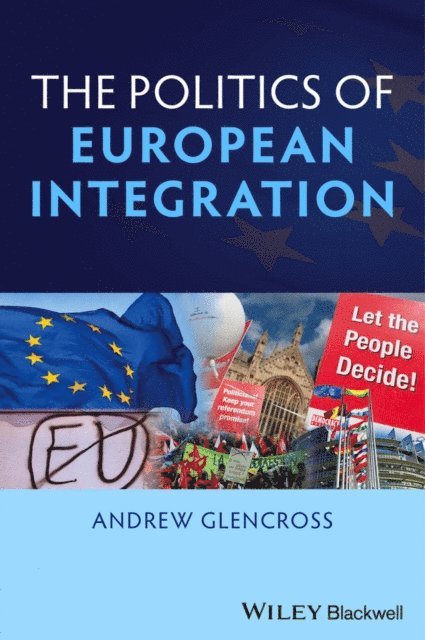
    Politics of European Integration

    Political Union or a House Divided?

    AvAndrew Glencross

    Häftad, Engelska, 2014

    307 kr

    Tillfälligt slut

    Fler format och utgåvor

    E-bok

    489 kr

    E-bok

    1 167 kr

    Beskrivning

    This is a systematic, up-to-date exploration of the politics of European integration that includes balanced coverage of the strengths and weaknesses of the European Union.  Examines European integration as a contested political process that continues to divide and inspire nations, citizens, and politiciansProvides students with the analytical tools to consider why the EU functions as it currently does, whether the EU is sufficiently democratic, the politics behind EU legislation, debates over foreign policy, proposals for institutional reform, and the Eurozone sovereign debt crisisBrings together the latest scholarly research from comparative politics, international relations, law, and democratic theoryAccompanied by a range of student resources including chapter-level flashcards and independent study questions – available at www.wiley.com/go/glencross
    Produktinformation

    • Utgivningsdatum:2014-01-31
    • Mått:170 x 241 x 18 mm
    • Vikt:476 g
    • Format:Häftad
    • Språk:Engelska
    • Antal sidor:344
    • Förlag:John Wiley and Sons Ltd
    • ISBN:9781405193948

    Utforska kategorier

    • Internationella relationer inom Samhälle och politik

    Mer om författaren

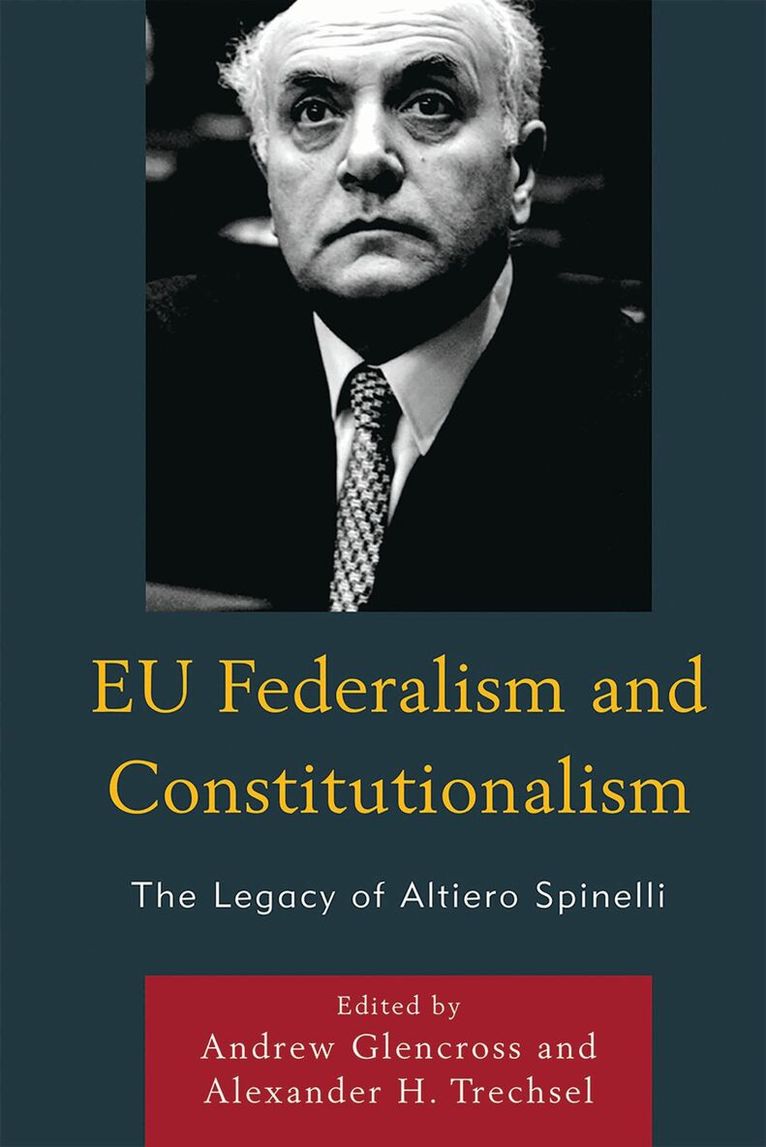
    Andrew Glencross is a Lecturer in International Politics at the Department of History and Politics at the University of Stirling. He is the author of What Makes the EU Viable? European Integration in the Light of the Antebellum US Experience (2009) and co-editor of European Union Federalism and Constitutionalism: The Legacy of Altiero Spinelli (2010).

    Recensioner i media

    “All in all, the book provides a broad overview of European integration and strives to fill the gaps left by existing textbooks.”  (JCMS: Journal of Common Market Studies, 17 December 2014)

    Innehållsförteckning

    • List of Figures xiList of Tables xiiiList of Timelines xvList of Boxes xviiAcknowledgments xixIntroduction 1PART I THE HISTORY OF EUROPEAN INTEGRATION 111 The Idea of Europe: Foundations and Justifications for Unity 131.0 Introduction: What and Where Is Europe? 141.1 The Historical Background to Th inking about European Unity 161.2 Early Ideas and Pioneers of Unity 181.3 The Peace or Civilizing Justification for Unity 221.4 The Prosperity Justification for Unity 241.5 The Strengthening State Capacity Justification for Unity 261.6 Concluding Summary 282 The Institutional Development of European Integration, 1945–1973 332.0 Introduction: Uniting for Peace 342.1 The Struggle to Resolve Post-War Security and Economic Issues, 1945–1951 362.2 The Creation of the European Coal and Steel Community (ECSC) in 1951 382.3 The Functioning of the ECSC and the Attempt at Full Military and Political Union, 1951–1957 422.4 The Continuing Pursuit of Economic Integration: Creating the EEC, 1957 452.5 Overcoming the First Tests: The Common Agricultural Policy and the Empty Chair Crisis, 1957–1973 472.6 Concluding Summary 513 The Institutional Development of European Integration, 1973–2010 573.0 Introduction: The Widening and Deepening of European Integration 583.1 Living with the First Enlargement Round and Preparing for the Next, 1973–1986 603.2 Completing the Single Market as a Prelude to Monetary and Political Union, 1986–1992 653.3 Designing European Unity for the Post-Cold War Era, 1992–2004 683.4 From Constitutional Failure to the Lisbon Treaty, 2004–2010 733.5 Concluding Summary 77PART II ANALYZING INTEGRATION 834 The EU’s Institutional Dynamics 854.0 Introduction: The Functioning of the EU 864.1 An Overview of the Dynamics of EU Policy-Making 874.2 The Ordinary Legislative Procedure (OLP) 894.3 The Role of Interest Groups and Experts 954.4 The Commission’s Watchdog Role and the Importance of the CJEU 994.5 Special Provisions for Foreign Policy 1044.6 Concluding Summary 1065 EU Policy-Making in Action: Major EU Policies 1115.0 Introduction: The EU’s Major Policy Areas 1125.1 The EU Budget 1135.2 The Euro 1155.3 The Single Market 1185.4 Social and Environmental Policy 1225.5 Justice and Citizenship 1255.6 Enlargement 1285.7 Concluding Summary 1316 The EU in Comparative Perspective 1376.0 Introduction: Why Compare? 1386.1 The EU Compared with Federal States 1396.2 The EU Compared with International Organizations 1436.3 The sui generis Interpretation 1486.4 Concluding Summary 153PART III DEBATING THE EU SYSTEM AND ITS POLICY OUTPUTS 1597 EU Internal Policies: The Theory, Practice, and Politics of Regulation 1617.0 Introduction: Regulatory Outputs and EU Politics 1627.1 Regulatory Theory and European Integration 1637.2 EU Regulation in Practice 1677.3 Not Just a Regulatory State: The Politics of EU Regulatory Outputs 1717.4 Theorizing EU Regulation and Explaining Its Eff ects 1777.5 Concluding Summary 1808 The Institutionalization of EU Foreign Policy and Debates over the EU’s International Role 1858.0 Introduction: What Is at Stake in Understanding EU Foreign Relations? 1868.1 The Institutions and Institutionalization of EU Foreign Policy 1878.2 The Debate over EU Foreign Policy Eff ectiveness 1928.3 The Ideological Debate over the Aims of EU Foreign Policy 1978.4 The Explanatory Debate over EU Foreign Policy 2018.5 Concluding Summary 2059 What Model for Uniting Europe? 2119.0 Introduction: Competing Models of European Integration 2129.1 Federalism 2139.2 Confederalism 2169.3 The Networked Governance Model 2209.4 The Diff erentiated Integration Model 2249.5 Concluding Summary 228PART IV DEMOCRACY AND INTEGRATION 23310 Democracy in the European Union 23510.0 Introduction: More Integration, More Democracy? 23610.1 Democratic Accountability in the EU: Beyond Majoritarianism 23710.2 The Democratic Deficit Debate 24110.3 Enhancing Democracy in the EU 24910.4 Concluding Summary 25511 The Impact of European Integration on National Politics 26111.0 Introduction: Political Adaptation to European Integration 26211.1 European Integration and National Politics: The End of the Permissive Consensus 26311.2 Euroskepticism and Its Varieties 26711.3 National Referendums on EU Issues 27311.4 Concluding Summary 27812 Integration and Democracy in the Shadow of the Eurozone Debt Crisis 28512.0 Introduction: The Eurozone Crisis as a Challenge to Democracy and Integration 28612.1 The Causes of the Eurozone Crisis 28812.2 The Travails of Formulating an EU Response 29212.3 Criticism and Controversies Surrounding the EU Response 29712.4 Conclusion: What the Crisis Means for the Future of Integration 305Index 311