• Fri frakt över 249 kr
  • •
  • Snabba leveranser
  • •
  • Billiga böcker
Kundservice

Du är på sajten för privatpersoner.

Företag, bibliotek eller offentlig verksamhet?

Du handlar på classic.bokus.com, där alla dina funktioner finns intakta.
Till classic.bokus.com
Bokus logotyp. Gå till startsidan.
  • Erbjudanden
  • Nyheter
  • Student
  • Topplistor
  • Barn & ungdom
  • Bokus Play
  • E-böcker
  • Pocketböcker
  • Spel & pussel

10% rabatt på allt med kod NYSTART10 →

Sidfot

Mina sidor

    Hjälp

    • Kundservice
    • Vanliga frågor och svar
    • Frakt och leverans
    • Retur vid ångerrätt
    • Reklamera vara
    • Betalning
    • Köpvillkor
    • Allmänna villkor
    • Information om webbplatsens tillgänglighet

    Om Bokus

    • Om oss
    • Pressrum
    • För studenter
    • För företag
    • För bibliotek och offentlig verksamhet
    • För leverantörer
    • Hållbarhet

    Populärt

    • Aktuella erbjudanden
    • Presentkort
    • Studentlitteratur
    • Nya böcker
    • Topplistor
    • Signerade böcker
    • Engelska böcker

    Inspiration

    • Boktips
    • BookTok
    • Populära bokserier
    • Barnbokskaraktärer
    • Populära författare
    Logotyp för Bokus
    Följ oss på Facebook (extern länk)Följ oss på Instagram (extern länk)Följ oss på YouTube (extern länk)Följ oss på TikTok (extern länk)
    bokus @ CookiesAnpassa cookiesIntegritetspolicyKöpvillkor
    Till Citymail hemsida (extern länk)Till Budbee hemsida (extern länk)Till Postnord hemsida (extern länk)Till Schenker hemsida (extern länk)Till Early Bird hemsida (extern länk)Till Walleys hemsida (extern länk)
    1. Psykologi och pedagogik
    2. Pedagogik
    3. Pedagogisk metodik

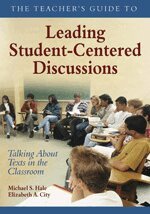
    The Teacher's Guide to Leading Student-Centered Discussions

    Talking About Texts in the Classroom

    AvMichael S. Hale,Elizabeth A. City

    Häftad, Engelska, 2006

    575 kr

    Beställningsvara. Skickas inom 3-6 vardagar. Fri frakt över 249 kr.

    Beskrivning

    Facilitate dynamic classroom discussions that motivate students and deepen their understanding!

    "There are two reasons why this book is so important now. The first is the vitality of the subject: true classroom dialogue may be our only hope for helping students become thoughtful citizens. The second is that the authors practice what they preach. They assume from the first page that teachers are thoughtful professionals capable of making the subtle decisions discussed. The result is a book that should lie open on the desk of any teacher who is truly interested in teaching students to think."
    -Terry Roberts, Director National Paideia Center

    "I loved the case stories of classroom discussions that illustrated the authors' points."
    -Kimberly C. Smith, Advanced Math Teacher/Math Department Chair
    Welborn Middle School, High Point, NC

    "Practical and beneficial to teaching and learning in today's world."
    -Sylvia Jackson, Principal
    Adolfo Camarillo High School, CA

    Engage and enlighten students by skillfully guiding them through thought-provoking classroom discussions using these straightforward strategies. Aligned with the principles of Paideia and Socratic seminars, and packed with real-life examples, this teacher-friendly resource highlights the fundamentals of planning for text-based discourse, the four key factors that shape the teacher's decision-making during discussions, and tips for problem-solving and fine-tuning facilitation skills.  

    Produktinformation

    • Utgivningsdatum:2006-05-23
    • Mått:177 x 254 x 11 mm
    • Vikt:310 g
    • Format:Häftad
    • Språk:Engelska
    • Antal sidor:136
    • Upplaga:1
    • Förlag:SAGE Publications
    • ISBN:9781412906357

    Utforska kategorier

    • Pedagogisk metodik inom Psykologi och pedagogik

    Mer om författaren

    Michael S. Hale has served as a teacher, principal, professional developer, professor, university administrator, and educational software executive.  His passion for student inquiry has resulted in many years of experience with participant-centered discussions in a wide variety of settings.   A National Paideia Faculty member, he has worked with many teachers and students to develop the knowledge and skills to engage in idea- and text-based conversations.  He currently spends most of his days as Vice President for Curriculum Consulting with VitalSource Technologies in Raleigh, NC, where he works with educators to transform didactic materials into more interactive digital formats. His formal education includes a B.A. in Philosophy from Auburn University and a M.A. and Ph.D in Curriculum and Instruction from the University of North Carolina. Elizabeth A. City has served as a teacher, principal, and instructional coach, primarily in North Carolina and Massachusetts. In addition to enjoying countless student-centered discussions in her own classroom, as a National Paideia Faculty member, she has worked with teachers and students across the country as they have learned to facilitate and participate in text-based conversations. Much of Liz’s current work centers on supporting principals and teachers in creating collaborative communities where rich dialogue and learning for both adults and children is the norm. She is a member of the Senior Faculty of Boston’s School Leadership Institute, where she teaches courses in using data, learning and teaching, and professional development to Boston Public School Principal Fellows. She is currently working on her doctorate at the Harvard Graduate School of Education.

    Recensioner i media

    "Practical and beneficial to teaching and learning in today′s world ...the book provides good strategies for helping teachers facilitate meaningful academic discussions in the classroom setting."

    Innehållsförteckning

    • PrefaceAcknowledgmentsAbout the AuthorsPart I: Getting Started: The "Science" of Leading Discussions1. The Fundamentals of FacilitatingWhy Have Student Centered Discussions?Essential Ingredients of a Student-Centered, Text-based Discussion, aka “Seminar”The Architecture of a DiscussionFrequently Asked Questions and Tips for BeginnersTips for BeginnersReferencesPART II: Becoming a Skillful Facilitator: The “Art and Magic” of Leading Discussions2. SafetyRecognizing Safety IssuesTone of the DiscussionAtmosphere of Safety and RespectCreating a Culture of InquiryThe Danger of SarcasmFeedback During SeminarA Climate of Respect3. Authentic ParticipationRecognizing Authentic Participation IssuesAttention-Seeking ParticipationText-Focused ParticipationReflective ActivityAssessing Pauses in ConversationFacilitator is Not the Focus4. ChallengeRecognizing Challenge IssuesAssessing UnderstandingOff-Topic ConversationRepetitive Ideas and StatementsIdea-HoppingChallenging Ideas5. OwnershipRecognizing Ownership IssuesAvoiding AnarchyFacilitator Releasing ControlStudent-Driven Discussions6. The Seminar Decision-Making ModelSteps of the Decision-Making ProcessIdentifying the IssueIdentifying Possible CausesMatch to Primary FulcrumIdentifying and Applying Possible StrategiesDetermine Effectiveness of Strategy and Next StepsPART III: Improving Student-Centered Discussions7. Strategies for Ongoing Improvement Across All the FulcrumsReflectionSeminar MappingTeaching the Fulcrums to StudentsFishbowlSeminar FoldersVideotapeAssessmentPeer PlanningPeer CoachingCase Study8. Strategies for Improving Specific FulcrumsSafetySeminar Ground RulesAssigned SeatsYellow Card, Red CardEjectionTime-outWrite Before You TalkRole PlayStop and Try AgainBuilding Safety Outside SeminarRole PlayHave Seminars More FrequentlyAsk The StudentsAuthentic ParticipationHeads-Up QuestionPair-ShareRound RobinInviting Quiet People to SpeakReflective WritingFollow-up WritingPositive ReinforcementConnectionsQuestion AgainPair Share/Write During SeminarSilenceMap ConnectionsChallengeWhere in the Text?Ask Follow-Up QuestionsParaphrase and ProbePair-Share/Write during SeminarPre-SeminarChoosing a Different Type of TextGood QuestionsOwnershipRelinquish the ReinsSelf-assessmentWait TimeFavorite Text PhenomenonEye ContactDon’t Be Afraid—DriveTurn-TakingLook Around the CircleResource A – Training GuidesUsing the Fulcrums for Professional DevelopmentWorking with Groups of TeachersNew FacilitatorsExperienced FacilitatorsWorking on Your Own/Working with Individual TeachersIndividual TeachersResource B – ReproduciblesIndex