• Fri frakt över 249 kr
  • •
  • Snabba leveranser
  • •
  • Billiga böcker
Kundservice

Du är på sajten för privatpersoner.

Företag, bibliotek eller offentlig verksamhet?

Du handlar på classic.bokus.com, där alla dina funktioner finns intakta.
Till classic.bokus.com
Bokus logotyp. Gå till startsidan.
  • Erbjudanden
  • Nyheter
  • Student
  • Topplistor
  • Barn & ungdom
  • Bokus Play
  • E-böcker
  • Pocketböcker
  • Spel & pussel

10% rabatt på allt med kod: NYSTART10 →

Sidfot

Mina sidor

    Hjälp

    • Kundservice
    • Vanliga frågor och svar
    • Frakt och leverans
    • Retur vid ångerrätt
    • Reklamera vara
    • Betalning
    • Köpvillkor
    • Allmänna villkor
    • Information om webbplatsens tillgänglighet

    Om Bokus

    • Om oss
    • Pressrum
    • För studenter
    • För företag
    • För bibliotek och offentlig verksamhet
    • För leverantörer
    • Hållbarhet

    Populärt

    • Aktuella erbjudanden
    • Presentkort
    • Studentlitteratur
    • Nya böcker
    • Topplistor
    • Signerade böcker
    • Engelska böcker

    Inspiration

    • Boktips
    • BookTok
    • Populära bokserier
    • Barnbokskaraktärer
    • Populära författare
    Logotyp för Bokus
    Följ oss på Facebook (extern länk)Följ oss på Instagram (extern länk)Följ oss på YouTube (extern länk)Följ oss på TikTok (extern länk)
    bokus @ CookiesAnpassa cookiesIntegritetspolicyKöpvillkor
    Till Citymail hemsida (extern länk)Till Budbee hemsida (extern länk)Till Postnord hemsida (extern länk)Till Schenker hemsida (extern länk)Till Early Bird hemsida (extern länk)Till Walleys hemsida (extern länk)
    1. Psykologi och pedagogik
    2. Pedagogik
    3. Undervisning i specifika ämnen

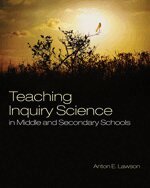
    Teaching Inquiry Science in Middle and Secondary Schools

    AvAnton E. Lawson

    Häftad, Engelska, 2009

    1 838 kr

    Tillfälligt slut

    Beskrivning

    Provides solutions for using inquiry-based teaching while meeting standards

    This compelling new text practices what it preaches—it uses the inquiry approach to teach the inquiry approach.

    The book is developed around six key questions:
    1. What is science?
    2. Why teach science?
    3. What is the nature of scientific knowledge?
    4. How do scientists construct knowledge?
    5. How do people develop effective reasoning patterns?
    6. What teaching methods best facilitate scientific knowledge acquisition?


    Key Features

    • Focus on inquiry teaching methods: This text shows teachers how to use inquiry-based teaching in a standards-based environment.
    • Practical examples: Several examples of inquiry lessons are provided, along with examples of classroom management techniques, lesson planning procedures, and effective evaluation procedures.
    • Research-based content: Written by a leader in the field, the book includes current and important research to frame the examples and methods.

    Ancillaries
    A password-protected instructor resources site includes PowerPoint slides for each chapter, a test bank, chapter outlines with notes, Internet resources, and sample assignments.

    Produktinformation

    • Utgivningsdatum:2009-12-08
    • Mått:203 x 254 x 14 mm
    • Vikt:620 g
    • Format:Häftad
    • Språk:Engelska
    • Antal sidor:344
    • Upplaga:1
    • Förlag:SAGE Publications
    • ISBN:9781412966658

    Utforska kategorier

    • Undervisning i specifika ämnen inom Psykologi och pedagogik

    Mer om författaren

    Dr. Anton Lawson’s career in science education began in the late 1960s in California where he taught middle school science and mathematics for three years before completing his Ph.D. at the University of Oklahoma and moving to Purdue University in 1973. Lawson continued his research career at the University of California Berkeley in 1974, and then moved to Arizona State University in 1977, where he currently conducts research and teaches courses in biology, in biology teaching methods, and in research methods. Lawson has directed over 100 workshops for teachers, mostly on inquiry teaching methods, and has published over 200 articles and over 20 books including Science Teaching and the Development of Thinking (Wadsworth: Belmont, CA, 1995), Biology: A Critical Thinking Approach, (Addison Wesley: Menlo Park, CA, 1994), and The Neurological Basis of Learning, Development and Discovery, (Kluwer: Dordrecht, The Netherlands, 2003). Lawson’s most recent book is an introductory biology text called Biology: An Inquiry Approach, (Kendall/Hunt; Dubuque, IA, 2004). Lawson is perhaps best known for his research articles in science education, which have three times been judged to be the most significant articles of the year by the National Association for Research in Science Teaching (NARST). He has also received NARST’s career award for Distinguished Contributions to Science Education Research as well as the Outstanding Science Educator of the Year Award by the Association for the Education of Teachers in Science.

    Recensioner i media

    "This is an excellent and needed contribution to the science education teacher preparation field."

    Innehållsförteckning

    • Part I. The Nature of Science1. Educational Goals and The Nature of Science InquiryExploring Instructional AlternativesThe Goals of American EducationHow Science Is PracticedTesting Hypothesis Using ExperimentsBasic and Applied Research2. The Nature of Scientific TheoriesThe Greek Four-Material TheoryThe "Discovery" of OxygenDescription Versus Explanation: Why Do Objects Fall?Proof and DisproofThe Elements of Scientific DiscoveryHow Do Science and Religion Differ?Part II. Student Thinking, Development, and Learning3. How Students ThinkExploring Student ReasoningHow Do Student Responses Relate to Intellectual Development?Is There A Fifth State?Why Developmental Stages Are Important to Teachers4. Developing and Learning Different Types of KnowledgeDeveloping Procedural KnowledgeProvoking Self-Regulation In The ClassroomWhy Does State "Retardation" Occur?Learning Declarative KnowledgeProvoking Development and Learning In The ClassroomTeaching for Development and LearningPart III. Elements of Inquiry Instruction5. The Origins And Outcomes of Inquiry InstructionA Brief History of Science InstructionOutcomes of Inquiry Instruction6. Inquiry InstructionExploring Instructional AlternativesTypes of Learning CyclesHow Do Learning Cycles Relate to Doing Science?Using Textboks to Introduce New Terms7. Planning For InquiryQuestions to ConsiderPreparing Good Lesson Plans8. Technology, Labs, and Safety in the Inquiry ClassroomClassroom TechnologyLabs in the Inquiry ClassroomLab Safety and Organism UsePart IV. Instructional Strategies9. Demonstrations, Lectures, Discussions, and Field TripsDemonstrationsLecturesDiscussionsField Trips10. Managing the Inquiry ClassroomClassrooms Rules and ProceduresSolving Management ProblemsThe Classroom Management Survey11. Inquiry Instruction and Diverse LearnersStrategies for English Language LearnersAvoiding Gender BiasStudents With Learning DisabilitiesMeeting the Needs of Gifted StudentsSelecting and Using a Textbook for Diverse Learners12. Curriculum DevelopmentTypes of ConceptsConceptual SystemsInititating and Sequencing UnitsTeaching the Ecosystem Conceptual SystemScheduling Learning CyclesIntegrating Technological and Societal Issues13. Assessing Student ProgressTypes of AssessmentAnticipating and Reducing BiasAssigning GradesDeveloping Effective ExamsBloom′s Taxonomy of Educational ObjectivesUsing Exams to Encourage Self-RegulationDeveloping and Scoring Essay ExamsUsing Homework Problems to Encourage Self-RegulationUsing Written Assignments to Encourage Self-RegulationPart V. Professional Induction and Development14. Helping More Teachers Use InquiryInquiry Doesn′t Take Too Much Time and EnergyInquiry Can "Cover" Enough MaterialReading Inquiry Textbooks Can Be EasierRisk Is Not Too HighConcrete Thinkers Can InquireStudents Don′t Waste Too Much TimeOld "Dogs" Can Learn New "Tricks"Inquiry Is FlexibleInquiry Increases ComfortInquiry Is Not Too ExpensiveUsing the RTOP to Measure and Improve Inquiry Teaching15. Professional DevelopmentProfessional Development StandardsGood Teaching Really MattersConducting Action Research in Your Classroom