• Fri frakt över 249 kr
  • •
  • Snabba leveranser
  • •
  • Billiga böcker
Kundservice

Du är på sajten för privatpersoner.

Företag, bibliotek eller offentlig verksamhet?

Du handlar på classic.bokus.com, där alla dina funktioner finns intakta.
Till classic.bokus.com
Bokus logotyp. Gå till startsidan.
  • Erbjudanden
  • Nyheter
  • Student
  • Topplistor
  • Barn & ungdom
  • Bokus Play
  • E-böcker
  • Pocketböcker
  • Spel & pussel

10% rabatt på allt med kod NYSTART10 →

Sidfot

Mina sidor

    Hjälp

    • Kundservice
    • Vanliga frågor och svar
    • Frakt och leverans
    • Retur vid ångerrätt
    • Reklamera vara
    • Betalning
    • Köpvillkor
    • Allmänna villkor
    • Information om webbplatsens tillgänglighet

    Om Bokus

    • Om oss
    • Pressrum
    • För studenter
    • För företag
    • För bibliotek och offentlig verksamhet
    • För leverantörer
    • Hållbarhet

    Populärt

    • Aktuella erbjudanden
    • Presentkort
    • Studentlitteratur
    • Nya böcker
    • Topplistor
    • Signerade böcker
    • Engelska böcker

    Inspiration

    • Boktips
    • BookTok
    • Populära bokserier
    • Barnbokskaraktärer
    • Populära författare
    Logotyp för Bokus
    Följ oss på Facebook (extern länk)Följ oss på Instagram (extern länk)Följ oss på YouTube (extern länk)Följ oss på TikTok (extern länk)
    bokus @ CookiesAnpassa cookiesIntegritetspolicyKöpvillkor
    Till Citymail hemsida (extern länk)Till Budbee hemsida (extern länk)Till Postnord hemsida (extern länk)Till Schenker hemsida (extern länk)Till Early Bird hemsida (extern länk)Till Walleys hemsida (extern länk)
    1. Psykologi och pedagogik
    2. Pedagogik
    3. Utbildningsstrategier och utbildningspolitik
    4. Studievägledning och elevhälsa

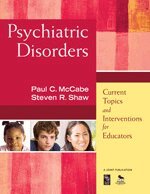
    Psychiatric Disorders

    Current Topics and Interventions for Educators

    AvPaul C. McCabe,Steven R. Shaw

    Häftad, Engelska, 2010

    654 kr

    Beställningsvara. Skickas inom 3-6 vardagar. Fri frakt över 249 kr.

    Beskrivning

    "This book focuses on educational implications of Tourette syndrome, bipolar disorder, mood disorders, eating disorders, and other issues, as well as pediatric medications and side effects. The well-organized chapters include research reviews, educational strategies, handouts, and discussion questions and are valuable resources for school psychologists, teachers, administrators, nurses, and others."—Patti L. Harrison, President, National Association of School PsychologistsProfessor of School Psychology, The University of Alabama, TuscaloosaThe educator′s go-to reference for important psychiatric health topics!Increasingly, educators are called upon to address children′s medical as well as mental health needs within the school setting. Based on a critical review of current research, this concise, highly practical volume outlines the most relevant psychiatric health issues for educators today. Written for school psychologists, counselors, administrators, and teachers, this easy-to-understand resource covers:Neuropsychiatric conditions that commonly affect children, including Tourette syndrome, bipolar/mood disorders, and anxiety disorderPsychopharmacology, including the use of atypical antipsychotics and autism, the treatment of tardive dyskinesia in children, the medical management of ADHD, polypharmacy prescription practice, and side effects of common health medicationsDietary control and supplement use that includes dietary treatments for autism, identification and treatment of eating disorders, and use of steroids in adolescenceFeaturing case studies, strategies for educators, discussion questions, glossaries, and handouts, Psychiatric Disorders provides valuable information to practitioners involved in providing differentiated instruction and educational accommodations, offering special education services, collaborating with families, working with the community, or influencing policy.

    Produktinformation

    • Utgivningsdatum:2010-05-04
    • Mått:215 x 279 x 8 mm
    • Vikt:490 g
    • Format:Häftad
    • Språk:Engelska
    • Antal sidor:184
    • Förlag:SAGE Publications Inc
    • ISBN:9781412968768

    Utforska kategorier

    • Studievägledning och elevhälsa inom Psykologi och pedagogik
    • Specialundervisning inom Psykologi och pedagogik
    • Pediatrik inom Medicin

    Mer om författaren

    Paul C. McCabe, NCSP, is an associate professor of school psychology in the School Psychologist Graduate Program at Brooklyn College of the City University of New York. McCabe is a New York State certified school psychologist, New York State licensed psychologist, and a Nationally Certified School Psychologist (NCSP). He serves on the editorial boards of several publications in school psychology and developmental psychology, and has consulted at state and national levels on issues of early childhood assessment and best practices, pediatric issues in schools, and training in school psychology. McCabe conducts and publishes research in early childhood social, behavioral, and language development and concomitant problems; pediatric school psychology and health issues addressed by schools; and social justice issues in training, especially training educators to advocate for gay, lesbian, bisexual and transgendered youth. McCabe received his PhD in clinical and school psychology from Hofstra University. He holds undergraduate degrees from University of Rochester and Cazenovia College. Steven R. Shaw, NCSP, is an assistant professor in the Department of Educational and Counselling Psychology at McGill University in Montreal, Quebec. He has been a school psychologist since 1988 with clinical and administrative experience in schools, hospitals, and independent practice. He has conducted workshops and consulted with educational policy makers to address the needs of children with borderline intellectual functioning in the US, Canada, Pakistan, Moldova, Poland, India, and Egypt. Shaw conducts and publishes research in behavior and language development in children with rare genetic disorders; resilience factors for children with risk factors for school failure, especially borderline intellectual functioning; and pediatric school psychology and health issues addressed by schools. Shaw received a PhD in school psychology from the University of Florida.

    Recensioner i media

    "Paul McCabe and Steven Shaw have provided an essential and comprehensive resource for school personnel. The prodigious three volumes are a critical presentation of the expansive range of student issues that confront educators and student support specialists."

    Innehållsförteckning

    • PrefaceAcknowledgmentsPart I. Neuropsychiatric Conditions Affecting Children1. Developments in Neuropsychiatric Treatment: New Challenges and Old Problems - Paul C. McCabe, Steven R. ShawIntroductionLinking Neurotransmitters to BehaviorIncreasing Specificity of MedicationsMedication Side Effects(De-) Emphasis on Talk TherapiesFuture DirectionsReferences2. Neurochemical Bases of Tourette Syndrome and Implications for Educators - Jason Collins, Paul C. McCabeIntroductionGlossaryLiterature ReviewPrevalence and EpidemiologyClinical PhenomenologyComorbidityNeurochemical BasesImplications for EducatorsEducational StrategiesDiscussion QuestionsResearch SummaryHandout-Tourette Syndrome3. Diagnosis and Treatment of Pediatric Bipolar Disorder - J. Elizabeth Chesno Grier, Megan L. Wilkins, Elizabeth JeffordsIntroductionGlossaryLiterature ReviewSymptoms of bipolar DisorderDifferential DiagnosisInterventions for Pediatric Bipolar DisorderMedical ManagementPsychosocial InterventionsConclusionsImplications for EducatorsSchool-based InterventionsEducational StrategiesDiscussion QuestionsResearch SummaryHandout-Pediatric Bipolar Disorder4. Parental Control Effects on Separation Anxiety Disorder in Children - Erica E. Levavi, Florence J. Schneider, Paul C. McCabeIntroductionGlossaryLiterature ReviewBehavioral ControlParental AnxietyParental AffectionDisciplinePsychological ControlCultural DifferencesParental FactorsImplications for EducatorsPreventionInterventionEducational StrategiesDiscussion QuestionsResearch SummaryHandout-Interventions for Children with Separation Anxiety Disorder5. Mood Disorders and Creativity - Sara Pollak-Kagan, Paul McCabeIntroductionGlossaryLiterature ReviewLink Between Bipolar Disorder and CreativityNeurobiological and Genetic ModelImplications for EducatorsEducational StrategiesDiscussion QuestionsResearch SummaryHandout-Use of Creative Mediums with Children and Adolescents with Mood DisordersPart II. Psychopharmacology6. Atypical Antipsychotic Use in Children and Adolescents with Autism Spectrum Disorders: A Review for Educators - Steven R. Shaw, Tamara DawkinsIntroductionBackgroundThe Effects of Atypical Antipsychotic on Symptoms of ASDAgressionHyperactivityMoodCognitionSide EffectsClozapineOlanzapineRisperidoneQuetiapineZiprasidoneConclusionsEducational StrategiesDiscussion QuestionsResearch SummaryHandout-Use of Atypical Antipsychotic Medication with Children and Adolescents7. Tardive Dyskinesia with Typical and Atypical Antipsychotic Medications in Children and Adolescents - Daniel Farrell, Janine Fischer, Paul C. McCabeIntroductionBackgroundSymptoms and PrevalencePrevalence of TDTreatment of TDImplications for EducatorsEducational StrategiesDiscussion QuesitonsResearch SummaryHandout-Tardive Dyskinesia8. Recent Advances in the Medical Management of Children with Attention-Deficit/Hyperactivity Disorder - John S. Carlson, Angela Maupin, Tara BrinkmanIntroductionBackgroundPsychostimulantsAtomoxetineNovel and Alternative MedicinesConclusionImplications for EducatorsEducational StrategiesDiscussion QuestionsResearch SummaryHandout-Recent Advances in the Medical Management of ADHD9. Polypharmacy Prescription Practices in School-Aged Populations: Challenges and Considerations - John S. CarlsonIntroductionBackgroundOverview and DefinitionsRisks Associated with PolypharmacyAssumptions Associated with PolypharmacyMedication Use in School-aged PopulationsMedication Use within Vulnerable PopulationsPrevalence of Polypharmacy in Childhood PopulationsCultural Considerations and PolypharmacyInterventionsCombined Medication ApproachesMonitoring Combined Medication TreatmentsImplications for EducatorsEducational StrategiesDiscussion QuestionsResearch SummaryHandout- Polypharmacy Prescription Practices in School-aged Populations10. Educational Implications of Commonly Used Pediatric Medications - Larry M. Bolen, Michael B. BrownIntroductionBackgroundMedication IssuesNon-specific Medication Side EffectsIssues Specific to Medications for Treatment of AsthmaIssues Specific to Medications for Pain and FeverIssues Specific to Medications for Cough and ColdsImplications for EducatorsAssessmentInterventionAdvocacy and EducationConclusionEducational StrategiesDiscussion QuestionsResearch SummaryHandout- Medication Effects in ChildrenPart III. Diatary Control and Supplement Use11. Dietary Modification in the Treatment of Autism Spectrum Disorders - Caryn R. Depinna, Paul C. McCabeIntroductionBackgroundThe GFCF DietResearch LimitationsConclusionImplications for EducatorsEducational StrategiesDiscussion QuestionsResearch SummaryHandout-Dietary Modification: The Gluten-Free Casein-Free Diet12. The Prevention and Intervention of Eating Disorders - Catherine Cook-CottoneIntroductionBackgroundEtiology Research BriefNeurological FindingsOther Contributing FactorsPrevention and Intervention SupportEating Disorder Prevention Practices and the Three Tiered Service Delivery ModelUniversal PreventionTargeted PreventionIdentify At-risk IndividualsMake Referrals/Be Aware of ResourcesIntervention OverviewImplications for EducatorsSchool ReintegrationEducational StrategiesDiscussion QuestionsResearch SummaryHandout-Prevention and Intervention of Eating Disorders13. Steroids in Adolescents: The Cost of Achieving the Physical Ideal - Sarita Gober, Paul McCabeIntroductionBackgroundSteroid Use and EffectsGender-specific Health RisksPhysiological Health RisksPsychological and Behavioral Risks and EffectsWithdrawalPrevalence of Steroid UseReasons for Steroid UseTypology 1: Sports and Physical Performance ImprovementTypology 2: AppearanceTypology 3: Illicit Drug Use and Other Risky, Sensation-Seeking BehaviorsImplications for EducatorsEducational StrategiesDiscussion QuestionsResearch SummaryHandout-Anabolic Steroid Use Among AdolescentsAppendixGlossaryReferencesIndex