• Fri frakt över 249 kr
  • •
  • Snabba leveranser
  • •
  • Billiga böcker
Kundservice

Du är på sajten för privatpersoner.

Företag, bibliotek eller offentlig verksamhet?

Du handlar på classic.bokus.com, där alla dina funktioner finns intakta.
Till classic.bokus.com
Bokus logotyp. Gå till startsidan.
  • Erbjudanden
  • Student
  • Topplistor
  • Barn & ungdom
  • Bokus Play
  • E-böcker
  • Ljudböcker
  • Pocketböcker
  • Spel och pussel

Pocketfynda! Hundratals böcker för 49 kr/st →

Sidfot

Mina sidor

    Hjälp

    • Kundservice
    • Vanliga frågor och svar
    • Frakt och leverans
    • Retur vid ångerrätt
    • Reklamera vara
    • Betalning
    • Köpvillkor
    • Allmänna villkor
    • Information om webbplatsens tillgänglighet

    Om Bokus

    • Om oss
    • Pressrum
    • För studenter
    • För företag
    • För bibliotek och offentlig verksamhet
    • För leverantörer
    • Hållbarhet

    Populärt

    • Aktuella erbjudanden
    • Presentkort
    • Studentlitteratur
    • Nya böcker
    • Topplistor
    • Signerade böcker
    • Engelska böcker

    Inspiration

    • Boktips
    • BookTok
    • Barnbokskaraktärer
    • Populära författare
    Logotyp för Bokus
    Följ oss på Facebook (extern länk)Följ oss på Instagram (extern länk)Följ oss på YouTube (extern länk)Följ oss på TikTok (extern länk)
    bokus @ CookiesAnpassa cookiesIntegritetspolicyKöpvillkor
    Till Citymail hemsida (extern länk)Till Budbee hemsida (extern länk)Till Postnord hemsida (extern länk)Till Schenker hemsida (extern länk)Till Early Bird hemsida (extern länk)Till Walleys hemsida (extern länk)
    1. Filosofi och religion
    2. Filosofi
    3. Filosofiska discipliner

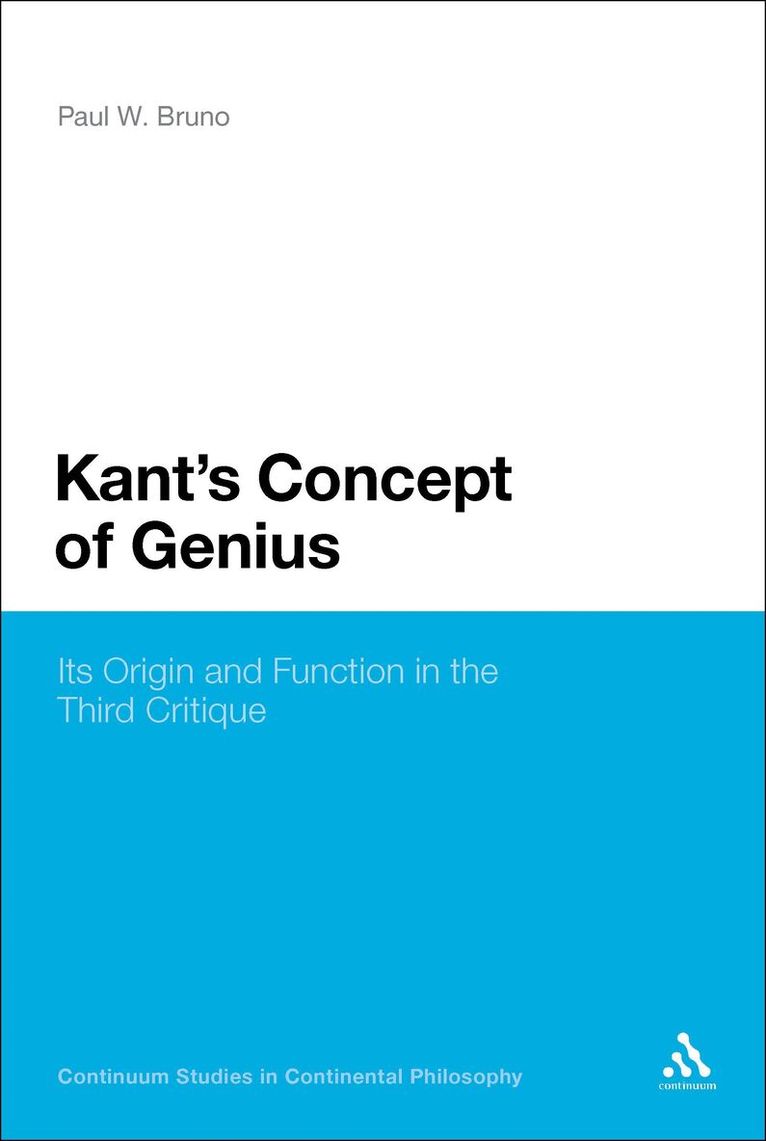
    Kant's Concept of Genius

    Its Origin and Function in the Third Critique

    AvPaul W. Bruno

    Häftad, Engelska, 2011

    Del i serien Continuum Studies in Philosophy

    546 kr

    Beställningsvara. Skickas inom 10-15 vardagar. Fri frakt över 249 kr.

    Fler format och utgåvor

    Inbunden

    2 080 kr

    E-bok

    589 kr

    E-bok

    589 kr

    Beskrivning

    While many studies have chronicled the Romantic legacy of artistic genius, this book uncovers the roots of the concept of genius in Kant's third Critique, alongside the development of his understanding of nature. Paul Bruno addresses a genuine gap in the existing scholarship by exploring the origins of Kant's thought on aesthetic judgment and particularly the artist. The development of the word 'genius' and its intimate association with the artist played itself out in a rich cultural context, a context that is inescapably significant in Western thought. Bruno shows how in many ways we are still interrogating the ways in which a nature governed by physical laws can be reconciled with a spirit of human creativity and freedom. This book leads us to a better understanding of the centrality of understanding the modern artistic enterprise, characterized as it is by creativity, for modern conceptions of the self.

    Produktinformation

    • Utgivningsdatum:2011-12-29
    • Mått:156 x 234 x 10 mm
    • Vikt:275 g
    • Format:Häftad
    • Språk:Engelska
    • Serie:Continuum Studies in Philosophy
    • Antal sidor:176
    • Förlag:Continuum Publishing Corporation
    • ISBN:9781441132543

    Utforska kategorier

    • Filosofiska discipliner inom Filosofi och religion

    Mer om författaren

    Paul Bruno is Associate Professor of Philosophy at Framingham State College, Massachusetts, USA.

    Recensioner i media

    "Paul Bruno's clear study examines the concept of genius and offers an insightful reflection on its philosophical sources. His book perceptively discusses Young, Gerard, Herder, and especially Kant, judiciously referring to the secondary literature. This innovative book will help the reader understand Kant's views of taste, art, and genius in connection with his philosophy of nature." ­ Robert R. Clewis, Gwynedd-Mercy College, USA, author of The Kantian Sublime and the Revelation of Freedom

    Innehållsförteckning

    • Acknowledgments Introduction1. Origins Genius2. Aspects of the Third Critique3. Nature4. Genius ConclusionNotesBibliographyIndex