• Fri frakt över 249 kr
  • •
  • Snabba leveranser
  • •
  • Billiga böcker
Kundservice

Du är på sajten för privatpersoner.

Företag, bibliotek eller offentlig verksamhet?

Du handlar på classic.bokus.com, där alla dina funktioner finns intakta.
Till classic.bokus.com
Bokus logotyp. Gå till startsidan.
  • Erbjudanden
  • Nyheter
  • Student
  • Topplistor
  • Barn & ungdom
  • Bokus Play
  • E-böcker
  • Pocketböcker
  • Spel & pussel

Må bättre, för mindre! Upp till 50% rabatt på hälsoböcker

Sidfot

Mina sidor

    Hjälp

    • Kundservice
    • Vanliga frågor och svar
    • Frakt och leverans
    • Retur vid ångerrätt
    • Reklamera vara
    • Betalning
    • Köpvillkor
    • Allmänna villkor
    • Information om webbplatsens tillgänglighet

    Om Bokus

    • Om oss
    • Pressrum
    • För studenter
    • För företag
    • För bibliotek och offentlig verksamhet
    • För leverantörer
    • Hållbarhet

    Populärt

    • Aktuella erbjudanden
    • Presentkort
    • Studentlitteratur
    • Nya böcker
    • Topplistor
    • Signerade böcker
    • Engelska böcker

    Inspiration

    • Boktips
    • BookTok
    • Populära bokserier
    • Barnbokskaraktärer
    • Populära författare
    Logotyp för Bokus
    Följ oss på Facebook (extern länk)Följ oss på Instagram (extern länk)Följ oss på YouTube (extern länk)Följ oss på TikTok (extern länk)
    bokus @ CookiesAnpassa cookiesIntegritetspolicyKöpvillkor
    Till Citymail hemsida (extern länk)Till Budbee hemsida (extern länk)Till Postnord hemsida (extern länk)Till Schenker hemsida (extern länk)Till Early Bird hemsida (extern länk)Till Walleys hemsida (extern länk)
    1. Historia och arkeologi
    2. Historia
    3. Forntidens historia

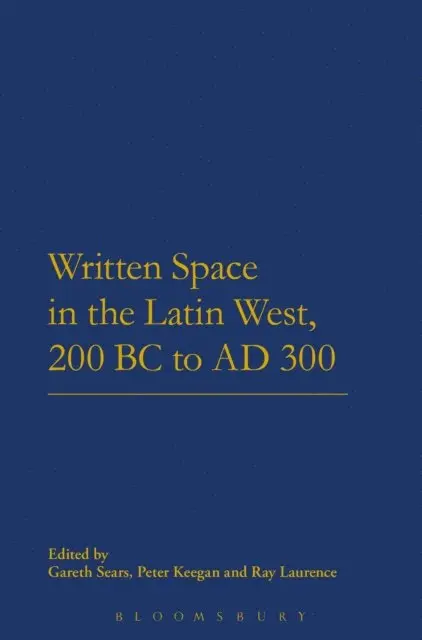
    Written Space in the Latin West, 200 BC to AD 300

    AvGareth Sears,Peter Keegan

    E-bok
    PDF, Engelska, 2013

    608 kr

    Läs direkt i Bokus Reader – eller ladda ned till din enhet (PDF kräver ofta zoom och scroll på små skärmar).

    Beskrivning

    This volume explores the creation of 'written spaces' through the accretion of monumental inscriptions and non-official graffiti in the Latin-speaking West between c.200 BC and AD 300. The shift to an epigraphic culture demonstrates new mentalities regarding the use of language, the relationship between local elites and the population, and between local elites and the imperial power. The creation of both official and non-official inscriptions is one of the most recognisable facets of the Roman city. The chapters of this book consider why urban populations created these written spaces and how these spaces in turn affected those urban civilisations. They also examine how these inscriptions interacted to create written spaces that could inculcate a sense of 'Roman-ness' into urban populations whilst also acting as a means of differentiating communities from each other. The volume includes new approaches to the study of political entities, social institutions, graffiti and painting, and the differing trajectories of written spaces in the cities of Roman Africa, Italy, Spain and Gaul.

    Produktinformation

    • Utgivningsdatum:2013-07-18
    • Språk:Engelska
    • Antal sidor:288
    • Filformat:PDF
    • Kopieringsskydd:LCP
    • ISBN:9781441188762
    • Förlag:Bloomsbury Publishing PLC (Digital)

    Utforska kategorier

    • Forntidens historia inom Historia och arkeologi

    Mer om författaren

    Gareth Sears is lecturer in Roman History at the University of Birmingham, UK.Peter Keegan is a Senior Lecturer in Roman History at Macquarie University, Australia.Ray Laurence is Professor of Roman History and Archaeology at the University of Kent, UK.

    Recensioner i media

    The greatest success of this volume is its attempt to force the reader to think of writing as a concept in toto ... Whilst each individual chapter has a clear merit for the study of that particular place or type of writing, it is the work as a whole that should be viewed as an important contribution to furthering the scholarly discourse on the significance and prevalence of writing in Rome and the West. -- Virginia L. Campbell, University of Oxford Bryn Mawr Classical Review

    Innehållsförteckning

    • 1. 'Written Space' - Laurence and Sears 2. Writing In Roman Public Space - Corbier 3. Writing In Public Space: The Meaning of Graffiti - Laurence and Senna-Garrafoni 4. The Political Graffiti of the Late Roman Republic - Hillard 5. Slaves and Children in a Roman Villa: Writing and Space in the Villa di San Marco at Stabiae - Laurence, Baldwin and Moulden 6. Convergence and Commentary: Writing at the Locus Celeberrimus -Newsome 7. Reconstructing the Epigraphic Culture of Funerary Space in the Roman City - Keegan 8. Looking at Inscriptions in Roman Baths - Cooley 9. Text, Space, and Movement: Discovering the Platea in Epigraphy - Trifilo 10. Inscribed in the City: How Did Women Enter Written Space? - Hemelrijk 11. Calendars: Time in Written Spaces - Hannah 12. A New Era? The Function of Severan Inscriptions in Africa - Sears 13. The City as Preferred Epigraphic Space: The Case of Aquitania - Esmonde-Cleary 14. Writing Politics in the Western Mediterranean - Revell 15. Afterword - Keegan.