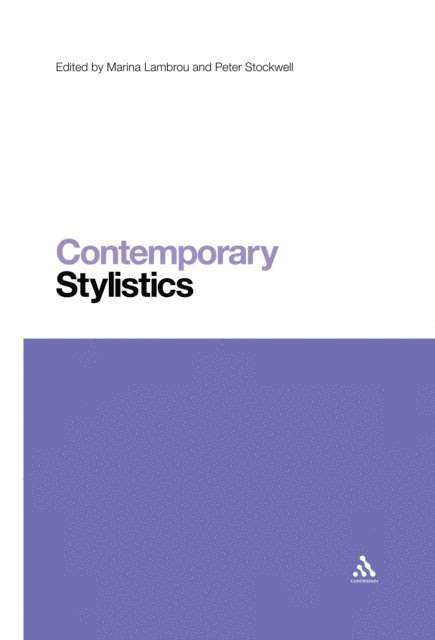
Contemporary Stylistics
AvMarina Lambrou,Peter Stockwell
Del i serien Contemporary Studies in Linguistics
691 kr
Läs direkt i Bokus Reader – eller ladda ned till din enhet (PDF kräver ofta zoom och scroll på små skärmar).
Du är på sajten för privatpersoner.
AvMarina Lambrou,Peter Stockwell
Del i serien Contemporary Studies in Linguistics
691 kr
Läs direkt i Bokus Reader – eller ladda ned till din enhet (PDF kräver ofta zoom och scroll på små skärmar).
Marina Lambrou is Associate Professor of English Language and Linguistics at Kingston University, UK. Peter Stockwell is Professor of Literary Linguistics at the University of Nottingham, UK.
'This is a lively selection of contributions, on a wide range of texts (fiction, plays, and poetry) and drawing on a remarkable diversity of theoretical commitments, from twenty of the most talented newer or younger academics engaged in language-oriented analyses of literature. Each essay in turn is usefully introduced by an established academic in the same field. This format, in which an older author sponsors a newer one while being given the chance to point out differences of view, lends both a gracious formality and a spirit of collegial dialogism to the collection. For anyone who wants to see what issues and arguments fascinate and inspire some of the exciting new generation of stylisticians, this is an excellent place to look.'
Du är på sajten för privatpersoner.
AvMarina Lambrou,Peter Stockwell
Del i serien Contemporary Studies in Linguistics
691 kr
Läs direkt i Bokus Reader – eller ladda ned till din enhet (PDF kräver ofta zoom och scroll på små skärmar).
Marina Lambrou is Associate Professor of English Language and Linguistics at Kingston University, UK. Peter Stockwell is Professor of Literary Linguistics at the University of Nottingham, UK.
'This is a lively selection of contributions, on a wide range of texts (fiction, plays, and poetry) and drawing on a remarkable diversity of theoretical commitments, from twenty of the most talented newer or younger academics engaged in language-oriented analyses of literature. Each essay in turn is usefully introduced by an established academic in the same field. This format, in which an older author sponsors a newer one while being given the chance to point out differences of view, lends both a gracious formality and a spirit of collegial dialogism to the collection. For anyone who wants to see what issues and arguments fascinate and inspire some of the exciting new generation of stylisticians, this is an excellent place to look.'