• Fri frakt över 249 kr
  • •
  • Snabba leveranser
  • •
  • Billiga böcker
Kundservice

Du är på sajten för privatpersoner.

Företag, bibliotek eller offentlig verksamhet?

Du handlar på classic.bokus.com, där alla dina funktioner finns intakta.
Till classic.bokus.com
Bokus logotyp. Gå till startsidan.
  • Erbjudanden
  • Nyheter
  • Student
  • Topplistor
  • Barn & ungdom
  • Bokus Play
  • E-böcker
  • Pocketböcker
  • Spel & pussel

10% rabatt på allt med kod: NYSTART10 →

Sidfot

Mina sidor

    Hjälp

    • Kundservice
    • Vanliga frågor och svar
    • Frakt och leverans
    • Retur vid ångerrätt
    • Reklamera vara
    • Betalning
    • Köpvillkor
    • Allmänna villkor
    • Information om webbplatsens tillgänglighet

    Om Bokus

    • Om oss
    • Pressrum
    • För studenter
    • För företag
    • För bibliotek och offentlig verksamhet
    • För leverantörer
    • Hållbarhet

    Populärt

    • Aktuella erbjudanden
    • Presentkort
    • Studentlitteratur
    • Nya böcker
    • Topplistor
    • Signerade böcker
    • Engelska böcker

    Inspiration

    • Boktips
    • BookTok
    • Populära bokserier
    • Barnbokskaraktärer
    • Populära författare
    Logotyp för Bokus
    Följ oss på Facebook (extern länk)Följ oss på Instagram (extern länk)Följ oss på YouTube (extern länk)Följ oss på TikTok (extern länk)
    bokus @ CookiesAnpassa cookiesIntegritetspolicyKöpvillkor
    Till Citymail hemsida (extern länk)Till Budbee hemsida (extern länk)Till Postnord hemsida (extern länk)Till Schenker hemsida (extern länk)Till Early Bird hemsida (extern länk)Till Walleys hemsida (extern länk)
    1. Samhälle och politik
    2. Krig och försvar
    3. Vapen och utrustning
    4. Kärnvapen

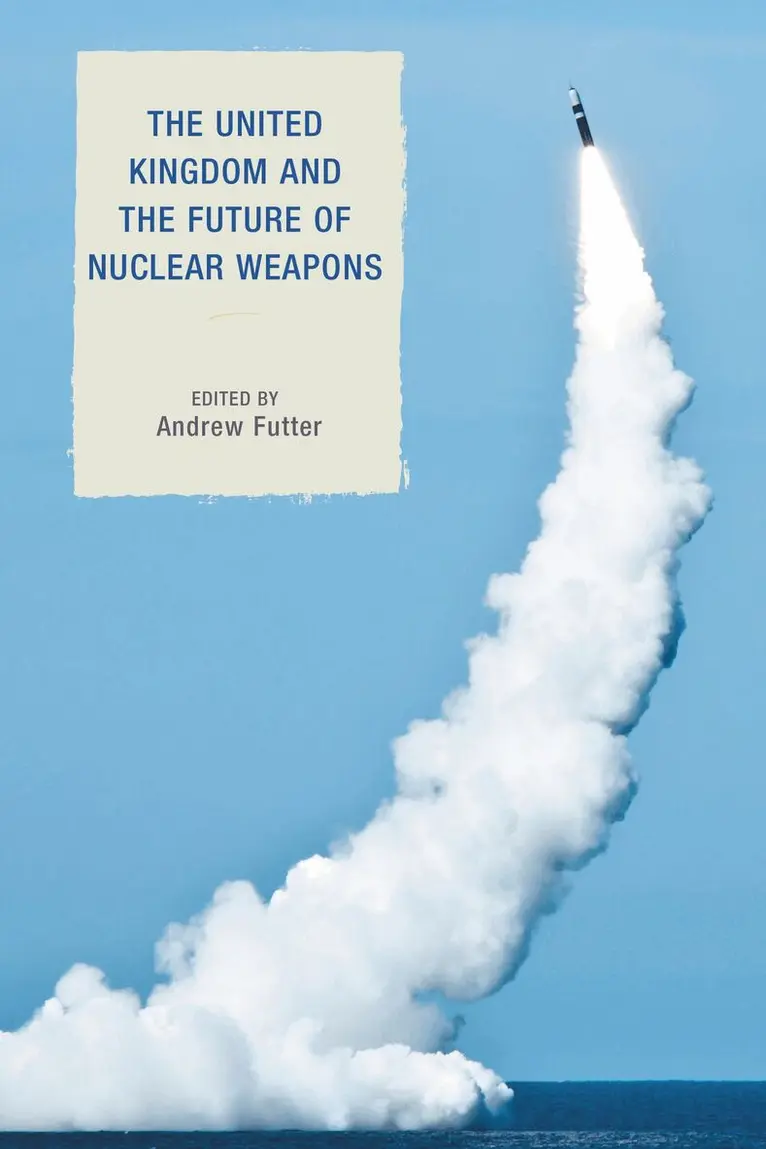
    United Kingdom and the Future of Nuclear Weapons

    AvAndrew Futter

    Inbunden, Engelska, 2016

    Del i serien Weapons of Mass Destruction and Emerging Technologies

    1 395 kr

    Beställningsvara. Skickas inom 10-15 vardagar. Fri frakt över 249 kr.

    Beskrivning

    Since 1969, the United Kingdom always has always had one submarine armed with nuclear-tipped ballistic missiles underwater, undetected, in constant communication, ready at a set notice to fire at targets anywhere in the world. This is part of its Trident Programme, which includes the development, procurement, and operation of the current generation of British nuclear weapons, as well as the means to deliver them. Operated by the Royal Navy and based at Clyde Naval Base on Scotland’s west coast, it is the most expensive and most powerful capability of the British military forces. In 2016, the United Kingdom had to decide on whether to go ahead and build the next generation of nuclear submarines that will allow the UK to remain in the nuclear business well into the second half of this century. The book presents the political, cultural, technical, and strategic aspects of Trident to provide a thoughtful overview of the UK’s complex relationship with nuclear weapons. The authors, both scholars and practitioners, bring together diverse perspectives on the issue, discussing the importance of UK nuclear history as well as the political, legal, and diplomatic aspects of UK nuclear weapons—internationally and domestically. Also addressed are the new technical, military, and strategic challenges to the UK nuclear thinking and strategy.

    Produktinformation

    • Utgivningsdatum:2016-06-16
    • Mått:157 x 237 x 24 mm
    • Vikt:549 g
    • Format:Inbunden
    • Språk:Engelska
    • Serie:Weapons of Mass Destruction and Emerging Technologies
    • Antal sidor:244
    • Förlag:Bloomsbury Publishing Plc
    • Medarbetare:Lawrence Freedman
    • ISBN:9781442265738

    Utforska kategorier

    • Kärnvapen inom Samhälle och politik
    • Internationella relationer inom Samhälle och politik

    Mer om författaren

    Editor:Andrew Futter is a senior lecturer at the University of Leicester, UK Contributors:Peter Burt, director of the UK Nuclear Information Service Catherine Eschle, senior lecturer, University of Strathclyde Toby Fenwick, research associate at the Centre Forum and former RAF officerJonathan Hogg, senior lecturer, University of Liverpool David Jarvis, associate fellow at the Royal United Services Institute, founder of the UK Project on Nuclear Issues, and former UK Liaison Officer at US STRATCOM Lukasz Kulesa, research director of the European Leadership Network and former head of the Non-proliferation and Arms Control Project at the Polish Institute of International Affairs Nick Ritchie, senior lecturer, University of York Daniel Salisbury, research associate at the Centre for Science and Security Studies, King’s College London Shatabhisha Shetty, deputy director of the and co-founder of the European Leadership Network Kristan Stoddart, senior lecturer at Aberystwyth University William Walker, emeritus professor at the University of St Andrews Heather Williams, MacArthur Postdoctoral Fellow at King’s College London and former Nuclear Policy analyst at Chatham HouseHenrietta Wilson, independent analyst and associate at the UK Nuclear Information Service

    Recensioner i media

    The public debate about the future of British nuclear weapons has traditionally been rather superficial and based on largely unexamined prejudices on both sides of the argument. This timely and balanced study from a wide range of experts, with differing views, calls for an open-minded and informed discussion of the subject. It is an excellent contribution to one of the most fundamental questions facing Britain today.

    Innehållsförteckning

    • Foreword by Sir Lawrence FreedmanIntroduction: the Trident debate renewed – Andrew FutterPart I – British nuclear strategy: history and culture1. 70 years of British nuclear debates: a brief history – Daniel Salisbury2. The UK nuclear deterrent: a system of systems – David Jarvis 3. UK Trident renewal: antecedents and decision-making – Kristan Stoddart4. The silence of British nuclear culture – Jon HoggPart II – Trident renewal: the wider context5. The heterogeneity of UK military views on nuclear weapons – Henrietta Wilson6. The Trident renewal decision, the UK and the NPT – Shatabhisha Shetty & Lukasz Kulesa7. The legality and legitimacy of Trident renewal – William Walker8. Trident and the special relationship – Heather Williams 9. Dangerous and inhumane: the implications for UK nuclear policy of international strategies to apply humanitarian law and prohibit nuclear weapons - Rebecca Johnson 10. Bairns not bombs: the Scottish anti-nuclear movement and the British nuclear st