Weapons of Mass Destruction and Emerging Technologies – serie
Visar alla böcker i serien Weapons of Mass Destruction and Emerging Technologies. Handla med fri frakt och snabb leverans.
15 produkter
15 produkter
Inbunden, Engelska, 2015
1 224 kr
Skickas inom 10-15 vardagar
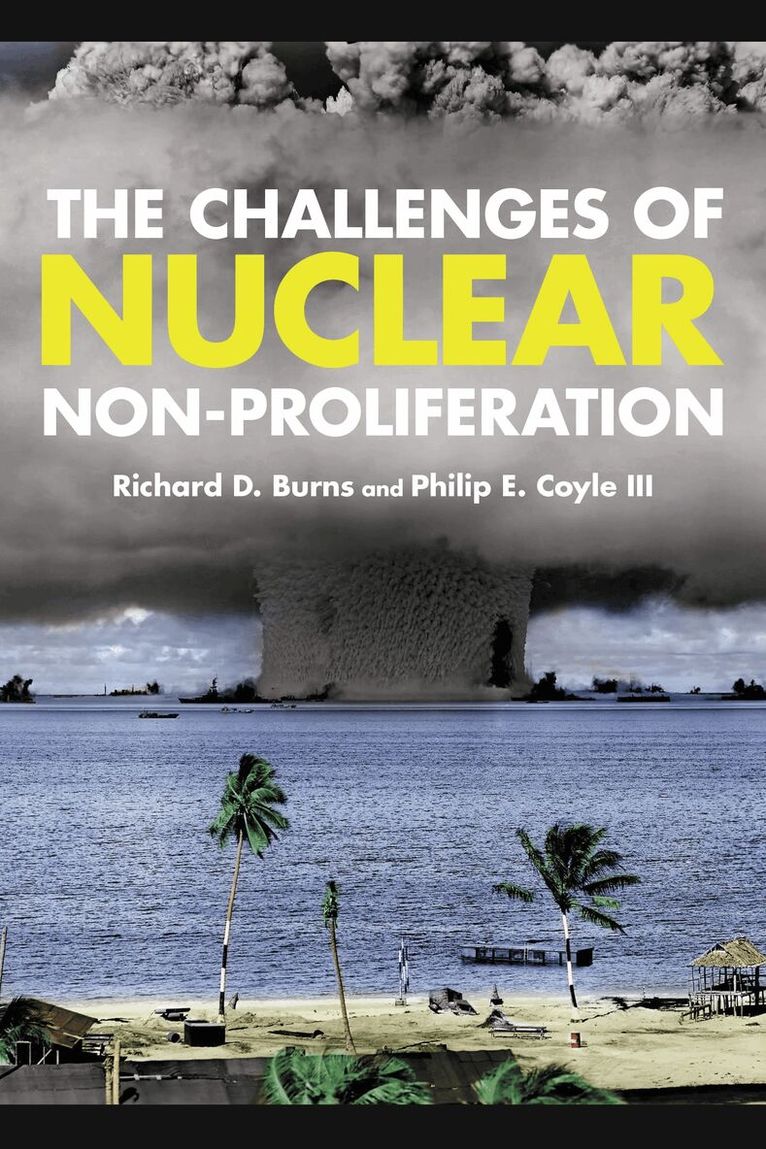
The Challenges of Nuclear Non-Proliferation is an exhaustive survey of the many aspects of non-proliferation efforts. It explains why some nations pursued nuclear programs while others abandoned them, as well as the challenges, strengths, and weaknesses of non-proliferation efforts. It addresses key issues such as concerns over rogue states and stateless rogues, delivery systems made possible by technology, and the connection between nuclear weapons and ballistic missiles, examining whether non-proliferation regimes can deal with these threats or whether economic or military sanctions need to be developed. It also examines the feasibility of eliminating or greatly reducing the number of nuclear weapons. A broad survey of one of today’s great threats to international security, this text provides undergraduates students with the tools needed to evaluate current events and global threats.
Häftad, Engelska, 2015
507 kr
Skickas inom 10-15 vardagar
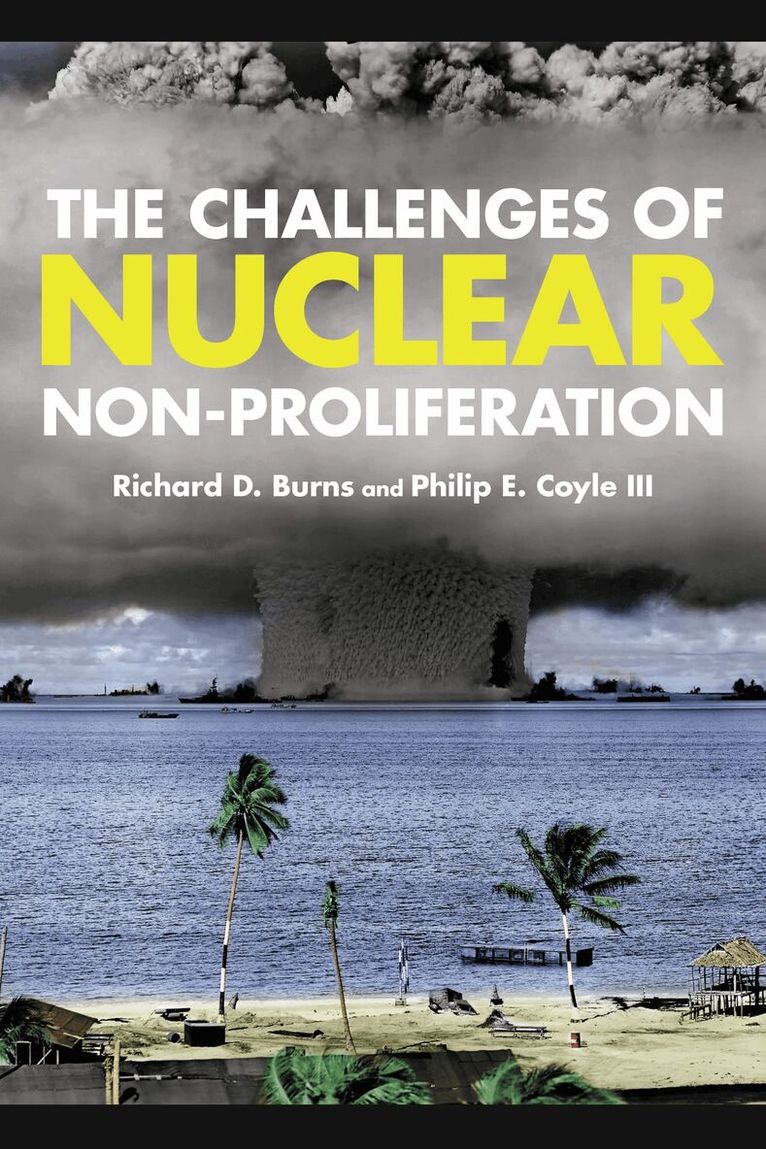
The Challenges of Nuclear Non-Proliferation is an exhaustive survey of the many aspects of non-proliferation efforts. It explains why some nations pursued nuclear programs while others abandoned them, as well as the challenges, strengths, and weaknesses of non-proliferation efforts. It addresses key issues such as concerns over rogue states and stateless rogues, delivery systems made possible by technology, and the connection between nuclear weapons and ballistic missiles, examining whether non-proliferation regimes can deal with these threats or whether economic or military sanctions need to be developed. It also examines the feasibility of eliminating or greatly reducing the number of nuclear weapons. A broad survey of one of today’s great threats to international security, this text provides undergraduates students with the tools needed to evaluate current events and global threats.
Häftad, Engelska, 2013
575 kr
Skickas inom 10-15 vardagar
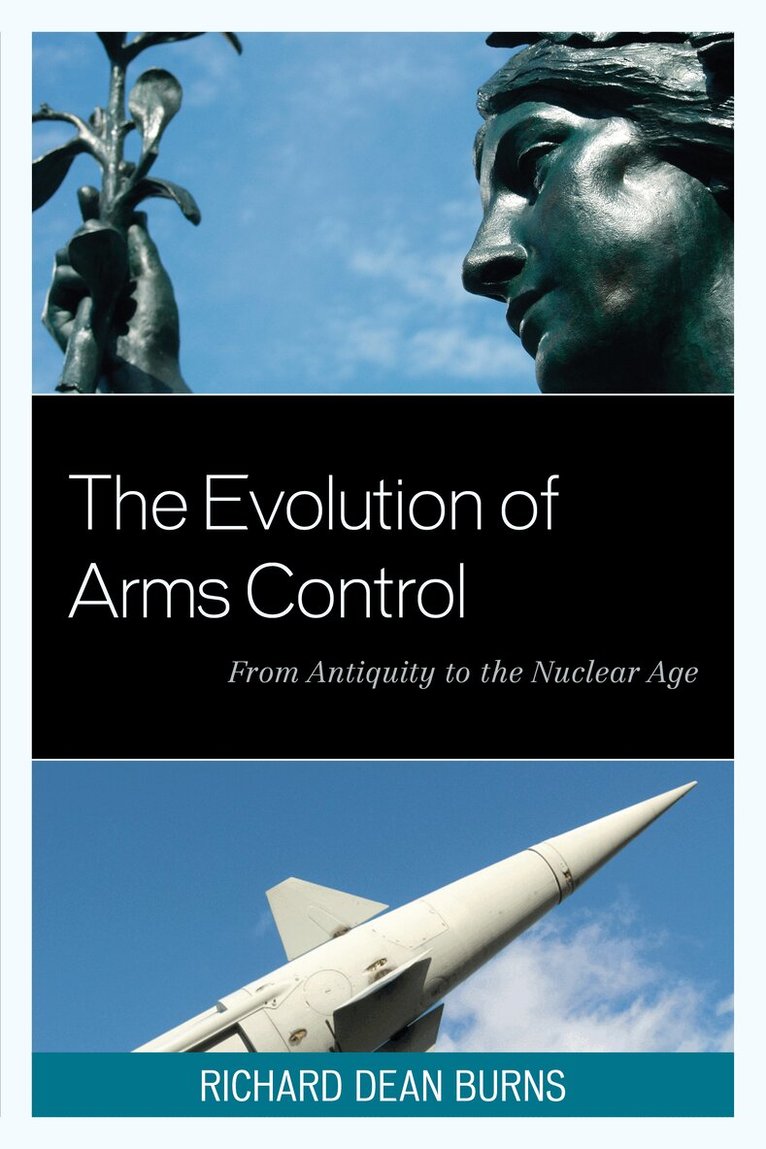
Drawing on his knowledge of the comparative history of warfare and arms control across preliterate, ancient, medieval, and modern polities, Richard Dean Burns focuses longitudinally on such perennial arms control issues as negotiation, verification, and compliance. Although he does not, for example, allege that war elephants and nuclear weapons are of equal destructive potential, he does discern instructive similarities between Carthage in 202 BCE and Iraq in 1991 AD. Arms control and disarmament measures have been pursued and adopted throughout the history and prehistory of human warfare: sometimes as protocols recognizing evolving humanitarian taboos; sometimes as terms imposed by the victors on the vanquished; and sometimes as accords negotiated between rivals fearful of mutual destruction. Arms control measures ramped up in significance and urgency at the dawn of the 20th century by the introduction of rapid-fire weapons, aircraft, chemical agents, and submarines, and again at mid-century with the advent of weapons of mass destruction—nuclear, chemical, and bacteriological—with sophisticated delivery systems. As Burns makes clear, the enormous increase in destructive potential brought about by thermonuclear weaponry essentially changed the nature of war and, therefore, of arms control.
Inbunden, Engelska, 2014
1 539 kr
Skickas inom 10-15 vardagar
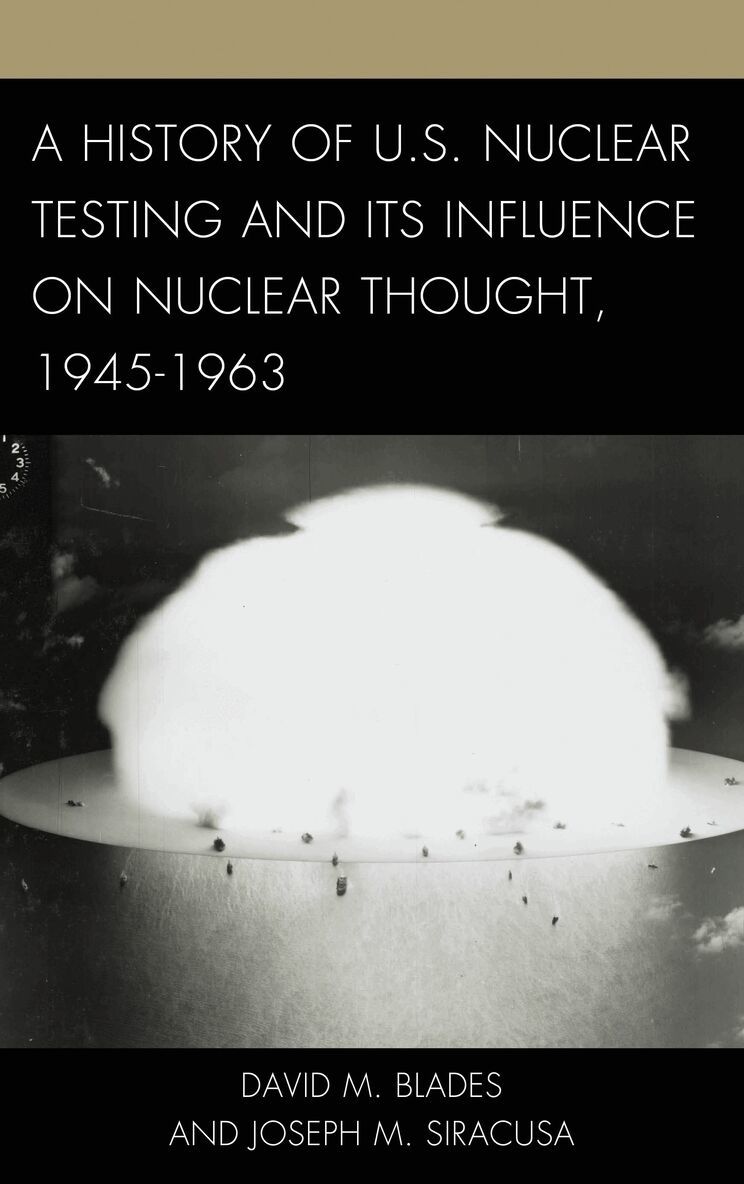
The story of U. S. nuclear testing between 1945 and 1963 is a vivid and exciting one, but also one of profound importance. It is a story of trailblazing scientific progress, weapons of mass destruction, superpower rivalry, accidents, radiological contamination, politics, and diplomacy. The testing of weapons that defined the course and consequences of the Cold War was itself a crucial dimension to the narrative of that conflict. Further, the central question - Why conduct nuclear tests? - was fully debated among American politicians, generals, civilians, and scientists, and ultimately it was victory for those who argued in favor of national security over diplomatic and environmental costs that normalized nuclear weapons tests. A History of U. S. Nuclear Testing and Its Influence on Nuclear Thought, 1945–1963 is an examination of this question, beginning with the road to normalization and, later, de-normalization of nuclear testing, leading to the Nuclear Test Ban Treaty in 1963. As states continue to pursue nuclear weaponry, nuclear testing remains an important political issue in the twenty-first century.
Inbunden, Engelska, 2017
1 089 kr
Skickas inom 10-15 vardagar
Whether possessed by a state or non-state actor, the specter of Weapons of Mass Destruction (WMDs), and more specifically, nuclear weapons and their associated material, present a significant threat to global security. Notwithstanding the fact that there are fewer nuclear weapons today than the massive stockpiles that existed during the height of the Cold War, the complexities relating to nuclear security have in many ways intensified amid globalization and porous borders. More states in volatile regions possess such weapons, UN Security Council states are busily modernizing their weapons, and non-states actors have made it clear their intention to use such weapons should they attain them. The emerging prospect of a cyber-attack, or a misunderstanding that could potentially evolve into a limited regional nuclear war, would both have dire global ramifications and are scenarios that should not be considered farfetched. Additionally, concerns pertaining to chemical and biological weapons, the associated ramifications relating to nuclear terrorism, and broader limitations of the NPT regime, all pose major challenges to global stability. In considering all of these areas, this foundational primer for the Rowman and Littlefield WMD Series seeks to inform and advance policy debate in ways that support international security, while also adding important connective tissue between analytical areas in the IR and historical domains that often remain separate. Offering a comprehensive analysis of the evolution and current status of WMDs, this volume will be of great interest to scholars, analysts, and students of security studies, international history, and international relations.
Häftad, Engelska, 2017
494 kr
Skickas inom 10-15 vardagar
Whether possessed by a state or non-state actor, the specter of Weapons of Mass Destruction (WMDs), and more specifically, nuclear weapons and their associated material, present a significant threat to global security. Notwithstanding the fact that there are fewer nuclear weapons today than the massive stockpiles that existed during the height of the Cold War, the complexities relating to nuclear security have in many ways intensified amid globalization and porous borders. More states in volatile regions possess such weapons, UN Security Council states are busily modernizing their weapons, and non-states actors have made it clear their intention to use such weapons should they attain them. The emerging prospect of a cyber-attack, or a misunderstanding that could potentially evolve into a limited regional nuclear war, would both have dire global ramifications and are scenarios that should not be considered farfetched. Additionally, concerns pertaining to chemical and biological weapons, the associated ramifications relating to nuclear terrorism, and broader limitations of the NPT regime, all pose major challenges to global stability. In considering all of these areas, this foundational primer for the Rowman and Littlefield WMD Series seeks to inform and advance policy debate in ways that support international security, while also adding important connective tissue between analytical areas in the IR and historical domains that often remain separate. Offering a comprehensive analysis of the evolution and current status of WMDs, this volume will be of great interest to scholars, analysts, and students of security studies, international history, and international relations.
Inbunden, Engelska, 2016
1 224 kr
Skickas inom 10-15 vardagar
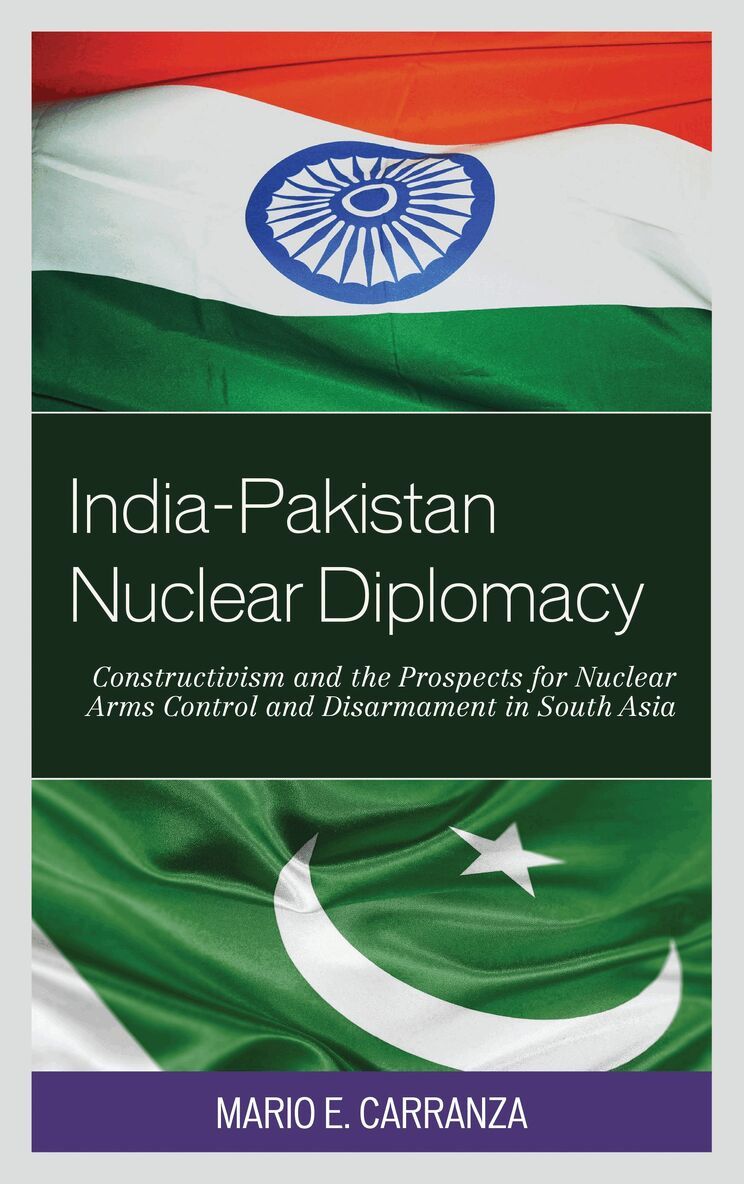
The conventional wisdom, based on realist premises, is that nuclear weapons are an irreversible reality in South Asia, and that efforts to denuclearize the subcontinent are a futile endeavor. As a result, real nuclear arms control in South Asia remains elusive and scholars continue focusing their efforts on how to achieve crisis stability and deterrence stability in future Indo-Pakistani confrontations. However, they tend to analyze India and Pakistan’s nuclear diplomacy as if the nuclear competition occurred in complete isolation from the changing dynamics of the international social environment. Using a constructivist model, this study brings nuclear arms control and disarmament back into the debates on the future of Indo-Pakistani relations. Constructivism recognizes the independent impact of international norms, such as the Nuclear Non-Proliferation Norm (NNPN), on India and Pakistan’s nuclear behavior. Even though the NNPN does not legally bind them, it is reinforced at the global level, and may lead the South Asian rivals to move in the direction of nuclear arms control and disarmament, thus reducing the costs, dangers, and risks of an eternal strategic rivalry. After examining the main tenets of constructivism in international relations, the works delves into the proliferation debate, discussing nuclear reversal and U.S. policy toward the subcontinent since the G. W. Bush administration. It looks at the prospects for nuclear arms control and disarmament in South Asia after the U.S.-India nuclear deal of 2008, and the nuclear abolitionist wave during the first Obama administration. It concludes with the contribution of social constructivism to understanding how changes in the India-Pakistan nuclear status quo can happen.
Inbunden, Engelska, 2015
1 156 kr
Skickas inom 10-15 vardagar
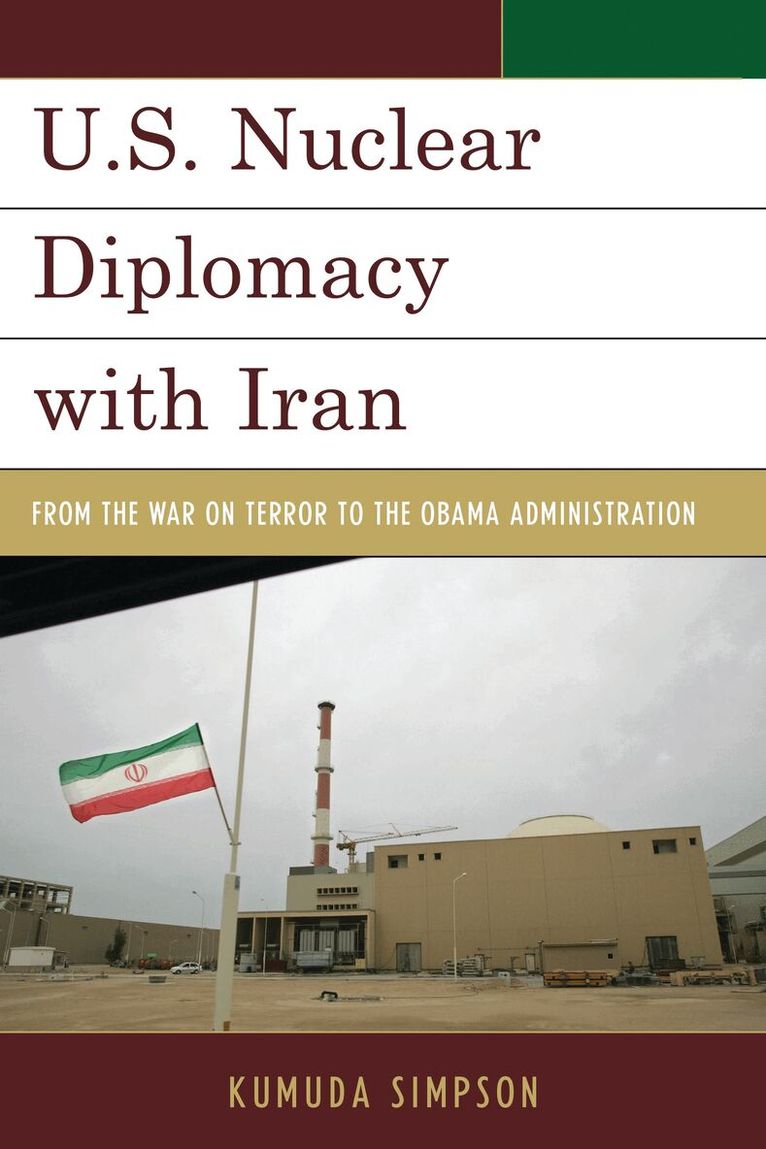
The United States’ commitment to non-proliferation often propels its foreign policy rhetoric. In 2002, George W. Bush framed his goal of preventing the spread of nuclear weapons within the context of the global war on terror, accusing Iran of being part of the “Axis of Evil.” Iran’s nuclear program was declared an intolerable threat to global peace and stability. This approach however showed the conflict between the rhetoric of good vs. evil and the need for a pragmatic and measured approach to non-proliferation in the Middle East. The book explores this divergence between the alarmist rhetoric of the Bush Administration’s public diplomacy and its actual non-proliferation policy toward Iran. It shows how the two policy directions, the war on terror and negotiations over the nuclear issue, were often at odds. Further, the Administration’s desire to change the regime in Iran undermined efforts to find a diplomatic solution to the nuclear issue. Ultimately, the policies implemented failed both to shut down Iran’s nuclear program and bring significant democratic reform within the Islamic Republic. The book also examines this legacy and how Obama’s approach differs or follows that of his predecessor. Lastly, the implications for non-proliferation policies beyond Iran are discussed, as nuclear proliferation remains a key concern in a Middle East plagued by instability.
Inbunden, Engelska, 2016
1 359 kr
Skickas inom 10-15 vardagar
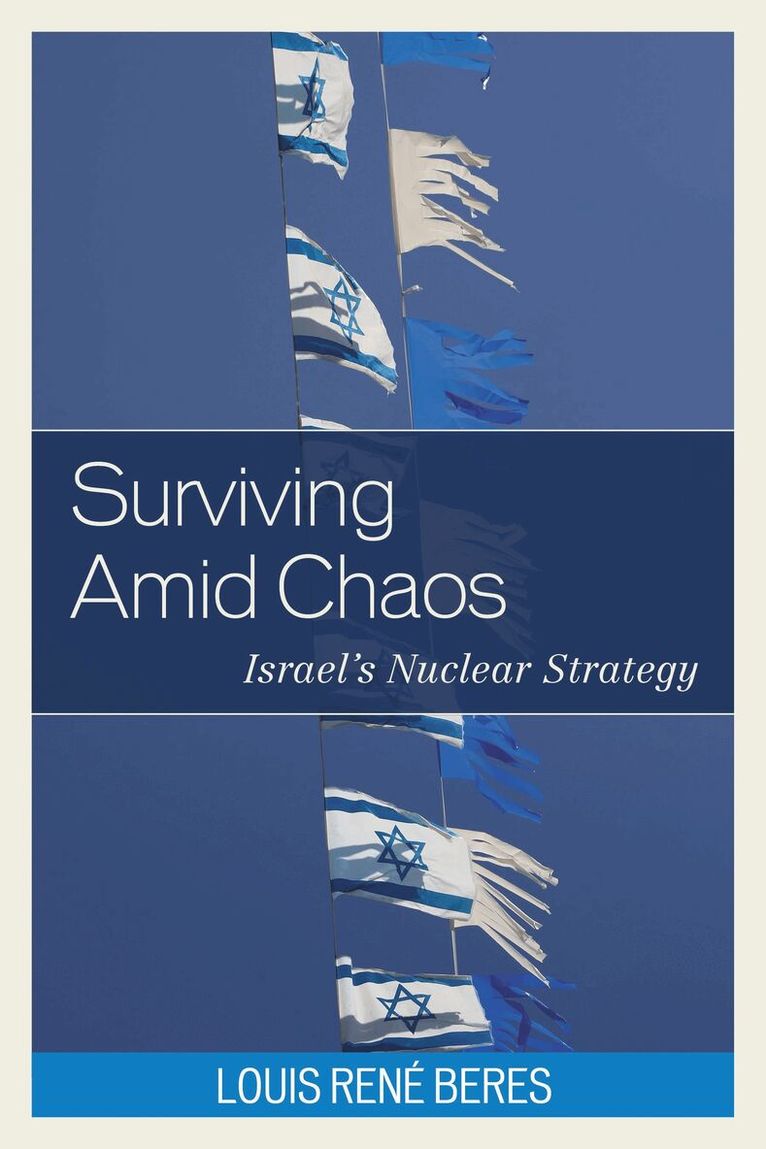
Now facing a genuinely unprecedented configuration of existential threats, Israel's leaders must decide whether to continue their deliberate nuclear ambiguity policy (the "bomb in the basement") as they consider such urgent and overlapping survival issues as regional nuclear proliferation, Jihadist terror-group intersections with enemy states, rationality or irrationality of state and sub-state adversaries, assassination or "targeted killing," preemption, and the probable effects of a "Cold War II" between Russia and the United States. Israel must develop a strategic posture that will involve a suitably coherent and refined nuclear strategy. This book critically examines Israel's rapidly evolving nuclear strategy in light of these issues and explains how it underscores the overarching complexity of strategic interactions in the Middle East.
Inbunden, Engelska, 2017
1 021 kr
Skickas inom 10-15 vardagar
This volume in the Weapons of Mass Destruction series makes the case that the United States’ expansive missile defence policy has eroded both its own security and that of its allies. These findings are based on an examination of the response of a number of key states to U.S. policy, including Russia, China, North Korea and Iran. Situating their argument in the theoretical debate on balancing in unipolarity, the authors contrast their view to influential perspectives that see little evidence of hard balancing against the U.S. in the post-Cold War era. Adopting a neorealist perspective, the authors demonstrate the clear presence of this inter-state practice, providing insight into the international politics of unipolarity, showing how hard balancing and security dilemma-related dynamics operate in the contemporary strategic environment.
Inbunden, Engelska, 2016
1 359 kr
Skickas inom 10-15 vardagar
Since 1969, the United Kingdom always has always had one submarine armed with nuclear-tipped ballistic missiles underwater, undetected, in constant communication, ready at a set notice to fire at targets anywhere in the world. This is part of its Trident Programme, which includes the development, procurement, and operation of the current generation of British nuclear weapons, as well as the means to deliver them. Operated by the Royal Navy and based at Clyde Naval Base on Scotland’s west coast, it is the most expensive and most powerful capability of the British military forces. In 2016, the United Kingdom had to decide on whether to go ahead and build the next generation of nuclear submarines that will allow the UK to remain in the nuclear business well into the second half of this century. The book presents the political, cultural, technical, and strategic aspects of Trident to provide a thoughtful overview of the UK’s complex relationship with nuclear weapons. The authors, both scholars and practitioners, bring together diverse perspectives on the issue, discussing the importance of UK nuclear history as well as the political, legal, and diplomatic aspects of UK nuclear weapons—internationally and domestically. Also addressed are the new technical, military, and strategic challenges to the UK nuclear thinking and strategy.
Inbunden, Engelska, 2016
1 900 kr
Skickas inom 10-15 vardagar
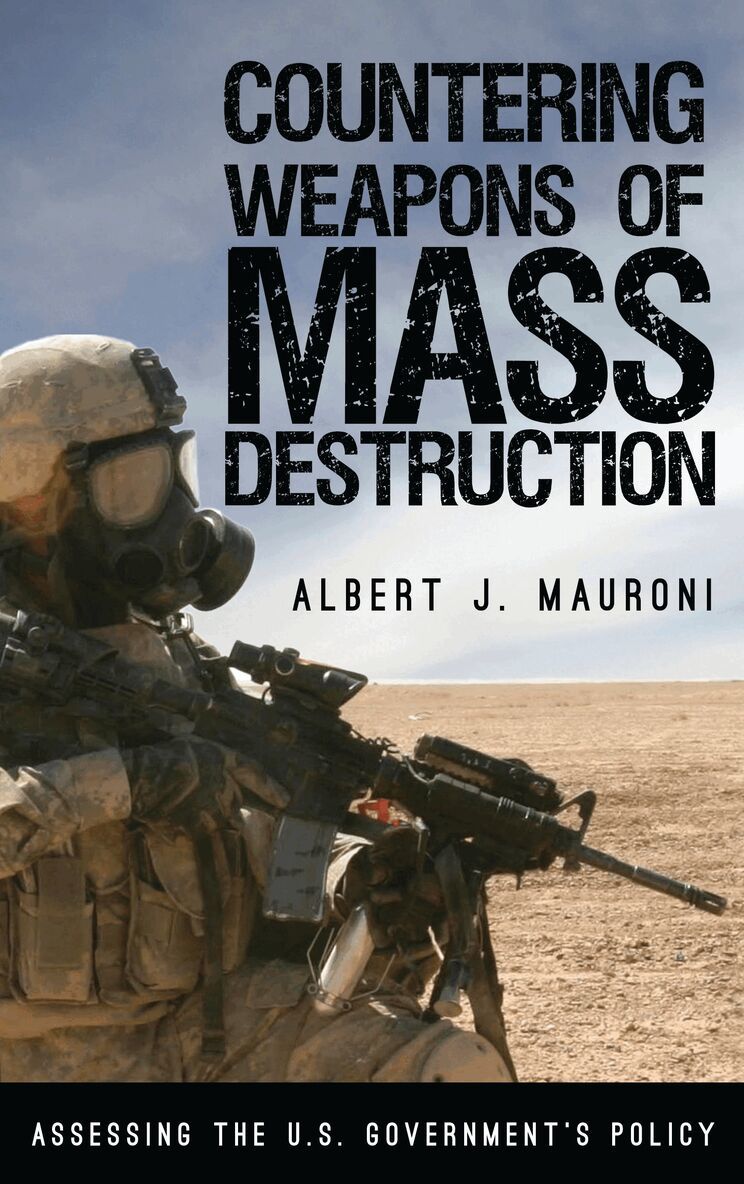
The Cold War phrase “weapons of mass destruction” continues to be used despite significant changes in international political cultures, military concepts of operation, and technology advances. Today, the term “weapons of mass destruction” (WMD) is used to address many things, from grams of ricin and barrels of industrial chemicals to megaton nuclear weapons. As a direct result of the decision to refer to all nuclear, biological, and chemical (NBC) weapons as well as biological, chemical and radiological (CBR) hazards as “WMD,” we have lost the ability to accurately develop, assess, and discuss policy concerns relating to the contemporary use of unconventional weapons on the battlefield and within the homeland. This book uses a public policy framework to examine how the U.S. government, and in particular the U.S. military, should address the potential use of unconventional weapons in the 21st century. It defines the problem, identifies the policy actors and reviews policy options. It discusses past policy efforts before offering a critical review of current strategies and how WMD issues are integrated into the current military Joint Operating Concepts (deterrence, cooperative security, major combat operations, irregular warfare, stability, and homeland security), and proposes new national framework for countering WMD. The aim is to answer such questions as what does counterproliferation mean and whether the U.S. government is adequately prepared to protect U.S. citizens and its armed forces from adversaries developing unconventional weapons.
Häftad, Engelska, 2016
751 kr
Skickas inom 10-15 vardagar
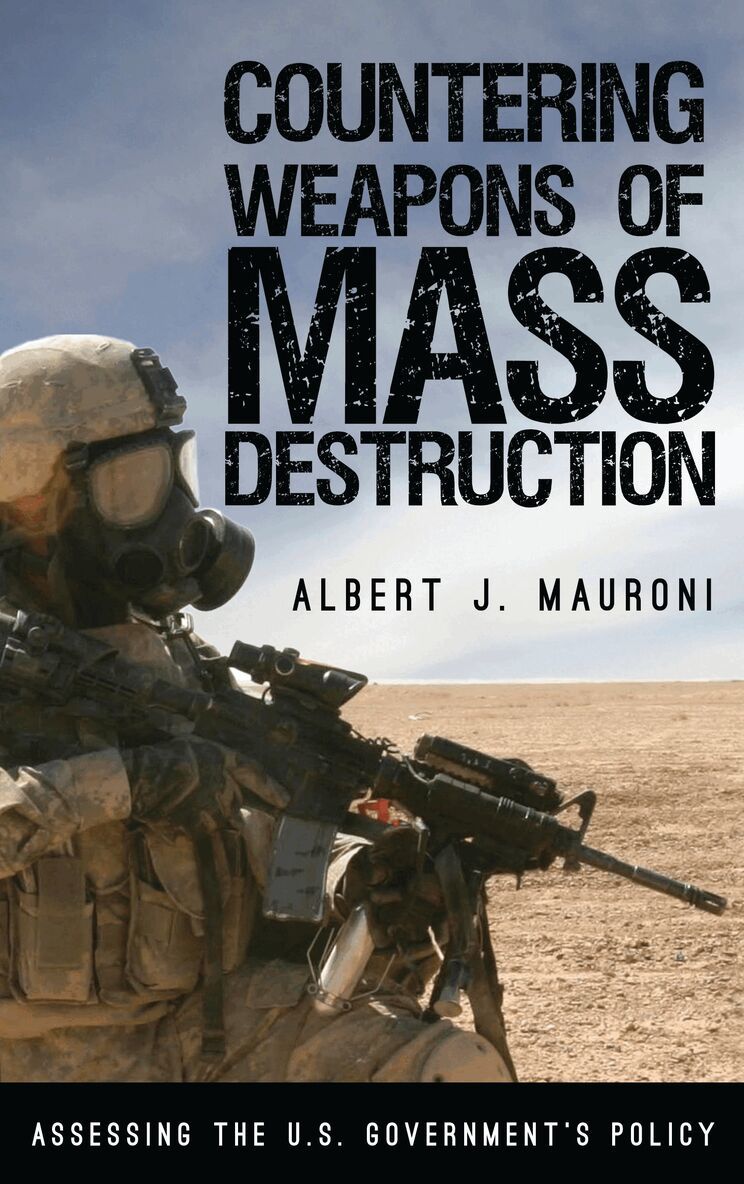
The Cold War phrase “weapons of mass destruction” continues to be used despite significant changes in international political cultures, military concepts of operation, and technology advances. Today, the term “weapons of mass destruction” (WMD) is used to address many things, from grams of ricin and barrels of industrial chemicals to megaton nuclear weapons. As a direct result of the decision to refer to all nuclear, biological, and chemical (NBC) weapons as well as biological, chemical and radiological (CBR) hazards as “WMD,” we have lost the ability to accurately develop, assess, and discuss policy concerns relating to the contemporary use of unconventional weapons on the battlefield and within the homeland. This book uses a public policy framework to examine how the U.S. government, and in particular the U.S. military, should address the potential use of unconventional weapons in the 21st century. It defines the problem, identifies the policy actors and reviews policy options. It discusses past policy efforts before offering a critical review of current strategies and how WMD issues are integrated into the current military Joint Operating Concepts (deterrence, cooperative security, major combat operations, irregular warfare, stability, and homeland security), and proposes new national framework for countering WMD. The aim is to answer such questions as what does counterproliferation mean and whether the U.S. government is adequately prepared to protect U.S. citizens and its armed forces from adversaries developing unconventional weapons.
Inbunden, Engelska, 2017
954 kr
Skickas inom 10-15 vardagar
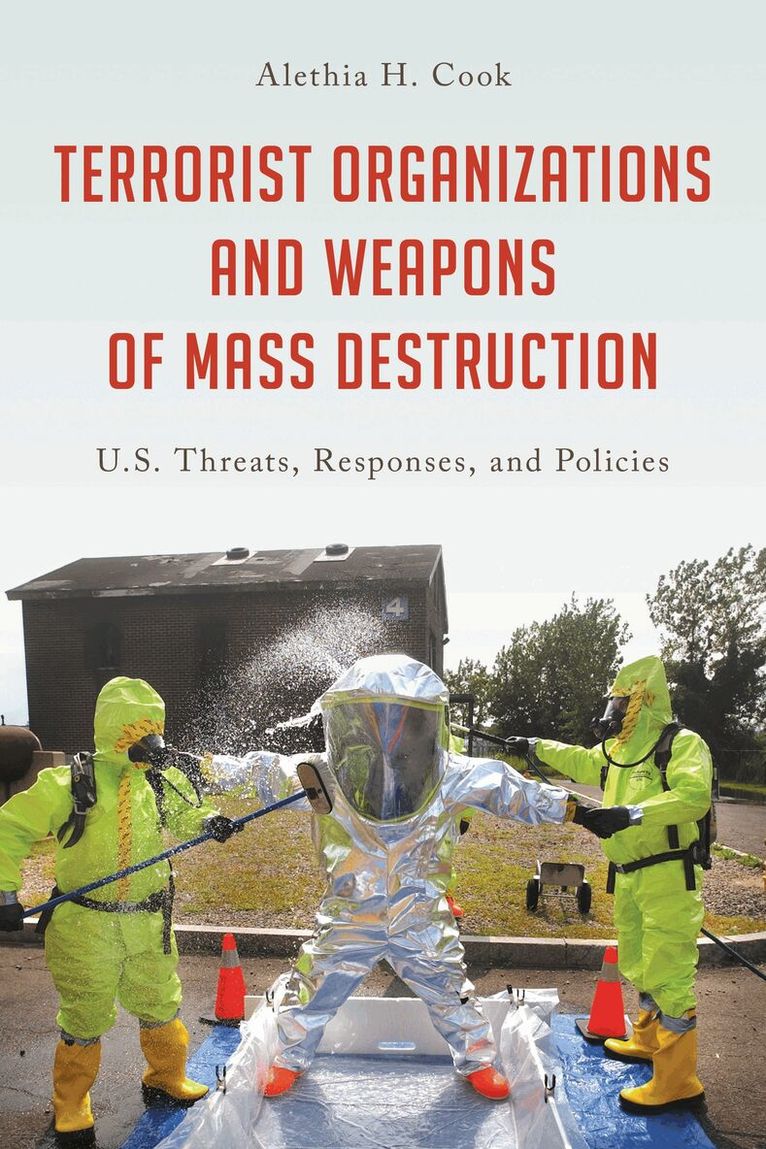
Weapons of Mass Destruction are diverse and pose unique challenges to governments attempting to keep them out of the wrong hands and preparing to respond to an attack. This text analyzes Chemical, Biological, Radiological, and Nuclear (CBRN) weapons and terrorist groups with a known interest in them. It presents accessible information about the technical challenges posed by each type of weapon, assesses the threats, and reviews the US governmental responses. It provides structured CBRN case studies and allows for easy comparison of threats, challenges, and responses. The text combines weapons and policy information in one comprehensive and comparative resource for researchers and students interested in key issues in modern terrorism and international security.
Häftad, Engelska, 2018
592 kr
Skickas inom 10-15 vardagar
Now facing a genuinely unprecedented configuration of existential threats, Israel's leaders must decide whether to continue their deliberate nuclear ambiguity policy (the "bomb in the basement") as they consider such urgent and overlapping survival issues as regional nuclear proliferation, Jihadist terror-group intersections with enemy states, rationality or irrationality of state and sub-state adversaries, assassination or "targeted killing," preemption, and the probable effects of a "Cold War II" between Russia and the United States. Israel must develop a strategic posture that will involve a suitably coherent and refined nuclear strategy. This book critically examines Israel's rapidly evolving nuclear strategy in light of these issues and explains how it underscores the overarching complexity of strategic interactions in the Middle East.