• Fri frakt över 249 kr
  • •
  • Snabba leveranser
  • •
  • Billiga böcker
Kundservice

Du är på sajten för privatpersoner.

Företag, bibliotek eller offentlig verksamhet?

Du handlar på classic.bokus.com, där alla dina funktioner finns intakta.
Till classic.bokus.com
Bokus logotyp. Gå till startsidan.
  • Erbjudanden
  • Nyheter
  • Student
  • Topplistor
  • Barn & ungdom
  • Bokus Play
  • E-böcker
  • Pocketböcker
  • Spel & pussel

10% rabatt på allt med kod NYSTART10 →

Sidfot

Mina sidor

    Hjälp

    • Kundservice
    • Vanliga frågor och svar
    • Frakt och leverans
    • Retur vid ångerrätt
    • Reklamera vara
    • Betalning
    • Köpvillkor
    • Allmänna villkor
    • Information om webbplatsens tillgänglighet

    Om Bokus

    • Om oss
    • Pressrum
    • För studenter
    • För företag
    • För bibliotek och offentlig verksamhet
    • För leverantörer
    • Hållbarhet

    Populärt

    • Aktuella erbjudanden
    • Presentkort
    • Studentlitteratur
    • Nya böcker
    • Topplistor
    • Signerade böcker
    • Engelska böcker

    Inspiration

    • Boktips
    • BookTok
    • Populära bokserier
    • Barnbokskaraktärer
    • Populära författare
    Logotyp för Bokus
    Följ oss på Facebook (extern länk)Följ oss på Instagram (extern länk)Följ oss på YouTube (extern länk)Följ oss på TikTok (extern länk)
    bokus @ CookiesAnpassa cookiesIntegritetspolicyKöpvillkor
    Till Citymail hemsida (extern länk)Till Budbee hemsida (extern länk)Till Postnord hemsida (extern länk)Till Schenker hemsida (extern länk)Till Early Bird hemsida (extern länk)Till Walleys hemsida (extern länk)
    1. Skönlitteratur
    2. Litteraturvetenskap

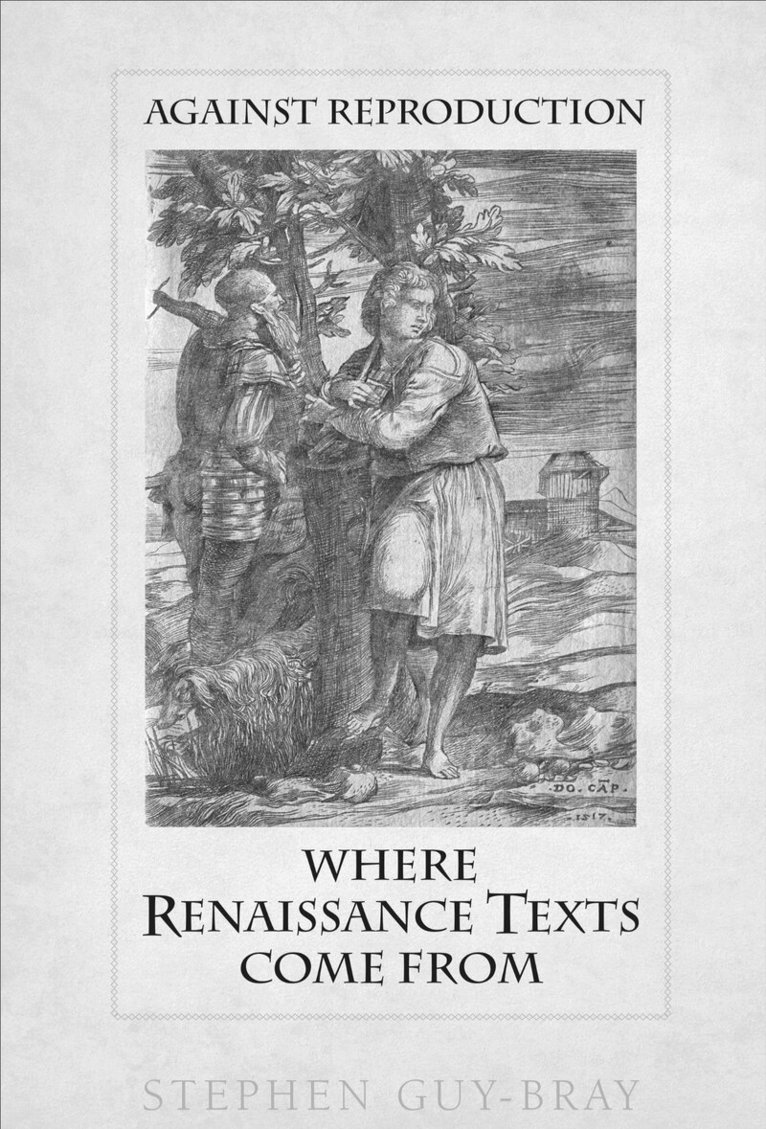
    Against Reproduction

    Where Renaissance Poems Come from

    AvStephen Guy-Bray

    E-bok
    PDF, Engelska, 2010

    399 kr

    Läs direkt i Bokus Reader – eller ladda ned till din enhet (PDF kräver ofta zoom och scroll på små skärmar).

    Fler format och utgåvor

    Häftad

    354 kr

    Beskrivning

    The idea of the author as parent and the text as child is a pervasive metaphor throughout Renaissance poetry and drama. In Against Reproduction, Stephen Guy-Bray sets out to systematically interrogate this common trope, and to consider the limits of using heterosexual reproduction to think of textual creation.Through an analysis of Renaissance texts by poets and playwrights including William Shakespeare, Christopher Marlowe, and John Milton, Guy-Bray argues that the reproductive metaphor was only one of the ways in which writers presented their own literary production. Their uses of sexual language reveal that these authors were surprisingly ambivalent about their own writing. Guy-Bray suggests that they often presented their work in such a way as to feminize themselves and to associate the writing process with shame and abjection.Offering fresh perspectives on well-known texts, Against Reproduction is an accessible and compelling book that will affect the study of both Renaissance literature and queer theory.

    Produktinformation

    • Utgivningsdatum:2010-12-31
    • Språk:Engelska
    • Antal sidor:240
    • Filformat:PDF
    • Kopieringsskydd:LCP
    • ISBN:9781442685819
    • Förlag:University of Toronto Press

    Utforska kategorier

    • Litteraturvetenskap inom Skönlitteratur

    Mer om författaren

    Stephen Guy-Bray is a professor in the Department of English at the University of British Columbia.

    Recensioner i media

    'Against Reproduction is a pioneering and erudite study that should hold wide appeal for scholars of Renaissance poetry, the history of sexuality, and the history of the book. Stephen Guy-Bray has written a sophisticated book in an accessible and compelling style that sets out to systematically interrogate the guiding trope of literary production in the early modern period: reproduction. He persuasively demonstrates that sexuality and productivity have not always been linked and argues that Renaissance authors engaged erotic metaphors in various ways that were not always determined by the ends of normative (hetero)sexuality.' - Amanda Bailey, Department of English, University of Connecticut 'Against Reproduction is exciting, irreverent, and wonderfully erudite. It will be indispensible for scholars of Renaissance texts and queer studies alike.' - Madhavi Menon, Department of Literature, American University