• Fri frakt över 249 kr
  • •
  • Snabba leveranser
  • •
  • Billiga böcker
Kundservice

Du är på sajten för privatpersoner.

Företag, bibliotek eller offentlig verksamhet?

Du handlar på classic.bokus.com, där alla dina funktioner finns intakta.
Till classic.bokus.com
Bokus logotyp. Gå till startsidan.
  • Erbjudanden
  • Nyheter
  • Student
  • Topplistor
  • Barn & ungdom
  • Bokus Play
  • E-böcker
  • Pocketböcker
  • Spel & pussel

10% rabatt på allt med kod: NYSTART10 →

Sidfot

Mina sidor

    Hjälp

    • Kundservice
    • Vanliga frågor och svar
    • Frakt och leverans
    • Retur vid ångerrätt
    • Reklamera vara
    • Betalning
    • Köpvillkor
    • Allmänna villkor
    • Information om webbplatsens tillgänglighet

    Om Bokus

    • Om oss
    • Pressrum
    • För studenter
    • För företag
    • För bibliotek och offentlig verksamhet
    • För leverantörer
    • Hållbarhet

    Populärt

    • Aktuella erbjudanden
    • Presentkort
    • Studentlitteratur
    • Nya böcker
    • Topplistor
    • Signerade böcker
    • Engelska böcker

    Inspiration

    • Boktips
    • BookTok
    • Populära bokserier
    • Barnbokskaraktärer
    • Populära författare
    Logotyp för Bokus
    Följ oss på Facebook (extern länk)Följ oss på Instagram (extern länk)Följ oss på YouTube (extern länk)Följ oss på TikTok (extern länk)
    bokus @ CookiesAnpassa cookiesIntegritetspolicyKöpvillkor
    Till Citymail hemsida (extern länk)Till Budbee hemsida (extern länk)Till Postnord hemsida (extern länk)Till Schenker hemsida (extern länk)Till Early Bird hemsida (extern länk)Till Walleys hemsida (extern länk)
    1. Skönlitteratur
    2. Litteraturvetenskap

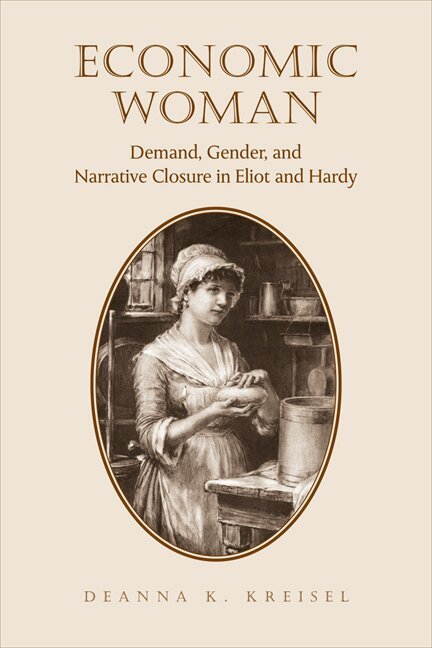
    Economic Woman

    Demand, Gender, and Narrative Closure in Eliot and Hardy

    AvDeanna K. Kreisel

    E-bok
    PDF, Engelska, 2016

    1 089 kr

    Läs direkt i Bokus Reader – eller ladda ned till din enhet (PDF kräver ofta zoom och scroll på små skärmar).

    Fler format och utgåvor

    E-bok

    1 089 kr

    Beskrivning

    The ways in which women are portrayed in Victorian novels can provide important insights into how people of the day thought about political economy, and vice versa. In Economic Woman, Deanna K. Kreisel innovatively shows how images of feminized sexuality in novels by George Eliot and Thomas Hardy reflected widespread contemporary anxieties about the growth of capitalism. Economic Woman is the first book to address directly the links between classical political economy and gender in the novel. Examining key works by Eliot and Hardy, including The Mill on the Floss and Tess of the d’Urbervilles, Kreisel investigates the meaning of two female representations: the ‘economic woman,’ who embodies idealized sexual restraint and wise domestic management, and the degraded prostitute, characterized by sexual excess and economic turmoil. Kreisel effectively integrates economic thought with literary analysis to contribute to an ongoing and lively scholarly discussion.

    Produktinformation

    • Utgivningsdatum:2016-04-15
    • Språk:Engelska
    • Antal sidor:320
    • Filformat:PDF
    • Kopieringsskydd:LCP
    • ISBN:9781442694149
    • Förlag:University of Toronto Press
    • Vikt:1 g

    Utforska kategorier

    • Litteraturvetenskap inom Skönlitteratur

    Mer om författaren

    Deanna K. Kreisel is an associate professor in the Department of English at the University of British Columbia.

    Recensioner i media

    ‘Exemplary first book… One of the greatest strengths is its exposition of how political economy developed in nineteenth-century Britain.’ - Robyn Warhol (Nineteenth Century Literature, vol 67:02:2012) ‘Kreisel’s detailed analysis of gender and political economy is intriguing and insightful. Most impressively, Kreisel’s discussion weaves together ideas about history, Economics and narrative closure in engaging and original ways.’ - Samantha Briggs (Literature and History vol 23:01:2014)

    Innehållsförteckning

    • AcknowledgmentsIntroduction Demand; or, the Cephalopod1 Popular Demand: Surplus and Stagnation in Nineteenth-Century Political Economy 2 “Fine Clothes an' Waste”: Utopian Economy and the Problem of Femininity in Adam Bede3 Superfluity and Suction: The Problem with Saving in The Mill on the Floss 4 “All Was Over at Last”: Epistemological and Domestic Economies in The Mayor of Casterbridge 5 Self-Sacrifice, Skillentons, and Mother's Milk: The Internalization of Demand in TessWorks CitedIndex