• Fri frakt över 249 kr
  • •
  • Snabba leveranser
  • •
  • Billiga böcker
Kundservice

Du är på sajten för privatpersoner.

Företag, bibliotek eller offentlig verksamhet?

Du handlar på classic.bokus.com, där alla dina funktioner finns intakta.
Till classic.bokus.com
Bokus logotyp. Gå till startsidan.
  • Erbjudanden
  • Nyheter
  • Student
  • Topplistor
  • Barn & ungdom
  • Bokus Play
  • E-böcker
  • Pocketböcker
  • Spel & pussel

10% rabatt på allt med kod: NYSTART10 →

Sidfot

Mina sidor

    Hjälp

    • Kundservice
    • Vanliga frågor och svar
    • Frakt och leverans
    • Retur vid ångerrätt
    • Reklamera vara
    • Betalning
    • Köpvillkor
    • Allmänna villkor
    • Information om webbplatsens tillgänglighet

    Om Bokus

    • Om oss
    • Pressrum
    • För studenter
    • För företag
    • För bibliotek och offentlig verksamhet
    • För leverantörer
    • Hållbarhet

    Populärt

    • Aktuella erbjudanden
    • Presentkort
    • Studentlitteratur
    • Nya böcker
    • Topplistor
    • Signerade böcker
    • Engelska böcker

    Inspiration

    • Boktips
    • BookTok
    • Populära bokserier
    • Barnbokskaraktärer
    • Populära författare
    Logotyp för Bokus
    Följ oss på Facebook (extern länk)Följ oss på Instagram (extern länk)Följ oss på YouTube (extern länk)Följ oss på TikTok (extern länk)
    bokus @ CookiesAnpassa cookiesIntegritetspolicyKöpvillkor
    Till Citymail hemsida (extern länk)Till Budbee hemsida (extern länk)Till Postnord hemsida (extern länk)Till Schenker hemsida (extern länk)Till Early Bird hemsida (extern länk)Till Walleys hemsida (extern länk)
    1. Ekonomi och Ledarskap
    2. Företagsekonomi

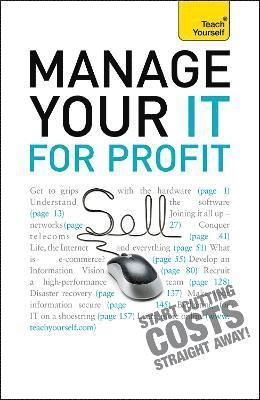
    Manage Your IT For Profit: Teach Yourself

    AvMichael Pagan

    Häftad, Engelska, 2010

    Del i serien TY Computing

    249 kr

    Beställningsvara. Skickas inom 10-15 vardagar. Fri frakt över 249 kr.

    Fler format och utgåvor

    E-bok

    44 kr

    Beskrivning

    Manage Your IT for Profit will help 'those who manage what they do not understand'! Written with humour and sound practicality, this guide is intended for the business owners and managers who need to understand the implications of technology in their business and to know how to utilize the information it provides to their maximum advantage and profit. It lessens the risk of your having the wool pulled over your eyes and reduces the fear of technology. Just as you need to understand balance sheets, profit and loss accounts and other financial metrics, you need to understand the language of IT. This book, organized so that each chapter can be easily completed in a day, is the perfect solution for the busy owner/manager.NOT GOT MUCH TIME?One, five and ten-minute introductions to key principles to get you started.AUTHOR INSIGHTSLots of instant help with common problems and quick tips for success, based on the author's many years of experience.TEST YOURSELFTests in the book and online to keep track of your progress.EXTEND YOUR KNOWLEDGEExtra online articles to give you a richer understanding of how to manage your IT.FIVE THINGS TO REMEMBERQuick refreshers to help you remember the key facts.TRY THISInnovative exercises illustrate what you've learnt and how to use it.

    Produktinformation

    • Utgivningsdatum:2010-04-30
    • Mått:129 x 198 x 17 mm
    • Vikt:186 g
    • Format:Häftad
    • Språk:Engelska
    • Serie:TY Computing
    • Antal sidor:256
    • Förlag:John Murray Press
    • ISBN:9781444107548

    Utforska kategorier

    • Företagsekonomi inom Ekonomi och Ledarskap

    Mer om författaren

    Michael Pagan has many years' experience as an IT director/consultant and as a small business owner.

    Innehållsförteckning

    • : 1. Hardware - Outlines the main types of computing device and peripherals2. Software: - Outlines software categories and the most popular products in each: 3.Joining it all up – Networks, the benefits and features of connecting computers together: 4.Communications - the world of phones, and wireless standards: 5.The Internet and E-Commerce - history, description, purpose and benefits of the World Wide Web: 6. Setting a Direction for Information - identifies how and why information can be used in an organisation, focusing on the human elements.: 7.Assessing Information Resources - how to analyse an organisation’s ability to use information by examining the culture, management and technology of information: 8.Information Vision and Architecture - how to develop a broad view of where an organisation is going with information: 9.Information Strategy - how a company can achieve its information goals one step at a time: 10.The medium term plan - how to create a practical, workable roadmap to move your company ahead in its use of information: 11.The short term plan - how to create the immediate environment to succeed in your use of information12. People: - recruiting a high performing IT team: 13. Business Continuity - protecting business critical systems: 14. Action! - example of strategy.: 15. Best practice - 20 ways to save money on your IT. 20 ways to add value through IT: 16.Glossary: 17. Bibliography: 18. Index