• Fri frakt över 249 kr
  • •
  • Snabba leveranser
  • •
  • Billiga böcker
Kundservice

Du är på sajten för privatpersoner.

Företag, bibliotek eller offentlig verksamhet?

Du handlar på classic.bokus.com, där alla dina funktioner finns intakta.
Till classic.bokus.com
Bokus logotyp. Gå till startsidan.
  • Erbjudanden
  • Nyheter
  • Student
  • Topplistor
  • Barn & ungdom
  • Bokus Play
  • E-böcker
  • Pocketböcker
  • Spel & pussel

10% studentrabatt med kod TERM26

Sidfot

Mina sidor

    Hjälp

    • Kundservice
    • Vanliga frågor och svar
    • Frakt och leverans
    • Retur vid ångerrätt
    • Reklamera vara
    • Betalning
    • Köpvillkor
    • Allmänna villkor
    • Information om webbplatsens tillgänglighet

    Om Bokus

    • Om oss
    • Pressrum
    • För studenter
    • För företag
    • För bibliotek och offentlig verksamhet
    • För leverantörer
    • Hållbarhet

    Populärt

    • Aktuella erbjudanden
    • Presentkort
    • Studentlitteratur
    • Nya böcker
    • Topplistor
    • Signerade böcker
    • Engelska böcker

    Inspiration

    • Boktips
    • BookTok
    • Populära bokserier
    • Barnbokskaraktärer
    • Populära författare

    Mina sidor

      Hjälp

      • Kundservice
      • Vanliga frågor och svar
      • Frakt och leverans
      • Retur vid ångerrätt
      • Reklamera vara
      • Betalning
      • Köpvillkor
      • Allmänna villkor
      • Information om webbplatsens tillgänglighet

      Om Bokus

      • Om oss
      • Pressrum
      • För studenter
      • För företag
      • För bibliotek och offentlig verksamhet
      • För leverantörer
      • Hållbarhet

      Populärt

      • Aktuella erbjudanden
      • Presentkort
      • Studentlitteratur
      • Nya böcker
      • Topplistor
      • Signerade böcker
      • Engelska böcker

      Inspiration

      • Boktips
      • BookTok
      • Populära bokserier
      • Barnbokskaraktärer
      • Populära författare
      Logotyp för Bokus
      Följ oss på Facebook (extern länk)Följ oss på Instagram (extern länk)Följ oss på YouTube (extern länk)Följ oss på TikTok (extern länk)
      bokus @ CookiesAnpassa cookiesIntegritetspolicyKöpvillkor
      Till Citymail hemsida (extern länk)Till Budbee hemsida (extern länk)Till Postnord hemsida (extern länk)Till Schenker hemsida (extern länk)Till Early Bird hemsida (extern länk)Till Walleys hemsida (extern länk)
      1. Medicin
      2. Medicin: icke kliniska discipliner
      3. Fysiologi

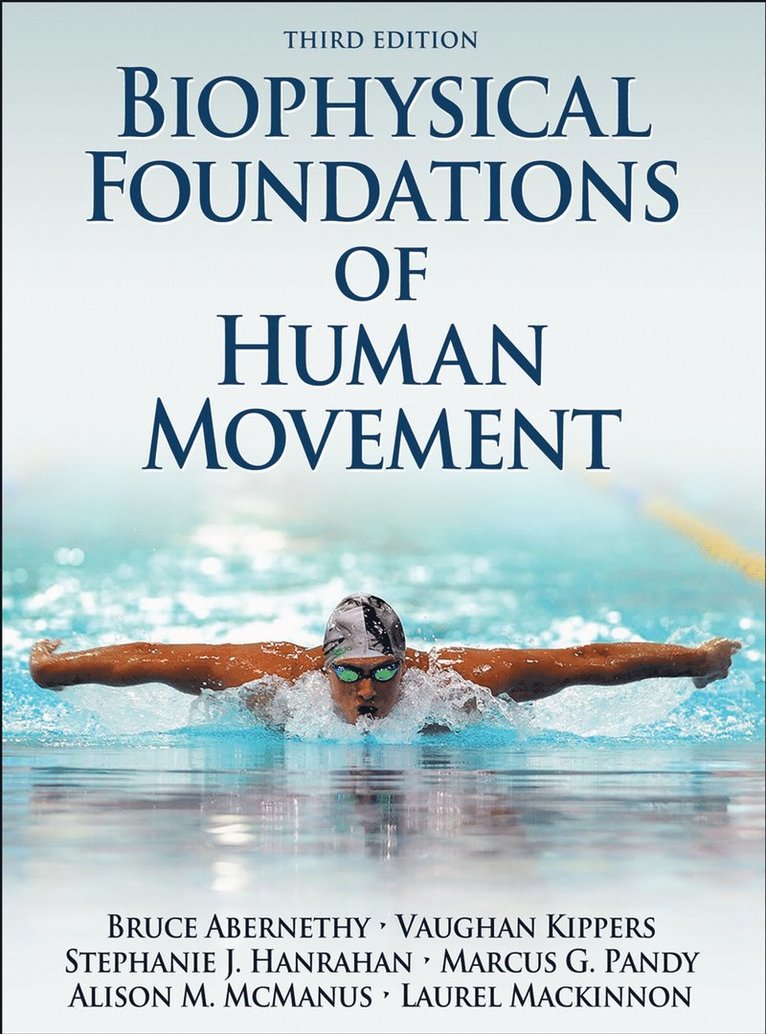
      Biophysical Foundations of Human Movement

      AvBruce Abernethy,Vaughan Kippers

      Inbunden, Engelska, 2013

      1 065 kr

      Beställningsvara. Skickas inom 5-8 vardagar. Fri frakt över 249 kr.

      Beskrivning

      Biophysical Foundations of Human Movement, Third Edition, introduces readers to key concepts concerning the anatomical, mechanical, physiological, neural, and psychological bases of human movement. The text provides undergraduate students with a broad foundation for more detailed study of the subdisciplines of human movement and for cross-disciplinary studies. Readers will learn the multi-dimensional changes in movement and movement potential that occur throughout the life span as well as those changes that occur as adaptations to training, practice, and other lifestyle factors.This third edition includes the latest research and improved presentation to address areas of growth and change in the fields of human movement. The following are important updates to this edition:A new chapter on historical origins of human movement science provides students with an appreciation of the development of the field as well as its future directions.Content regarding exercise physiology has been reorganized to provide more discrete coverage of key concepts in nutrition.A new concluding section focuses on applications in the areas of prevention and management of chronic disease, prevention and management of injury, and performance enhancement in sport and the workplace, as well as the benefits of sport and exercise science to work, sport, and everyday living.Ancillary materials support instructors in teaching across disciplines as they assist students in understanding the breadth of content in this comprehensive text.Using a modular approach to teaching sport and exercise science, Biophysical Foundations of Human Movement, Third Edition, offers students a structured understanding of how the subdisciplines work independently and in tandem. Following a general introduction to the field of human movement studies, readers are introduced to basic concepts, life-span changes, and adaptations arising in response to training in each of the five major biophysical subdisciplines of human movement. Each subdiscipline is given a brief introduction, including the definition and historical development of the subdiscipline, the typical issues and problems it addresses, the levels of analysis it uses, and relevant professional training and organizations. Multi-disciplinary and cross-disciplinary approaches to human movement are also discussed along with contemporary applications. By studying the integration of knowledge from a number of the biophysical subdisciplines, students will be better prepared for advanced study and careers reliant on the integration of knowledge from various disciplines and perspectives.The third edition offers tools for retaining the material, including learning objectives and summaries in each chapter, a glossary, and lists of web-based resources. Throughout the text, special “In Focus” features highlight key organizations, individuals, and studies from around the world that have contributed to the current understanding of human movement. These features help readers appreciate the evolution of the field so that they may better understand its direction. Students interested in further study will find specialized texts for each of the subdisciplines listed in the Further Reading and References section of each chapter along with updated lists of websites.The third edition of Biophysical FFoundations of Human Movement offers a comprehensive introduction for students, scientists, and practitioners involved in the many professions grounded in or related to human movement, kinesiology, and sport and exercise science. By considering the effect of adaptations in each of the biophysical subdisciplines of human movement, Biophysical Foundations of Human Movement also illustrates the important role physical activity plays in the maintenance of health throughout the life span.

      Produktinformation

      • Utgivningsdatum:2013-03-25
      • Mått:216 x 279 x 30 mm
      • Vikt:1 293 g
      • Format:Inbunden
      • Språk:Engelska
      • Antal sidor:408
      • Upplaga:3
      • Förlag:Human Kinetics Publishers
      • ISBN:9781450431651

      Utforska kategorier

      • Fysiologi inom Medicin

      Mer om författaren

      Bruce Abernethy, PhD, is professor of human movement science in the School of Human Movement Studies and deputy executive dean and associate dean (research) in the faculty of health sciences at the University of Queensland, Brisbane, Australia. He also holds a visiting professor appointment at the University of Hong Kong, where he was previously the inaugural chair professor and director of the Institute of Human Performance. He is also coeditor of Creative Side of Experimentation. Abernethy earned his PhD from the University of Otago. He is an international fellow of the National Academy of Kinesiology (USA), a fellow of Sports Medicine Australia, and a fellow of Exercise and Sports Science Australia. Stephanie J. Hanrahan, PhD, is a registered sport psychologist and an associate professor in the Schools of Human Movement Studies and Psychology at the University of Queensland, Brisbane, Australia. Hanrahan has over 20 years of experience in teaching human movement studies at the undergraduate level. She is a recipient of the University of Queensland's Excellence in Teaching Award. In addition to being part of the author team for the first two editions of Biophysical Foundations of Human Movement, Hanrahan has authored or edited nine other books. Hanrahan is a fellow of the Australian Sports Medicine Federation and a fellow of the Association for Applied Sport Psychology, for which she is chair of the organization's International Relations Division. Hanrahan serves on the national executive committee of the College of Sport and Exercise Psychologists in the Australian Psychological Society. Hanrahan earned her doctorate in sport psychology in 1990 from the University of Western Australia. She resides in Moorooka, Queensland, and enjoys traveling, Latin dancing, and kayaking. Vaughan Kippers, PhD, is a senior lecturer in the School of Biomedical Sciences at the University of Queensland. He coordinates anatomy courses for students enrolled in medicine, physiotherapy, and occupational therapy programs. His major research involves the use of electromyography, in which the electrical signals produced by muscles as they contract are analyzed to determine muscular control of human movement. Kippers is a fellow of the International Association of Medical Science Educators and is on the board of directors of that association. He is also secretary of the Australian and New Zealand Association of Clinical Anatomists. Cycling and photography are Kippers' main interests. He commutes on a bicycle daily and regularly participates in long rides on weekend. He is a former president of Audax Queensland, an international long-distance cycling association. Marcus G. Pandy, PhD, is a professor of mechanical and biomedical engineering in the department of mechanical engineering at the University of Melbourne, Parkville, Victoria, Australia. Pandy earned his PhD in mechanical engineering at Ohio State University in Columbus and then completed a postdoctoral fellowship in mechanical engineering at Stanford University. Before joining the University of Melbourne, he held the Joe J. King professorship in engineering at the University of Texas at Austin. Pandy is an associate editor for the Journal of Biomechanics and a fellow of the Institute of Engineers Australia, the American Institute of Medical and Biological Engineering, and the American Society of Mechanical Engineers. Ali McManus, PhD, is an associate professor and assistant director of the Institute of Human Performance at the University of Hong Kong. Her research focuses on the role exercise and free-living physical activity play in the health and well-being of children, the development of population measures of obesity and its associated health risks, and the provision of a more comprehensive understanding of the complex metabolic bases of exercise and physical activity in obese children. McManus earned her PhD from the University of Exeter, UK. She lives in Clearwater Bay, Hong Kong, and enjoys going to the gym, horse riding, playing tennis, and spending time with her children, Tash and Bella, and husband, John. Laurel T. Mackinnon, PhD, is a science writer and editor based in Brisbane, Queensland, Australia. She is also a former associate professor and now adjunct associate professor in the School of Human Movement Studies at the University of Queensland, Brisbane, Australia. Mackinnon conducted research on the immune response to exercise in the 1980s and 1990s and is internationally recognized for her work on overtraining and immune function in athletes. She is the author of 6 books and 12 book chapters, including Exercise and Immunology (Human Kinetics, 1992), the first book to explore the intriguing relationship between exercise and immune response. She has published over 65 peer-reviewed articles in international journals. Mackinnon has worked since 2000 as a science writer and editor. She is editing team manager for OnLine English, an Internet-based service that specializes in editing academic, research, and industry communications written by non-native speakers of English wishing to publish in English-language scientific journals. Mackinnon is a fellow of the American College of Sports Medicine and a member of the Australasian Medical Writers Association. She is a former board member of the International Society of Exercise and Immunology (ISEI) and the Australian Association for Exercise and Sports Science. Mackinnon earned her PhD in exercise science from the University of Michigan. She enjoys exercising, reading, and listening to classical and jazz music. Mackinnon resides in Brisbane, Queensland.

      Recensioner i media

      "The book is made up of standalone sections that make reading easy and understandable. The authors are well-respected scientists in the field, and the information they provide throughout originates from evidence-based research."--Doody's Book Review (5 Star Review)

      Innehållsförteckning

      • Part I: Introduction to Human Movement StudiesChapter 1. Human Movement Studies as a Discipline and a ProfessionWhat is Human Movement Studies and Why is it Important?Disciplines and ProfessionsIs Human Movement Studies a Discipline?Structure of a Discipline of Human Movement StudiesWhat Should the Discipline of Human Movement Studies Be Called?Professions Based on Human Movement StudiesProfessional OrganisationsRelationships Between the Discipline and the ProfessionsSummaryFurther Reading and ReferencesChapter 2. Historical Origins of the Academic Study of Human MovementScholarly Writings on Human Movement From Ancient Civilisations (ca. 1000 BC-350 AD)The Middle Ages as a Period of Suppression of the Study of Human Movement (ca. 350-1350 AD)Scholarly Works on Human Movement From the Renaissance and Reformation Periods (ca. 1350-1650 AD)Scholarly Works on Human Movement During the Period 1650-1885Professionalization of Physical Education During the Period 1885-1929Organisation of Research Efforts in Physical Education During the Period 1930-1959Beginnings of a Discipline of Human Movement Studies During the Period 1960-1970Emergence of Subdisciplines and Specialisations, 1970-PresentFuture Directions, Challenges, and OpportunitiesSummaryFurther ReadingPart II: Anatomical Bases of Human Movement: Functional AnatomyChapter 3. Basic Concepts of the Musculoskeletal SystemTools for MeasurementSkeletal SystemArticular SystemMuscular SystemSummaryFurther ReadingChapter 4. Basic Concepts of AnthropometryDefinition of AnthropometryTools for MeasurementBody SizeDetermination of Body ShapeTissues Composing the BodySomatotyping as a Description of Body BuildHuman VariationSummaryFurther Reading and ReferencesChapter 5. Musculoskeletal Changes Across the Life SpanDefinitions of Auxology and GerontologyTools for MeasurementPhysical Growth, Maturation, and AgeingAge-Related Changes in the Skeletal and Articular SystemsAge-Related Changes in the Muscular SystemChanges in Body Dimensions Across the Life SpanMethods of Determining AgeSummaryFurther ReadingChapter 6. Musculoskeletal Adaptations to TrainingEffects of Physical Activity on BoneEffects of Physical Activity on Joint Structure and Ranges of MotionEffects of Physical Activity on Muscle–Tendon UnitsEffects of Physical Activity on Body Size, Shape, and CompositionSummaryFurther Reading and ReferencesPart III: Mechanical Bases of Human Movement: BiomechanicsChapter 7. Basic Concepts of Kinematics and KineticsVectorsMotionGeneralized Coordinates and Degrees of FreedomForceMoment of ForceForce AnalysesEquations of MotionComputer Modeling of MovementSummaryFurther ReadingChapter 8. Basic Concepts of EnergeticsKinetic EnergyPotential EnergyTotal Mechanical EnergyPowerElastic Strain EnergyMetabolic Energy ConsumptionEfficiency of MovementSummaryFurther ReadingChapter 9. Biomechanics Across the Life SpanBiomechanics of Normal GaitChanges in Muscle Strength with AgeGait Development in ChildrenGait Changes in Older AdultsSummaryFurther ReadingChapter 10. Biomechanical Adaptations to TrainingMuscular Adaptations to TrainingNeuromuscular Adaptations to TrainingTraining to Prevent Anterior Cruciate Ligament InjuryBiomechanical Adaptations to InjuryDependence of Motor Performance on Changes in Muscle PropertiesUsing Computer Modelling to Study Vertical Jumping PerformanceInsights Into the Effects of Training Provided by Computer ModelsSummaryFurther ReadingPart IV: Physiological Bases of Human Movement: Exercise PhysiologyChapter 11. Basic Concepts of Exercise MetabolismProduction of Energy for ExerciseOxygen Supply During Sustained ExerciseVO2max as an Indicator of Endurance-Exercise CapacityMeasurement of Exercise CapacityHuman Skeletal Muscle CellsSummaryFurther ReadingChapter 12. Basic Concepts of Nutrition and ExerciseEnergy Requirements of ExerciseNutrients for ExerciseFluid Requirements During ExerciseSummaryFurther ReadingChapter 13. Physiological Capacity Across the Life SpanResponses to Exercise in ChildrenExercise in Older Adult LifeSummaryFurther Reading and ReferencesChapter 14. Physiological Adaptations to TrainingTraining-Induced Metabolic AdaptationsImmediate and Anaerobic-System Changes After High-Intensity Sprint and Strength TrainingChanges in Aerobic Metabolism After Endurance TrainingEndurance Training-Induced Changes in the Cardiorespiratory SystemEndurance Training-Induced Respiratory ChangesEndurance Training-Induced Changes in Lactate ThresholdChanges in the Muscular System After Strength TrainingBasic Principles of TrainingContinuous and Interval TrainingTraining for Cardiovascular EnduranceMethods of Strength TrainingCauses of Muscle SorenessSummaryFurther ReadingPart V: Neural Bases of Human Movement: Motor ControlChapter 15. Basic Concepts of Motor Control: Neuroscience PerspectivesNervous System as an Elaborate Communications NetworkComponents of the Nervous SystemNeurons and Synapses as the Building Blocks of the Nervous SystemSensory Receptor Systems for MovementEffector Systems for MovementMotor Control Functions of the Spinal CordMotor Control Functions of the BrainIntegrative Brain Mechanisms for MovementSummaryFurther ReadingChapter 16. Basic Concepts of Motor Control: Cognitive Science PerspectivesUsing Models to Study Motor ControlKey Properties to be Explained by Models of Motor ControlInformation-Processing Models of Motor ControlSome Alternative Models of Motor ControlSummaryFurther ReadingChapter 17. Motor Control Changes Throughout the Life SpanChanges in Observable Motor PerformanceChanges at the Neurophysiological LevelChanges in Information-Processing CapabilitiesSummaryFurther ReadingChapter 18. Motor Control Adaptations to TrainingChanges in Observable Motor PerformanceChanges at the Neurophysiological LevelChanges in Information-Processing CapabilitiesFactors Affecting the Learning of Motor SkillsSummaryFurther ReadingPart VI: Psychological Bases of Human Movement: Sport and Exercise PsychologyChapter 19. Basic Concepts in Sport PsychologyPersonalityMotivation in SportSelf-Determination TheoryArousal, Anxiety, and Sport PerformanceThe Practice of Applied Sport PsychologyImagery: An Example of Psychological SkillSummaryFurther ReadingChapter 20. Basic Concepts in Exercise PsychologyEffects of Psychological Factors on ExerciseEffects of Exercise on Psychological FactorsSummaryFurther ReadingChapter 21. Physical Activity and Psychological Factors Across the Life SpanChanges in PersonalityPsychosocial Development Through Sport ParticipationExercise in the AgedTermination of Athletic CareersSummaryFurther ReadingChapter 22. Psychological Adaptations to TrainingAerobic Fitness and the Response to Psychological StressChanges in PersonalityChanges in Motivation: Staleness, Overtraining, and BurnoutChanges in Mental SkillsSummaryFurther ReadingPart VII: Multi- and Cross-Disciplinary Applications to Human Movement ScienceChapter 23. Applications to Health in Chronic-Disease Prevention and ManagementMajor Causes of Disease and Death GloballyCost of Physical InactivityMeasuring Physical Activity and Sedentary BehaviorLevels of Physical Activity in Adults and ChildrenRecommendations for Physical ActivitySummaryFurther ReadingChapter 24. Applications to Health in Injury Prevention and ManagementPreventing Manual-Lifting Injuries in the WorkplacePreventing and Managing Overuse Injuries in SportPreventing Injuries Related to OsteoporosisSummaryFurther ReadingChapter 25. Applications to Performance Enhancement in Sport and the WorkplaceTalent IdentificationPerformance OptimizationSummaryFurther Reading and References
      Hoppa över listan

      Du kanske också är intresserad av

      Mark B. Andersen, Stephanie J. Hanrahan - Doing Exercise Psychology, Inbunden

      Doing Exercise Psychology

      Mark B. Andersen, Stephanie J. Hanrahan

      Inbunden, 2015

      879 kr

      Stephanie J. Hanrahan, Lynn Kidman - Coaching Process, E-bok

      Coaching Process

      Stephanie J. Hanrahan, Lynn Kidman

      E-bok
      2010

      1 076 kr

      Lynn Kidman, Stephanie J. Hanrahan - Coaching Process, Inbunden

      Coaching Process

      Lynn Kidman, Stephanie J. Hanrahan

      Inbunden, 2010

      2 338 kr

      Lynn Kidman, Stephanie J. Hanrahan - Coaching Process, Häftad

      Coaching Process

      Lynn Kidman, Stephanie J. Hanrahan

      Häftad, 2010

      912 kr

      Stephanie J. Hanrahan, Lynn Kidman - Coaching Process, E-bok

      Coaching Process

      Stephanie J. Hanrahan, Lynn Kidman

      E-bok
      2010

      1 076 kr

      Klara Peters Bastin - SIGNERAD - Om julens wälgång, Inbunden
      • Signerad!

      SIGNERAD - Om julens wälgång

      Klara Peters Bastin

      Inbunden, 2026

      249 kr

      Roland Paulsen - Avbegåvad : en essäberättelse om arv och miljö, Inbunden
      • -15%

      Avbegåvad : en essäberättelse om arv och miljö

      Roland Paulsen

      Inbunden, 2026

      225 kr265 kr

      Peter Englund - Om att misslyckas, Inbunden
      • -17%

      Om att misslyckas

      Peter Englund

      Inbunden, 2026

      4,0 utav 5 stjärnor. Totalt antal röster:(9)

      199 kr239 kr

      Nigel Holt, Andy Bremner, Michael Vliek, Ed Sutherland, Michael Passer, Ronald Smith - Psychology 5e, Häftad
      • -10% student

      Psychology 5e

      Nigel Holt, Andy Bremner, Michael Vliek, Ed Sutherland, Michael Passer, Ronald Smith

      Häftad, 2023

      3,7 utav 5 stjärnor. Totalt antal röster:(3)

      655 kr

      Vendela Blomström, Jeanna Wennerberg - Akademiskt läsande och skrivande, Häftad
      • -10% student

      Akademiskt läsande och skrivande

      Vendela Blomström, Jeanna Wennerberg

      Häftad, 2026

      421 kr