• Fri frakt över 249 kr
  • •
  • Snabba leveranser
  • •
  • Billiga böcker
Kundservice

Du är på sajten för privatpersoner.

Företag, bibliotek eller offentlig verksamhet?

Du handlar på classic.bokus.com, där alla dina funktioner finns intakta.
Till classic.bokus.com
Bokus logotyp. Gå till startsidan.
  • Erbjudanden
  • Nyheter
  • Student
  • Topplistor
  • Barn & ungdom
  • Bokus Play
  • E-böcker
  • Pocketböcker
  • Spel & pussel

Må bättre, för mindre! Upp till 50% rabatt på hälsoböcker

Sidfot

Mina sidor

    Hjälp

    • Kundservice
    • Vanliga frågor och svar
    • Frakt och leverans
    • Retur vid ångerrätt
    • Reklamera vara
    • Betalning
    • Köpvillkor
    • Allmänna villkor
    • Information om webbplatsens tillgänglighet

    Om Bokus

    • Om oss
    • Pressrum
    • För studenter
    • För företag
    • För bibliotek och offentlig verksamhet
    • För leverantörer
    • Hållbarhet

    Populärt

    • Aktuella erbjudanden
    • Presentkort
    • Studentlitteratur
    • Nya böcker
    • Topplistor
    • Signerade böcker
    • Engelska böcker

    Inspiration

    • Boktips
    • BookTok
    • Populära bokserier
    • Barnbokskaraktärer
    • Populära författare
    Logotyp för Bokus
    Följ oss på Facebook (extern länk)Följ oss på Instagram (extern länk)Följ oss på YouTube (extern länk)Följ oss på TikTok (extern länk)
    bokus @ CookiesAnpassa cookiesIntegritetspolicyKöpvillkor
    Till Citymail hemsida (extern länk)Till Budbee hemsida (extern länk)Till Postnord hemsida (extern länk)Till Schenker hemsida (extern länk)Till Early Bird hemsida (extern länk)Till Walleys hemsida (extern länk)
    1. Medicin
    2. Veterinärmedicin
    3. Veterinärmedicin: hästar

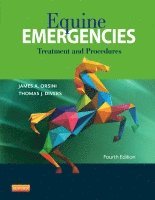
    Equine Emergencies

    Treatment and Procedures

    AvJames A. Orsini,Thomas J. Divers

    Inbunden, Engelska, 2014

    1 031 kr

    Beställningsvara. Skickas inom 5-8 vardagar. Fri frakt över 249 kr.

    Fler format och utgåvor

    Inbunden

    Kommande

    Beskrivning

    Ideal for use in the clinic and in the field, Equine Emergencies: Treatment and Procedures, 4th Edition, offers practical step-by-step guidelines for effectively managing a wide range of emergency situations. Thoroughly updated content keeps you informed of the latest advances in horse care in a portable, convenient format.

    Produktinformation

    • Utgivningsdatum:2014-01-08
    • Mått:224 x 282 x 38 mm
    • Vikt:2 247 g
    • Format:Inbunden
    • Språk:Engelska
    • Antal sidor:912
    • Upplaga:4
    • Förlag:Elsevier Health Sciences
    • ISBN:9781455708925

    Utforska kategorier

    • Veterinärmedicin: hästar inom Medicin

    Mer om författaren

    James A. Orsini, Associate Professor of Surgery, University of Pennsylvania. Dr. Thomas J. Divers earned his DVM from the University of Georgia and completed an internship in large animal medicine at the University of California at Davis. Dr. Divers returned to the University of Georgia for a residency in large animal internal medicine and ambulatory practice and later worked for 2 years as an assistant professor in the large animal medicine and ambulatory practice at the college. Dr. Divers then moved to the University of Pennsylvania for 10 years, where he was an associate professor of large animal medicine and served as chief of the section of medicine at the New Bolton Center of the University of Pennsylvania. Currently Dr. Divers is Professor of Medicine and co-Chief of the Section of Large Animal Medicine at Cornell University. He has been the recipient of teaching awards at three universities, has received the Educator of the Year Award from both the AAEP and ACVECC and recently received the Cornell University Hospital for Animals Distinguished Service Award for service to referring veterinarians. He is a diplomate of both the American College of Veterinary Internal Medicine and of the American College of Veterinary Emergency and Critical Care. He is co-author of three textbooks, has authored numerous book chapters, and has more than 190 peer-reviewed scientific publications. Dr. Divers is currently consulting editor of Veterinary Clinics of North America-Equine Practice. Dr. Divers' current research focuses on newly discovered hepatitis viruses in horses. Other research activities have included bacterial and toxic causes of liver failure in horses, equine neurological diseases including equine motor neuron disease and equine protozoal myelitis, equine lyme disease, equine leptospirosis, diseases of the urinary system, and advances in internal medicine and critical care for horses, foals, and dairy cattle

    Innehållsförteckning

    • PART 1: EMERGENCY PROCEDURES AND DIAGNOSTICSSection I: Important Diagnostic and Therapeutic Procedures for Emergency Care1. Blood Collection2. Medication Administration and Alternative Methods of Drug Administration3. Intravenous Catheter Selection, Sites for Placement and Maintenance4. Venous Cutdown5. Intraosseous and Regional Perfusion6. Biopsy Techniques7. Hyperbaric Oxygen Indications in Emergencies8. Alternative Therapies in Emergencies: AcupunctureSection II: Emergency Imaging, Endoscopy, Laboratory Diagnostics and Monitoring 9. Bacterial, Fungal and Viral Diagnostic Samples 10. Critical and Emergency Care Monitoring Techniques11. Cytology12. Emergency Diagnostic Endoscopy 13. Gene Testing 14. Imaging Techniques and Indications for the Emergency Patient15. Laboratory Tests and Point of Care DiagnosticsPART 2: EMERGENCY EXAMINATION AND MANAGEMENT OF ORGAN SYSTEMSSection I: Body and Organ Systems16. Blood Coagulation Disorders 17. Cardiovascular System18. Gastrointestinal System19. Integumentary System20. Liver Failure, Anemia and Blood Transfusion21. Musculoskeletal System22. Nervous System 23. Ophthalmology24. Reproduction System25. Respiratory System26. Urinary SystemSection II: Pregnancy, Perinatal/Neonatal Period 27. Monitoring the Pregnant Mare28. Emergency Foaling29. Foal Resuscitation30. Perinatology31. NeonatologySection III: Shock, Temperature Related Problems, Systemic Inflammatory Response Syndrome and Muti-Organ Dysfunction Syndrome32. Shock, Systemic Inflammatory Response Syndrome (SIRS), Multi-Organ Dysfunction Syndrome (MODS)33. Temperature Related Problems: Hypothermia and HyperthermiaPART 3: TOXICOLOGY34. ToxicologyPART 4: SPECIAL PROBLEM EMERGENCIES Section I: Special Problems35. Burns, Acute Soft Tissue Swellings. Pigeon Fever36. Caring for the Down Horse37. Disaster Medicine38. Diseases Unique to Donkeys and Miniature Horses39. Diseases Unique to Draft Horses40. Emergency Diseases Unique to Countries Outside the Continental United States41. Flood Injury42. Foot Injuries43. Laminitis 44. Orthopedic Emergencies of the Racing Athlete45. Snake Envenomination46. Thoracic TraumaSection II: Anesthesia47. Anesthesia for Out-of-Hospital Emergencies48. Euthanasia/Humane Destruction49. Pain ManagementSection III: Nutrition50. Approach to the Feed and Starvation Emergency51. Nutritional Guidelines for the Injured, Hospitalized and Postsurgical PatientSection IV: Biosecurity52. Contagious and Zoonotic Diseases53. Standard Precautions and Infectious Disease ManagementAPPENDICES1: Commonly Used Formulas and Calculations in Emergency Care2: Important Equivalents and Conversions for Clinical Practice3: Miscellaneous Charts and Tables Useful in Clinical Practice4: Reference Values5: Clinical Pharmacology and Emergency Drug FactsA. Emergency Drugs, Recommended Dosages and Adverse Drug EventsB. Drugs for Specific Emergencies, Protocols and Clinical Situations Antibiotics - Concentration Dependent vs. Time Dependent DrugsAnesthetic InductionCardio-Respiratory ResuscitationCardiac Arrhythmia Drugs and ProtocolsPharmacologic Adjuncts to IntubationPhysical and Chemical RestraintPressorsProkineticsSeizure ControlSepsisShockC. Adverse Drug Events and ManagementD. Clinical Signs and Overdose Response of Commonly Used Medications andRecommended Treatments

    Betyg & recensioner

    5/5