• Fri frakt över 249 kr
  • •
  • Snabba leveranser
  • •
  • Billiga böcker
Kundservice

Du är på sajten för privatpersoner.

Företag, bibliotek eller offentlig verksamhet?

Du handlar på classic.bokus.com, där alla dina funktioner finns intakta.
Till classic.bokus.com
Bokus logotyp. Gå till startsidan.
  • Erbjudanden
  • Nyheter
  • Student
  • Topplistor
  • Barn & ungdom
  • Bokus Play
  • E-böcker
  • Pocketböcker
  • Spel & pussel

10% rabatt på allt med kod NYSTART10 →

Sidfot

Mina sidor

    Hjälp

    • Kundservice
    • Vanliga frågor och svar
    • Frakt och leverans
    • Retur vid ångerrätt
    • Reklamera vara
    • Betalning
    • Köpvillkor
    • Allmänna villkor
    • Information om webbplatsens tillgänglighet

    Om Bokus

    • Om oss
    • Pressrum
    • För studenter
    • För företag
    • För bibliotek och offentlig verksamhet
    • För leverantörer
    • Hållbarhet

    Populärt

    • Aktuella erbjudanden
    • Presentkort
    • Studentlitteratur
    • Nya böcker
    • Topplistor
    • Signerade böcker
    • Engelska böcker

    Inspiration

    • Boktips
    • BookTok
    • Populära bokserier
    • Barnbokskaraktärer
    • Populära författare
    Logotyp för Bokus
    Följ oss på Facebook (extern länk)Följ oss på Instagram (extern länk)Följ oss på YouTube (extern länk)Följ oss på TikTok (extern länk)
    bokus @ CookiesAnpassa cookiesIntegritetspolicyKöpvillkor
    Till Citymail hemsida (extern länk)Till Budbee hemsida (extern länk)Till Postnord hemsida (extern länk)Till Schenker hemsida (extern länk)Till Early Bird hemsida (extern länk)Till Walleys hemsida (extern länk)
    1. Naturvetenskap och teknik
    2. Matematik och naturvetenskap
    3. Biologi
    4. Biovetenskap

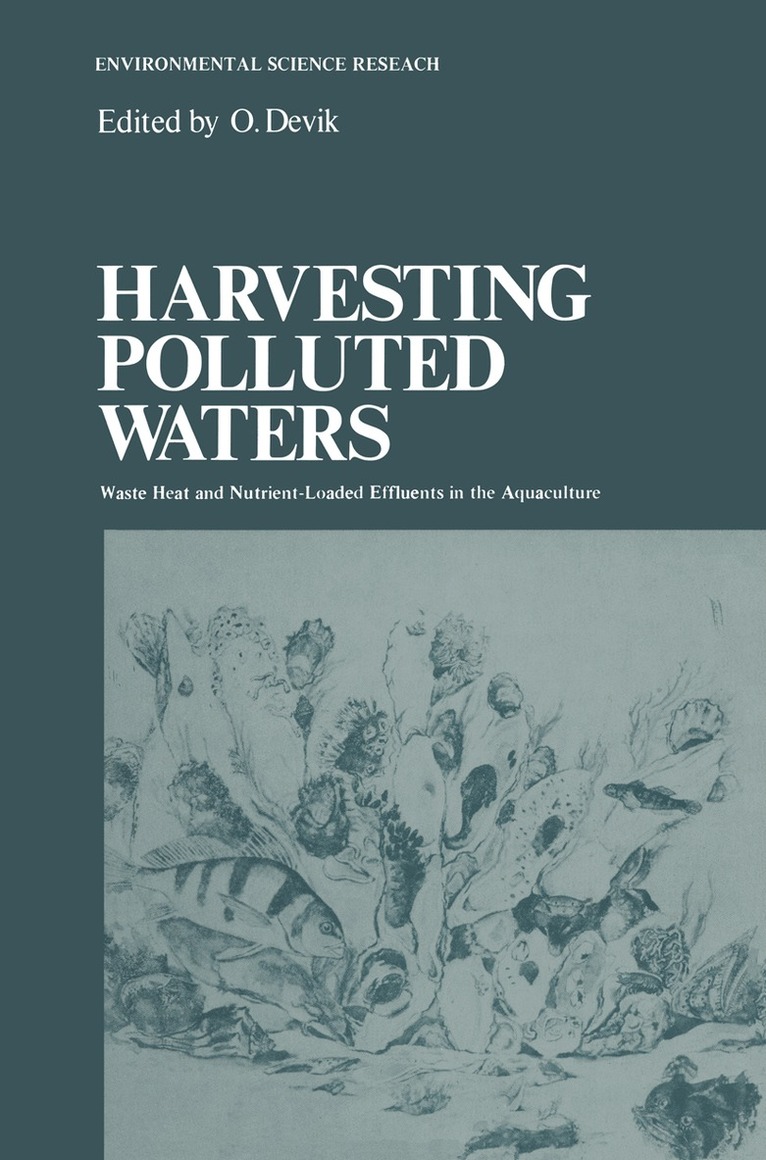
    Harvesting Polluted Waters

    Waste Heat and Nutrient-Loaded Effluents in the Aquaculture

    AvO. Devik

    Häftad, Engelska, 2011

    Del 8 i serien Environmental Science Research

    546 kr

    Beställningsvara. Skickas inom 10-15 vardagar. Fri frakt över 249 kr.

    Beskrivning

    Waste heat from thermal power generation and waste minerals from domestic sewage are polluting rivers and coastal waters. It would thus be an important step forward if these pollutants could be made productive in aquaculture. The proposal to call a meeting of experts on Waste Heat and Nutrient-Loaded Efflu­ ents in Aquaculture came from Dr. Ole Devik. His proposal was accepted and sponsored by the Special Program Panel on Eco-Sciences, a subsidiary body of the NATO Science Committee. NATO has extensive programs in the scientific and environmental fields, and I would like to take this opportunity to give you a short outline of these programs. Collaboration and consultation between member countries of the Alliance have been of major concern to the North Atlantic Treaty Organization ever since it was established. In the mid-fifties a serious attempt was made to imple­ ment the collaboration in nonmilitary fields, and a report* from a committee of foreign ministers-Lester B. Pearson (Canada), Gaetano Martino (Italy), and Halvard Lange (Norway)-named scientific and technological cooperation as especially important. As a consequence of this report, a position as science adviser to the secretary-general of NATO (later changed to Assistant Secretary­ General for Scientific and Environmental Affairs) and a science committee composed of one highly qualified scientist from each of the member countries of the Alliance was established in 1958.

    Produktinformation

    • Utgivningsdatum:2011-10-21
    • Mått:155 x 235 x 19 mm
    • Vikt:517 g
    • Format:Häftad
    • Språk:Engelska
    • Serie:Environmental Science Research
    • Antal sidor:324
    • Förlag:Springer-Verlag New York Inc.
    • ISBN:9781461343301

    Utforska kategorier

    • Biovetenskap inom Naturvetenskap och teknik

    Innehållsförteckning

    • Waste Heat and Nutrient-Loaded Effluents in the Aquaculture: The Setting of the Problem.- Controlled Primary Production in Marine Systems: Potentialities of Select Species/Control of Unwanted Grazers.- The Technical Production of Microalgae and Its Prospects in Marine Aquaculture.- Nitrogen and Phosphorus as Algal Growth-Limiting Nutrients in Waste-Receiving Waters.- Effects of Cooling Water Discharge on Primary Production and Composition of Bottom Fauna in a Fjord.- A One-Dimensional Model for Prediction of Excess Temperatures in a Fjord.- The Role of Filter Feeders in Stabilizing Phytoplankton Communities with Some Considerations for Aquaculture.- Large-Scale Culturing Systems.- Salient Features of Coastal Waters for Aquaculture.- Marine Greenhouse Systems: The Entrainment of Large Water Masses.- Dialysis Cultures in Integrated Aquaculture.- Food Chains and Their Use: Mussels, Mollusks, and Bivalves.- Integrated Systems of Mollusk Culture.- Factors Affecting the Relation between Feeding and Growth in Bivalves.- The Introduction of New Species in Habitats of Heated Effluents.- Safeguards in the Exploitation of Domestic Effluents for Aquaculture.- Food Chains and Their Use: Fish and Fish Fry.- Heated Effluent for the Rearing of Fry—For Farming and for Release.- The Ecology of a Texas Bay.- Higher Plants as the Basis for Alternate Food Chains: Their Potentialities in Relation to Mass Culture of Microalgae.- Discussion and Index.- Concluding Discussion.