• Fri frakt över 249 kr
  • •
  • Snabba leveranser
  • •
  • Billiga böcker
Kundservice

Du är på sajten för privatpersoner.

Företag, bibliotek eller offentlig verksamhet?

Du handlar på classic.bokus.com, där alla dina funktioner finns intakta.
Till classic.bokus.com
Bokus logotyp. Gå till startsidan.
  • Erbjudanden
  • Student
  • Topplistor
  • Barn & ungdom
  • Bokus Play
  • E-böcker
  • Ljudböcker
  • Pocketböcker
  • Spel och pussel

Upp till 25% på utvalda nyheter →

Sidfot

Mina sidor

    Hjälp

    • Kundservice
    • Vanliga frågor och svar
    • Frakt och leverans
    • Retur vid ångerrätt
    • Reklamera vara
    • Betalning
    • Köpvillkor
    • Allmänna villkor
    • Information om webbplatsens tillgänglighet

    Om Bokus

    • Om oss
    • Pressrum
    • För studenter
    • För företag
    • För bibliotek och offentlig verksamhet
    • För leverantörer
    • Hållbarhet

    Populärt

    • Aktuella erbjudanden
    • Presentkort
    • Studentlitteratur
    • Nya böcker
    • Topplistor
    • Signerade böcker
    • Engelska böcker

    Inspiration

    • Boktips
    • BookTok
    • Barnbokskaraktärer
    • Populära författare
    Logotyp för Bokus
    Följ oss på Facebook (extern länk)Följ oss på Instagram (extern länk)Följ oss på YouTube (extern länk)Följ oss på TikTok (extern länk)
    bokus @ CookiesAnpassa cookiesIntegritetspolicyKöpvillkor
    Till Citymail hemsida (extern länk)Till Budbee hemsida (extern länk)Till Postnord hemsida (extern länk)Till Schenker hemsida (extern länk)Till Early Bird hemsida (extern länk)Till Walleys hemsida (extern länk)
    1. Data och IT
    2. Systemvetenskap och AI

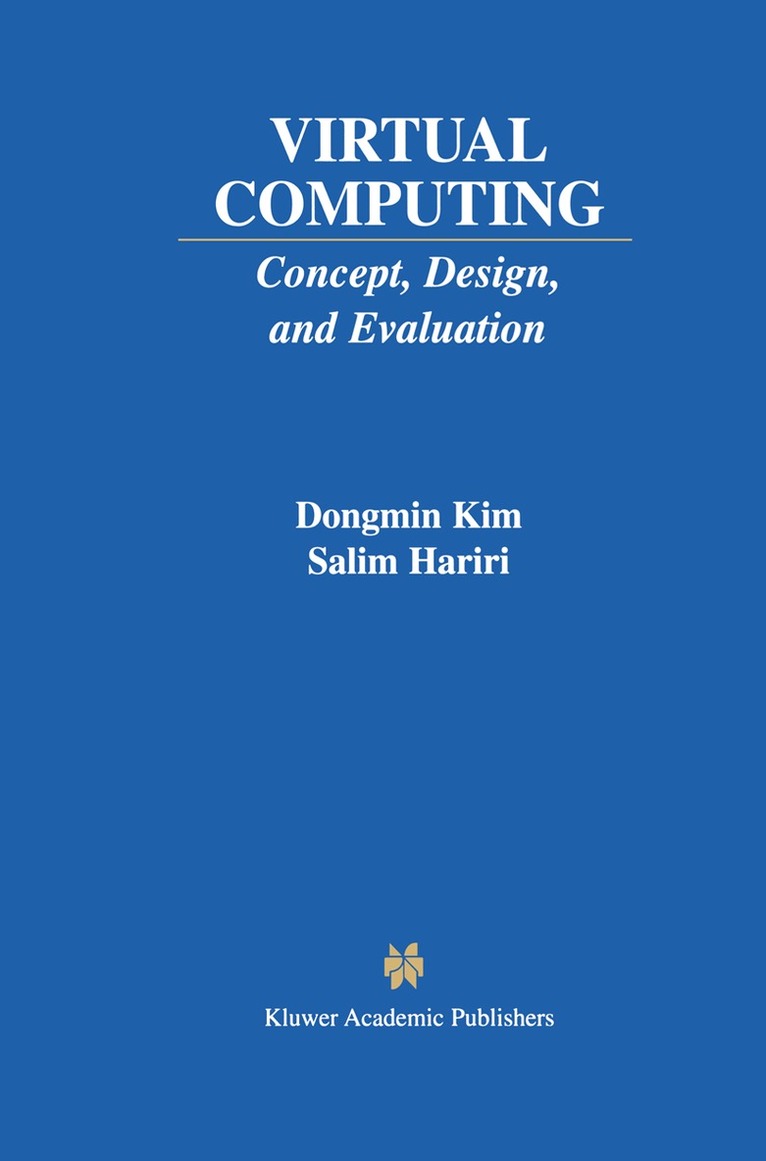
    Virtual Computing

    Concept, Design, and Evaluation

    AvDongmin Kim,Salim Hariri

    Häftad, Engelska, 2012

    Del 633 i serien Springer International Series in Engineering and Computer Science

    1 114 kr

    Beställningsvara. Skickas inom 10-15 vardagar. Fri frakt över 249 kr.

    Fler format och utgåvor

    Inbunden

    1 114 kr

    Beskrivning

    The evolution of modern computers began more than 50 years ago and has been driven to a large extend by rapid advances in electronic technology during that period. The first computers ran one application (user) at a time. Without the benefit of operating systems or compilers, the application programmers were responsible for managing all aspects of the hardware. The introduction of compilers allowed programmers to express algorithms in abstract terms without being concerned with the bit level details of their implementation. Time sharing operating systems took computing systems one step further and allowed several users and/or applications to time share the computing services of com­ puters. With the advances of networks and software tools, users and applications were able to time share the logical and physical services that are geographically dispersed across one or more networks. Virtual Computing (VC) concept aims at providing ubiquitous open computing services in analogous way to the services offered by Telephone and Elec­ trical (utility) companies. The VC environment should be dynamically setup to meet the requirements of a single user and/or application. The design and development of a dynamically programmable virtual comput­ ing environments is a challenging research problem. However, the recent advances in processing and network technology and software tools have successfully solved many of the obstacles facing the wide deployment of virtual computing environments as will be outlined next.

    Produktinformation

    • Utgivningsdatum:2012-11-13
    • Mått:155 x 235 x 9 mm
    • Vikt:242 g
    • Format:Häftad
    • Språk:Engelska
    • Serie:Springer International Series in Engineering and Computer Science
    • Antal sidor:124
    • Förlag:Springer-Verlag New York Inc.
    • ISBN:9781461356110

    Utforska kategorier

    • Systemvetenskap och AI inom Data och IT
    • Hårdvara inom Data och IT

    Innehållsförteckning

    • 1 Trends in Parallel and Distributed Computing.- 2 Parallel and Distributed Computing Environment.- 3 Trends Toward Virtual Computing.- 4 Adaptive Distributed Virtual Computing Environment.- 5 Resource Allocation and Scheduling.- 6 Analysis and Prediction of Task Execution.- 7 Task-Scheduling Algorithm.- 8 Experimental Results and Analysis.- 9 Summary and Future Directions.- References.