• Fri frakt över 249 kr
  • •
  • Snabba leveranser
  • •
  • Billiga böcker
Kundservice

Du är på sajten för privatpersoner.

Företag, bibliotek eller offentlig verksamhet?

Du handlar på classic.bokus.com, där alla dina funktioner finns intakta.
Till classic.bokus.com
Bokus logotyp. Gå till startsidan.
  • Erbjudanden
  • Nyheter
  • Student
  • Topplistor
  • Barn & ungdom
  • Bokus Play
  • E-böcker
  • Pocketböcker
  • Spel & pussel

10% rabatt på allt med kod: NYSTART10 →

Sidfot

Mina sidor

    Hjälp

    • Kundservice
    • Vanliga frågor och svar
    • Frakt och leverans
    • Retur vid ångerrätt
    • Reklamera vara
    • Betalning
    • Köpvillkor
    • Allmänna villkor
    • Information om webbplatsens tillgänglighet

    Om Bokus

    • Om oss
    • Pressrum
    • För studenter
    • För företag
    • För bibliotek och offentlig verksamhet
    • För leverantörer
    • Hållbarhet

    Populärt

    • Aktuella erbjudanden
    • Presentkort
    • Studentlitteratur
    • Nya böcker
    • Topplistor
    • Signerade böcker
    • Engelska böcker

    Inspiration

    • Boktips
    • BookTok
    • Populära bokserier
    • Barnbokskaraktärer
    • Populära författare
    Logotyp för Bokus
    Följ oss på Facebook (extern länk)Följ oss på Instagram (extern länk)Följ oss på YouTube (extern länk)Följ oss på TikTok (extern länk)
    bokus @ CookiesAnpassa cookiesIntegritetspolicyKöpvillkor
    Till Citymail hemsida (extern länk)Till Budbee hemsida (extern länk)Till Postnord hemsida (extern länk)Till Schenker hemsida (extern länk)Till Early Bird hemsida (extern länk)Till Walleys hemsida (extern länk)
    1. Medicin
    2. Andra medicinska specialiteter
    3. Patologi

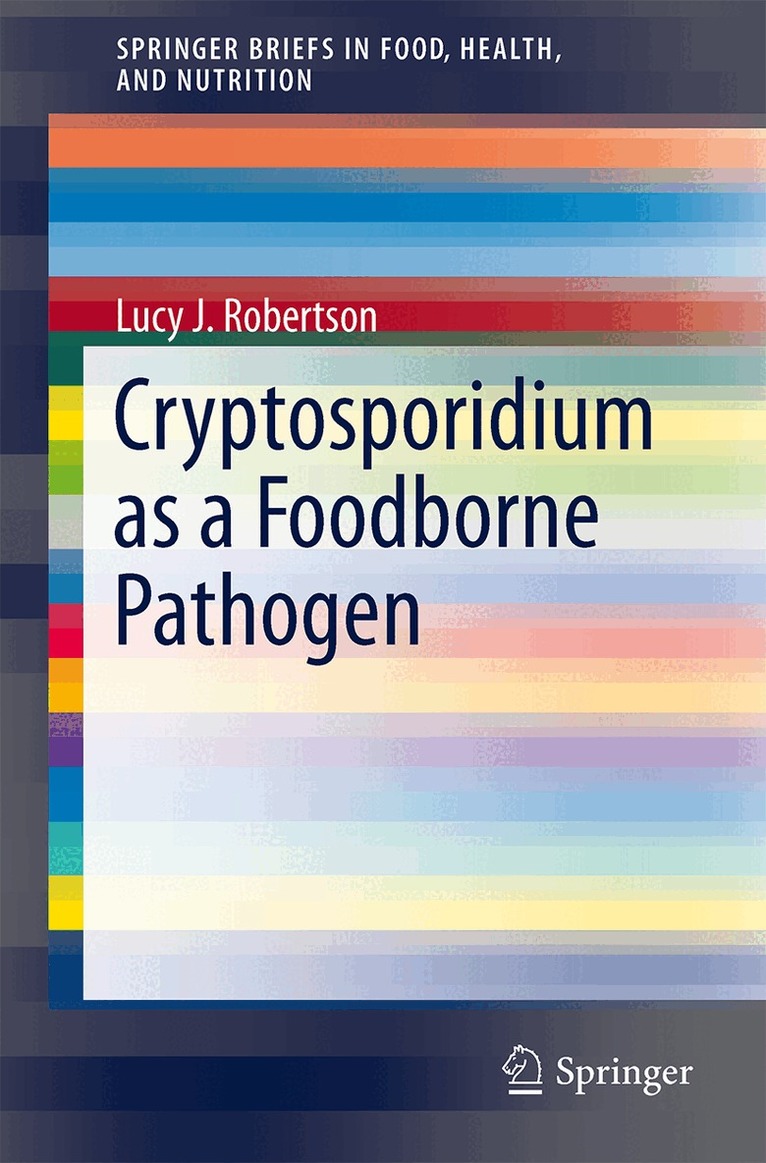
    Cryptosporidium as a Foodborne Pathogen

    AvLucy J. Robertson

    Häftad, Engelska, 2013

    Del i serien SpringerBriefs in Food, Health, and Nutrition

    563 kr

    Beställningsvara. Skickas inom 10-15 vardagar. Fri frakt över 249 kr.

    Fler format och utgåvor

    E-bok

    710 kr

    Beskrivning

    Although widely recognized as an important waterborne pathogen, Cryptosporidium spp. can also be transmitted by contamination of food. The same properties of this protozoan parasite that mean that water is an excellent transmission vehicle are also important for foodborne transmission. These include the low infective dose, the high number of oocysts that are excreted, and the robustness of these transmission stages. However, many more outbreaks of waterborne cryptosporidiosis have been reported than foodborne outbreaks. This is probably partly due to epidemiological tracing being much more difficult for foodborne outbreaks than waterborne outbreaks, and the number of persons exposed to infection often being fewer. Nevertheless, the potential importance of foodborne transmission is gradually being recognized, and a wide range of different foodstuffs have been associated with those outbreaks that have been recorded. Additionally, various factors mean that the potential for foodborne transmission is becoming of increasing importance: these include the growth of international food trade, a current trend for eating raw or very lightly cooked foods, and the rise in small-scale organic farms, where there the possibility for contamination of vegetable crops with animal feces may be greater.

    Produktinformation

    • Utgivningsdatum:2013-11-14
    • Mått:155 x 235 x 6 mm
    • Vikt:160 g
    • Format:Häftad
    • Språk:Engelska
    • Serie:SpringerBriefs in Food, Health, and Nutrition
    • Antal sidor:90
    • Upplaga:2014
    • Förlag:Springer-Verlag New York Inc.
    • ISBN:9781461493778

    Utforska kategorier

    • Patologi inom Medicin

    Innehållsförteckning

    • Introduction to Cryptosporidium – the parasite and the disease.- Transmission routes and factors that lend themselves to foodborne transmission.- Documented foodborne outbreaks of cryptosporidiosis.- Approaches to detecting Cryptosporidium oocysts in different food matrices.- Occurrence of Cryptosporidium oocysts in different food matrices: results of surveys.- Inactivation or decontamination procedures.- Risk assessment and regulations.- Future challenges.- Conclusions.- References.