• Fri frakt över 249 kr
  • •
  • Snabba leveranser
  • •
  • Billiga böcker
Kundservice

Du är på sajten för privatpersoner.

Företag, bibliotek eller offentlig verksamhet?

Du handlar på classic.bokus.com, där alla dina funktioner finns intakta.
Till classic.bokus.com
Bokus logotyp. Gå till startsidan.
  • Erbjudanden
  • Nyheter
  • Student
  • Topplistor
  • Barn & ungdom
  • Bokus Play
  • E-böcker
  • Pocketböcker
  • Spel & pussel

10% rabatt på allt med kod NYSTART10 →

Sidfot

Mina sidor

    Hjälp

    • Kundservice
    • Vanliga frågor och svar
    • Frakt och leverans
    • Retur vid ångerrätt
    • Reklamera vara
    • Betalning
    • Köpvillkor
    • Allmänna villkor
    • Information om webbplatsens tillgänglighet

    Om Bokus

    • Om oss
    • Pressrum
    • För studenter
    • För företag
    • För bibliotek och offentlig verksamhet
    • För leverantörer
    • Hållbarhet

    Populärt

    • Aktuella erbjudanden
    • Presentkort
    • Studentlitteratur
    • Nya böcker
    • Topplistor
    • Signerade böcker
    • Engelska böcker

    Inspiration

    • Boktips
    • BookTok
    • Populära bokserier
    • Barnbokskaraktärer
    • Populära författare
    Logotyp för Bokus
    Följ oss på Facebook (extern länk)Följ oss på Instagram (extern länk)Följ oss på YouTube (extern länk)Följ oss på TikTok (extern länk)
    bokus @ CookiesAnpassa cookiesIntegritetspolicyKöpvillkor
    Till Citymail hemsida (extern länk)Till Budbee hemsida (extern länk)Till Postnord hemsida (extern länk)Till Schenker hemsida (extern länk)Till Early Bird hemsida (extern länk)Till Walleys hemsida (extern länk)
    1. Psykologi och pedagogik
    2. Psykologi

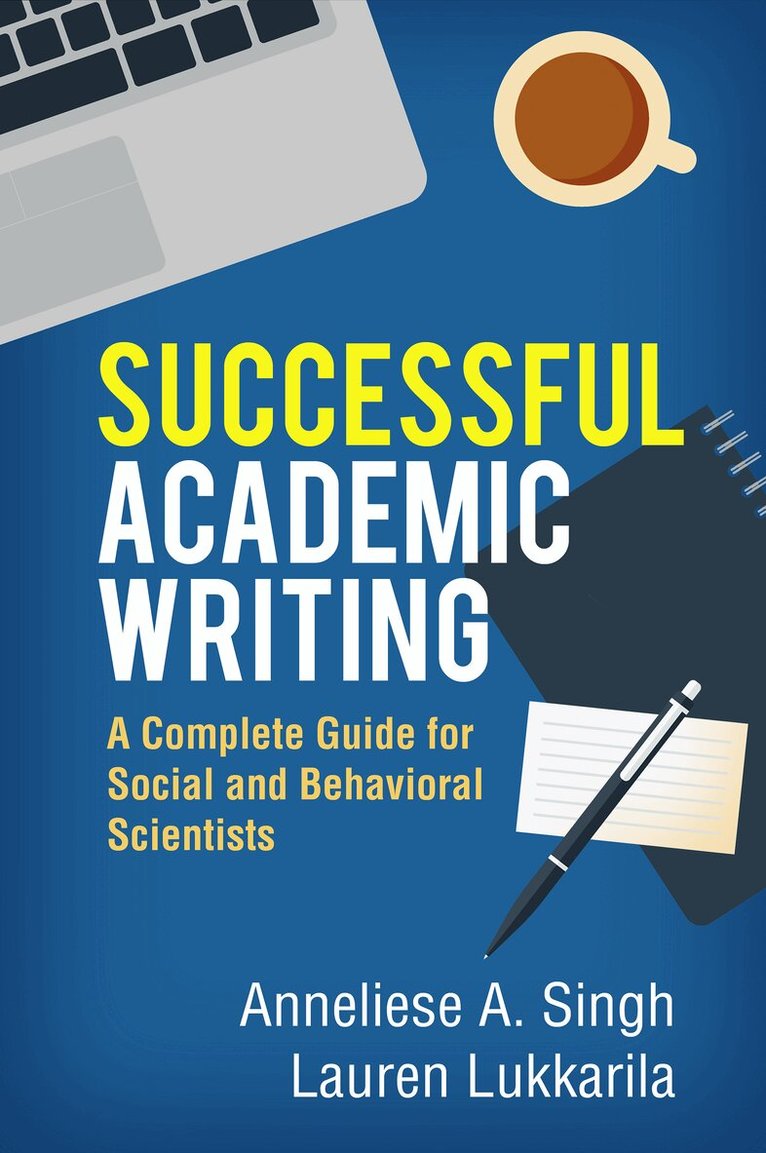
    Successful Academic Writing

    A Complete Guide for Social and Behavioral Scientists

    AvAnneliese A. Singh,Lauren Lukkarila

    Häftad, Engelska, 2017

    498 kr

    Beställningsvara. Skickas inom 10-15 vardagar. Fri frakt över 249 kr.

    Fler format och utgåvor

    Inbunden

    Tillf. slut

    Beskrivning

    Using rich examples and engaging pedagogical tools, this book equips students to master the challenges of academic writing in graduate school and beyond. The authors delve into nitty-gritty aspects of structure, style, and language, and offer a window onto the thought processes and strategies that strong writers rely on. Essential topics include how to: identify the audience for a particular piece of writing; craft a voice appropriate for a discipline-specific community of practice; compose the sections of a qualitative, quantitative, or mixed-methods research article; select the right peer-reviewed journal for submitting an article; and navigate the publication process. Readers are also guided to build vital self-coaching skills in order to stay motivated and complete projects successfully.User-Friendly Features*Exercises (with answers) analyzing a variety of texts.*Annotated excerpts from peer-reviewed journal articles.*Practice opportunities that help readers apply the ideas to their own writing projects.*Personal reflections and advice on common writing hurdles.*End-of-chapter Awareness and Action Reminders with clear steps to take.

    Produktinformation

    • Utgivningsdatum:2017-06-16
    • Mått:156 x 234 x 13 mm
    • Vikt:386 g
    • Format:Häftad
    • Språk:Engelska
    • Antal sidor:260
    • Förlag:Guilford Publications
    • ISBN:9781462529391

    Utforska kategorier

    • Psykologi inom Psykologi och pedagogik

    Mer om författaren

    Anneliese A. Singh, PhD, LPC, is an award-winning social justice scholar, author, speaker, and community organizer who speaks on a wide variety of racial healing; racial justice; diversity, equity and inclusion; and LGBTQ+ topics. She is the inaugural Chief Diversity Officer at Tulane University, where she is Professor in the School of Social Work and has a joint appointment in the Department of Psychology. Dr. Singh has taught widely on qualitative research methods and academic writing in the behavioral and social sciences. Her research, practice, advocacy, and more than 100 publications explore the resilience and liberation experiences of trans people, people of color, survivors of trauma, and South Asian immigrants, as well as social justice and empowerment training. Dr. Singh founded the Georgia Safe Schools Coalition and the Trans Resilience Project to translate her LGBTQ+ research findings into school and community-based change efforts. She has given TEDx talks on gender liberation and is a frequent workshop presenter. Dr. Singh’s pronouns are she/her/hers and they/them/theirs.Lauren Lukkarila, PhD, is Assistant Director of the Georgia Tech Language Institute, where she is also a lecturer and coordinates the curriculum of the Intensive English program, as well as many of the other academic-, professional-, and general-skills short programs. Dr. Lukkarila’s research foci include feminist approaches to English as a second language (ESL) pedagogy, critical pedagogy in ESL, academic reading-writing connections, identity and academic writing, critical thinking pedagogy, and academic writing pedagogy. She has been teaching pre- and postmatriculated ESL writers how to succeed at U.S. university academic writing for over a decade. She is a frequent guest lecturer on graduate academic writing and has been honored for her curriculum innovation with international students.

    Recensioner i media

    "A true gem of a book that addresses critical aspects of academic writing that I have not seen elsewhere. In an easy-to-access, conversational style, the authors delve into the logic, content, and structure of writing for an academic or professional audience. Excellent pedagogical tools encourage readers to analyze various writing styles in order to craft their own academic voices. I highly recommend this book for both class and professional use, and will use it in my doctoral classes."--Susan P. Robbins, PhD, LCSW, Graduate College of Social Work, University of Houston"If you are looking for a complete text to inspire and instruct graduate students in academic writing, look no further. The strengths of the book include its clarity and the practice exercises embedded in each chapter, which give students a chance to apply what they have read and check their mastery. The text boxes and the end-of-chapter Awareness and Action Reminders are also especially useful."--Peggy Meszaros, PhD, Department of Human Development, Virginia Tech"As a journal editor, I thank the authors for this book. We receive way too many manuscripts that are improperly formatted, not in the journal's scope, et cetera. I am so glad to see all of the advice about doing the boring but important work of making a manuscript review-ready. This book will be helpful for our students who are truly struggling to find their way, both as writers and as future faculty. It offers a less intimidating way for them to learn the ropes and get basic advice, and it will help them know what questions to ask their advisors."--Vanessa P. Dennen, PhD, College of Education, Florida State University; Editor-in-Chief, The Internet and Higher Education"Many graduate students struggle with writing, and their mentors are not always particularly good at articulating how they might improve. I would use this book in my research methods class. I love the section on 'writer-responsible' writing, which gets at what I am always trying to convey to students in a concise and elegant way. The peer-reviewed journal exemplars are a great addition, and the ways each one illustrates specific concepts are well explained."--Ann Marie Ryan, PhD, Department of Psychology, Michigan State University -This book would be an excellent textbook or reference for graduate students. In particular, I would recommend using the book for an introductory class in the graduate program. Also, if I was advising undergraduate honors students, I would use some of the chapters with them.--Family and Consumer Sciences Research Journal, 3/1/2018

    Innehållsförteckning

    • I. Becoming an Academic Writer1. What Is Academic Writing?2. Preparing for Writing Success in Your Discipline3. Developing Your Own Writing IdentityII. Developing Academic Writing Skills4. Understanding Academic Writer–Reader Roles and Writing Structures5. The Use of Tone and Style in Your Academic Writing6. Coaching Yourself to CompletionIII. Specific Types of Academic Writing7. Grounding Your Voice in the Literature8. The Writing Formula for Empirical Academic Writing9. Publish, Don’t PerishAppendix. Answer KeyReferencesIndexAbout the Authors