• Fri frakt över 249 kr
  • •
  • Snabba leveranser
  • •
  • Billiga böcker
Kundservice

Du är på sajten för privatpersoner.

Företag, bibliotek eller offentlig verksamhet?

Du handlar på classic.bokus.com, där alla dina funktioner finns intakta.
Till classic.bokus.com
Bokus logotyp. Gå till startsidan.
  • Erbjudanden
  • Nyheter
  • Student
  • Topplistor
  • Barn & ungdom
  • Bokus Play
  • E-böcker
  • Pocketböcker
  • Spel & pussel

10% rabatt på allt med kod NYSTART10 →

Sidfot

Mina sidor

    Hjälp

    • Kundservice
    • Vanliga frågor och svar
    • Frakt och leverans
    • Retur vid ångerrätt
    • Reklamera vara
    • Betalning
    • Köpvillkor
    • Allmänna villkor
    • Information om webbplatsens tillgänglighet

    Om Bokus

    • Om oss
    • Pressrum
    • För studenter
    • För företag
    • För bibliotek och offentlig verksamhet
    • För leverantörer
    • Hållbarhet

    Populärt

    • Aktuella erbjudanden
    • Presentkort
    • Studentlitteratur
    • Nya böcker
    • Topplistor
    • Signerade böcker
    • Engelska böcker

    Inspiration

    • Boktips
    • BookTok
    • Populära bokserier
    • Barnbokskaraktärer
    • Populära författare
    Logotyp för Bokus
    Följ oss på Facebook (extern länk)Följ oss på Instagram (extern länk)Följ oss på YouTube (extern länk)Följ oss på TikTok (extern länk)
    bokus @ CookiesAnpassa cookiesIntegritetspolicyKöpvillkor
    Till Citymail hemsida (extern länk)Till Budbee hemsida (extern länk)Till Postnord hemsida (extern länk)Till Schenker hemsida (extern länk)Till Early Bird hemsida (extern länk)Till Walleys hemsida (extern länk)
    1. Medicin
    2. Andra medicinska specialiteter
    3. Psykiatri

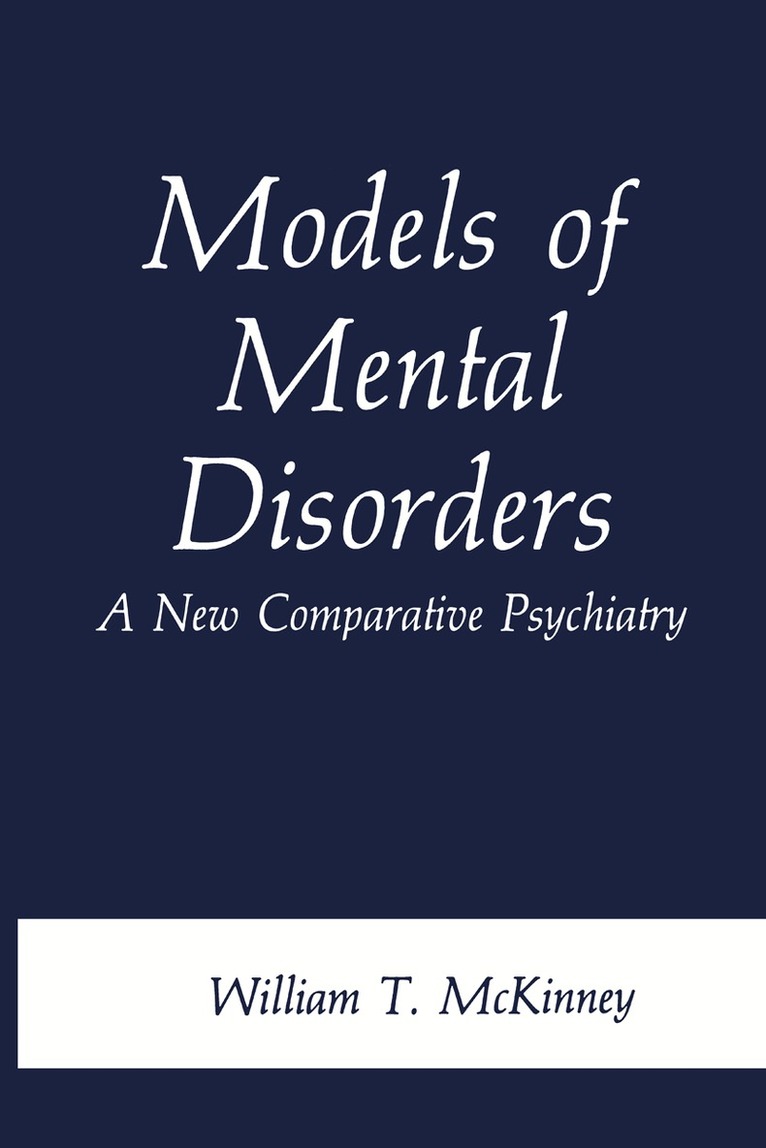
    Models of Mental Disorders

    A New Comparative Psychiatry

    AvWilliam T. McKinney Jr.

    Häftad, Engelska, 2012

    563 kr

    Beställningsvara. Skickas inom 10-15 vardagar. Fri frakt över 249 kr.

    Fler format och utgåvor

    E-bok

    732 kr

    Beskrivning

    My ideas for this book have been evolving over the last several years as I have been working in the animal modeling area and have seen it change rather dramatically. There have been tremendous advances, both in methodology and in conceptualization, yet the literature is scattered in journals encompassing many disciplines. In particular, there have been only very limited attempts to write about the philosophical, conceptual, and controversial issues in this field; to pull together diverse findings; and to provide some general perspective on its future. As will probably be apparent, I am a clinical psychiatrist who also has a fundamental interest in animal behavior, especially primate social behavior. I entered the field from a clinical research standpoint to devel­ op some animal models of depression after being stimulated to do so by Dr. William Bunney, then at the National Institute of Mental Health and now at the University of California-Irvine. The field has grown rapidly since then and there is considerable research activity. Indeed, the re­ search activity has grown more rapidly than our conceptualization of what animal models are and are not. Animal preparations are now available for studying specific aspects of certain types of psychopathology. Thoughtful workers in the animal modeling field no longer talk about comprehensive models but rather about more limited experimental preparations in animals for studying certain specific aspects of human psychopathology.

    Produktinformation

    • Utgivningsdatum:2012-03-13
    • Mått:152 x 229 x 12 mm
    • Vikt:321 g
    • Format:Häftad
    • Språk:Engelska
    • Antal sidor:212
    • Förlag:Springer-Verlag New York Inc.
    • ISBN:9781468454321

    Utforska kategorier

    • Psykiatri inom Medicin

    Innehållsförteckning

    • I. Fundamental Basis and Justification for a New Comparative Psychiatry.- 1. Historical Perspective.- 2. Philosophical Basis for the Development of Animal Models for Psychiatric Illnesses.- II. Four Illustrative Case Examples.- 3. Animal Models for Affective Disorders.- 4. Animal Models for Anxiety Disorders.- 5. Animal Models for Schizophrenic Disorders.- 6. Animal Models for Alcoholism.- III. Perspectives on the Animal Modeling Field.- 7. Future Tasks.- 8. Conclusions.