

Novel Approaches to the Treatment of Alzheimer’s Disease
546 kr
Beställningsvara. Skickas inom 10-15 vardagar. Fri frakt över 249 kr.
Fler format och utgåvor
Beskrivning
Alzheimer's disease afflicts up to 1 in 5 people over the age of 65 years and causes untold suffering of the patient and their family. The cause of this disease is unknown; indeed, evidence increasingly suggests that there may be multiple Alzheimer-type syndromes with different etiologies, analogous to different types of psychosis. Currently there are no means to prevent the disease, slow its progress or reverse its neurodegenerative consequences. With few exceptions, clinical trials of a variety of compounds have resulted in patient responses that are disappointing with respect to both the proportion of responders and the magnitude of the responses. Novel approaches to the treatment of Alzheimer's disease are clearly warranted. For this reason, we organized the First Suncoast Workshop on the Neurobiology of Aging in St. Petersburg, Florida, which took place from February 26-March 1, 1989. This workshop focused on novel treatments and models for Alzheimer's disease and represented a cooperative venture among academia, government and industry, both in its participants and sponsorship. The Center for the Neurobiology of Aging at the University of Florida, the National Institute on Aging and Taiho Pharmaceutical Corporation in Japan sponsored the workshop in which scientists from the North America, Europe, Japan and other parts of Asia participated.
Produktinformation
Utforska kategorier
Innehållsförteckning
Hoppa över listan

Mer från samma författare
Noncontact Atomic Force Microscopy
Roland Wiesendanger, E. Meyer, S. Morita, Roland Wiesendanger, E. Meyer
Inbunden, 2002
2 197 kr
Akustik
H. Backhaus, J. Friese, E.M.v. Hornbostel, A. Kalähne, H. Lichte, E. Lübcke, E. Meyer, E. Michel, C. V. Raman, H. Sell, F. Trendelenburg
Häftad, 1927
877 kr
Akustik
F. Trendelenburg, H. Sell, C. V. Raman, E. Michel, E. Meyer, E. Lubcke, H. Lichte, A. Kalahne, E.M.v. Hornbostel, J. Friese, H. Backhaus
E-bok
2013893 kr
Hoppa över listan
Mer från samma serie
Proceedings of the Fifth International Conference Held in Victoria, Canada, June 27-30, 1996
International Conference on Kindling, Michael E. Corcoran, Solomon L. Moshé
Häftad, 1998
911 kr
Alterations in the Neuronal Cytoskeleton in Alzheimer Disease
George Perry, George Perry
Inbunden, 1988
1 137 kr
Alzheimer’s and Parkinson’s Diseases
Israel Hanin, Israel Ed. Hanin, Israel Hanin, Mitsuo Yoshida, Abraham Fisher
Inbunden, 1995
3 397 kr
Epilepsy and the Corpus Callosum 2
Alexander G. Reeves, Richard Reeves, Alexander G. Reeves, David W. Roberts
Inbunden, 1995
2 267 kr
Biology and Physiology of the Blood-Brain Barrier
Pierre-O Couraud, Cerebral Vascular Biology Symposium, Pierre-Olivier Couraud, Daniel Scherman
Inbunden, 1996
2 267 kr
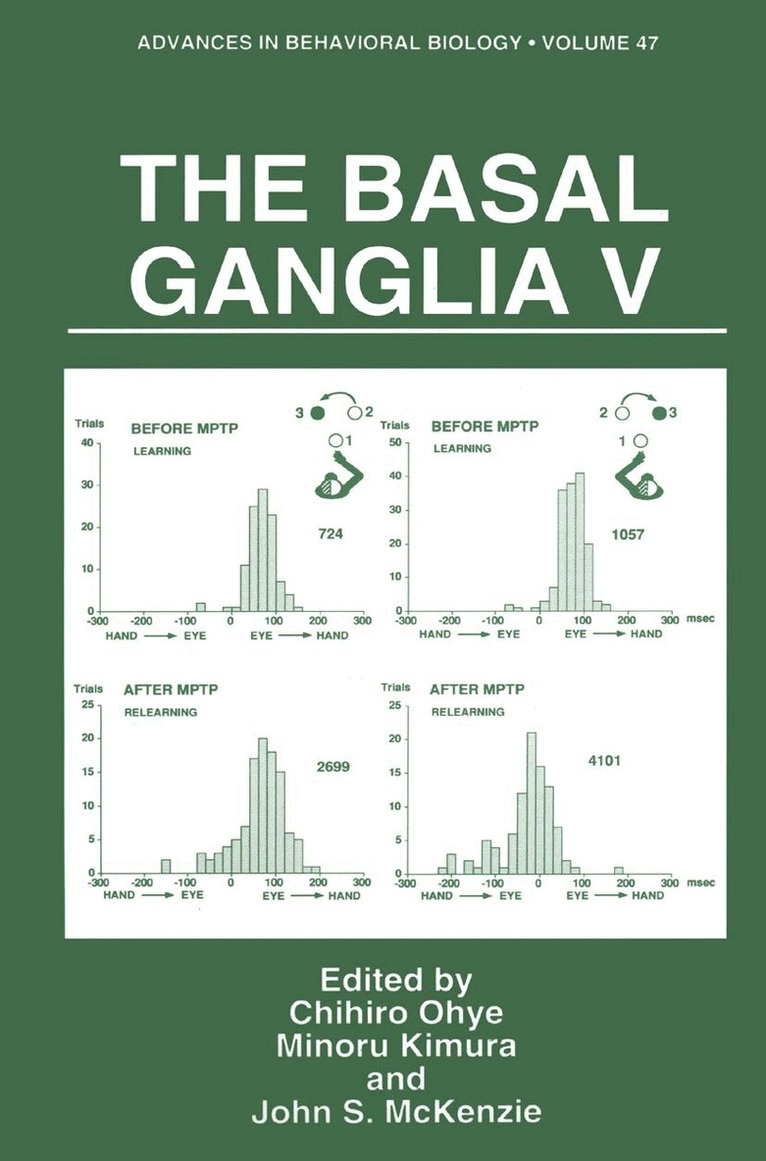
Basal Ganglia V
International Basal Ganglia Society Staf, M. Kimura, Chihiro Ohye, Minoru Kimura, John S. McKenzie
Inbunden, 1997
3 397 kr
Progress in Alzheimer’s and Parkinson’s Diseases
Israel Hanin, Abraham Fisher, Israel Hanin, Mitsuo Yoshinda
Häftad, 1998
3 397 kr
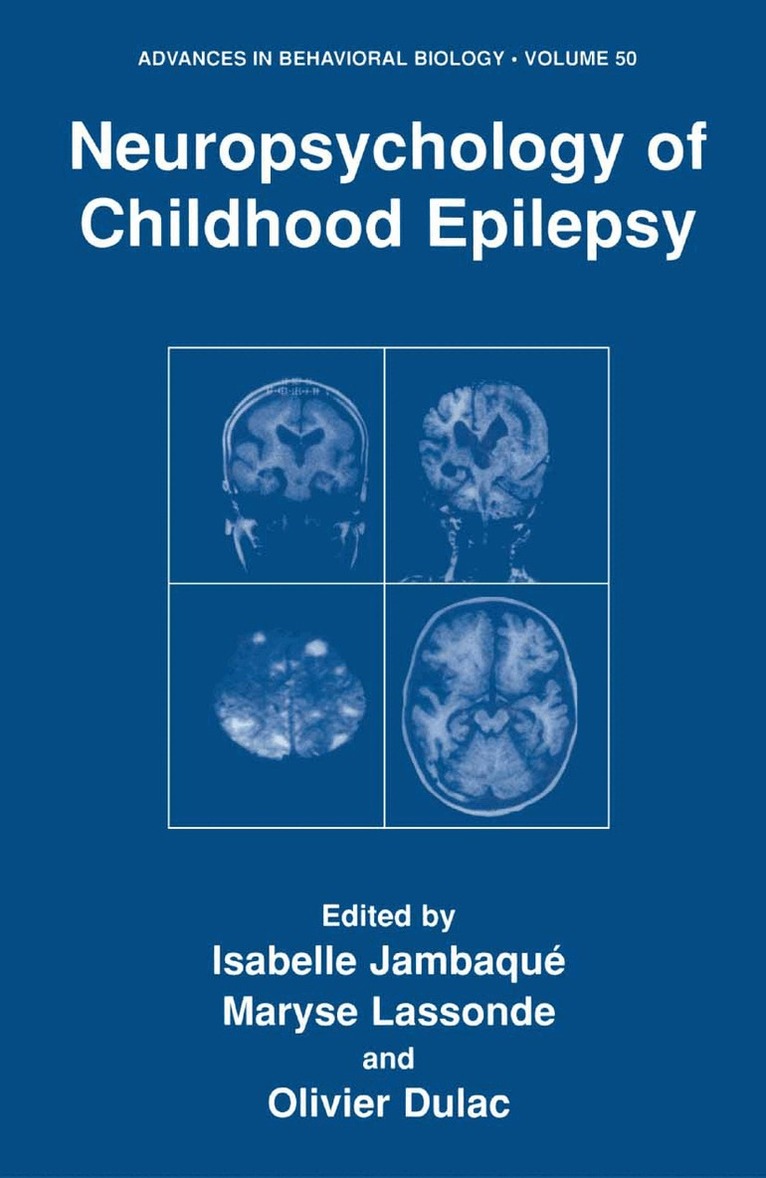
Neuropsychology of Childhood Epilepsy
Isabelle Jambaque, Maryse Lassonde, Isabelle Jambaqué, Maryse Lassonde, Olivier Dulac
Inbunden, 2001
1 702 kr
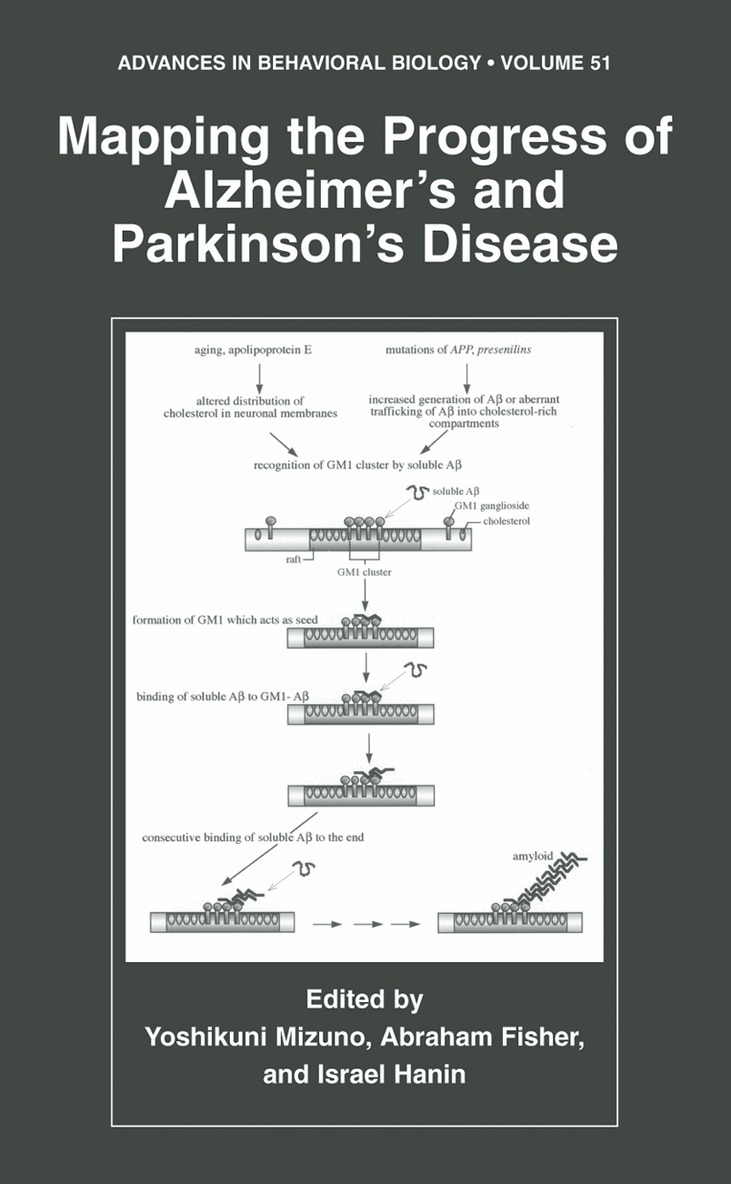
Mapping the Progress of Alzheimer’s and Parkinson’s Disease
Yoshikuni Mizuno, International Conference on Progress in, Yoshikuni Mizuno, Abraham Fisher, Israel Hanin
Inbunden, 2002
2 267 kr
Hoppa över listan

Du kanske också är intresserad av
- 10% rabatt på allt
Blut und Lymphe
W. Griesbach, B. Huber, F. Laquer, E. Meyer, C. Oehme, H. Oeller, V. Schilling, R. Seyderhelm
Häftad, 1928
587 kr
Schallabwehr im Bau- und Maschinenwesen
W. Zeller, W. Piening, E. Meyer, E. Lubcke, W. Durhammer, L. Cremer, Ernst Lubcke
E-bok
2013574 kr
Erkrankungen des Nervensystems
K. Wittmaack, O. Veraguth, M. Nadoleczny, E. Muller, E. Meyer, K. Goldstein, H. Curschmann, O. Bumke, R. Bing, E. Billigheimer, G. von Bergmann
E-bok
2013591 kr
Speƶielle Urologie
Th. Cohn, P. Frangenheim, H. Gebele, G.B. Gruber, Th. Heynemann, A. Lewin, E. Meyer, F. Necker, H.G. Pleschner, F. Oehlecker, P. Schneider, R. Siebeck, F. Suter, A. v. Lichtenber, F. Voelcker
Häftad, 1928
587 kr
Akustik
F. Trendelenburg, H. Sell, C. V. Raman, E. Michel, E. Meyer, E. Lubcke, H. Lichte, A. Kalahne, E.M.v. Hornbostel, J. Friese, H. Backhaus
E-bok
2013893 kr