• Fri frakt över 249 kr
  • •
  • Snabba leveranser
  • •
  • Billiga böcker
Kundservice

Du är på sajten för privatpersoner.

Företag, bibliotek eller offentlig verksamhet?

Du handlar på classic.bokus.com, där alla dina funktioner finns intakta.
Till classic.bokus.com
Bokus logotyp. Gå till startsidan.
  • Erbjudanden
  • Nyheter
  • Student
  • Topplistor
  • Barn & ungdom
  • Bokus Play
  • E-böcker
  • Pocketböcker
  • Spel & pussel

10% rabatt på allt med kod: NYSTART10 →

Sidfot

Mina sidor

    Hjälp

    • Kundservice
    • Vanliga frågor och svar
    • Frakt och leverans
    • Retur vid ångerrätt
    • Reklamera vara
    • Betalning
    • Köpvillkor
    • Allmänna villkor
    • Information om webbplatsens tillgänglighet

    Om Bokus

    • Om oss
    • Pressrum
    • För studenter
    • För företag
    • För bibliotek och offentlig verksamhet
    • För leverantörer
    • Hållbarhet

    Populärt

    • Aktuella erbjudanden
    • Presentkort
    • Studentlitteratur
    • Nya böcker
    • Topplistor
    • Signerade böcker
    • Engelska böcker

    Inspiration

    • Boktips
    • BookTok
    • Populära bokserier
    • Barnbokskaraktärer
    • Populära författare
    Logotyp för Bokus
    Följ oss på Facebook (extern länk)Följ oss på Instagram (extern länk)Följ oss på YouTube (extern länk)Följ oss på TikTok (extern länk)
    bokus @ CookiesAnpassa cookiesIntegritetspolicyKöpvillkor
    Till Citymail hemsida (extern länk)Till Budbee hemsida (extern länk)Till Postnord hemsida (extern länk)Till Schenker hemsida (extern länk)Till Early Bird hemsida (extern länk)Till Walleys hemsida (extern länk)
    1. Data och IT
    2. Systemvetenskap och AI

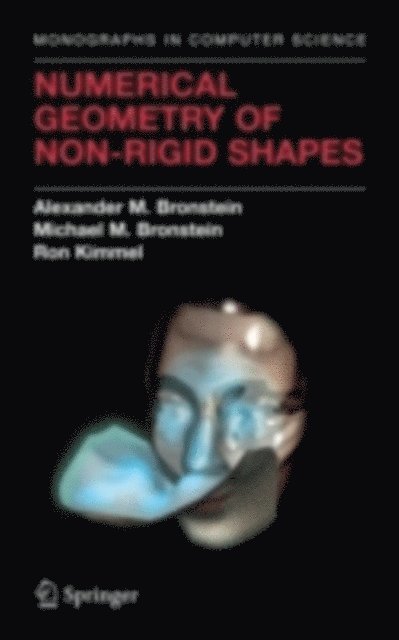
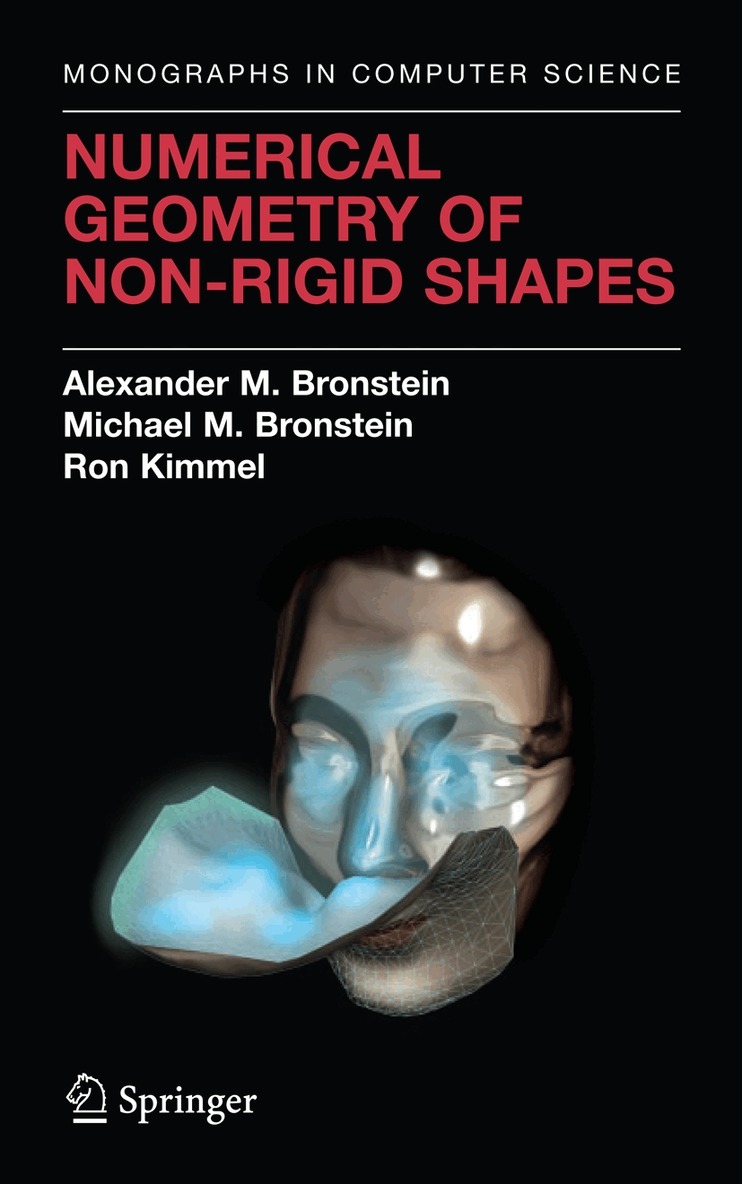
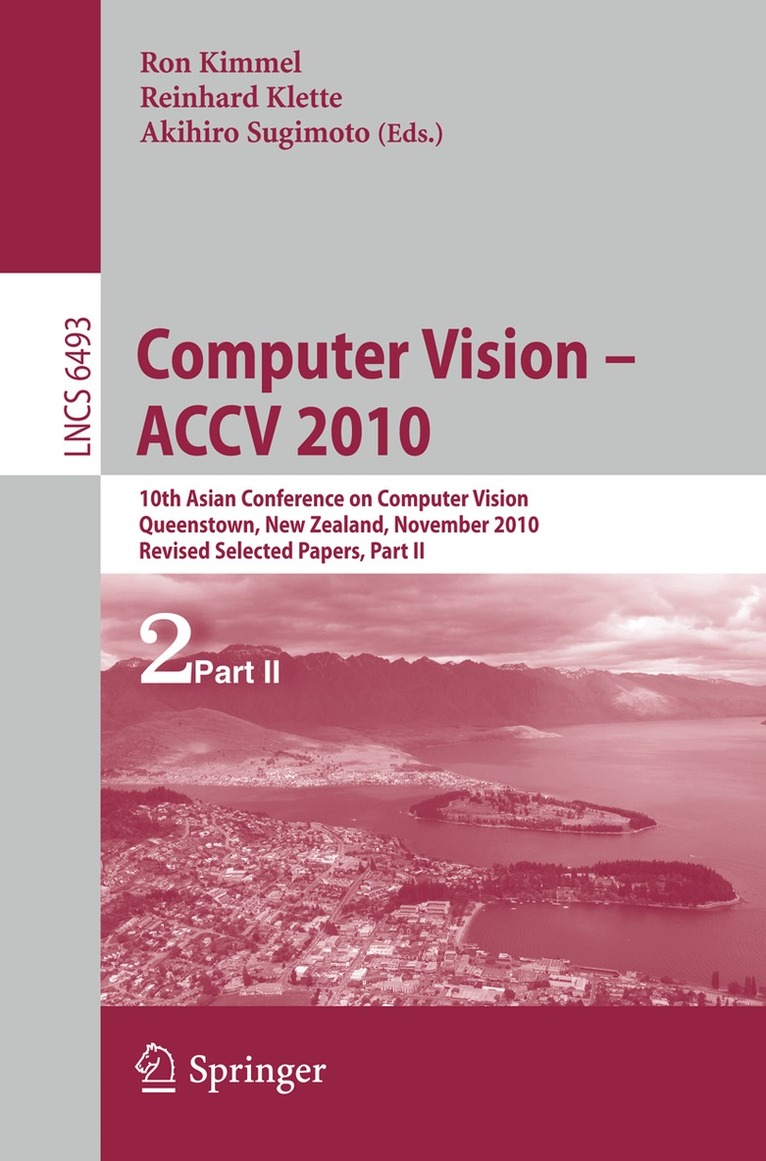
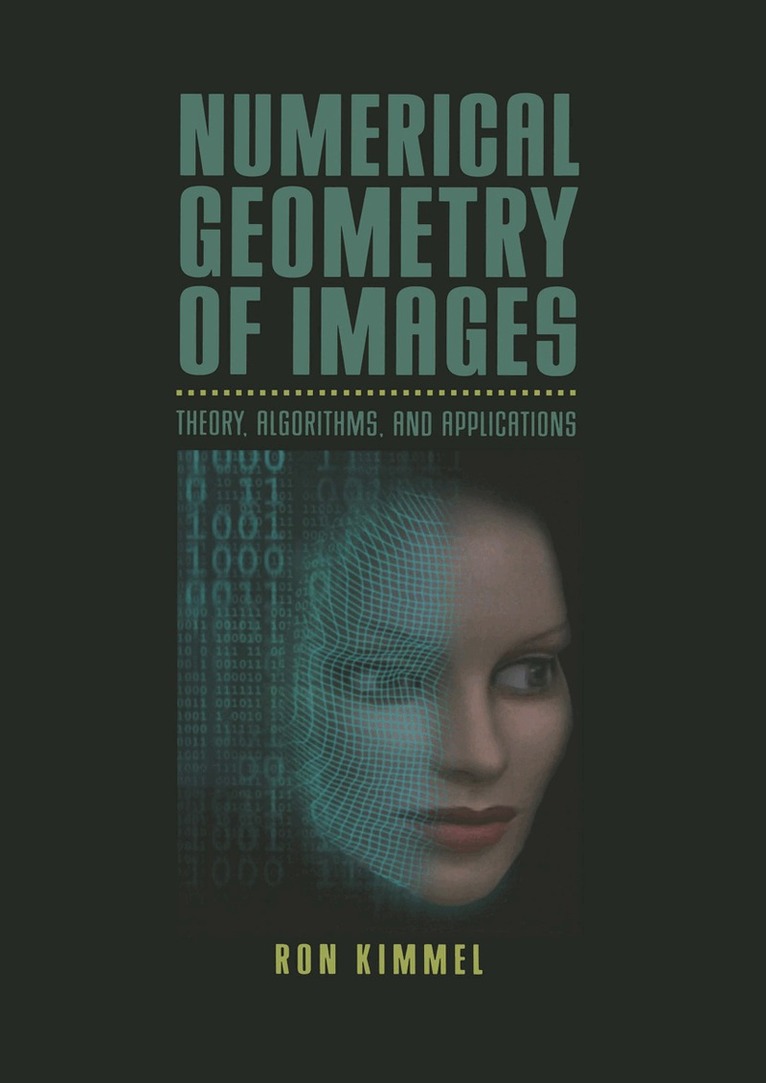
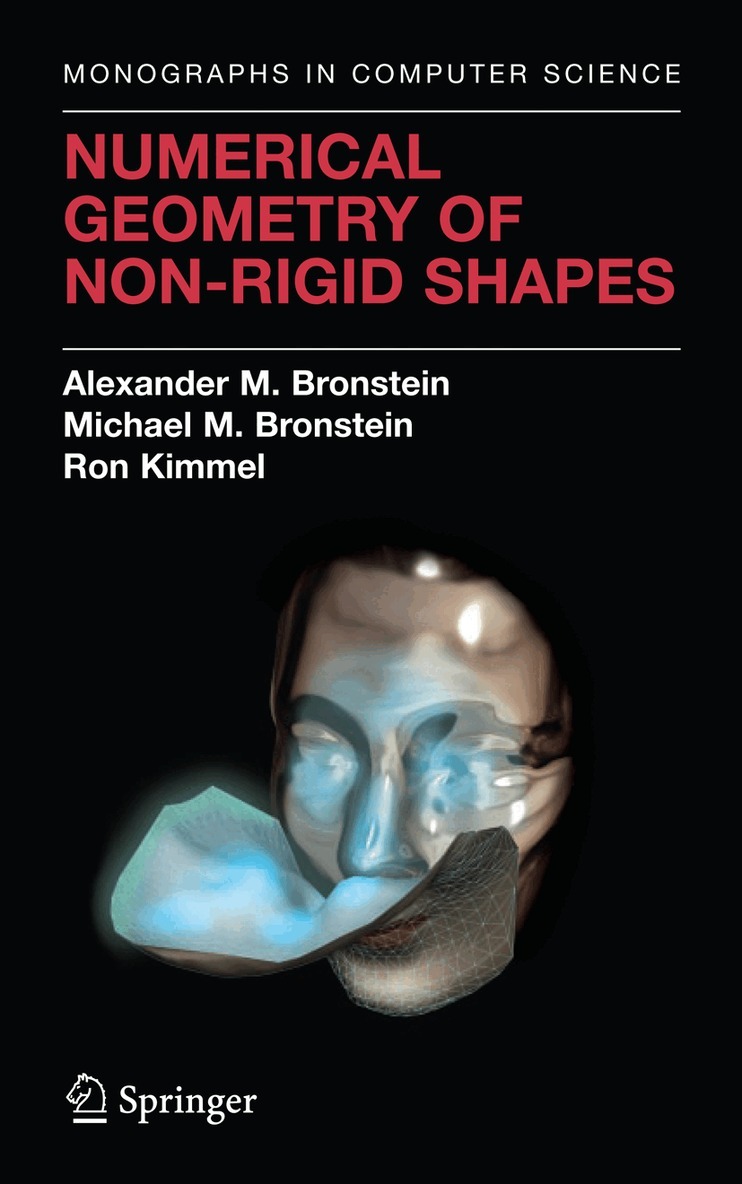
    Numerical Geometry of Images

    Theory, Algorithms, and Applications

    AvRon Kimmel

    Häftad, Engelska, 2012

    563 kr

    Beställningsvara. Skickas inom 10-15 vardagar. Fri frakt över 249 kr.

    Fler format och utgåvor

    E-bok

    732 kr

    Inbunden

    546 kr

    Beskrivning

    Numerical Geometry of Images examines computational methods and algorithms in image processing. It explores applications like shape from shading, color-image enhancement and segmentation, edge integration, offset curve computation, symmetry axis computation, path planning, minimal geodesic computation, and invariant signature calculation. In addition, it describes and utilizes tools from mathematical morphology, differential geometry, numerical analysis, and calculus of variations. Graduate students, professionals, and researchers with interests in computational geometry, image processing, computer graphics, and algorithms will find this new text / reference an indispensable source of insight of instruction.

    Produktinformation

    • Utgivningsdatum:2012-08-31
    • Mått:178 x 254 x 13 mm
    • Vikt:431 g
    • Format:Häftad
    • Språk:Engelska
    • Antal sidor:209
    • Förlag:Springer-Verlag New York Inc.
    • Illustratör:M. Bronstein, A. Bronstein
    • ISBN:9781468495355

    Utforska kategorier

    • Systemvetenskap och AI inom Data och IT
    • Programmeringsböcker inom Data och IT

    Recensioner i media

    From the reviews: "After a brief introduction to differential geometry the book covers computational methods and algorithms in image processing and image analysis. ... The author presents classic approaches as well as new solutions ... . It would certainly be beneficial for the presumptive reader to be able to rely on a sound background in geometry, linear algebra and calculus." (Anton Gfrerrer, Zentralblatt MATH, Vol. 1049, 2004)

    Innehållsförteckning

    • 1 Introduction.- 1.1 Mathematical Tools and Machinery.- 1.2 Applications.- 1.3 Exercises.- 2 Basic Differential Geometry.- 2.1 Introduction to Differential Geometry in the Plane.- 2.2 Invariant Signatures.- 2.3 Calculus of Variations in Parametric Form.- 2.4 Geometry of Surfaces.- 2.5 A Brief Introduction to Intrinsic Geometry.- 2.6 Exercises.- 3 Curve and Surface Evolution.- 3.1 Evolution.- 3.2 Properties of Curve Evolution.- 3.3 Surface Evolution.- 3.4 Exercises.- 4 The Osher—Sethian Level Set Method.- 4.1 The Eulerian Formulation.- 4.2 From Curve to Image Evolution.- 4.3 Exercises.- 5 The Level Set Method: Numerical Considerations.- 5.1 Finite Difference Approximation.- 5.2 Conservation Laws and Hamilton-Jacobi Equations.- 5.3 Entropy Condition and Vanishing Viscosity.- 5.4 Numerical Methodologies.- 5.5 The CFL Condition.- 5.6 One-Dimensional Example of a Differential Conservation Law.- 5.7 Two-Dimensional Example of the CFL Condition.- 5.8 Viscosity Solutions.- 5.9 Summary.- 5.10 Exercises.- 6 Mathematical Morphology and Distance Maps.- 6.1 Continuous Morphology by Curve Evolution.- 6.2 Continuous-Scale Morphology.- 6.3 Distance Maps.- 6.4 Skeletons.- 6.5 Exercises.- 7 Fast Marching Methods.- 7.1 The One-Dimensional Eikonal Equation.- 7.2 Fast Marching on Two-Dimensional Rectangular Grids.- 7.3 Fast Marching on Triangulated Manifolds.- 7.4 Applications of Fast Marching on Surfaces.- 7.5 Exercises.- 8 Shape from Shading.- 8.1 Problem Formulation.- 8.2 Horn Characteristic Strip Expansion Method.- 8.3 Bruckstein’s Equal-Height Contours Expansion Method.- 8.4 Tracking Level Sets by Level Sets.- 8.5 Extracting the Surface Topography.- 8.6 Oblique Light Source.- 8.7 Summary.- 8.8 Exercises.- 9 2D and 3D Image Segmentation.- 9.1 The Level Set Geometric Model.- 9.2Geodesic Active Contours.- 9.3 Relation to Image Enhancement Methods.- 9.4 Nongeometric Measures and the Maupertuis Principle of Least Action.- 9.5 Edge Integration.- 9.6 Geometric Segmentation in 3D.- 9.7 Efficient Numerical Schemes.- 9.8 Exercises.- 10 Geometric Framework in Image Processing.- 10.1 Images as Surfaces.- 10.2 The Geometric Framework.- 10.3 Movies and Volumetric Medical Images.- 10.4 The Image Area as a Measure for Color Processing.- 10.5 The Metric as a Structure Tensor.- 10.6 Inverse Diffusion Across the Edge.- 10.7 Summary.- 10.8 Exercises.- 11 Texture Mapping, Matching Isometric Surfaces, and 3D Face Recognition.- 11.1 Flat Embedding.- 11.2 Texture Mapping.- 11.3 Isometric Signatures for Surfaces.- 11.4 Face Recognition.- 11.5 Exercises.- 12 Solutions to Selected Problems.