• Fri frakt över 249 kr
  • •
  • Snabba leveranser
  • •
  • Billiga böcker
Kundservice

Du är på sajten för privatpersoner.

Företag, bibliotek eller offentlig verksamhet?

Du handlar på classic.bokus.com, där alla dina funktioner finns intakta.
Till classic.bokus.com
Bokus logotyp. Gå till startsidan.
  • Erbjudanden
  • Nyheter
  • Student
  • Topplistor
  • Barn & ungdom
  • Bokus Play
  • E-böcker
  • Pocketböcker
  • Spel & pussel

10% studentrabatt med kod TERM26

Sidfot

Mina sidor

    Hjälp

    • Kundservice
    • Vanliga frågor och svar
    • Frakt och leverans
    • Retur vid ångerrätt
    • Reklamera vara
    • Betalning
    • Köpvillkor
    • Allmänna villkor
    • Information om webbplatsens tillgänglighet

    Om Bokus

    • Om oss
    • Pressrum
    • För studenter
    • För företag
    • För bibliotek och offentlig verksamhet
    • För leverantörer
    • Hållbarhet

    Populärt

    • Aktuella erbjudanden
    • Presentkort
    • Studentlitteratur
    • Nya böcker
    • Topplistor
    • Signerade böcker
    • Engelska böcker

    Inspiration

    • Boktips
    • BookTok
    • Populära bokserier
    • Barnbokskaraktärer
    • Populära författare
    Logotyp för Bokus
    Följ oss på Facebook (extern länk)Följ oss på Instagram (extern länk)Följ oss på YouTube (extern länk)Följ oss på TikTok (extern länk)
    bokus @ CookiesAnpassa cookiesIntegritetspolicyKöpvillkor
    Till Citymail hemsida (extern länk)Till Budbee hemsida (extern länk)Till Postnord hemsida (extern länk)Till Schenker hemsida (extern länk)Till Early Bird hemsida (extern länk)Till Walleys hemsida (extern länk)
    1. Samhälle och politik
    2. Krig och försvar
    3. Krigsvetenskap

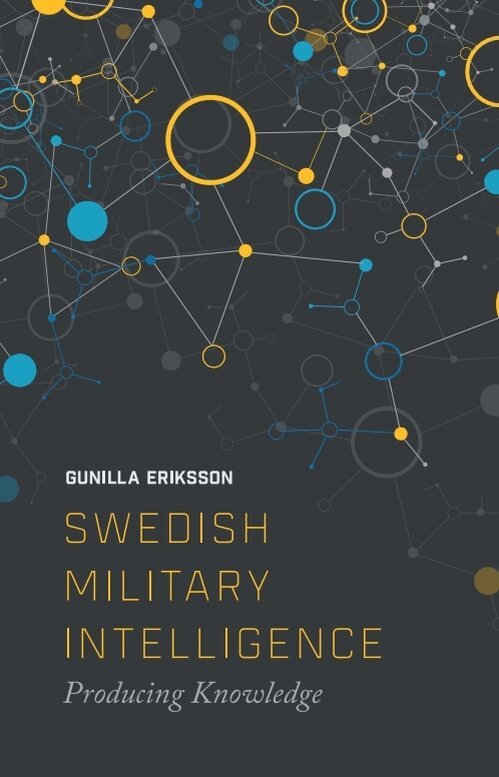
    Swedish Military Intelligence

    Producing Knowledge

    AvGunilla Erikkson

    Inbunden, Engelska, 2016

    1 357 kr

    Beställningsvara. Skickas inom 7-10 vardagar. Fri frakt över 249 kr.

    Fler format och utgåvor

    Häftad

    363 kr

    Beskrivning

    Builds a revisionary theoretical framework for researching intelligence knowledge and applies it to the Swedish Military and Security DirectorateGunilla Eriksson revises our perception of intelligence as carefully collected data and objective truth, arguing that there are hidden aspects to intelligence analysis that need to be uncovered and critically examined. This twofold study investigates the character of intelligence knowledge and the social context in which it is produced, using the Swedish Military and Security Directorate (MUST) as a case study. Eriksson argues that there is an implicit framework that continuously influences knowledge production: what kind of data is considered relevant, how this data is interpreted and the specific social and linguistic context of the organisation, surrounded by unarticulated norms and specific procedures. She asks whether these conventions hamper or obstruct intelligence assessments; an essential analysis, given that history has shown us the grave consequences basing policy on intelligence's wrong conclusions.Sources include: The annual Swedish Armed Forces Strategic Intelligence Estimates from 1998–2010Lengthy and highly valuable interviews with the analysts, including managers, working at MUST, giving insights into everyday life at the institution and leading to many important resultsParticipant observation carried out by the author at MUST working meetings and seminars during the production process of the 2010 estimate, and drawing on her experience from her years working as an active analyst

    Produktinformation

    • Utgivningsdatum:2016-09-20
    • Mått:156 x 234 x 18 mm
    • Vikt:514 g
    • Format:Inbunden
    • Språk:Engelska
    • Antal sidor:240
    • Förlag:Edinburgh University Press
    • ISBN:9781474413442

    Utforska kategorier

    • Krigsvetenskap inom Samhälle och politik
    • Internationella relationer inom Samhälle och politik
    • Krig och försvar inom Samhälle och politik

    Mer om författaren

    Gunilla Eriksson is a post-doctoral researcher in the Department of War Studies at the Swedish National Defense University. She holds a PhD in political science from Örebro University, Sweden, Prior to her academic career, she was an intelligence analyst at the Swedish Military Intelligence and Security Service (MUST).

    Recensioner i media

    This book is a remarkable achievement in a field with a chronic shortage of contemporary in-depth empirical studies. Her investigation of the knowledge production process within the walls of an intelligence machinery offers unique insights, far beyond the ordinary handbook literature, personal recollections and historical accounts.

    Innehållsförteckning

    • Tables and FiguresAcknowledgementsPart I1: IntroductionIntelligence – A Special Kind of KnowledgeIntelligence and KnowledgePolicy and KnowledgeInvestigating Intelligence Knowledge ProductionOutline of the Book2: Framework for Researching Intelligence KnowledgeIn Search of TheoryA View on InstitutionalismA View on KnowledgeSocial and Textual Discursive PracticeThe Framework AppliedPart II3 Intelligence in Swedish Political CultureThe Specificities of Swedish Political CultureA Culture of Compromise and Consensus4: The Institutional SettingTask and Legal FrameworkThe Process of Tasking and DirectingThe Formalised Intelligence Work Process5: The Swedish Military Intelligence DirectorateBefore 1945From 1945 Until 1989From Cold War until TodaySummaryPart III6: Practice for Producing KnowledgeMaking Intelligence AnalysisPhase One: Getting the Question RightPhase Two: Reading UpPhase Three: the Thinking ProcessPhase Four: Aligning and Creating SupportPhase Five: Releasing the AssessmentSummary7: Practice for Creating KnowledgeDirecting the Intelligence KnowledgeThe Literary StyleConsistency and ContradictionsThe Ethic ComponentSummaryPart IV8: The Intelligence WorldviewPolitical RealismRealism in the EstimatesSummary9: The Representation of NATOConstructing NATOThe Representation of NATONATO in an International ContextSummary10: The Representation of RussiaConstructing RussiaThe Representation of RussiaRussia in an International ContextSummary11: The Representation of TerrorismThe Early YearsAfter the Re-Emergence of TerrorismRecentlySummary12: The Intelligence DiscourseLanguage PracticeTerms and ConceptsFacts, Arguments and AssumptionsSummaryPart V13: The Intelligence ‘Style of Thought’ and ‘Collective of Thought’Intelligence Social PracticeIntelligence Social Discursive PracticeIntelligence Textual Discursive PracticeIntelligence Knowledge DiscourseConcluding Reflections and SuggestionsBibliographyLiteratureArticlesPublic InquiriesIntelligence Estimates and Policy DocumentsInterviewsObservations