• Fri frakt över 249 kr
  • •
  • Snabba leveranser
  • •
  • Billiga böcker
Kundservice

Du är på sajten för privatpersoner.

Företag, bibliotek eller offentlig verksamhet?

Du handlar på classic.bokus.com, där alla dina funktioner finns intakta.
Till classic.bokus.com
Bokus logotyp. Gå till startsidan.
  • Erbjudanden
  • Nyheter
  • Student
  • Topplistor
  • Barn & ungdom
  • Bokus Play
  • E-böcker
  • Pocketböcker
  • Spel & pussel

10% rabatt på allt med kod: NYSTART10 →

Sidfot

Mina sidor

    Hjälp

    • Kundservice
    • Vanliga frågor och svar
    • Frakt och leverans
    • Retur vid ångerrätt
    • Reklamera vara
    • Betalning
    • Köpvillkor
    • Allmänna villkor
    • Information om webbplatsens tillgänglighet

    Om Bokus

    • Om oss
    • Pressrum
    • För studenter
    • För företag
    • För bibliotek och offentlig verksamhet
    • För leverantörer
    • Hållbarhet

    Populärt

    • Aktuella erbjudanden
    • Presentkort
    • Studentlitteratur
    • Nya böcker
    • Topplistor
    • Signerade böcker
    • Engelska böcker

    Inspiration

    • Boktips
    • BookTok
    • Populära bokserier
    • Barnbokskaraktärer
    • Populära författare
    Logotyp för Bokus
    Följ oss på Facebook (extern länk)Följ oss på Instagram (extern länk)Följ oss på YouTube (extern länk)Följ oss på TikTok (extern länk)
    bokus @ CookiesAnpassa cookiesIntegritetspolicyKöpvillkor
    Till Citymail hemsida (extern länk)Till Budbee hemsida (extern länk)Till Postnord hemsida (extern länk)Till Schenker hemsida (extern länk)Till Early Bird hemsida (extern länk)Till Walleys hemsida (extern länk)
    1. Naturvetenskap och teknik
    2. Matematik och naturvetenskap
    3. Naturvetenskap:allmänt

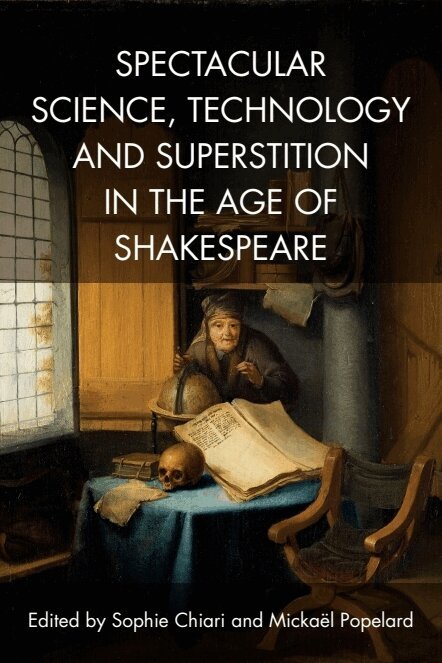
    Spectacular Science, Technology and Superstition in the Age of Shakespeare

    AvSophie Chiari,Mickaël Popelard

    Häftad, Engelska, 2019

    405 kr

    Beställningsvara. Skickas inom 7-10 vardagar. Fri frakt över 249 kr.

    Beskrivning

    Explores the interaction between science, literature and spectacle in Shakespeare’s eraTo the readers who ask themselves: ‘What is science?’, this volume provides an answer from an early modern perspective, whereby science included such various intellectual pursuits as history, poetry, occultism and philosophy. By exploring particular aspects of Shakespearean drama, this collection illustrates how literature and science were inextricably linked in the early modern period. In order to bridge the gap between Renaissance literature and early modern science, the essays collected here focus on a complex intellectual territory situated at the point of juncture between humanism, natural magic and craftsmanship. It is argued that science and literature constantly interacted, thus revealing that what we now call ‘literature’ and what we choose to describe as ‘science’ were not clear-cut categories in Shakespeare’s days but rather a part of common intellectual territory.Key FeaturesAnalyses different aspects of Shakespeare’s plays through the prism of early modern science Sheds fresh light on major works such as the Sonnets, Love’s Labour’s Lost, Romeo and Juliet, Twelfth Night, King Lear, Hamlet, Othello, Macbeth, The Tempest, The Winter’s TaleCombines theoretical views, historical approaches, and close readingsOffers an innovative dialectic vision of the Shakespeare/science nexus, taking up Mazzio’s seminal idea that it is now necessary to "move beyond forms of analysis focused largely on thematic traces of, or indeed linguistic reflections of, historically specific arenas of scientific practice" Links science and spectacle and posits that early modern theatre fashioned the reception of early modern discoveriesPays attention to systems of thought which bind together scientific and literary discourses, practices and mentalities within a single episteme (in Michel Foucault’s interpretation of the word)

    Produktinformation

    • Utgivningsdatum:2019-02-26
    • Mått:156 x 234 x 9 mm
    • Vikt:442 g
    • Format:Häftad
    • Språk:Engelska
    • Antal sidor:288
    • Förlag:Edinburgh University Press
    • ISBN:9781474427821

    Utforska kategorier

    • Naturvetenskap:allmänt inom Naturvetenskap och teknik

    Mer om författaren

    Sophie Chiari is Professor of Early Modern English Literature at Université Clermont Auvergne, France, where she is also the Director of the ‘Maison des Sciences de l’Homme de Clermont-Ferrand’, a research institute encompassing the humanities and social sciences. A member of the IHRIM research team, she has edited or coedited various collections of essays including Performances at Court in the Age of Shakespeare (coedited with John Mucciolo, 2019) and The Experience of Disaster in Early Modern English Literature (2022). Her current research focuses on ecocritical issues in Shakespeare and his contemporaries. Her most recent works are Shakespeare’s Representation of Weather, Climate and Environment (2019) and Shakespeare and the Environment. A Dictionary (2022). Mickaël Popelard is Senior Lecturer in English studies at the University of Caen- Normandie, France. He has written several articles on Shakespeare and Bacon, as well as a monograph on Francis Bacon (Francis Bacon: l’humaniste, le magicien, l’ingénieur, 2010) and a book on the figure of the scientist in Shakespeare’s The Tempest and Marlowe’s Doctor Faustus (Rêves de puissance et ruine de l'âme: la figure du savant chez Shakespeare et Marlowe, 2010).

    Recensioner i media

    This well-conceived and richly informative collection situates Shakespearean drama at the intersection of the arts and sciences in early modern culture. The continuities of knowledge were epitomized in the imaginative possibilities of theater; and Shakespeare here is seen as both a representative and the supreme examplar of an age in which humanism, technology, craftsmanship, philosophy, alchemy, magic and poetry were inextricably interrelated. Historians of both the arts and sciences will find this a valuable and provocative volume.

    Innehållsförteckning

    • AcknowledgementsNote on ContributorsTextual NoteGeneral IntroductionI. Popular Beliefs1. The ‘Science’ of Astrology in Shakespeare’s Sonnets, Romeo and Juliet and King LearFrançois Laroque2. Staging Devils and Witches: Did Shakespeare Read Reginald Scot’s The Discoverie of Witchcraft? Pierre KapitaniakII. Healing and Improving3. "Remedies For Life": Curing Hysterica Passio in Shakespeare’s Othello, Macbeth and The Winter’s TaleSélima Lejri4. "More, I prithee, more": Melancholy, Musical Appetite and Medical Discourse in Shakespeare’s Twelfth NightPierre Iselin5. Saving Perfection from the Alchemists: Shakespeare’s Use of AlchemyMargaret Jones-DaviesIII. Knowledge and (Re)Discoveries6. Of Mites and Motes: Shakespearean Readings of Epicurean ScienceJonathan Pollock7. Shakespeare’s Alhazen: Love’s Labour’s Lost and the History of OpticsAnne-Valérie Dulac8. Shakespeare’s Montaigne: Maps and Books in The TempestFrank Lestringant9. Unlimited Science: the Endless Transformation of Nature in Bacon and ShakespeareMickaël PopelardIV. Mechanical Tropes10. "Vat is de clock, Jack?": Shakespeare and the ‘Science’ of TimeSophie Chiari11. "Wheels have been set in motion": Geocentrism and Relativity in Tom Stoppard’s Rosencrantz and Guildenstern Are DeadLiliane CamposCodaScepticism and the Spectacular: On Shakespeare in an Age of ScienceCarla MazzioGeneral BibliographyIndex