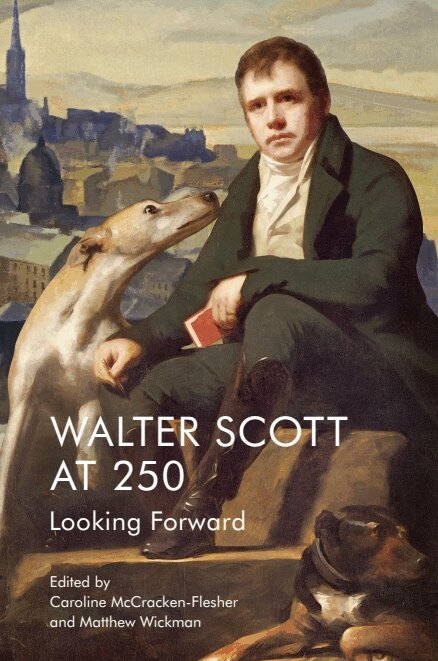
Walter Scott at 250
Looking Forward
AvCaroline McCracken-Flesher,Matthew Wickman
1 369 kr
Beställningsvara. Skickas inom 3-6 vardagar. Fri frakt över 249 kr.
Du är på sajten för privatpersoner.
AvCaroline McCracken-Flesher,Matthew Wickman
1 369 kr
Beställningsvara. Skickas inom 3-6 vardagar. Fri frakt över 249 kr.
Caroline McCracken-Flesher is Professor of English and Director of the Center for Global Studies at the University of Wyoming. Her monographs include Possible Scotlands: Walter Scott and the Story of Tomorrow (2005) and The Doctor Dissected: A Cultural Autopsy of the Burke and Hare Murders (2012). She edited the anthologies Culture, Nation, and the New Scottish Parliament (2005) and Scotland as Science Fiction (2007) and co-edited volumes such as Walter Scott at 250: Looking Forward (2021) and The International Companion to Nineteenth-Century Scottish Literature (2022). She published an edition of Mary Paterson (2015) and is currently editing Robert Louis Stevenson’s Kidnapped and John Gibson Lockhart’s Reginald Dalton for EUP. With Alan Riach, she is developing the Edinburgh Biographical Dictionary of Scottish Writers. Matthew Wickman is Professor of English at Brigham Young University and Founding Director of the BYU Humanities Center. He is the author of Literature after Euclid: The Geometric Imagination in the Long Scottish Enlightenment (University of Pennsylvania Press, 2016), The Ruins of Experience: Scotland’s “Romantick” Highlands and the Birth of the Modern Witness (Pennsylvania, 2007), and many articles on Scottish literary and intellectual history and in other fields across the interdisciplinary humanities.
‘Correctly identifying Scott in 1825 as "undoubtedly the most popular writer of the age", William Hazlitt also lodged a complaint against him: "He is just half what the human intellect is capable of being: if you take the universe, and divide it into two parts, he knows all that it has been; all that it is to be is nothing to him." But then, rephrasing, Hazlitt produces a pithier and more apt formulation, calling Scott a "prophesier of things past". Without citing Hazlitt’s punchline, this commemorative anthology of essays teases out its implications. This book is a thoughtful and provocative exploration of how reading Scott might matter going forward – for futures past, and passing, and to come.’
Caroline McCracken-Flesher, Alan Riach
Inbunden, 2021
1 727 kr
Du är på sajten för privatpersoner.
AvCaroline McCracken-Flesher,Matthew Wickman
1 369 kr
Beställningsvara. Skickas inom 3-6 vardagar. Fri frakt över 249 kr.
Caroline McCracken-Flesher is Professor of English and Director of the Center for Global Studies at the University of Wyoming. Her monographs include Possible Scotlands: Walter Scott and the Story of Tomorrow (2005) and The Doctor Dissected: A Cultural Autopsy of the Burke and Hare Murders (2012). She edited the anthologies Culture, Nation, and the New Scottish Parliament (2005) and Scotland as Science Fiction (2007) and co-edited volumes such as Walter Scott at 250: Looking Forward (2021) and The International Companion to Nineteenth-Century Scottish Literature (2022). She published an edition of Mary Paterson (2015) and is currently editing Robert Louis Stevenson’s Kidnapped and John Gibson Lockhart’s Reginald Dalton for EUP. With Alan Riach, she is developing the Edinburgh Biographical Dictionary of Scottish Writers. Matthew Wickman is Professor of English at Brigham Young University and Founding Director of the BYU Humanities Center. He is the author of Literature after Euclid: The Geometric Imagination in the Long Scottish Enlightenment (University of Pennsylvania Press, 2016), The Ruins of Experience: Scotland’s “Romantick” Highlands and the Birth of the Modern Witness (Pennsylvania, 2007), and many articles on Scottish literary and intellectual history and in other fields across the interdisciplinary humanities.
‘Correctly identifying Scott in 1825 as "undoubtedly the most popular writer of the age", William Hazlitt also lodged a complaint against him: "He is just half what the human intellect is capable of being: if you take the universe, and divide it into two parts, he knows all that it has been; all that it is to be is nothing to him." But then, rephrasing, Hazlitt produces a pithier and more apt formulation, calling Scott a "prophesier of things past". Without citing Hazlitt’s punchline, this commemorative anthology of essays teases out its implications. This book is a thoughtful and provocative exploration of how reading Scott might matter going forward – for futures past, and passing, and to come.’
Caroline McCracken-Flesher, Alan Riach
Inbunden, 2021
1 727 kr