Inbunden, Engelska, 2021
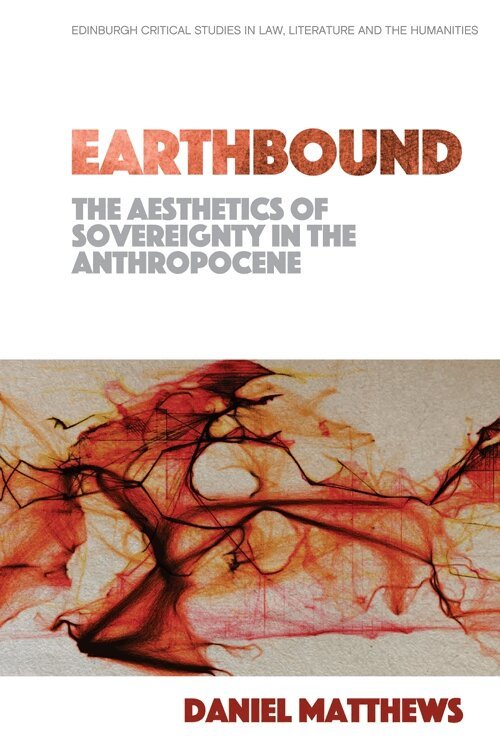
Earthbound: The Aesthetics of Sovereignty in the Anthropocene
Del i serien Edinburgh Critical Studies in Law, Literature and the Humanities
1816 kr
Beställningsvara. Skickas inom 3-6 vardagar. Fri frakt över 249 kr.
Beskrivning
Produktinformation
- Utgivningsdatum: 2021-08-31
- Mått: 156 x 234 x 20 mm
- Vikt: 488 g
- Format: Inbunden
- Språk: Engelska
- Serie: Edinburgh Critical Studies in Law, Literature and the Humanities
- Antal sidor: 224
- Förlag: Edinburgh University Press
- ISBN: 9781474455305
- Utmärkelser: Winner of Law, Literature and Humanities Association of Australasia: Penny Pether Prize 2021
Utforska kategorier
Mer om författaren
Daniel Matthews is Associate Professor of Law at the University of Warwick. He works in the fields of jurisprudence, political theory, and law and literature, with a particular focus on theories of sovereignty and political community. He is co-editor, with Scott Veitch, of Law, Obligation, Community (Routledge, 2018) and co-editor, with Tara Mulqueen, of Being Social: Ontology, Law and Politics (Counterpress, 2016). He serves on the editorial committees of Law and Critique and Law & Literature, at the latter he is the book reviews editor.
Recensioner i media
Daniel Matthews’s Earthbound makes a convincing case for why the response to climate change is not a serious challenge but the serious challenge for our time. He shows us that the comfortable division between the social and the natural has been erased and so the very boundaries and scope of human agency must be re-evaluated and reconsidered. Given that the great conceit of Western forms of sovereignty is that it controls and determines everything within its boundaries, we see that the advent of the Anthropocene gives a new and terrifying power to sovereign authority. In grappling with this challenge, Matthews does not suggest jettisoning sovereignty as such, especially as there are many forms of sovereignty, including indigenous ones that inherently recognize the fact of human existence within the context of—rather than above—nature. Instead, he looks at the aesthetics of sovereignty, how it shapes us even as we use it to shape the world around us, in order to rethink and redeploy key concepts of the Western and globally dominant mode of sovereignty, specifically in terms of territory, people and scale. This unique way of understanding sovereignty allows Matthews to add some teeth to the idea of rethinking the way we live in the world. Whereas such calls can be, and usually are merely gestural, by drilling down into the sediment of how sovereignty is lived and experienced, rather than just wielded, Matthews shows a path to action instead of just more talk. For this reason alone his work is both timely and critically vital.
Betyg & recensioner
0 recensioner
Inga recensioner tillgängliga.